 Brixton Vintage Thrift Shop Finder: South London Retro Gems
Hidden Gems & Odd Finds
Traditional Calligraphy Supply at Cornelissen: Nibs to Buy
Cornelissen in Bloomsbury has sold pigments and nibs since 1855. Plan your calligraphy supply run with a script list, a nib shortlist and a museum detour.
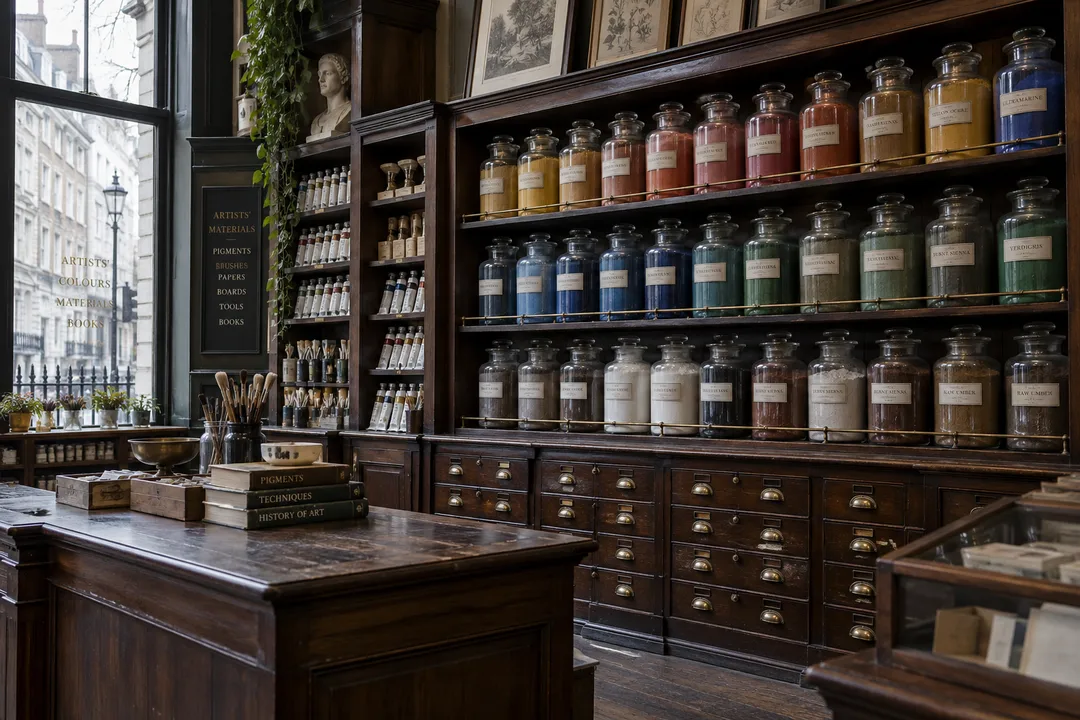
L. Cornelissen & Son has been supplying artists and letterers in London since 1855, and the historic Bloomsbury shop maintains rows of wooden specimen drawers, glass jars of traditional pigments and polished counters where classic supplies are measured with care. For any scribe seeking a dedicated traditional calligraphy supply destination near the British Museum, it remains a rare room where broad-edge nibs, stick inks and powdered gum arabic share space with gilding tools and specialist papers. Arriving with a thoughtful plan turns a simple browse into a coherent working kit.
Why Cornelissen Suits a Traditional Calligrapher
Most stationery chains stock pens for modern lettering and stop there. Cornelissen started as a colourman for painters and conservators, and that history shows in the shelves: raw pigments for mixing your own gouache, powdered gum arabic, glair ingredients, burnishers and loose-leaf gold. Its online catalogue lists separate calligraphy sections for automatic pens, calligraphy inks, Chinese and Japanese ink materials and calligraphy papers. A scribe who letters in Foundational Hand, Uncial or Italic will find the medieval supply chain compressed into one room.
The Calligraphy and Lettering Arts Society lists Cornelissen among its specialist suppliers, which tells you who the regulars are. On a weekday you are as likely to stand beside a conservator matching a pigment as a student from a lettering course buying their first oblique holder. Staff are used to questions like which nib suits a 7mm x-height, so treat the counter as a consultation rather than a checkout.
Build a Script List Before You Leave Home
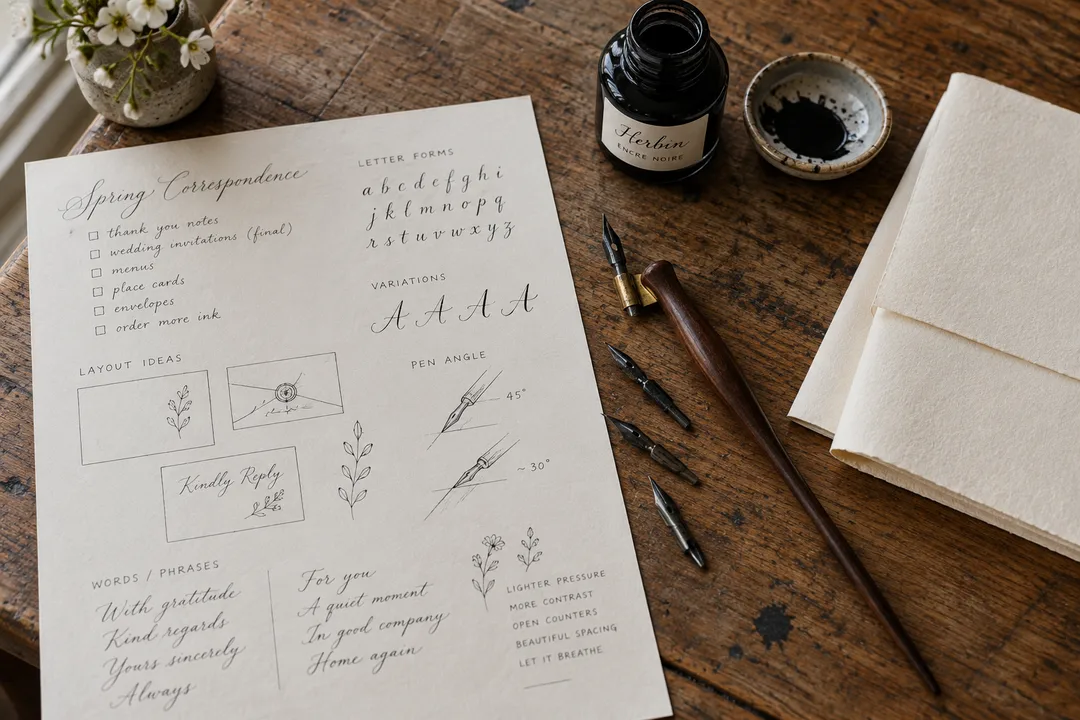
Write down the one or two scripts you actually practise, the nib widths your exemplar sheets call for, and the paper weight you work on. A Foundational Hand at four nib widths behaves very differently from a tight Italic, and the right nib follows from that. If you are learning from Edward Johnston's teaching or a Lettering Arts Trust exemplar, photocopy the page and bring it, because staff can see the stroke contrast you are chasing.
Add one line for the finish you want. Black ink on cartridge paper for daily drills needs nothing fancy. A presentation piece on calfskin vellum or a heavy hot-pressed sheet is another matter, and it pulls in gum sandarac, a pounce bag and perhaps gold. Writing this down stops you drifting toward every jar of ultramarine in the room, which is the most common way visitors spend an hour and leave with nothing they needed.
Nibs, Holders and Inks in a Sensible Order
Start with nibs, because everything else hangs off their width. Broad-edge dip nibs come in graded sets, and buying two neighbouring sizes rather than a full box lets you test without clutter. Pair them with a straight holder that fits your grip, then handle a couple before deciding. If you write Copperplate, ask to see oblique holders and pointed nibs side by side, since the flange angle matters more than brand.
Ink comes next. Non-waterproof stick ink ground on a stone gives the crisp hairlines that traditional scribes prize, while bottled ink is quicker for drills. Gum arabic, sold here as powder and solution, thickens gouache so it flows from a dip nib without blobbing. For colour work, a tube of designer gouache mixed with a drop of gum often beats any ready-made coloured ink. Skip the gift sets near the door, which are built for browsers rather than practising scribes.
Paper and Gilding Without the Guesswork
Bring a sample of the paper you already like, even a torn corner. Calligraphy paper choice comes down to sizing, surface and weight: a hard-sized sheet holds a sharp edge, while soft printmaking papers feather under wet ink. Laying your sample next to the shop's sheets is faster than reading descriptions. If you plan to frame a piece, a heavier hot-pressed watercolour sheet resists cockling when the ink dries.
Gilding is where Cornelissen stands out. Loose and transfer gold leaf, gesso ingredients and burnishers are all part of the stock, and staff can explain the difference between raised gilding on gesso and flat gilding on gum ammoniac. Beginners should start with transfer leaf and a small burnisher rather than a full gesso kit. Raised gilding takes weeks of practice, and a failed attempt wastes expensive leaf.
Who You Meet at the Counter
Expect a dedicated community of working scribes, illuminators and decorative artists comparing tools along the counter. Calligraphy students often bring exemplar sheets to assess broad nib angles directly against exemplar lines, while book artists select specialist mediums. The natural etiquette is unhurried and considerate: classic materials are often weighed or retrieved individually, so a brief queue moves at its own steady tempo. The surrounding wooden cabinets and pigment displays create an immersive workspace atmosphere that feels rooted in nineteenth-century craft traditions.
A Bloomsbury Walk With Your New Kit
The British Museum is a few minutes' walk away, and it rewards a calligrapher with cuneiform tablets, Egyptian papyri and the Islamic world galleries, where Kufic and Naskh inscriptions show broad-pen logic in stone, metal and ceramic. Look at letterforms with your new nib in mind, then sit in the Great Court to sketch. Museum Street, running south toward New Oxford Street, has small bookshops and print dealers worth a slow pass.
If the weather turns, the London Review Bookshop on Bury Place holds a strong shelf of typography and lettering titles, and its cake shop gives you a table to unpack and test your nibs on scrap paper. Russell Square, ten minutes north, is the quieter option on a dry day, with benches under plane trees and enough calm to write out a full alphabet before heading home.
Practical Notes
Pack a sturdy protective pouch or sealed container for any bottled inks or loose pigments, ensuring liquid supplies remain upright during travel across central London. Carry your working exemplar card, a paper sample and your current pen holder so you can judge physical balance and stroke geometry directly at the counter. Bloomsbury offers flat, accessible pavements connecting directly from surrounding transit corridors, making a combined studio and museum trip easy to navigate on foot.
Plan a second visit rather than buying everything at once. Most calligraphers find that a single nib width, one bottle of ink and two sheets of good paper teach them more in a week than a full box would in a month. Come back for gilding and colour once your strokes are consistent, and ask Karpo APP to line up the British Museum galleries or a lettering class near Bloomsbury for the same afternoon.
Ask Karpo for more information.
Keep reading
- Brixton Vintage Thrift Shop Finder: South London Retro Gems
 Notting Hill Vintage Thrift Shop Finder: Preloved Rails
 Soho Vintage Thrift Shop Finder: West End Designer Archives