 Brixton Vintage Thrift Shop Finder: South London Retro Gems
Hidden Gems & Odd Finds
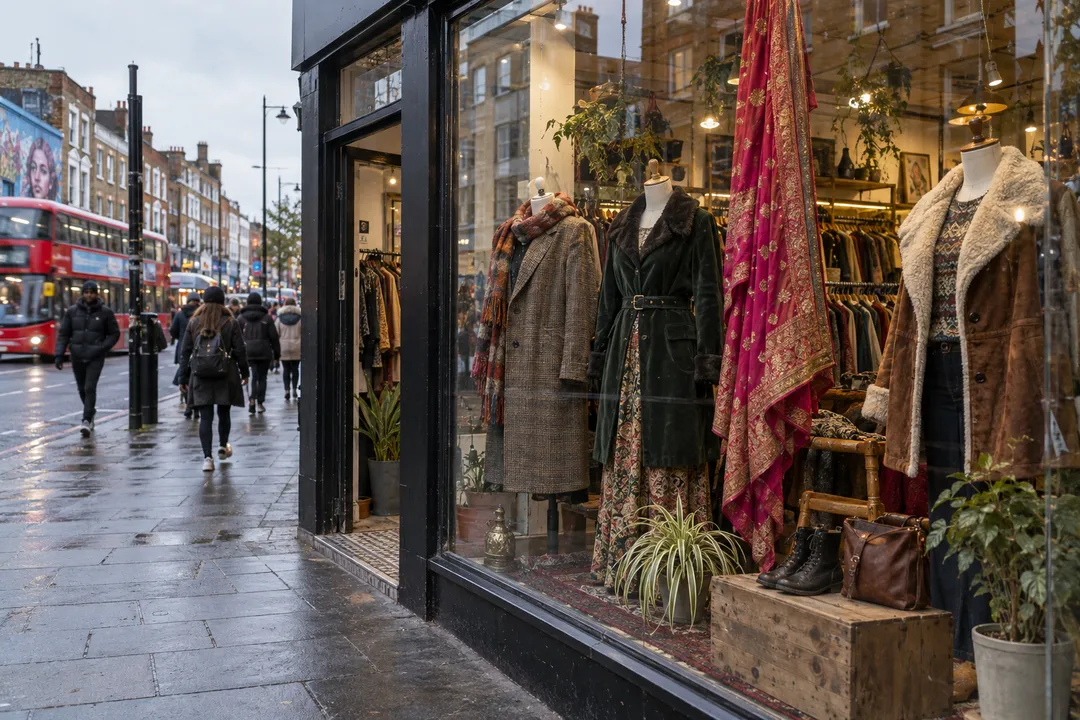
Traid Dalston Thrift Store: Open Until 8pm Mon–Sat
Traid Dalston at 106-108 Kingsland High Street opens 10am-8pm Monday to Saturday and 11am-6pm Sunday. Bargain bins and saris sit beside curated rails.
Traid Dalston opens at 10am and closes at 8pm Monday to Saturday, with Sundays and public holidays running 11am to 6pm, which makes it one of the few thrift stores on Kingsland High Street you can reach after a full working day. The shop sits at 106-108 Kingsland High Street, London E8 2NS, and it belongs to the charity Traid, a London organisation that has been collecting and reselling used clothes since 1999. Every jumper sold here pays for projects abroad, so the browsing is cheap and the receipt does something useful.
Opening Hours and How to Reach Kingsland High Street
Traid publishes the Dalston hours on its own shop page: 10am to 8pm Monday to Saturday, and 11am to 6pm on Sunday and public holidays. That eight o'clock close is the real selling point. Most London charity shops pull the shutters down at five or six, which leaves anyone who works a normal day with only a Saturday rush. Here you can come straight from the office, browse for an hour, and still be home for dinner.
The shop is on Kingsland High Street, the stretch of the A10 that runs through Dalston, and Dalston Kingsland Overground station is on the same road, so the walk is short whichever way you arrive. Buses run along Kingsland Road and the High Street all day, which helps if you are carrying a bag of finds. If you cycle, lock up properly before you go in.
What You Will Find on the Rails
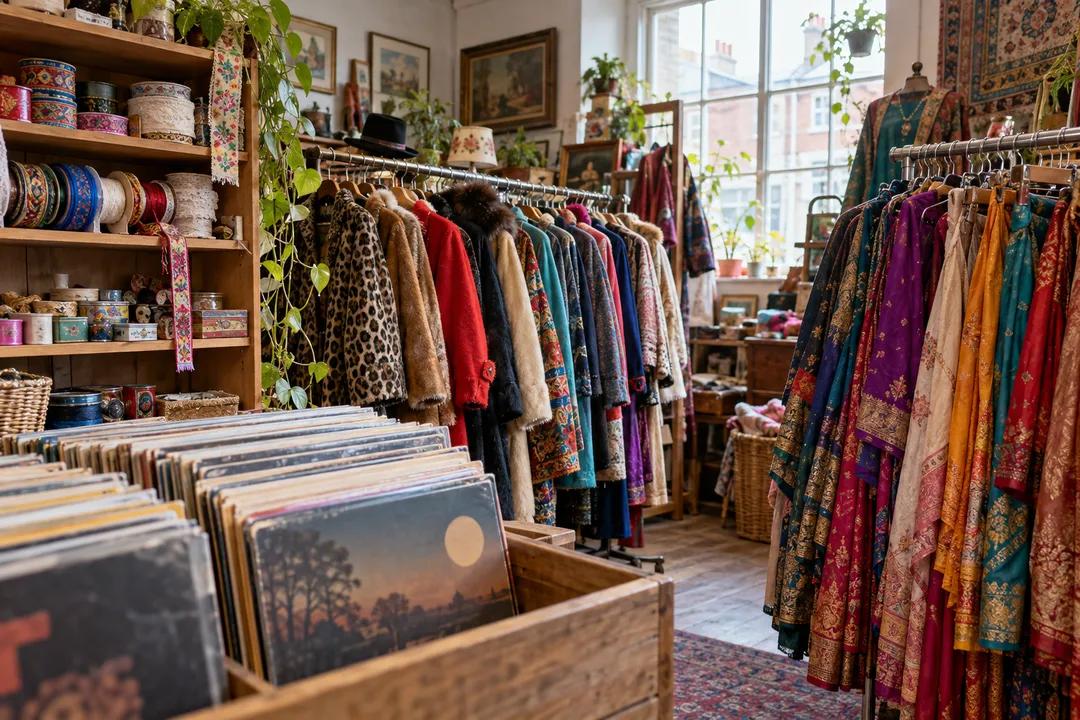
Time Out describes the shop as genuinely very cheap and warns you not to be fooled by the high-fashion concept window displays, which look like a boutique but sit above a store where items can go for as little as a quid. The same review lists what makes Traid Dalston unusual: bargain bins with music finds, a haberdashery section for people who make their own clothes, and an always-impressive array of saris and African fashion.
That mix tells you how to shop it. Dalston is a mixed, creative part of east London, and the stock reflects it. A secondhand sari is a very different find from a vintage band tee, and both can turn up in one visit. If you sew, head for the haberdashery first, because trimmings and fabric are the kind of thing that sells quickly and rarely gets restocked in the same form.
Window displays change, and the rails behind them turn over as donations arrive from across London, so the shop is never quite the same twice. Treat it like a market stall rather than a department store: look at everything, touch the fabric, and decide fast on the pieces you love. A coat that is still on the rail at 6pm on a Thursday may be gone by Saturday morning.
How to Shop It Without Wasting an Hour
Go on a weekday evening if you can. The long 8pm close means the last hour is calmer than a Saturday afternoon, and staff are still pulling stock to the floor. Arrive with a rough list, such as a winter coat, a plain knit, a belt, and leave room for one thing you did not plan to buy. Charity shop browsing rewards flexibility far more than a fixed shopping list does.
Start with the bargain bins, because that is where the lowest prices live and where the quid-level finds Time Out mentions tend to sit. Then work the rails by garment type rather than by size, since secondhand sizing drifts by decade and brand. Try things on if there is space, check seams, zips and underarms, and hold knitwear up to the light for moth holes before you queue.
A fair judgement: if you want a neatly sorted, size-ordered edit, a vintage boutique down the road will give you that at three times the price. Traid is for people who enjoy the hunt. Skip it if you are in a hurry, and come back when you have forty minutes to spare.
Who Traid Is and Where the Money Goes
Traid launched in 1999 as a registered UK charity with four charity shops and 700 clothing banks, with the aim of raising money to fight global poverty by collecting and reselling clothes. In 2001 it founded TRAIDremade, an ethical label that makes garments from damaged textiles, and in 2003 it started an education programme on textile reuse. In 2014 it began a free home collection service, first with four London councils and later across every London borough, collecting 125 tonnes of clothing in its first year.
Traid's own figures say it has put 240 million garments back into use, and its sorting facilities are described by the charity as the most efficient in the country. Money from the shops funds partners working on projects such as supporting organic cotton farmers in Benin, backing garment workers in India, growing pesticide-free crops in southern Ethiopia and helping migrant garment workers. In 2022 Traid became a partner signatory to Textiles 2030, the UK's textile sustainability agreement.
Traid lists Dalston among its 13 shops in London. The page for this one is brief, so what you see is a working neighbourhood shop rather than a flagship, which is part of the appeal. The charity registration number printed on the Traid site is 297489.
Donating on the Same Trip
Traid is a place to drop things off as well as pick them up. Its donate page lists several routes: book a free collection, find a clothing bank, post your donation, or drop clothes off in store. If you live in London the collection service will come to you at no charge, which suits anyone clearing a wardrobe in one go. If you are already walking to Dalston to shop, bringing a bag of your own clothes is the simplest way to close the loop.
Bag your items cleanly and keep damaged pieces separate from good ones. Traid turns some damaged textiles into TRAIDremade garments, so worn-out fabric still has a use. Keep the things you really want on top of the bag in case you decide to swap a donation for a purchase at the till.
A Short Dalston Walk Around the Shop
Once you are done on the rails, Dalston rewards a slow loop. Ridley Road Market, a long-running street market just off Kingsland High Street, is the obvious next stop for anyone who enjoys a rummage. The independent Rio Cinema is also on Kingsland High Street, which makes an easy end to an evening of shopping.
If you have the energy, walk south towards Dalston Junction, where cafes and bars fill the streets around the Overground station. Everything here is walkable, so carry a tote bag, keep your hands free and let the afternoon drift.
If Dalston Is Too Busy: Other Traid Shops
Traid lists 13 shops across London on its website: Brixton, Camden, Clapham, Dalston, Hammersmith, Kilburn, Lewisham, Peckham, Shepherds Bush, Tooting, Walthamstow, Westbourne Grove and Wood Green. If the Dalston rails feel picked over on a Saturday, Walthamstow or Wood Green are the nearest alternatives for anyone coming from the east and north of the borough, and each branch sets its own opening hours on its page.
For a quieter visit, aim for a weekday evening or a Sunday after 11am, when the shop has just opened and the previous week's donations have been put out. Bring a reusable bag, wear something easy to take on and off, and give yourself time to dig through the bins; the best finds here are the ones you were not looking for.
Ask Karpo for more information.
Keep reading
- Brixton Vintage Thrift Shop Finder: South London Retro Gems
 Notting Hill Vintage Thrift Shop Finder: Preloved Rails
 Soho Vintage Thrift Shop Finder: West End Designer Archives