 Brixton Vintage Thrift Shop Finder: South London Retro Gems
Hidden Gems & Odd Finds
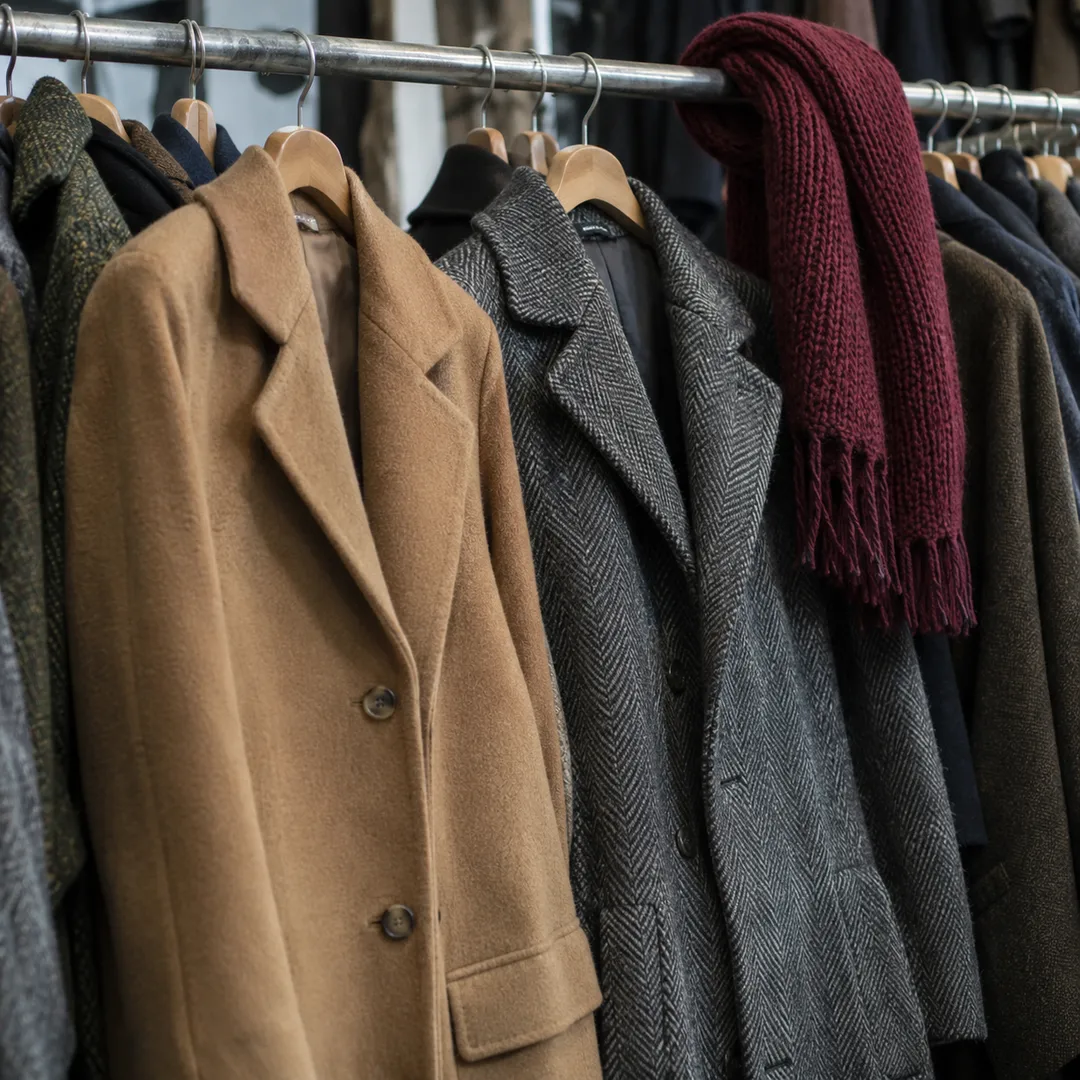
Notting Hill Thrift Store Crawl Planner for a Winter Coat
Need a warm coat before the cold sets in? Plan a Notting Hill thrift store crawl for secondhand wool coats, with fit checks and Portobello Road breaks.
The first properly cold weekend in London tends to arrive without warning. One week a light jacket is enough; the next, the wind off the Westway makes you wish you owned something heavier. Notting Hill is a good place to solve that problem secondhand. Between Portobello Road, Westbourne Grove and the streets running down toward Holland Park sit vintage dealers, charity shops and market stalls where long wool coats from decades past still hang, waiting for a second winter. A coat is one of the best things to buy used, because older ones were often built to last for years. This plan walks you through a full day of hunting, trying and choosing, with tea breaks to warm up along the way.
Why a Secondhand Coat Is Worth the Hunt
Coats made a generation or two ago were frequently cut from dense, pure wool and finished with full linings, sturdy buttons and generous hems. Those details matter in a damp London winter. A thick wool coat holds warmth even when the drizzle sets in, and a well-made lining lets it slide over a jumper without bunching. Many of these coats have already survived years of wear, which is a good sign they will survive several more.
Notting Hill attracts that kind of stock. The area has long drawn collectors and dealers, and households here often hand in good quality outerwear when they clear a wardrobe. On a crawl you might find a classic camel overcoat, a herringbone tweed, a navy pea coat or a long military greatcoat, each with its own small history. Finding the one that fits you is the fun part.
How to Check a Coat Before You Fall for It
Start at the shoulders. Slip the coat on over the thickest jumper you plan to wear with it, then reach forward as if you are holding a bus rail. If the back pulls tight or the sleeves ride far up your forearms, the coat is too small, and shoulders are the hardest part for a tailor to change. A coat should sit comfortably with a little room, since you will be layering beneath it all winter.
Feel the fabric between your fingers. Good wool feels dense and springs back when you squeeze it. Hold the coat up to the light and look for small moth holes, which usually show as tiny pinpricks of brightness, especially near the collar and under the arms. A single small hole can be darned, but a scattering across the back is a sign to move on.
Turn the coat inside out. Check the lining for tears along the seams and at the armholes, then look at the pockets, because a pocket lining with a hole will swallow your keys. Test every button and buttonhole, and look at the hem for loose stitching. Finally, give the coat a gentle sniff. A slightly musty smell usually fades after airing, while a strong damp odour is harder to shift.
Check the length in a full mirror while wearing the shoes you live in. A coat that reaches just past the knee keeps the wind off your legs on a bus stop wait, while a shorter cut is easier on a bike. Either can work; the point is to pick the one that suits how you actually move around London.
A Day Route From Westbourne Grove to Portobello
Begin on Westbourne Grove and the streets around it, where charity shops tend to be roomy and calm in the morning. This is the place to learn your size in older cuts, since sizing has shifted over the decades and labels can be misleading. Try on anything with the right shoulders, even if the colour is not what you had in mind, and take a photo in the mirror so you can compare later.
Head north toward Portobello Road next. The market is at its busiest at the weekend, with antiques at the southern end and clothes and bric-a-brac stalls further along. Vintage dealers under the Westway often hang coats on tall rails, and the sellers there know their stock well. Ask about the fabric and where a coat came from; the stories are part of the appeal, and a good seller will happily let you try a few on in front of a mirror.
When the cold gets into your fingers, step into a cafe off the main road and warm up with something hot. It is the perfect moment to look back through your mirror photos and decide which coat you keep thinking about. Then return to the stall or shop for a second fitting before you buy.
Keep your budget loose but your standards firm. It is easy to buy the first warm coat you try simply because your hands are cold. Give yourself permission to walk away from anything that is nearly right, because Portobello and the streets around it turn over stock constantly, and a better fit may be hanging two stalls along.
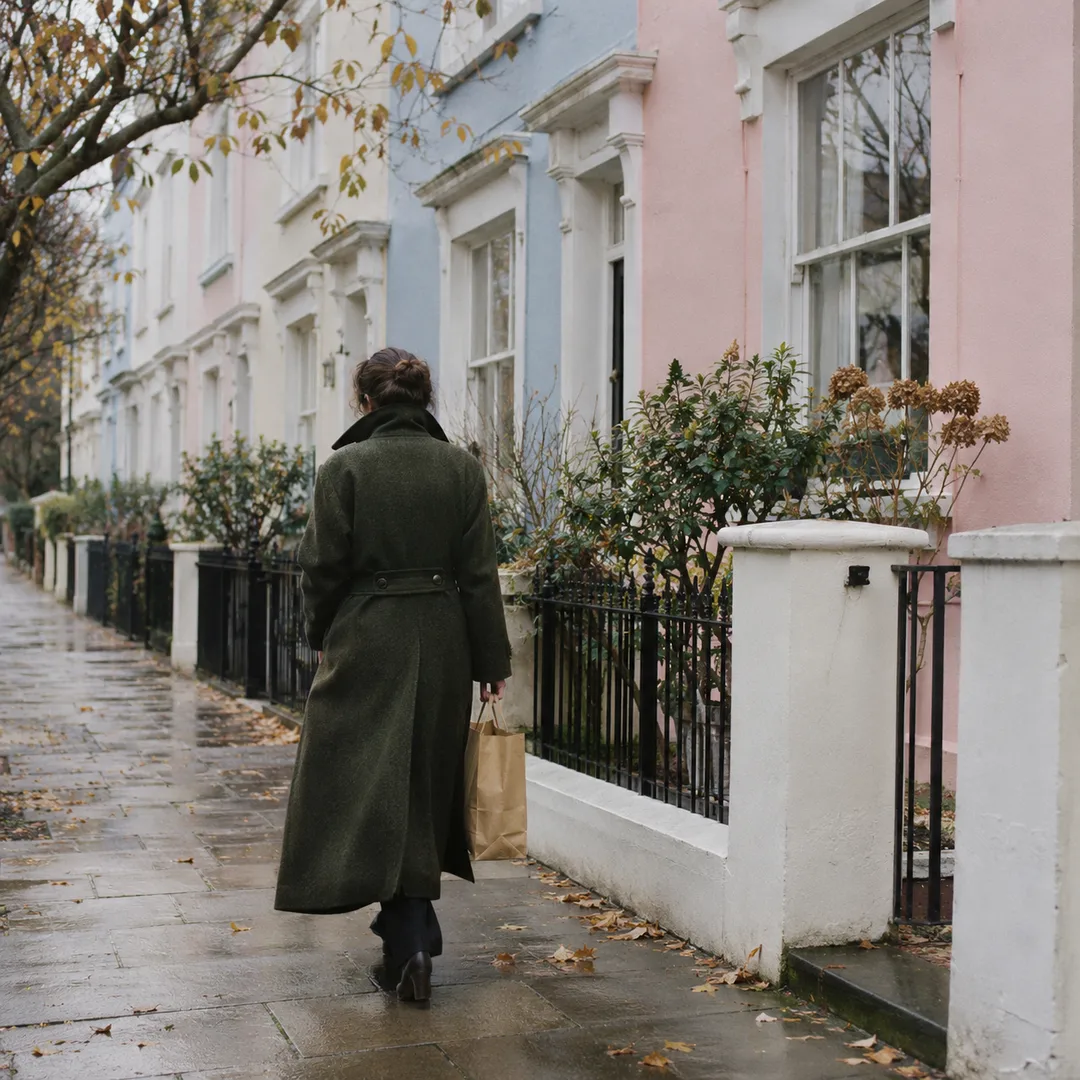
Walking It Home Through the Pastel Streets
Once you have your coat, wear it out of the shop. The streets around Notting Hill are lined with pastel terraces, garden squares and quiet mews, and a slow walk through them is the best way to feel how a coat behaves. Notice whether the collar stays up in the wind, whether the pockets sit at a natural height for your hands and whether the length suits your stride.
If you have time, wander south toward Holland Park. The paths there are lovely in late autumn, with fallen leaves underfoot and peacocks sometimes strutting near the formal gardens. A walk in the park in your new old coat feels like a small celebration of the season.
Caring for Your Coat Through the Winter
Most secondhand wool coats benefit from a fresh start. Hang yours somewhere airy for a day or two, ideally near an open window, and brush it down with a clothes brush to lift dust and loose fibres. A gentle steam relaxes creases, and a professional clean is worth it if the coat has a smell that airing does not lift.
Small repairs make a big difference. Sew loose buttons on firmly, stitch any gaps in the lining and consider swapping tired buttons for a new set if you want a fresher look. Store the coat on a broad wooden hanger so the shoulders keep their shape, and tuck a cedar block or a lavender sachet into a pocket to keep moths away.
A coat found this way has a way of becoming the one you reach for every morning. When people ask where you got it, you will have a better answer than a shop name: a cold Saturday in Notting Hill, a rail under the Westway and the moment you turned up the collar and knew it was yours.
Ask Karpo for more information.
Keep reading
- Brixton Vintage Thrift Shop Finder: South London Retro Gems
 Notting Hill Vintage Thrift Shop Finder: Preloved Rails
 Soho Vintage Thrift Shop Finder: West End Designer Archives