 Brixton Vintage Thrift Shop Finder: South London Retro Gems
Hidden Gems & Odd Finds

Stoke Newington Thrift Shop Crawl Planner for a Reading Nook
Plan a Stoke Newington thrift crawl for a reading nook: hunt paperbacks, lamps and throws in charity shops, rest in Clissold Park, then build your cosy corner.
Stoke Newington has long been a neighbourhood of readers, and its charity shops show it. Shelves fill up with paperbacks, poetry, cookbooks and travel guides from people who live in tall terraced houses and pass their books on when the shelves overflow. A thrift shop crawl here is a lovely way to furnish a reading nook from scratch. This plan is for anyone who has cleared a corner of their flat and wants to fill it with a stack of old books, a warm lamp, a soft throw and perhaps a chair, all found secondhand on a slow afternoon in north east London.
Why Stoke Newington Suits a Bookish Crawl
The neighbourhood's high street and Church Street are lined with independent shops, cafes and several charity shops within a comfortable walk. Many have generous book sections, often organised by volunteers who clearly love reading. You are as likely to find a cloth-bound classic as a recent prize winner, and the mix rewards people who browse slowly.
The area also has a calm, village feel that suits this kind of day. There are green spaces at both ends of the walk, quiet residential streets for a detour and plenty of places to sit with a new book. A bookish crawl is not something to rush, and Stoke Newington is a place that makes slowing down feel natural.
Sketch the Nook Before You Shop
Before you leave home, measure the corner you are filling and take a photo of it in daylight. Note the width of the wall, the distance to the nearest socket and the height of the window sill. These numbers will help you decide quickly whether a lamp, a side table or a small shelf will fit, and they stop you carrying home a chair that blocks the door.
Think about the mood you want. A nook for winter evenings might need warm light, a heavy throw and a deep chair. A nook for weekend mornings might want a lighter blanket and a seat by the window. Write three words that describe it, such as warm, quiet and green, and use them as a filter when the shelves start to tempt you.
Reading the Shelves Like a Regular
Charity shop book sections can be large, so start with a list of authors or subjects you love and a few you have always meant to try. Scan the spines quickly rather than pulling every book out. Regular browsers often check the shelves near the till too, where volunteers place newer arrivals or more unusual finds that have just come in.
Look at the condition of each book before you commit. Check the spine for cracks, the pages for damp marks and the cover for loose corners. Older hardbacks can have beautiful cloth covers under a tired dust jacket. Pencil notes in the margins can be charming, but heavy highlighting can spoil the reading, so flick through before you decide.
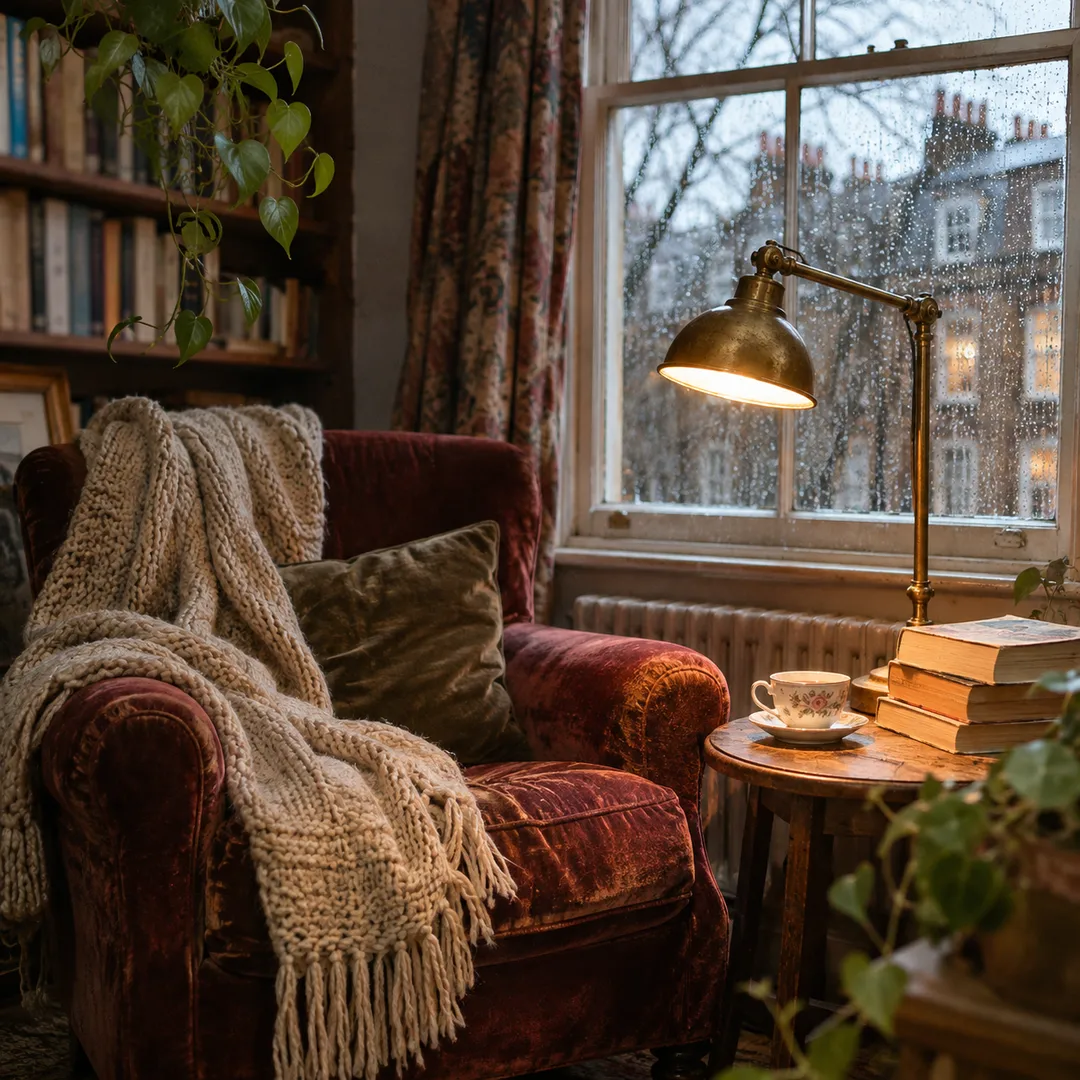
Lamps, Throws and Small Furniture
A reading nook needs good light, and charity shops often have a corner of lamps waiting for new homes. Look for brass, wood or ceramic bases with simple shapes. Check the cable for cracks and the switch for a firm click, and plan to have any older lamp checked by an electrician before using it. A new shade can transform a tired base completely.
Throws, cushions and small rugs are often folded in baskets or stacked on shelves. Feel for wool, cotton or linen and check for moth holes and loose threads. Small wooden side tables, footstools and plant stands are easy to carry home and can finish a nook beautifully. Leave bigger chairs until the end of the crawl, when you know what else you have found.
A Rest in Clissold Park
When your tote bag starts to pull at your shoulder, walk into Clissold Park and find a bench by the ponds or under the old trees. Open one of the books you have just found and read a few pages. It is the best test of all, because a book that holds you on a cold bench will hold you anywhere.
This pause is also a good time to look at what you have and what is missing. Lay your finds out on the bench and imagine them in your corner at home. If the nook still needs a lamp or a cushion, make a note and head back to the shops with a clear goal. If you have everything, enjoy the rest of the afternoon in the park.
Finding a Chair With a Past
A chair is the heart of a reading nook, and secondhand ones are often more comfortable and better made than new. Look for solid wood frames, firm springs and cushions that bounce back. Sit in it for a few minutes, lean back and tuck your feet up. If it creaks or wobbles, check the joints. Loose glue can be fixed, but a cracked frame is harder.
Larger furniture can be tricky to carry home, so ask the shop whether they can hold it for a short time while you arrange a lift. Some charity shops have their own delivery service, though this varies from shop to shop. Measure the chair against your notes before you buy, and check that it will fit through your front door and up the stairs.
Building the Nook at Home
When everything is home, start with a clean. Wipe books gently with a dry cloth and air any that smell musty in a dry room for a day or two. Wash throws and cushion covers following their labels and brush down upholstery. Polish wooden tables with a little wax and dust lamp shades with a soft brush.
Arrange the nook so the lamp falls over your shoulder onto the page, the side table sits within easy reach and the throw is folded on the chair arm. Stack books in a small pile rather than filling a shelf at once, so the nook feels calm. Add a plant if there is light. The whole corner will feel as though it has always been there.
Using Karpo APP to Plan the Crawl
Tell Karpo APP about the reading nook, the measurements of your corner and the authors you love, and ask it to sketch a walk along Stoke Newington's high street and Church Street with a rest in Clissold Park. You can also ask it for a backup route through nearby Dalston if you are still missing a lamp or a chair.
Karpo APP will not hold books or contact shops for you, so keep those chats in person with the volunteers. What it does well is give the afternoon a gentle shape, with a clear start, a peaceful break and a sensible finish. That leaves you free to enjoy the best part, which is finding the book you will read first in your new corner.
Ask Karpo for more information.
Keep reading
- Brixton Vintage Thrift Shop Finder: South London Retro Gems
 Notting Hill Vintage Thrift Shop Finder: Preloved Rails
 Soho Vintage Thrift Shop Finder: West End Designer Archives