 Brixton Vintage Thrift Shop Finder: South London Retro Gems
Hidden Gems & Odd Finds
Notting Hill Thrift Shop Crawl Planner for a First Flat
Plan a Notting Hill thrift shop crawl to furnish a first rented flat: crockery, lamps, frames and mirrors from Portobello stalls and charity shops, taken home.
A Notting Hill thrift shop crawl planner makes the most sense for people facing a very London moment: the keys to a first rented flat, white walls, and a kitchen with a kettle and nothing else. Rather than ordering a box of identical flat-pack things, many new renters spend a Saturday walking Portobello Road and the charity shops around Notting Hill Gate, building a home from plates with a story, a lamp with weight to it and a mirror that makes a small room feel twice its size. This plan keeps that day focused, affordable and easy to carry.
Why Notting Hill Works for Homewares
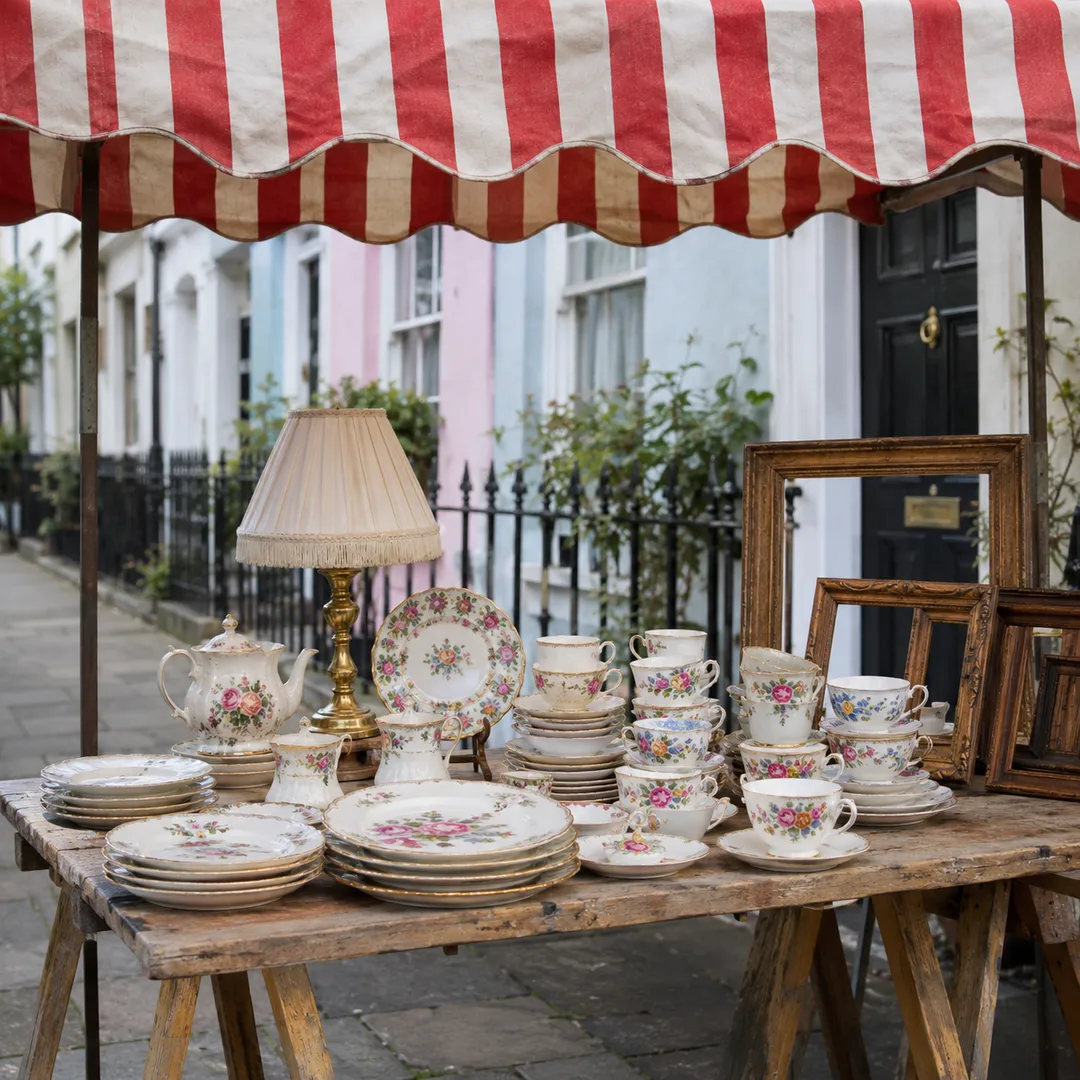
Portobello Road has been a market street for generations, and its long run from the antique arcades at the top down to the fruit stalls and secondhand clothing under the Westway gives it a rare range. On busy market days you can move from silver and porcelain dealers to bric-a-brac tables piled with china, old cutlery and kitchen tins, all within one long walk. Newer renters love it because one street covers the whole spectrum from treasured antiques to cheerful odds and ends.
Around the market, the charity shops of Notting Hill Gate and Westbourne Grove fill in the everyday gaps. Their shelves carry glassware, picture frames, cushions and the occasional lamp, often donated by local households clearing out large Victorian houses. Mixing the market and the charity shops gives you two sources with very different moods: the street for character pieces, the shops for practical basics.
Measure the Flat Before You Leave
The biggest mistake on a homeware crawl is falling for something that will not fit. Before setting off, measure the wall where a mirror might hang, the width of the space beside the bed for a side table, and the inside of the kitchen cupboards. Write the numbers on your phone along with the colour of your walls and floors, and take a quick photo of each room so you can picture new pieces in place.
Think too about your stairs and front door. Many London rentals sit up narrow staircases in converted houses, and a lovely chest of drawers is useless if it cannot turn the landing. For a first crawl, keep to things one person can carry: plates, glasses, lamps, frames, cushions, small mirrors, a rug that rolls tightly. Larger furniture can wait for a second trip with a friend and a van.
Start Up the Hill With the Antique End
Begin at the top of Portobello Road, near the antique arcades, and treat this stretch as inspiration rather than shopping. Look at how dealers pair old china with silver, how they stack books and frames, and what makes a lamp look handsome rather than tired. You may not buy here, but your eye will be sharper by the time you reach the bric-a-brac tables further down, and you will spot the good pieces faster.
Many stallholders are happy to talk about what they sell, and a friendly question about a pattern or maker often turns into a short history lesson. That is part of the pleasure. Ask how they would display a set of mismatched plates, or which kind of lamp base lasts longest, and you will leave with ideas for your own walls even if your wallet stays closed.
Build a Mismatched Kitchen Set
Mismatched crockery is one of the joys of a secondhand flat. Instead of hunting for a complete set, choose a theme that holds everything together, such as blue and white, a single floral palette, or plain white with gold rims. Pick up plates, bowls and teacups one or two at a time from different tables and shops, and the result looks deliberate rather than random when the table is laid for friends.
Check each piece in good light. Run a finger around the rim for chips, look for fine cracks in the glaze, and avoid anything with crazing on surfaces that touch food, since those tiny cracks can trap grime. Old cutlery is often a bargain and lasts for decades, while glassware is easiest found in charity shops, where tumblers and wine glasses often arrive in small matching groups.
Lamps, Mirrors and Frames That Change a Room
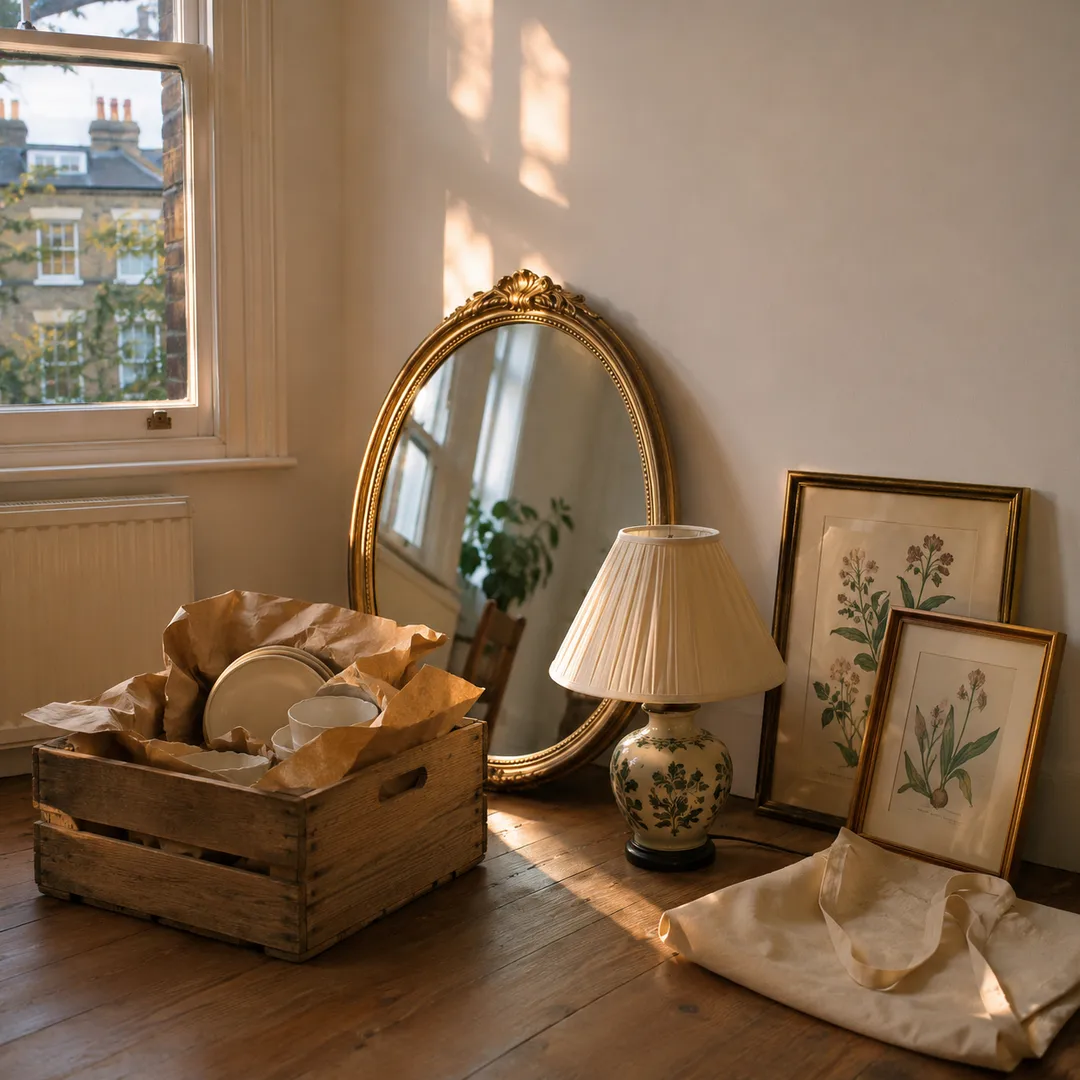
A rented flat usually comes with harsh ceiling lights, and a couple of warm lamps change the mood more than any other purchase. Look for heavy ceramic or brass bases with sound fittings, and plan to buy a new shade and have an electrician check the wiring before using anything old. Many people keep the base and replace everything else, which is safer and lets them choose a shade that suits the room.
Mirrors and frames are the other quick wins. A large secondhand mirror leaning against a wall throws light into a dark hallway, and empty frames from charity shops become a gallery wall once filled with postcards, old maps or your own photographs. Small scuffs on gilt frames add charm. Just check that the glass is intact and the hanging wire or fixings are sound.
Haggle Kindly at the Stalls
On the market, polite bargaining is part of the culture, especially for a bundle of items from the same table. Gather what you want, ask the stallholder what they could do for the lot, and accept their answer graciously. A smile and a fair offer go further than a hard push. Charity shops are different: prices there support good causes, so pay what is marked and enjoy the find.
Bring cash for the smaller stalls and a card for the shops. Keep a few sheets of plain wrapping paper and some soft cloths in your bag, since not every stall will wrap china for you. Wrapped plates stacked upright travel better than flat piles, and a folded tea towel between each bowl prevents the clinking that ends with a chip.
Rest Stops Along the Way
A homeware crawl is heavy work, and the side streets off Portobello Road offer welcome pauses. Step away from the crowds onto the pastel-painted terraces, find a bakery or café for something warm, and sit for a while with your bag at your feet. Many visitors also wander up to the garden squares between the streets or toward Kensington Gardens for a breath of green before the last stretch.
Use the break to review what you have bought. Lay out your finds, check them against your measurements and your room photos, and decide whether you still need a lamp or a mirror. If the bag is already full, stop. Overloaded crawls end with sore shoulders and broken china, and the market will still be there for another Saturday visit.
Getting Everything Home in One Piece
Plan the route home before you buy anything fragile. Notting Hill Gate and Ladbroke Grove stations sit at either end of the market, so choose your starting point based on which line takes you home, and finish at the other. A wheeled shopping trolley is a smart idea for a big trip, rolling far more easily over the crowded pavement than a stack of tote bags.
Once home, wash every piece in warm soapy water before use, and let old plates and glasses dry fully before stacking them in cupboards. Wipe frames and lamp bases with a damp cloth, and treat any brass to a gentle polish. By evening the flat will look lived in, and every object on the shelf will come with a small memory of the day you found it.
Practical Notes for Your Crawl
Market days bring the widest range of stalls but also the biggest crowds, so arrive early if you want room to browse. Weekdays are quieter for the charity shops, when shelves are often freshly restocked. Wear comfortable shoes, keep your bag zipped in the crowds, and leave time to walk the whole length of the road rather than rushing.
Keep a short list in your pocket with your measurements, wall colours and the few things you need most. Use the Karpo APP to plan your route between Portobello Road and the charity shops nearby, save the stalls that suited your style, and line up a second crawl when it is time to add a rug, a chair or a set of shelves.
Ask Karpo for more information.
Keep reading
- Brixton Vintage Thrift Shop Finder: South London Retro Gems
 Notting Hill Vintage Thrift Shop Finder: Preloved Rails
 Soho Vintage Thrift Shop Finder: West End Designer Archives