 Brixton Vintage Thrift Shop Finder: South London Retro Gems
Hidden Gems & Odd Finds
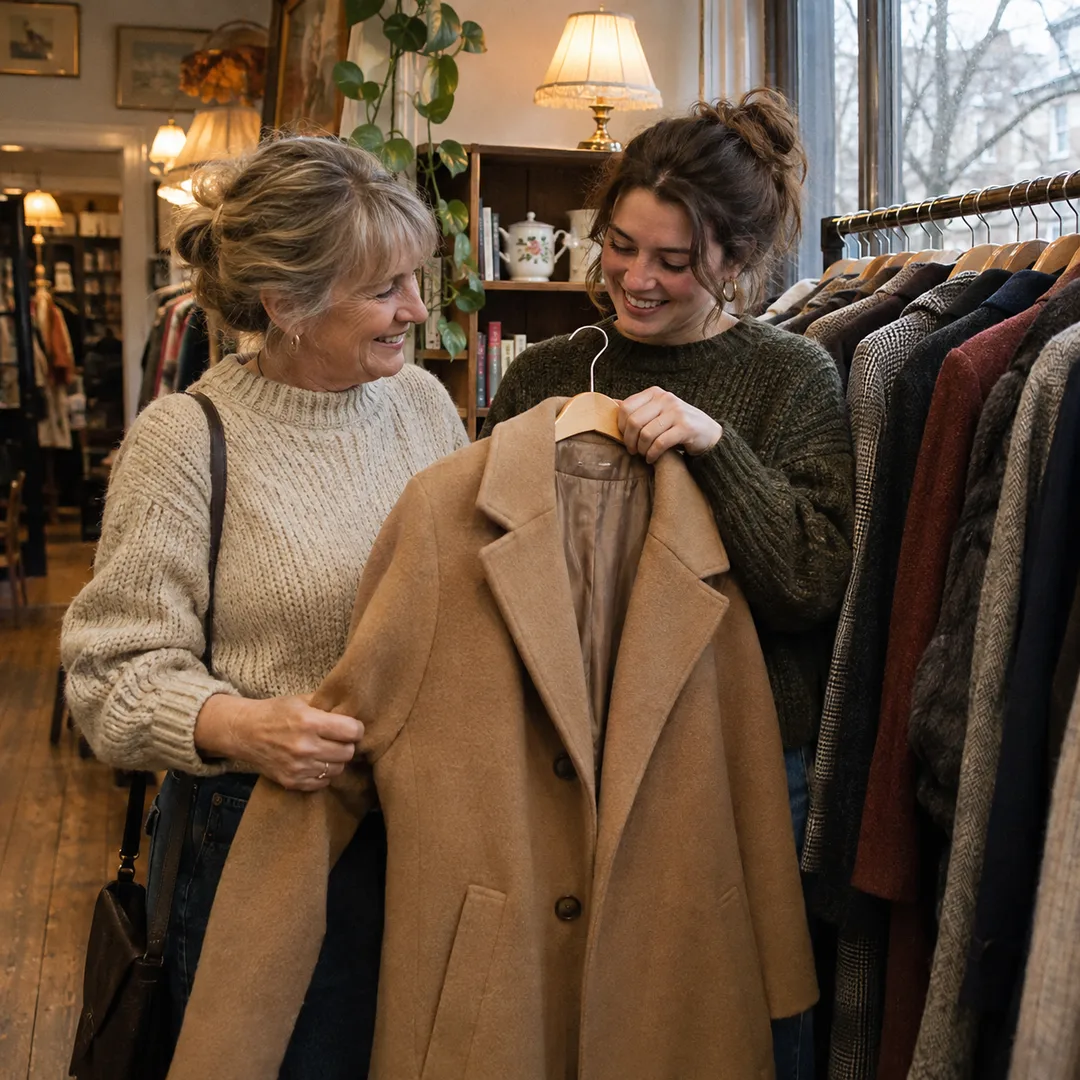
Hampstead Thrift Shop Crawl Planner for Classic Winter Wool
Plan a Hampstead thrift crawl for classic winter wool: read labels and seams in village charity shops, share a fitting room, then walk it off on the Heath.
Hampstead has a reputation for big houses and long walks, and that reputation quietly fills its charity shops with very good winter clothes. People who live here tend to buy well-made coats, cashmere and wool tailoring, then pass them on when they move, downsize or simply change their minds. A thrift shop crawl through the village in November is a chance to find a coat that will last another twenty winters. This plan is written for a mother and an adult daughter shopping together, but it works for any pair who enjoy a slow day of rails, opinions and fresh air.
Why Hampstead Is Good for Classic Wool
The village streets are short and close together, so several charity shops sit within a few minutes of each other on the hill. Stock tends to lean towards quality basics rather than fashion experiments. You are more likely to find a navy wool overcoat, a lambswool cardigan or a pair of leather gloves than a neon festival jacket. That makes the area ideal for someone building a calm, lasting winter wardrobe.
The pace helps too. Hampstead is not a place where people rush, and the shops reflect that. Volunteers often have time to chat, rails are usually tidy and there is room to try things on without elbows. When two people are shopping together and trading opinions, that unhurried feeling keeps the day pleasant rather than competitive.
Agree on the Mission Before You Go
Decide at breakfast what each of you is looking for. One of you might want a long coat that covers the knees, the other a short wool jacket for cycling. Write two or three words for each target, such as warm, plain and dark, and agree that anything outside the mission needs a very good reason to come home. A clear plan stops a lovely day turning into a pile of impulse jumpers.
Wear a thin long-sleeved top and comfortable trousers so you can slip coats on and off quickly in the aisle. Bring a fabric tape measure and a note of the sleeve length and shoulder width of a coat that already fits you well. Measurements are more honest than size labels, especially with older pieces that were cut long before modern sizing settled.
How to Read a Label and a Seam
Start with the composition label inside the coat. Look for a high share of wool, cashmere or camel hair, and be a little wary of blends where polyester does most of the work. Then feel the cloth. Good wool is dense and springs back when you squeeze it, while cheaper cloth feels flat and thin. Hold a sleeve to the light to see how tightly it is woven.
Turn the coat inside out. A full lining sewn in neatly at the hem, generous seam allowances and buttons stitched with a shank are all signs of care. Check the armpits, cuffs and collar for wear, and look closely for tiny moth holes on the shoulders and back. A single small hole can be darned, but a scattering of them usually means the coat has been stored badly.

Sharing a Fitting Room Without Arguing
Shopping as a pair works best with a simple rule. Each person gets one honest veto and one enthusiastic push per shop. That means the daughter can talk her mother out of a coat that drowns her, and the mother can nudge her daughter into a colour she would never pick alone. The rule keeps things playful and stops anyone feeling outvoted.
Take photos of each other from the front, side and back near the window, where the light is truer than under shop bulbs. Lift your arms, sit down and pretend to carry a heavy bag. A coat that looks perfect while standing still can pull across the back the moment you reach for a train handrail, and it is better to learn that before you pay.
Knitwear, Scarves and the Small Wins
Coats take patience, so give yourselves a few quick victories along the way. Knitwear shelves in this part of London can hold cashmere jumpers, Shetland cardigans and Aran knits that feel far better than anything new at the same effort. Squeeze the yarn, look for bobbling under the arms and check the ribbing at the cuffs still springs back.
Scarves, gloves and hats are often in a basket near the till and are easy to overlook. A long wool scarf in a good colour can lift an older coat instantly, and leather gloves soften with age. These smaller pieces are also good gifts for the person who stayed at home, which tends to make the next shopping day easier to negotiate.
A Walk Up Parliament Hill
When the bags start to feel heavy, leave the village and walk onto Hampstead Heath. The paths through the woods and open meadows are the best test a winter coat will ever get. Wear the new find straight away and see how it handles the wind at the top of Parliament Hill, where London spreads out below in a grey haze on a November afternoon.
This is also a natural place to talk the day through. Sit on a bench, share a flask or a hot drink from a cafe near the Heath and decide whether anything should be returned to the rails on the way back. Some charity shops are happy for you to bring an unworn item back the same day, though it depends on the shop, so ask at the till.
Caring for an Old Coat at Home
Most secondhand wool coats only need a gentle refresh. Hang the coat on a broad wooden hanger in a well-aired room for a day, then go over it with a clothes brush in downward strokes. A steamer or the steam from a hot shower will relax creases and lift the smell of a previous wardrobe. Avoid the washing machine unless the label clearly allows it.
Small repairs make an older coat feel new. Replace tired plastic buttons with horn or corozo ones from a haberdasher, re-stitch a loose lining hem and darn any tiny moth holes with matching yarn. If the sleeves need shortening, a local alterations tailor can usually do it neatly. Store the coat with cedar blocks over summer so it is ready for the next winter.
Using Karpo APP to Plan the Day
Tell Karpo APP who is coming, what each of you is hunting for and how far you are happy to walk, and ask it to sketch a village route that strings the charity shops together before a loop on the Heath. You can ask it for an easier option if one of you has tired knees, or a lunch idea that suits both of you.
Karpo APP will not hold coats or call shops for you, so keep those conversations at the till in person. What it does well is give the day a shape, with a gentle start, a sensible break and a walk that ends where you want to be. That leaves your attention for the best part, which is finding a coat worth keeping for decades.
Ask Karpo for more information.
Keep reading
- Brixton Vintage Thrift Shop Finder: South London Retro Gems
 Notting Hill Vintage Thrift Shop Finder: Preloved Rails
 Soho Vintage Thrift Shop Finder: West End Designer Archives