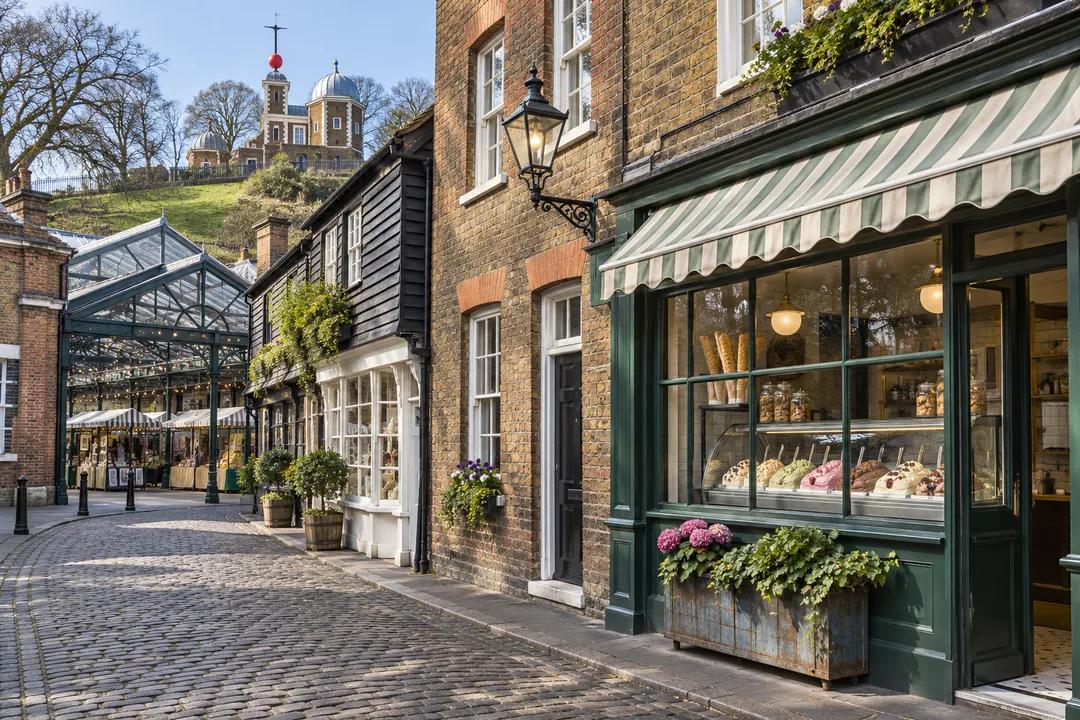
 Greenwich Gelato Shop Crawl: Market Cobbles to Park Hilltop
Coffee & Dessert

Tea Room Near Me in Kensington: The Orangery Palace Pavilion
The Orangery at Kensington Palace serves a £60 traditional afternoon tea inside Queen Anne's restored 1704 garden conservatory surrounded by royal parkland.
The Orangery at Kensington Palace stands just north of the state apartments off Bayswater Road in Kensington Gardens, serving its Traditional Afternoon Tea for £60 a head beneath towering arched sash windows. Commissioned in 1704 for Queen Anne, this brick and Portland stone pavilion reopened following an extensive multi-year conservation project, restoring one of London's finest neoclassical garden interiors to active daily hospitality. If you searched for a tea room near me while walking between Kensington High Street and Notting Hill Gate, this historic conservatory offers an unhurried royal garden setting unmatched by ordinary basement cafes or crowded west end department store dining halls.
Finding the Garden Pavilion
Reaching The Orangery requires a pleasant stroll through Kensington Gardens, as no private vehicle access exists within the royal park. The most direct approach is from Queensway Underground station on the Central line or Bayswater station on the District and Circle lines, entering through the Black Lion Gate and walking south along the Broad Walk for approximately seven minutes. Visitors arriving via High Street Kensington station can walk north up Kensington Church Street or cross through the formal palace gates along Palace Green. The official postal code W8 4PX brings pedestrians to the palace perimeter, where signposted gravel footpaths lead directly to the pavilion's grand stone terrace overlooking the manicured south lawn and mature parkland trees.
A Neoclassical Setting from 1704
Queen Anne originally conceived The Orangery not merely as an overwintering greenhouse for rare potted citrus trees, but as a sophisticated court reception room set away from the ceremonial pressures of the main palace state apartments. Attributed to master mason Nicholas Hawksmoor with intricate interior wood carvings crafted by master artisan Grinling Gibbons, the hall features soaring vaulted ceilings, delicate Corinthian pilasters, and monumental arched windows that flood the wide parquet floor with natural daylight. Unlike subterranean hotel lounges or modern commercial glasshouses, guests dine surrounded by three centuries of architectural craftsmanship, with views framing the formal parterres, ancient sweet chestnut trees, and the red brick palace facades outside.
The Afternoon Tea Menu and Tiered Service
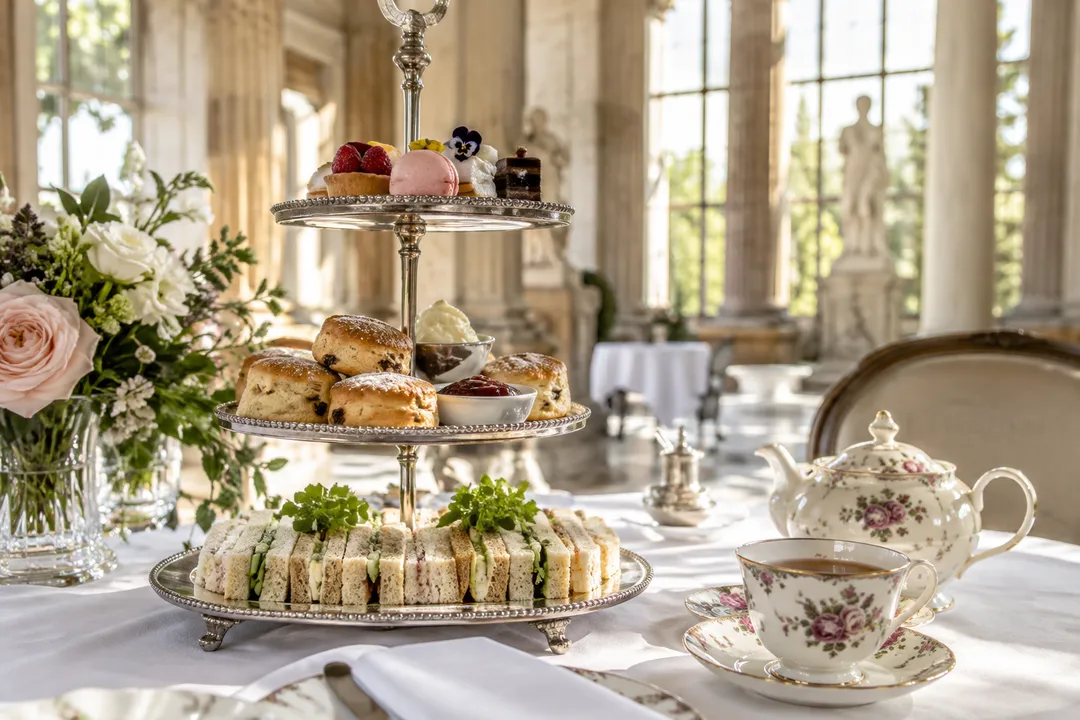
Service follows traditional English ceremonial order, beginning with loose-leaf teas sourced from historic estates and brewed in polished silver teapots. The food arrives on a three-tiered polished stand, anchored on the bottom tier by classic crustless finger sandwiches: Severn & Wye oak-smoked salmon with lemon-scented dill cream cheese on malted granary bread, coronation chicken prepared with toasted flaked almonds on brioche, and Burford Brown free-range egg mayonnaise seasoned with micro-cress. The £60 Traditional Afternoon Tea includes refills of hot water and fresh tea leaves, while the £75 Royal Afternoon Tea upgrades the service with a chilled flute of Gusbourne English sparkling wine. A single glass of Chapel Down Brut is also available a la carte for £14.50.
Warm Scones and Delicate Patisserie
The middle tier holds warm plain and golden raisin scones wrapped in a starched linen napkin to retain their oven heat throughout the meal. Each guest receives individual ceramic ramekins filled with thick Somerset clotted cream and British strawberry preserve, allowing generous dollops without sharing. On the upper level, the pastry chefs present miniature works of confectionery art that change with the seasons: an orange blossom and white chocolate choux bun paying tribute to the building's citrus heritage, a classic British Victoria sponge cake layered with raspberry compote, and a dark chocolate tartlet garnished with edible gold leaf and candied orange peel zest.
Reservations, Dress Code, and Timing
Advance reservations through Historic Royal Palaces are essential, especially for weekend seatings between 13:00 and 15:30 when tables fill weeks in advance. The pavilion maintains a smart-casual dress code, requesting that guests avoid athletic sportswear, beach sandals, and torn denim. Walk-in availability is rare during peak autumn afternoons, though solo diners or couples arriving right at 10:30 for early morning service or after 16:30 for late afternoon tea occasionally secure unreserved patio tables on dry, mild days. Table allocations are reserved for ninety minutes, providing ample leisure to enjoy multiple infusions without feeling rushed by the floor team.
Strolling the Royal Gardens Afterwards
Stepping outside The Orangery puts you directly at the edge of the Sunken Garden, an ornamental terraced garden planted in 1908 in the style of an eighteenth-century Dutch garden, which now features the permanent bronze memorial statue of Diana, Princess of Wales. A five-minute walk eastward leads past the historic Round Pond, where model boat enthusiasts gather beside resident swans, toward the Serpentine Gallery in neighboring Hyde Park. Strolling west brings visitors to the quiet residential streets of Kensington, lined with independent bookshops, historic mews cottages, and antique dealers along Kensington Church Street.
Curated Loose-Leaf Teas and Brewing Methods
The tea menu emphasizes single-origin black, green, and herbal infusions selected to complement each savory and sweet course. Staff recommend beginning with the bespoke Kensington Palace Blend, a full-bodied black tea marrying brisk Assam with fragrant Ceylon leaves, which holds up admirably to milk alongside the savory sandwiches. For the scone course, a light first-flush Darjeeling brings muscatel grape notes that cut through the richness of the clotted cream, while a caffeine-free chamomile blossom or peppermint leaf infusion provides a soothing finish alongside the citrus-accented patisserie. Every pot arrives with a small timer and a fine mesh strainer so diners can pour at their preferred infusion strength.
British Farmstead Sourcing and Seasonal Ingredients
The kitchen partners with regional British farmsteads and artisan food producers to maintain high provenance standards across every tier of the tea stand. Smoked salmon is cured over oak shavings by traditional smokehouses along the River Severn, while the butter and double cream are churned from grass-fed Somerset dairy herds. All bread is baked fresh daily by London craft bakeries using stoneground flour, providing a firm yet tender crumb for the finger sandwiches that never turns soggy under moist fillings like cucumber or herb mayonnaise. In the autumn months, the preserves highlight tart Bramley apples and damson plums harvested across Kentish orchards.
Practical Notes for Your Visit
The Orangery welcomes guests daily from 10:00 to 18:00, with last afternoon tea orders taken at 17:00. Families are welcomed with a dedicated Children's Afternoon Tea priced at £30 for guests aged twelve and under, featuring smaller sandwiches and sweet treats. Full step-free wheelchair accessibility is provided via a gently sloped stone ramp at the eastern colonnade, with accessible restrooms situated within the main conservatory pavilion.
Ask Karpo for more information.
Keep reading
- Greenwich Gelato Shop Crawl: Market Cobbles to Park Hilltop
 Hackney Gelato Shop Crawl: Small-Batch Arch and Park Route
 Islington Gelato Shop Crawl: Sunday Canal and Passage Walk