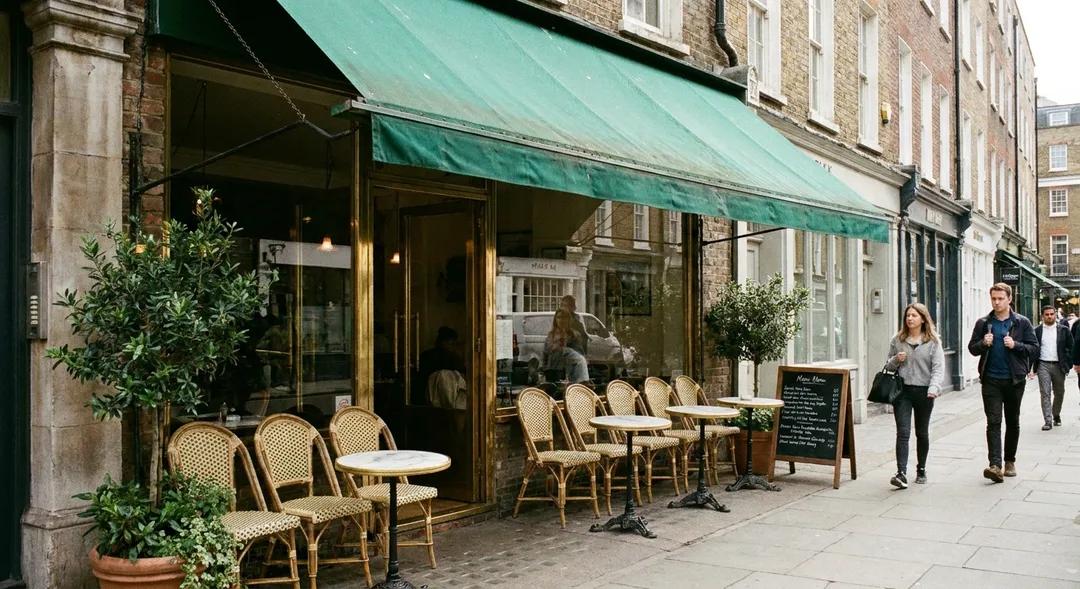
 Marylebone Coffee Shop Finder: Village Cafes and Espresso
Coffee & Dessert
Marylebone Tea Room Afternoon Picker: Your First Proper Tea
Taking a first afternoon tea in Marylebone? Pick a calm room, learn the scone and milk rules, pace the tiers and walk it off in Regent's Park after.
A Marylebone tea room afternoon picker is really a guide for someone who has never sat down to a proper afternoon tea and would like the first one to go well. Maybe you have flown in for a week, maybe a friend from home is visiting, or maybe you have lived in London for years and simply never booked one. Marylebone suits a beginner. The streets around the High Street feel like a village set inside the city, with independent bookshops, cheese shops and quiet mews, and its tea rooms tend to run at a gentler pace than the grand hotel salons further south. Below you will find how to choose a room that will not intimidate you, the small rituals that confuse newcomers, how to pace the three tiers, and how to finish with a long walk among the trees of Regent's Park.
Why Marylebone Works for a First Tea
Grand hotel teas can feel like theatre, with pianists, dress codes and waiters who glide. That is wonderful on a second or third visit, but on a first try it can make you worry about every move. Marylebone has a different temperament. Its rooms often sit above a bakery, behind a shopfront or inside a townhouse, and the people at the next table are just as likely to be locals reading the paper.
That quieter mood lets you ask questions. Staff in smaller rooms will usually explain what is on each tier, how strong a blend runs and whether you can swap a pot halfway. If you came to learn rather than to perform, a neighbourhood room is the friendlier classroom, and the High Street outside gives you somewhere pleasant to wander before your booking.
How to Pick the Right Room for You
Before you book, decide what kind of first tea you want. If you hope to try the full ritual with three tiers, a pot each and a glass of something sparkling, look for a room that serves a set afternoon tea at a fixed sitting. If you only want a pot and a scone, a café that offers a simple cream tea will feel less like a commitment.
Read recent photos rather than polished marketing. You want to see the actual table: how much space there is, whether the chairs look comfortable for a long sit, and whether the light comes from windows. Use the Karpo APP to compare a few nearby rooms side by side and save the two that feel right, so a full booking does not end the plan.
The Scone Question: Cream or Jam First
Every newcomer hears about the great argument. In Devon tradition the clotted cream goes on first and the jam sits on top; in Cornwall it is jam first, then a crown of cream. Nobody in a Marylebone tea room will scold you for either, and you will often see both at the same table. Choose one, and enjoy telling the story later.
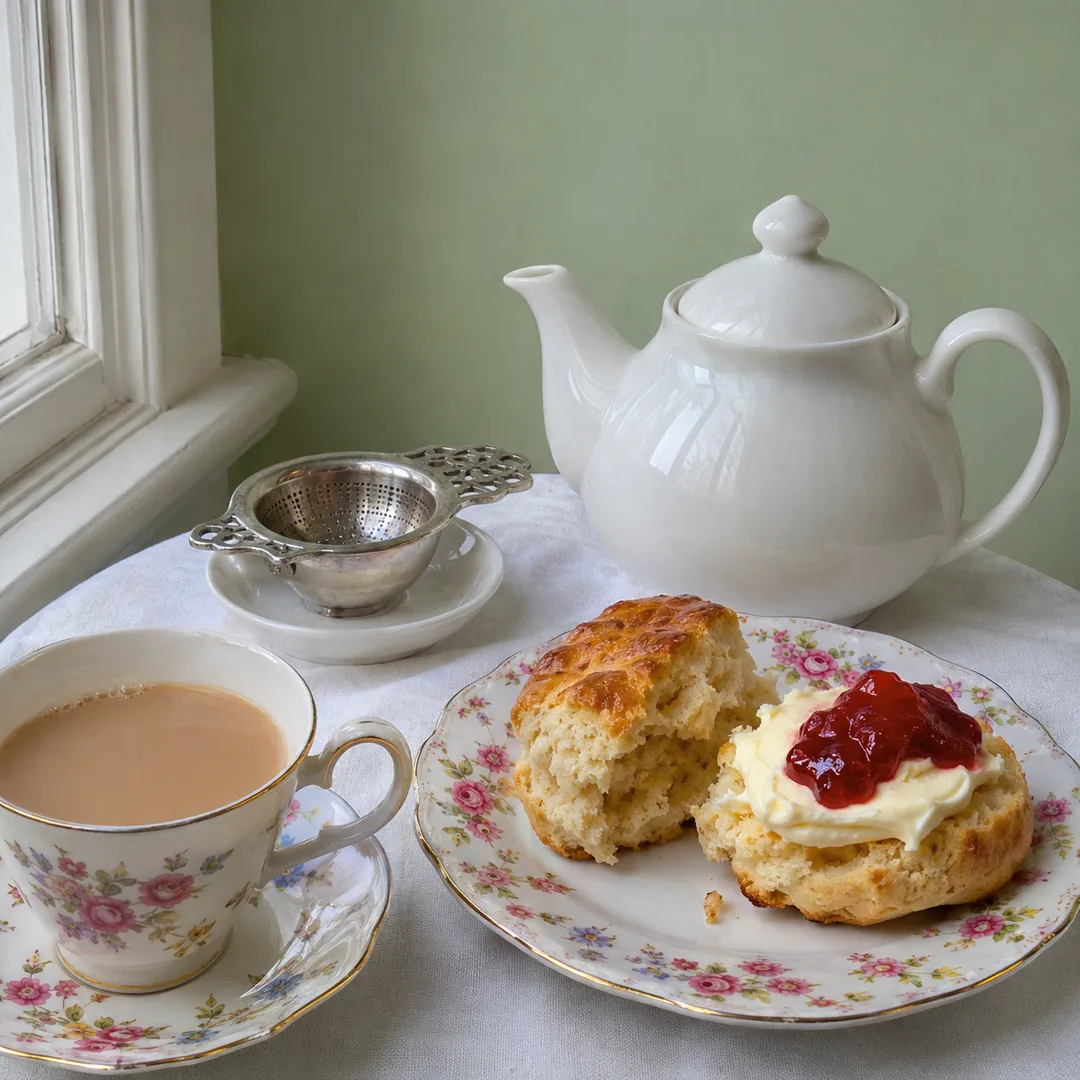
The part that does matter is how you open the scone. Break it in half with your fingers rather than slicing it like a bagel, then spread each half separately as you eat it. Never sandwich the two halves back together. Use the spoon in the dish to move cream and jam to your plate first, and keep the shared bowls clean for everyone else.
Milk, Sugar and the Strainer
Loose leaf tea arrives in a pot, and a silver strainer sits on a small dish beside it. Hold the strainer over your cup, pour, then set it back on its dish so it does not drip on the cloth. Let the pot rest a few minutes first if the leaves were just added. Your server may tell you how long a particular blend likes.
Milk goes in after the tea in most rooms today, which lets you judge the colour. Add sugar before milk if you take it, and stir gently back and forth rather than clinking around the cup. Leave the spoon on the saucer behind the cup. Delicate teas such as Darjeeling or a green blend are usually drunk without milk, so taste them plain first.
Pacing the Three Tiers
Tradition runs from the bottom up. Start with the finger sandwiches on the lowest plate, usually cucumber, egg and cress, smoked salmon and something with ham or chicken. Move to the scones in the middle while they are still warm, then finish with the small cakes and pastries on top. Eating in that order keeps the savoury and sweet flavours from colliding.
Go slowly. A first-timer tends to finish the sandwiches in ten minutes and feel full by the cakes. Pause between tiers, pour a fresh cup and talk. Many rooms will happily refill sandwiches or bring more hot water if you ask, so there is no rush to clear the stand. Plan on a sitting of around two hours.
What to Wear and How to Book
Neighbourhood rooms rarely ask for anything formal. Smart casual is plenty, and you will see people in jumpers, coats and comfortable shoes after a morning of shopping. If you have chosen a hotel lounge instead, check its dress guidance when you book. Sportswear and flip-flops are the usual things to avoid in grander settings.
Weekend afternoons fill first, so book a few days ahead for a Saturday. A weekday sitting in the middle of the afternoon is calmer and gives you more time to ask staff about the tea list. Mention any allergies or dietary needs when you book, because sandwiches and cakes are often prepared in advance and swaps need notice.
Bringing a Visitor or an Older Relative
If you are taking a parent, a grandparent or a friend from abroad, think about the practical side. Ask whether the room is on the ground floor or up a narrow staircase, and pick a table near a window rather than by the door. Older guests often enjoy a pot of something familiar, such as an English breakfast blend, before trying anything floral.
For visitors from countries without a tea tradition, explain the ritual as part of the treat. Show them how to break the scone, let them choose cream or jam first and tell them which county they just sided with. These small moments are what they will remember, more than the décor or the cake list.
Before Tea: An Hour on the High Street
Arrive early and give yourself an hour to wander. Marylebone High Street and the lanes around it are lined with independent shops, a well-loved travel bookshop with long oak galleries, cheese counters, florists and homeware stores. Browsing a little first builds an appetite and gives the afternoon a shape beyond the table.
Do not shop heavily before you sit. Big bags crowd small tea rooms, and a cheese purchase will not enjoy two hours under the table. Save the serious buying for afterwards, when you know how much energy you have left. A small book to read with your second pot is the ideal purchase beforehand.
After Tea: Regent's Park on Foot
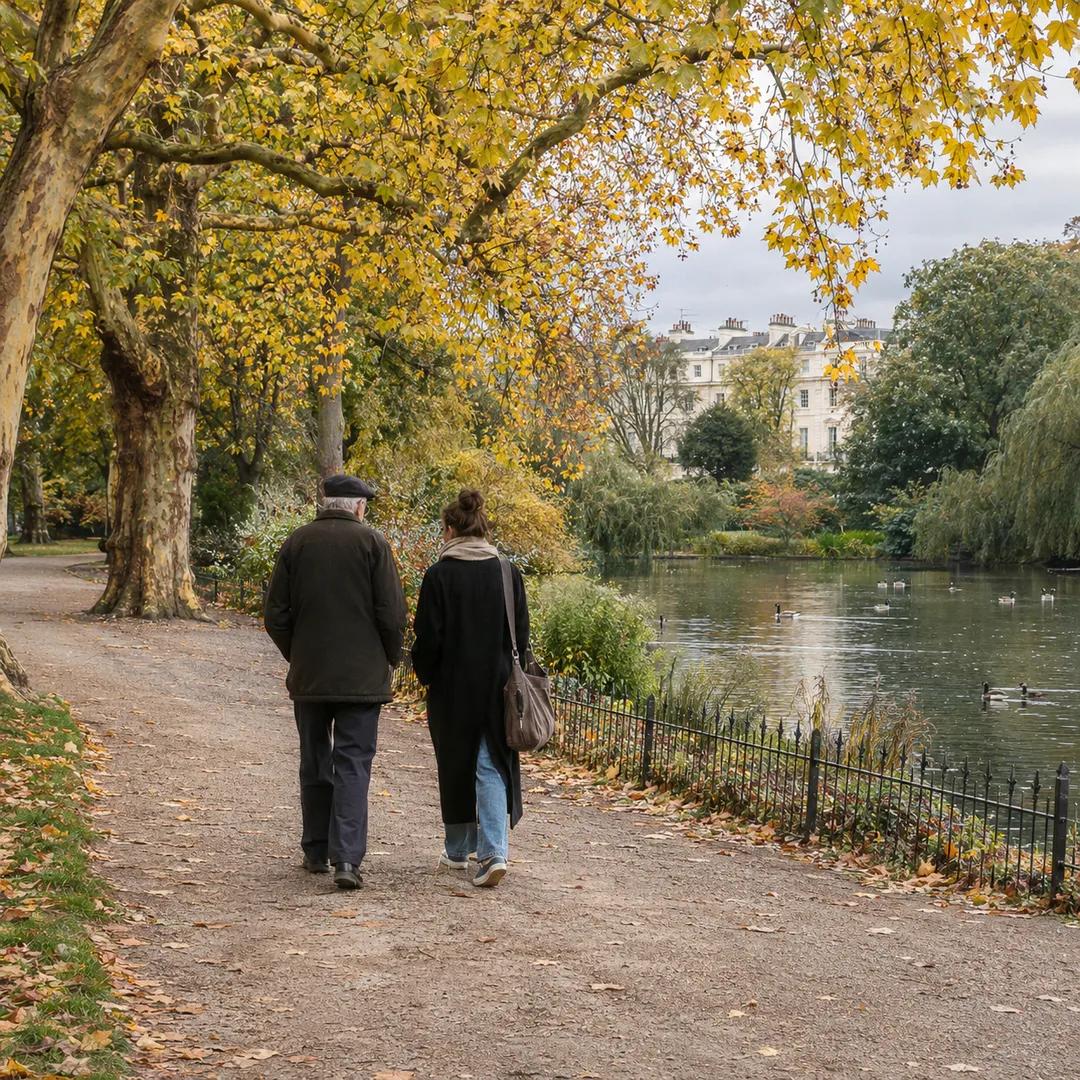
When the last cake is gone, walk north towards Regent's Park. The streets rise gently past Georgian terraces, and within ten or fifteen minutes you reach the Inner Circle and Queen Mary's Gardens. In summer the rose beds are in full colour, and in autumn the plane trees drop yellow leaves across the gravel paths.
Follow the boating lake if you want an easy loop, or keep going to Primrose Hill for a view over the city if your legs are willing. A slow park walk after two hours of sitting is the perfect end to a first tea, and it gives everyone a chance to talk about which tier was their favourite.
Rainy Day Version
London weather may cancel the park, but it rarely ruins tea. On a wet afternoon, book a slightly later sitting and spend the morning at one of the small museums within walking distance, then let the rain become the soundtrack to your second pot. Window tables are especially lovely when the street outside turns grey and shiny.
Bring a compact umbrella and ask staff where to leave wet coats. Most rooms have hooks or a stand by the door, and a dripping coat over a chair back makes a cosy room feel cramped. If the rain clears, the park will still be there, smelling of wet grass and fallen leaves.
Using the Karpo APP to Plan the Afternoon
Open the Karpo APP and search for tea rooms around Marylebone to see which ones match the kind of first tea you want, whether that is a full three-tier set or a simple pot and scone. Save a first choice and a backup, add a bookshop or a park stop, and share the plan with whoever is joining you.
If you enjoy the ritual, keep a short note of the blend you liked and how you took your scone. Next time, try a different neighbourhood or a grander lounge with that knowledge in hand. A first proper tea is a beginning, and Marylebone is a kind place to start.
Ask Karpo for more information.
Keep reading
- Marylebone Coffee Shop Finder: Village Cafes and Espresso
 Fitzrovia Coffee Shop Finder: Quiet Central London Espresso
 Covent Garden Coffee Shop Finder: Hidden Courtyard Cafes