 Marylebone Coffee Shop Finder: Village Cafes and Espresso
Coffee & Dessert

Covent Garden Tea Room Afternoon Picker for Tea Beginners
New to loose-leaf tea? Spend a Covent Garden afternoon tasting black, green and oolong, learning to brew, then settling into a calm tea room with a proper pot.
Plenty of people in London drink four cups of tea a day and have never seen what the leaves look like. If that sounds familiar, Covent Garden is a gentle place to start. Between the market halls, the lanes of Seven Dials and the little courtyards behind them, the area has long been a good hunting ground for tea shops with tasting counters and calm rooms to sit in. This tea room afternoon picker walks a beginner through one unhurried afternoon of smelling, sipping and choosing.
Why Covent Garden Works for a First Tea Tasting
Covent Garden was once London's great fruit, vegetable and flower market, and something of that trading spirit survives in the way its shops invite you to touch, smell and try before you choose. Tea fits naturally into that tradition. Walk around the piazza and the streets leading off it and you will find shops lined with tins, counters where staff brew small cups to taste, and quieter tea rooms upstairs or round the corner where you can sit with a full pot.
For a beginner, that combination matters. Reading the names on a tea menu means little until you have tasted the difference between a brisk black tea and a soft green one. Covent Garden lets you do the learning and the relaxing in the same small area, all within a few minutes' walk of each other.
It also helps that the neighbourhood is easy to reach and pleasant to wander. Even if the tasting part takes only half an hour, the lanes around Seven Dials and Neal's Yard give you plenty to look at before and after.
The Three Teas Every Beginner Should Taste
Keep your first tasting simple. Ask to try three styles side by side: a black tea, a green tea and an oolong. These come from the same plant, but they are processed differently, and tasting them together is the fastest way to understand what tea can be. The black will be dark, bold and familiar. The green will be lighter, grassy or nutty, sometimes a little sweet. The oolong sits between them, often with a toasty or floral edge that surprises people.
Before each sip, look at the dry leaves and smell them. Black tea leaves are usually dark and twisted, green ones bright and flat or rolled, oolong leaves often curled into little balls that open up in the water. Then smell the brewed cup. Much of what you taste comes through your nose, and beginners are often amazed at how different the three smell once you slow down.
Do not worry about having the right words. It is enough to say which one you liked and why, even if the reason is just that it tasted like toast or reminded you of a garden after rain. Good tea staff love that kind of honest reaction and will steer you from there.
Brewing Lessons You Can Take Home
The biggest mistake new loose-leaf drinkers make is treating every tea like a builder's brew. Boiling water and a long steep work for strong black tea, but they turn green tea bitter. When you are at the tasting counter, ask how hot the water should be and how long each tea should steep. Most staff will happily explain, and many will show you by brewing a second cup the right way.
A rough guide is enough to start: black teas with water just off the boil for three to four minutes, oolongs a little cooler and shorter, greens noticeably cooler and shorter still. Use more leaf than you think and taste as you go. You will learn faster from a few small mistakes than from any chart.
If you only buy one piece of equipment, make it a simple infuser basket that sits inside your mug or pot. It gives the leaves room to open, which a cramped tea ball does not, and it makes cleaning up easy.
Settling Into a Proper Tea Room
Once you have tasted, it is time to sit down. Covent Garden has a range of places to do this, from grand hotel lounges with tiered stands to small, calm tea rooms with a long menu of loose leaves and only a few tables. For a beginner afternoon, the smaller rooms are often better, because the staff have time to talk and the menu explains each tea rather than just listing names.
Order a pot of whichever of your three tasting teas you liked best, and see how it holds up over a longer sitting. Pay attention to how the flavour changes as the pot cools and the leaves keep steeping. That is something a quick tasting cup cannot show you.
If you are hungry, a scone with jam and clotted cream is the classic match for black tea, while green tea goes better with something less rich, such as a light almond cake or a few shortbread biscuits. Use the Karpo app to look for tea rooms near the piazza that describe their teas in detail, which is usually a sign they enjoy helping newcomers.
Choosing a Tin to Take Home
Buying tea is part of the fun, but beginners often buy too much of something they have only tasted once. Start with a small tin or bag of your favourite from the afternoon, enough for a couple of weeks. If you love it, you can always come back for more, and in the meantime you will learn how it tastes at home with your own water and your own mug.
Ask the staff how to store it. Tea likes to be kept cool, dark and away from strong smells, so a cupboard far from the spice rack is better than a sunny windowsill. Airtight tins are worth the small extra effort, especially for green teas, which fade faster than black.
If you want a gift for a tea-loving friend, a sampler of three small tins, one black, one green and one oolong, makes a thoughtful present. It lets them repeat your tasting at home and pick their own favourite.
Walking the Lanes Around Your Tea Stop
Covent Garden rewards wandering between tea stops. Start in the covered market building and the piazza, where street performers draw crowds most afternoons, then head north into the lanes towards Seven Dials, where seven streets meet at a sundial pillar. The shops here are smaller and more independent, and the atmosphere calmer than in the main square.
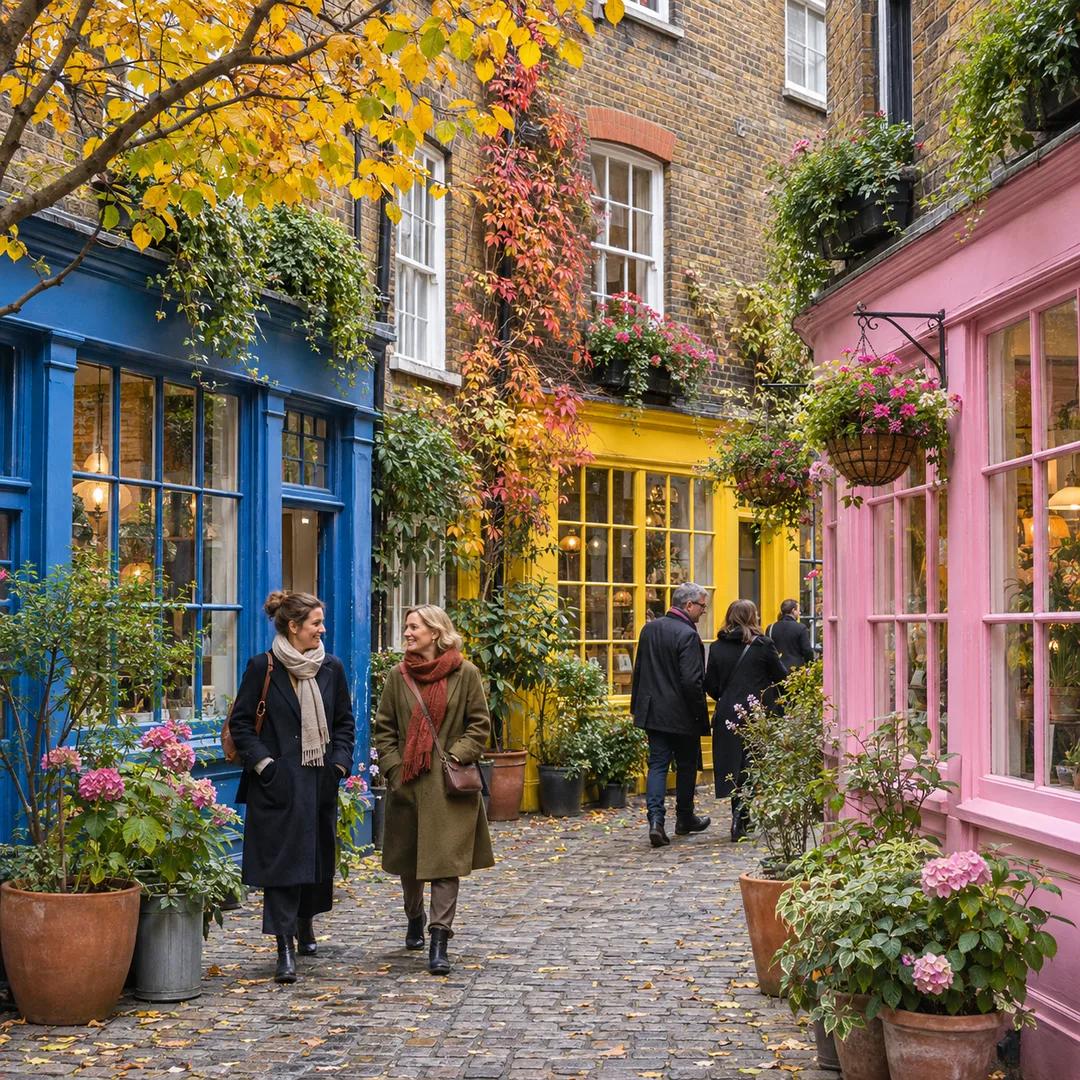
Tucked just off those streets, Neal's Yard is a tiny courtyard of brightly painted shopfronts and plants, a pleasant place to pause between tastings. Nearby side streets hold bookshops, cheese counters and small bakeries, all of which make good detours if you want to build a whole afternoon around flavours.
On a busy weekend, try to do your tasting earlier and leave the piazza for later in the day, when you are content to watch the crowds from the edge rather than push through them.
Keeping the Habit Going After Your Afternoon
The real test of a good tea afternoon is whether you keep exploring afterwards. Try brewing your new tea every morning for a week and notice how your taste for it changes. Then try something new, perhaps a different black tea from another region, or a jasmine green, and see whether you can pick out the differences you learned about at the counter.
Many people who start this way end up with a small shelf of tins and a favourite tea room they return to for a pot and a chat with the staff. That is the best possible outcome, and it begins with one slow afternoon of tasting in Covent Garden.
When you are ready for your next round, open the Karpo app, search for tea rooms with tasting counters near you, and make a plan to try three new teas side by side. It is the simplest way to keep learning, one pot at a time.
Ask Karpo for more information.
Keep reading
- Marylebone Coffee Shop Finder: Village Cafes and Espresso
 Fitzrovia Coffee Shop Finder: Quiet Central London Espresso
 Covent Garden Coffee Shop Finder: Hidden Courtyard Cafes