 Brixton Christmas Light Up Walk Planner: Rainy Arcades
Free Things to Do
Shoreditch Sunday Morning Stroll Planner: Before the Market
A free Sunday morning in Shoreditch climbs the Arnold Circus bandstand, walks the Huguenot streets of Spitalfields and reaches Brick Lane as the market stirs.
Shoreditch on a Sunday has a split personality. By midday the markets around Brick Lane and Spitalfields are a slow-moving sea of people, food smoke and buskers. Two or three hours earlier, the same streets are almost deserted. Shutters are down on the vintage shops, the murals are fresh in the morning light and the only sound is a cafe grinder or a street sweeper. This Sunday morning stroll planner for Shoreditch is built for that early window. It starts somewhere most visitors never find, passes through some of London's most beautiful old streets and arrives at the markets just as they come to life.
Why Timing Matters Here
The pull of Shoreditch is its energy, but energy is easier to enjoy when you can actually move. Early on a Sunday you can stand back and look at a mural without blocking a crowd, read the old painted signs above shopfronts and notice how the area's layers fit together. Weavers, furniture makers, immigrant families, artists and tech start-ups have all shaped these streets, and the quiet makes that history easy to read.
Give yourself about two and a half hours. The route is a gentle downhill drift from north to south, all on foot and all free. You can end with breakfast at the markets or keep going into the City, which is a short walk away and silent on a Sunday.
Start at the Arnold Circus Bandstand
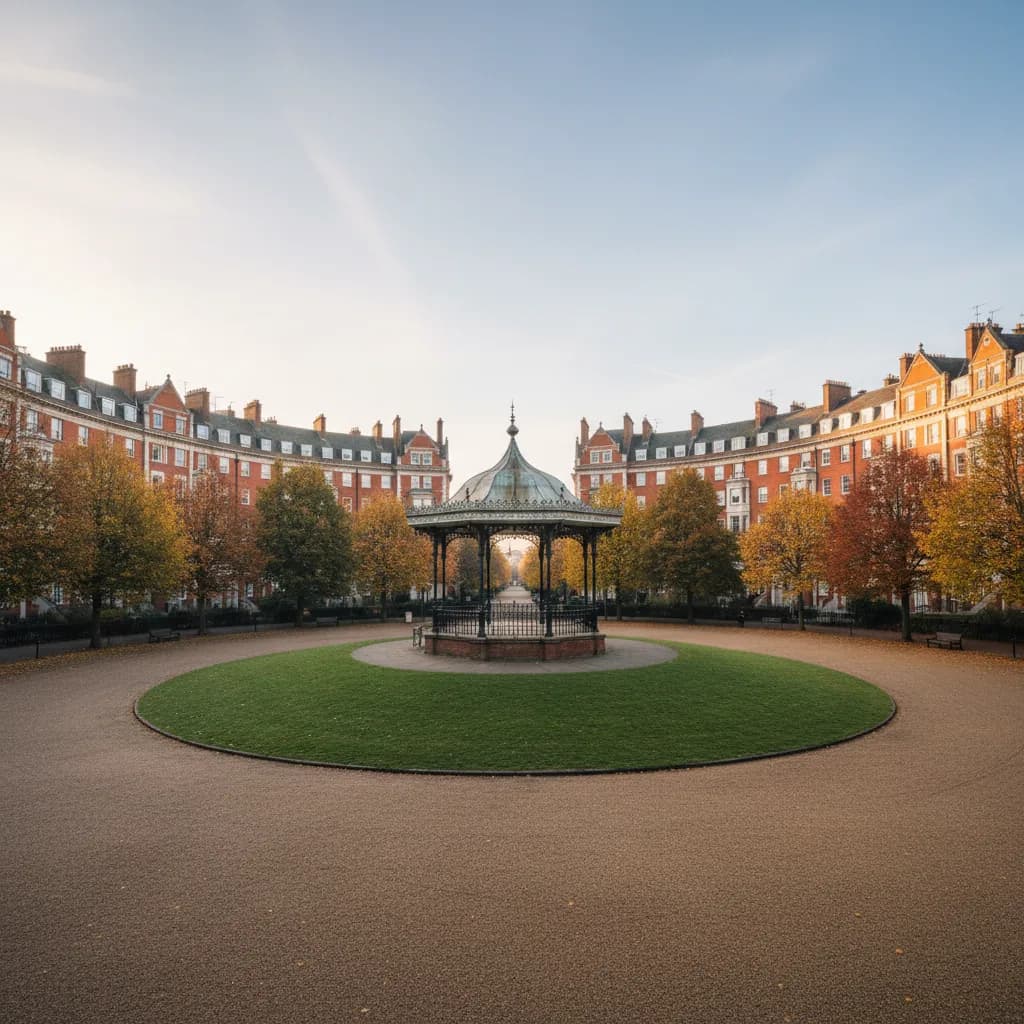
Begin at Arnold Circus, the heart of the Boundary Estate, a few minutes north of Shoreditch High Street. It is one of London's first council housing schemes, a ring of tall red-brick mansion blocks with striped bands and decorative gables, arranged around a raised circular garden. In the middle, on top of a small mound made from the rubble of the slum that once stood here, sits a Victorian bandstand. Climb the steps and you have a quiet, leafy look-out over the rooftops.
Very few tourists come up here, especially on a Sunday morning. You will see neighbours sitting on benches, someone practising tai chi or a parent with a pushchair. Walk round the circle slowly and look along the streets that radiate out like spokes. The whole estate was designed to bring light and air to families who had lived in dark, crowded courts, and the idea still feels generous.
Down Through Redchurch Street and the Murals
Leave Arnold Circus along one of the spokes heading south and you soon reach Redchurch Street, a narrow road of independent shops, small galleries and old warehouses. On a Sunday morning most fronts are still closed, which makes it the perfect time to look at the architecture and the painted walls. Shoreditch is one of the street art capitals of the world, and pieces change constantly, so every visit shows something new.
Wander the side streets around Ebor Street, Sclater Street and the railway arches toward Brick Lane. Murals cover gable ends, shutters and doorways, from huge portraits to tiny paste-ups and tiles hidden at ankle height. Look up as well as along, because some of the best work sits high on the brick. Photographers love this hour for the soft light and the lack of passers-by in every frame.
The Huguenot Streets of Spitalfields
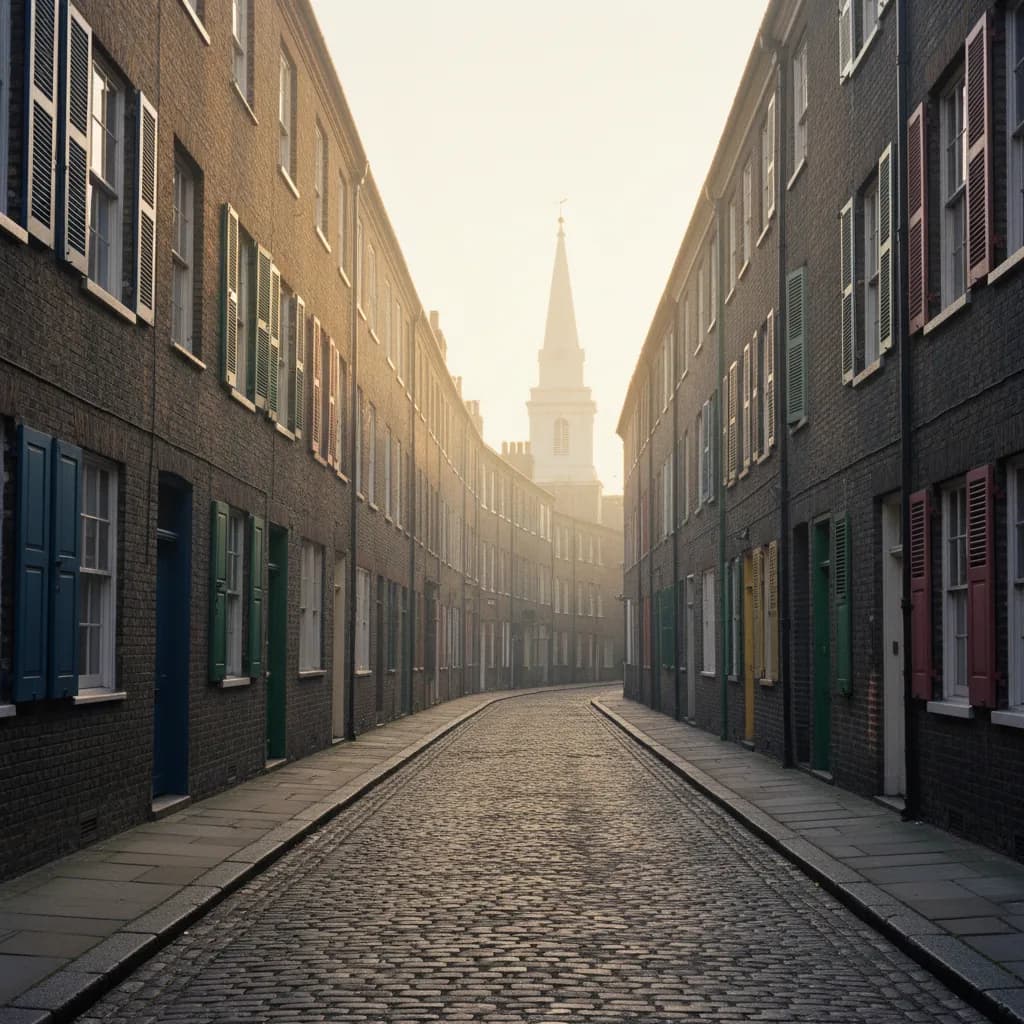
Cross south over Bethnal Green Road and walk down past the old brewery into the streets around Fournier Street. This is the oldest and most atmospheric part of the walk. Tall brick houses with wooden shutters, panelled front doors and large attic windows line the pavements. They were built for French Protestant silk weavers who arrived as refugees, and the big top-floor windows let light onto their looms.
Many of these homes have been lovingly restored, with candle-style lamps, old paintwork and shutters in deep greens, reds and greys. Walking here early on a Sunday feels like stepping back several centuries, especially with the white spire of Christ Church rising at the end of the street. The church is a towering baroque landmark and dominates every view in the area. Pause in the small garden beside it, then look back up the street at the line of weavers' houses.
Brick Lane and the Sunday Markets
From the church, walk east onto Brick Lane, a street with layers of history. The old mosque on the corner of Fournier Street began as a Huguenot chapel and later served a Jewish congregation before becoming a mosque, a single building that tells the story of the whole neighbourhood. Further north, the bagel bakeries that have fed night owls and early risers for generations are a must for a warm breakfast.
By now the Sunday markets are starting to set up. Vintage clothing, records, food stalls and makers fill the old brewery yards and side lots, and the street begins to hum. Walk through the first stalls while they are still being arranged, then cut west to the covered Old Spitalfields Market, where traders sell crafts, fashion and food under a vast Victorian roof. Arriving early gives you a chance to browse calmly before the crowds take over.
Optional Detour to Hoxton and St Leonard's
If you want a longer walk, start further north at Hoxton Square, a small Georgian square ringed by bars and galleries, and the nearby St Leonard's Church, whose bells appear in the old nursery rhyme. Its churchyard is a peaceful spot early in the day. From there, the bandstand is only a short walk away, and you can follow the rest of the route as planned.
If the Weather Turns or the Group Splits
Rain does not spoil this route. The railway arches, the covered Spitalfields hall and the old brewery yards all give shelter, so on a wet morning simply shorten the outdoor stretch and spend longer under cover. If your group wants different things, split at Christ Church. Shoppers can head straight into the markets, while anyone who prefers history can loop the quieter lanes around Elder Street and Folgate Street, where more weavers' houses survive. Agree to meet at the church steps, which are easy to find from every direction.
Practical Notes
Wear comfortable shoes, since some pavements are uneven and cobbled. Respect residents on Fournier Street and the Boundary Estate by keeping your voice low and photographing from the street. Bring a bag if you plan to browse the markets. When you are ready to sit down, ask the Karpo APP for cafes or breakfast spots near Brick Lane or Spitalfields and compare a few that fit your group and mood. Popular places fill quickly once the market crowds arrive, so for a larger table, get in touch with the cafe directly. Then let the noise of the Sunday market carry you through the rest of your morning.
Ask Karpo for more information.
Keep reading
- Brixton Christmas Light Up Walk Planner: Rainy Arcades
 Hackney Christmas Light Up Walk Planner: Canal Boats
 Islington Christmas Light Up Walk Planner: Square Dates