 Brixton Vintage Thrift Shop Finder: South London Retro Gems
Hidden Gems & Odd Finds

Walthamstow Stationery Shop Crawl Planner for Lino Prints
A Walthamstow stationery crawl for first-time lino printers: pick carving tools, ink and paper, then borrow ideas from Morris patterns in Lloyd Park.
Walthamstow is where William Morris spent his boyhood, and this stationery shop crawl planner turns that link into a hands-on afternoon for anyone curious about lino printing. You will gather a small set of carving tools, ink and paper from local art and paper shops, study real Morris patterns in the house where his family lived and head home with a design ready to cut. No studio is needed, only a kitchen table and some patience.
Why Walthamstow Suits a Printmaking Day
Morris was born in Walthamstow in 1834, and as a teenager he lived in a large Georgian house beside what is now Lloyd Park. That house is today the William Morris Gallery, which is packed with his wallpapers, textiles and printing blocks. Seeing his carved wooden blocks up close is the best possible introduction to lino, because the logic of cutting away what should stay white is exactly the same.
The neighbourhood beyond the gallery has its own creative streak. Artists and makers have filled old workshops and railway arches, the long street market runs down the High Street, and the neon collection at God's Own Junkyard glows in an industrial estate nearby. It is a place that rewards people who like making things with their hands.
Who This Crawl Is For
This plan suits a beginner who has admired lino prints at craft fairs and wondered how they are made. It also works for friends looking for a creative weekend activity that ends with something you can frame or turn into cards. Children of about ten and up can join, as long as an adult handles the sharpest tools at first.
If you already print, use the crawl as a refresh: a new colour of ink, a better roller or a larger block. Experienced printers often enjoy the gallery visit most, because the Morris blocks show tricks of registration and repeat patterns that still matter today.
A Beginner's Lino Kit
Keep the first kit modest. You need a couple of small blocks of lino, ideally the softer kind that cuts easily at room temperature, a basic set of gouges with a V-shaped and a U-shaped blade, a rubber roller called a brayer, a tube of water-based block ink and a flat surface for rolling it out. A bench hook, a simple board that stops the block sliding, keeps fingers safe.
Paper is the last piece. Thin, smooth papers pick up detail well when you rub the back with a wooden spoon, and many beginners like lightweight Japanese printmaking paper for that reason. A pad of cheaper paper for test prints saves the good sheets. Ask at the counter what local printmakers tend to buy.
Shopping Tips at the Counter
Hold the gouges before choosing them. A handle that fits your palm makes long carving sessions far more comfortable, and a cheap set with good grips is often better than a fancy tool you cannot hold for long. Staff in small art shops are usually happy to explain the difference between blade shapes.
Pick one ink colour for your first print, preferably a dark one such as black, deep blue or forest green. Dark colours forgive uneven rolling and look strong on white paper. Water-based inks clean up with soap, which matters if you are printing on a kitchen table.
Sketching Patterns at the Gallery
Take a pencil and a small sketchbook into the William Morris Gallery. Choose one pattern you like, such as a willow branch, a bird or a twist of honeysuckle, and draw just a small piece of it. Notice how Morris simplified leaves into bold shapes with clear edges, because that clarity is what makes a design work in lino.
Do not try to copy a whole wallpaper. A single motif the size of your palm is plenty for a first block. Draw it twice, once as lines and once with the areas that will print filled in dark, so you can see the positive and negative spaces before cutting.
A Walk Through Lloyd Park and the Village
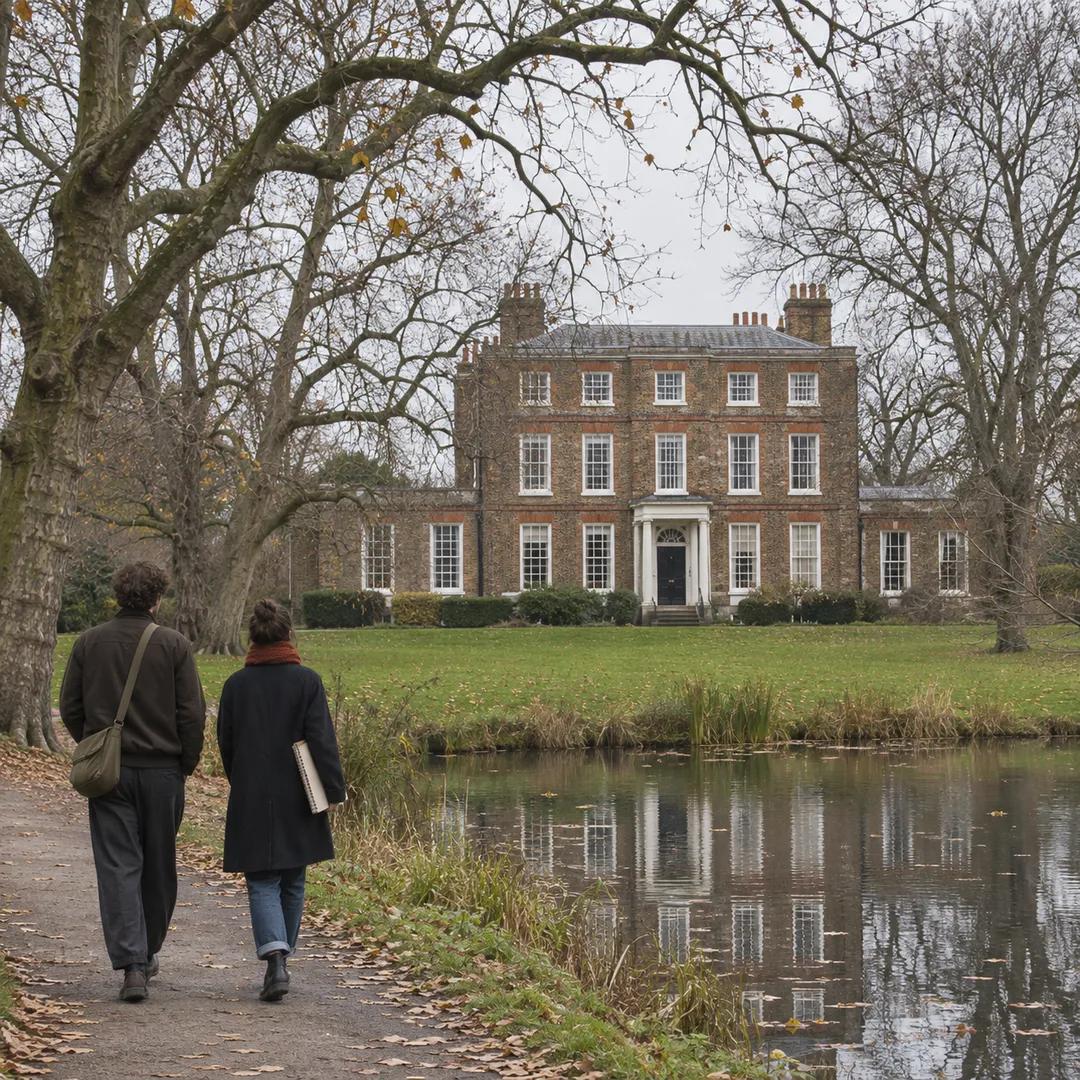
After the gallery, walk round Lloyd Park and its moat, where ducks and old trees give you plenty of natural shapes to sketch. In autumn the bare branches make excellent study for line work. Bring the sketchbook out again and try a quick drawing of one twig or seed head.
If you have energy left, wander to Walthamstow Village around Orford Road, with its old cottages, the Vestry House Museum and small cafés. The quiet lanes make a pleasant contrast to the busy market streets. On a dry day, Walthamstow Wetlands to the west offers big skies, reeds and water birds for a different kind of inspiration.
Carving Your First Block at Home
Transfer your drawing to the lino with soft pencil, remembering that the print will appear reversed. Carve slowly, always pushing the gouge away from the hand holding the block. Start with outlines using the V-shaped blade, then clear larger areas with the U-shaped one. Stop often to check depth with your fingertip.
Roll a thin, even layer of ink until it looks like velvet, then roll it onto the block. Lay paper on top and rub firmly with a spoon in small circles. Peeling back the first print is the best moment of the whole day, even if it is patchy. Most first prints are, and that is how you learn.
Using Karpo to Plan the Crawl
Open the Karpo APP and describe your day: a stationery and art supply crawl in Walthamstow for a lino printing beginner, with a visit to the William Morris Gallery and a café for sketching. You can add that you are bringing a child, or that you want to include Walthamstow Village or the Wetlands.
Karpo can suggest an order for the stops and nearby alternatives if one shop does not stock what you need. Save the route in the app for your next supply run. For specific tools and inks, the staff in each shop remain your best guide.
Practical Notes for the Day
Carry gouges in a pouch or their box, never loose in a bag. Bring a tote big enough for a flat pad of paper so it does not get creased on the way home. The gallery is popular on weekends, so a weekday or an early weekend visit gives you more space to sketch quietly.
Set a budget before you start, because art shops are full of temptations. One block, a few gouges, one ink and one pad are enough to make many prints. Once you have carved two or three designs, you will know far better what to buy next.
Ask Karpo for more information.
Keep reading
- Brixton Vintage Thrift Shop Finder: South London Retro Gems
 Notting Hill Vintage Thrift Shop Finder: Preloved Rails
 Soho Vintage Thrift Shop Finder: West End Designer Archives