 Brixton Vintage Thrift Shop Finder: South London Retro Gems
Hidden Gems & Odd Finds
Notting Hill Stationery Shop Crawl Planner: Travel Journal
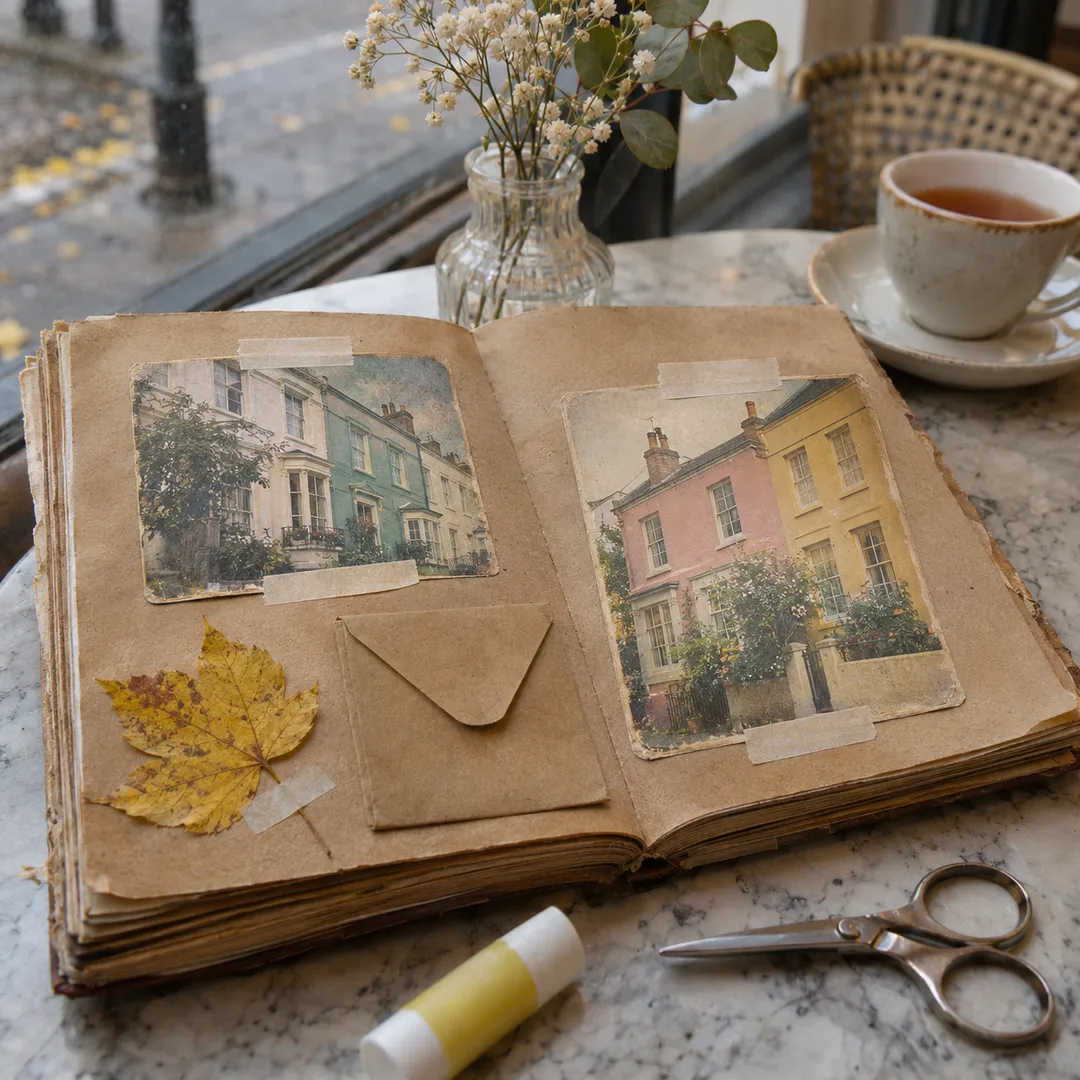
Plan a Notting Hill stationery shop crawl to build a London travel journal: pick a notebook, hunt old postcards on Portobello Road, then glue it all in.
A Notting Hill stationery shop crawl planner turns a visitor's afternoon into a travel journal you will actually keep. Most trips end as a camera roll nobody scrolls again. A paper journal, built from a good notebook and the odd bits London hands you, lasts longer and tells the story better. Notting Hill is a fine place to build one, because its paper shops sit near Portobello Road, where market stalls sell old postcards, maps, tickets, and ephemera that fit neatly onto a page.
Why Notting Hill Suits a Journal Day
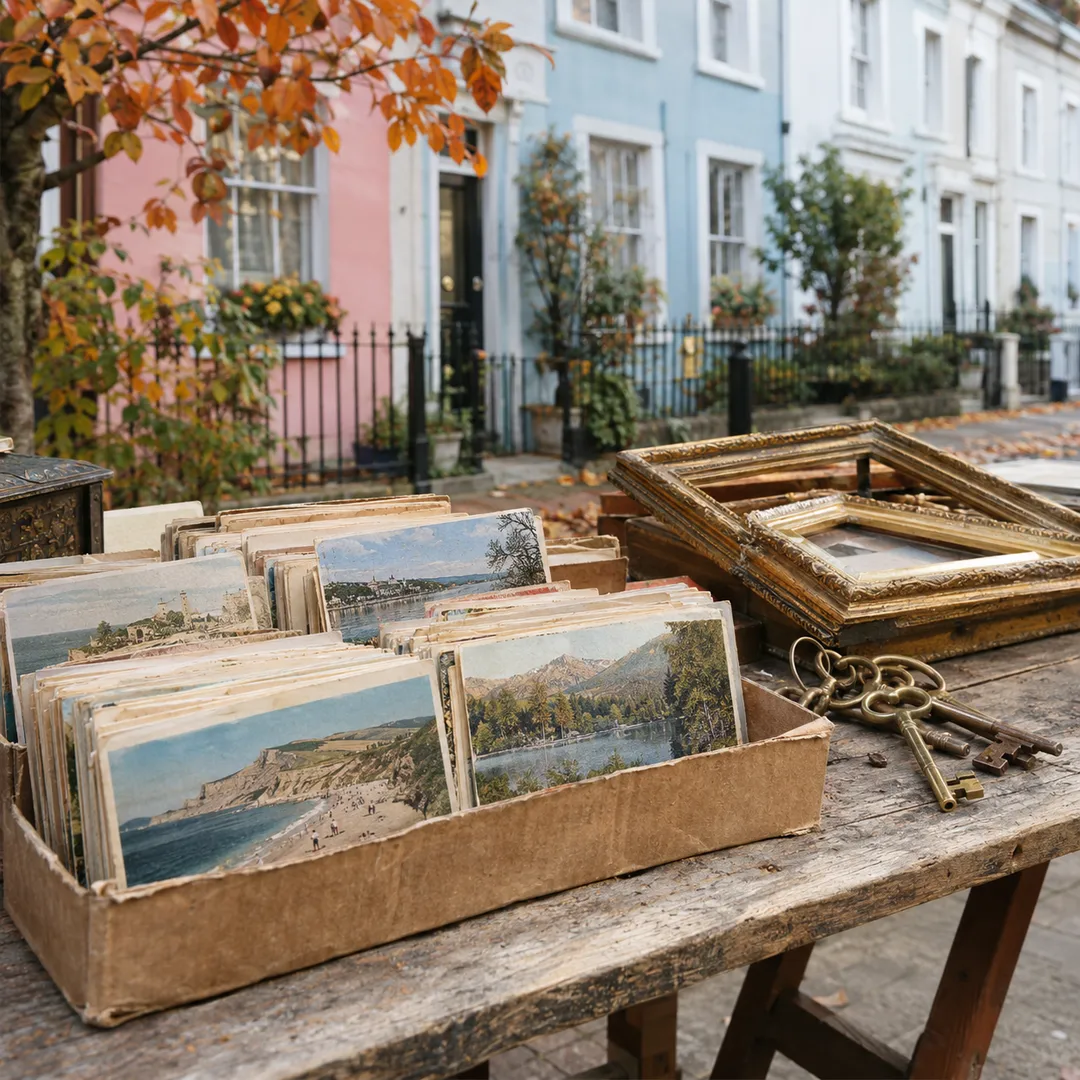
Notting Hill mixes two kinds of shopping that journal makers love. Along the side streets you find gift and paper shops with notebooks, tapes, and cards. Along Portobello Road you find the long antiques market, where trays of old postcards, cigarette cards, maps, and photographs wait for someone patient. Put the two together and you have both the book and the material to fill it.
The setting helps too. The pastel terraces, the curved streets, and the quiet mews behind them give you scenes worth sketching or describing. The neighbourhood has been a draw for artists and writers for generations, and a little of that habit rubs off when you sit down with a pen on a bench nearby.
Choose a Notebook That Can Take Glue
A travel journal is heavier than a diary. Glue, tape, and paper scraps add bulk and moisture, so start with a notebook that lies flat and has thick pages. Mixed media or sketch paper handles glue without wrinkling, and kraft or cream paper hides small mistakes. Test the binding by opening the book fully on the counter. If it springs closed, it will fight you on every page.
Size matters for a visitor. Pick something that fits in a day bag and survives being pulled out in drizzle. A soft cover with an elastic band is easier to carry than a rigid hardback, and a back pocket is useful for loose finds you have not glued in yet.
Build a Small Kit Before the Market
Before you head to the stalls, gather a short kit from the paper shops: a glue stick, a roll or two of paper tape, a fine black pen that does not smudge, and a pencil for sketching. A small pair of folding scissors is handy if you plan to trim postcards. Skip big sets of stickers, because the pleasure of this journal is real material from the trip.
Ask the shop if they sell glassine envelopes or small paper bags. They protect fragile finds, such as an old ticket or a pressed flower, until you are ready to mount them. Keep everything in a pencil case so you are not fishing for tape at a café table.
Hunting Ephemera on Portobello Road
The postcards and paper goods usually hide among the antiques rather than at the front of stalls. Look for shallow trays and shoeboxes, often near maps and old photographs. Flip slowly and look for images that echo your trip: a seaside town you visited, a city view, a painted street that looks like the one you are standing on.
Be gentle and ask before you dig through a stallholder's box. Many traders know their stock well and will point you to old London views or theatre programmes if you say what you are making. Choose a handful of pieces, not dozens, so the journal stays about your trip rather than the market.
Keep Your Own Ephemera Too
The richest material is free. Save your museum floor plan, a café receipt, the paper sleeve from a pastry, and the map you picked up at a station. Each one dates a page without you writing the date. Fold them into the back pocket during the day and sort them later.
Leaves and flowers from the nearby garden squares press nicely between two sheets of tissue inside the notebook. Give them a day or two before gluing. They add colour and a touch of season that no sticker can match.
Laying Out the First Spread
Pick one theme for the first two pages, such as the market morning. Place the largest item first, usually a postcard, slightly off centre. Add one or two smaller pieces around it, then leave space for a few lines of writing. Resist the urge to fill every corner, because white space makes a page feel calm.
Write while the memory is fresh. Note what you heard, what you ate, and one small exchange, maybe a stallholder's joke or a question from a stranger. These details become the reason you reread the journal years later.
A Quiet Mews to Sit and Glue
When your bag is full, step off the main road. The mews and garden-lined streets behind Portobello are far calmer, and a wall or a step out of the flow gives you a few minutes to sort finds. For a proper session, settle into a café with a wide table where you can spread out the kit without crowding anyone.
Order something that will not spill, and keep drinks away from the open page. If the café is busy, sketch the street instead and glue later. The journal does not need to be finished in one sitting.
Sketching the Pastel Houses
Even non-artists can capture Notting Hill with a few lines. Draw the outline of a row of houses, add doors and windows as simple rectangles, then write the colours you see in tiny letters inside each house. That colour-label trick works better than carrying paints and looks charming on the page.
Stand back on the pavement so you are not blocking doors, and keep in mind that the houses are homes. Respect residents by keeping voices low and not leaning on railings or steps.
What to Skip on a Journal Crawl
Skip expensive antiques and framed prints unless you truly want them. A journal thrives on small, light paper, not heavy objects that will crush the spine. Skip very busy market hours if you dislike crowds, because flipping through postcard boxes is hard when people press behind you.
Avoid buying several notebooks for future trips. Finish this one first. Most people discover what they love about journaling only after filling a dozen pages.
Using Karpo to Plan the Route
Open the Karpo APP and describe your plan: a Notting Hill afternoon to build a travel journal, with a paper shop, the Portobello Road stalls, and a calm café for gluing. Karpo can suggest a walking order that avoids doubling back, a few quiet streets to sit, and a café with room to spread out.
You can also ask Karpo for journal prompts tied to your trip, such as a page about sounds or a page about a meal. It helps the journal grow beyond Notting Hill as you explore the rest of London.
Practical Notes for the Notting Hill Crawl
Carry a tote bag for flat items, a zip folder to keep postcards dry, and a small packet of tissues. London drizzle arrives without warning, so a waterproof cover for the journal is worth having.
Keep the crawl short and personal. Two shops, one stretch of the market, and one café table are plenty. The finished spread will hold more of the day than any photo, and you can add to it on every stop that follows.
Ask Karpo for more information.
Keep reading
- Brixton Vintage Thrift Shop Finder: South London Retro Gems
 Notting Hill Vintage Thrift Shop Finder: Preloved Rails
 Soho Vintage Thrift Shop Finder: West End Designer Archives