 Brixton Vintage Thrift Shop Finder: South London Retro Gems
Hidden Gems & Odd Finds
Marylebone Stationery Shop Crawl Planner for Your First Pen
Plan a Marylebone stationery shop crawl to choose a first fountain pen: test nibs and inks at the counter, judge paper by feel, then write in Regent's Park.
A Marylebone stationery shop crawl planner is the easiest way to buy a first fountain pen without guessing. Most people who want one have only seen them in films or on a grandparent's desk, and the jump from ballpoint feels oddly intimidating. Marylebone softens that. Its high street still feels like a village lane, the side streets are calm, and the shops that sell good paper and pens tend to let you sit, scribble, and ask simple questions. Give yourself an afternoon, two or three counters, and a park bench at the end.
Why Marylebone Works for a First Pen
Marylebone grew up as a residential quarter for doctors, musicians, and families rather than a shopping district, and the pace still shows. Shoppers stroll instead of charging, and the independent shops along the high street and the lanes around it lean toward craft and care. Stationery counters here are used to customers who want to try before they choose, which is exactly what a first fountain pen needs.
The area also packs a lot into a short walk. You can drift from a paper shop to a bookshop to a café without crossing a major road, and Regent's Park sits just north for the moment you want to sit down and use what you bought. That compact loop keeps the day relaxed, so the choice of pen never turns into an errand.
Set Your Brief Before the First Shop
Before you walk in anywhere, decide three things: what you will write, how often, and where. A daily journal at home asks for a different pen than meeting notes on a train. Jot the answers on your phone so you can repeat them at every counter. Staff can steer you far faster when you say you want something for letters at the kitchen table than when you say you want a nice pen.
Also decide whether you want cartridges or a converter that draws ink from a bottle. Cartridges are tidy and travel well. Bottles open up the fun of colour but need a little patience. Neither is wrong for a beginner, and knowing your leaning keeps the first conversation short and useful.
Learn the Nib Before You Love the Barrel
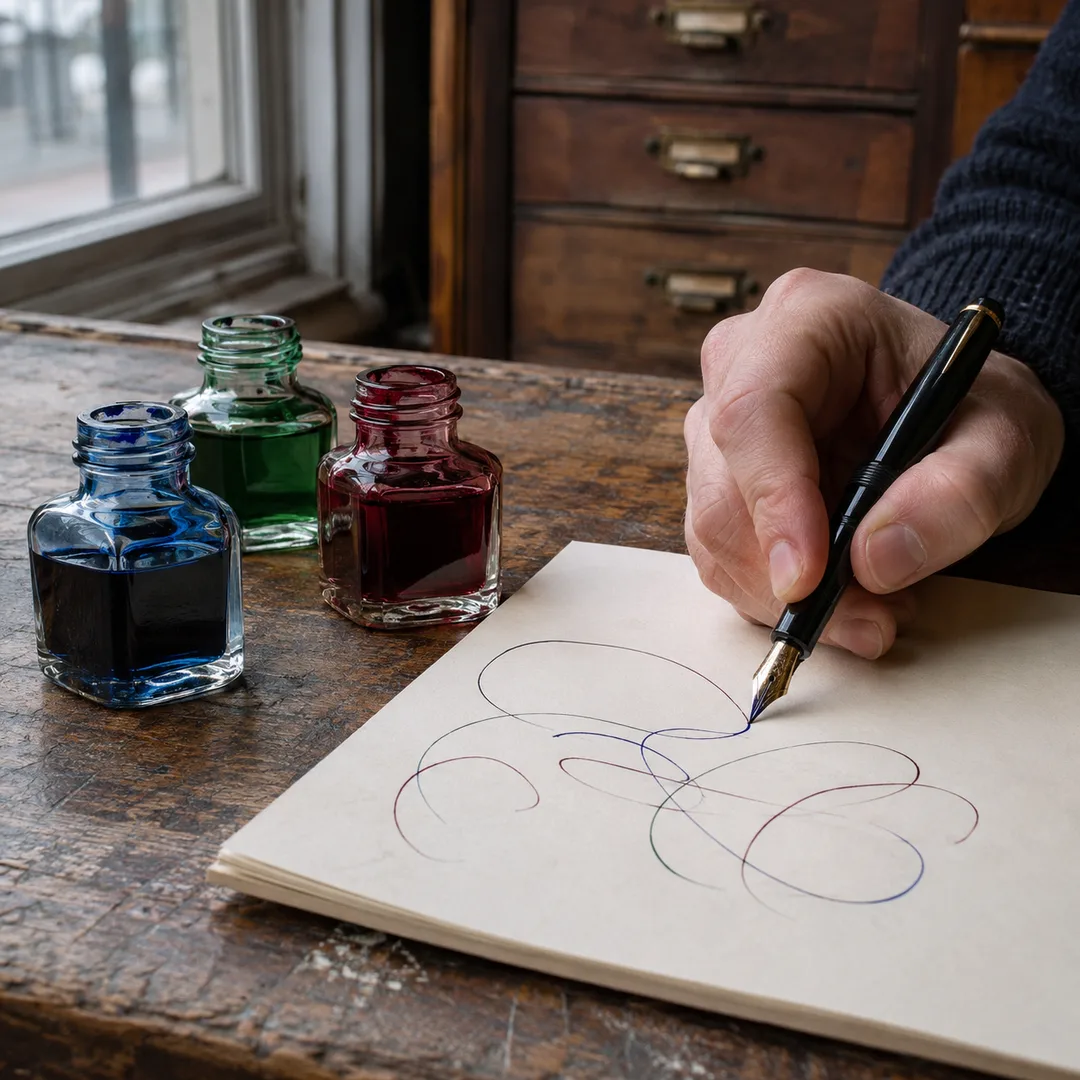
Beginners usually fall for a colour or a shape, then discover the nib does not suit their hand. Ask to try the same pen in a fine and a medium nib, side by side, on the same paper. Fine nibs suit small handwriting and cheap paper. Medium nibs feel smoother and show off ink but can bleed on thin notebooks. Write your name, a short sentence, and a row of loops with each.
Notice how much pressure you use. Ballpoint habits make people press hard, and a fountain pen needs almost none. If the pen skips or scratches, try holding it at a lower angle before blaming the nib. A good counter will show you the angle with their own hand, and that one small lesson changes everything about how the pen feels.
Judge Paper by Hand, Not by Cover
The pen is only half the experience. Ask to test the same ink on two or three notebook papers. Run a fingertip across each page first: smoother paper lets ink sit on top and shine, while softer, toothier paper drinks it in and feathers at the edges. Then turn the page over and look for show-through. A beautiful cover means little if every line ghosts onto the next page.
If you plan to write letters, try a sheet of writing paper and an envelope as well. Heavier stock feels generous in the hand and holds wet ink without curling. Buy a small pad rather than a large boxed set on your first visit, so you can learn what you like before committing.
Three Counters, One Short List
Plan three stops at most. Start at the shop that feels most like a specialist, where you can sit and test properly. Make a second stop at a general paper or gift shop, where you will see more notebook styles and maybe a simpler starter pen. Finish at a bookshop or a design shop with a small stationery corner, which often hides unusual inks and travel notebooks.
At each stop, write the same test sentence on a scrap of your own paper and keep the scraps in one envelope. By the third counter you will have a little archive of nibs and inks in your own handwriting. Lay them out on a café table and the right choice is usually obvious.
Ink Colours for People Who Fear Colour
Many first-time buyers stick with black and then find it flat. A blue-black or a dark teal reads as serious at work but gives you shading, where the ink pools darker at the ends of strokes. Ask to see a few swatches on the counter, and look at them under the window light rather than the shop lamps, because colours shift indoors.
If you are buying a bottle, a small one is plenty for months of daily writing. Leave the shimmering and very saturated inks for later. They can be fussy to clean and are better enjoyed once you know your pen.
Mind Your Manners at the Counter
Testing pens is a privilege, so treat the counter like a quiet library. Ask before uncapping display pens, never post a cap onto a pen you have not bought if staff prefer you don't, and wipe nothing on the test pads. If a shop is busy, browse paper first and come back when the counter is free.
It is also fine to leave without buying. Thank whoever helped you, tell them you are comparing, and mean it if you return. Small shops remember polite customers, and that memory is worth more than any discount when you come back for refills.
A Café Pause to Decide
Marylebone has plenty of cafés where a pot of tea and a corner table give you time to think. Spread your test scraps, reread your brief, and ask yourself which pen you would actually carry tomorrow. The one you keep reaching for while you look at the scraps is usually the right answer.
If you are still torn, choose the plainer, sturdier option. A first fountain pen should be easy to clean, comfortable to cap and uncap, and forgiving when you drop it into a bag. You can chase beauty with the second one.
Write the First Page in Regent's Park
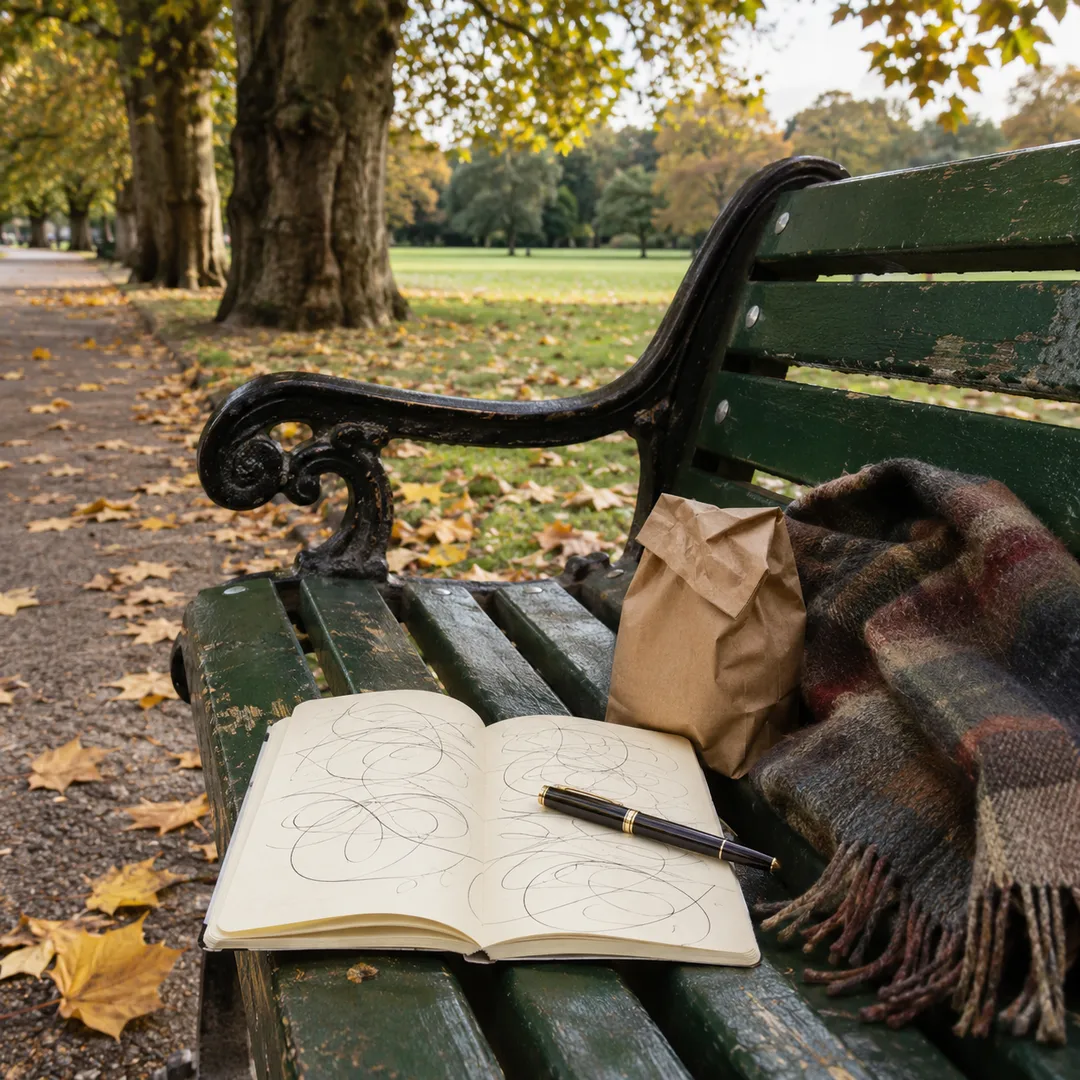
Once you have the pen, walk north into Regent's Park. The paths around the boating lake and the rose garden have benches that face greenery instead of traffic, which makes them good spots for your first proper page. Write a few lines about the afternoon, or start a letter to someone who would enjoy receiving one.
Writing outdoors also teaches you how the pen behaves in real life. You will notice whether the ink dries fast enough on a breezy day and whether the cap clicks securely before you stand up. That small test is the true end of the crawl.
What to Skip on a First Pen Day
Skip limited editions, gold nibs, and anything sold mainly as a gift box. They are lovely, but a beginner rarely knows enough to enjoy the difference. Skip buying several notebooks at once, too, because your taste in paper will change after a few weeks of writing.
Avoid planning the crawl on a busy Saturday if you want time at the counter. Weekday afternoons tend to be calmer in the village streets, and staff have more room to show you how a converter works or how to flush a pen with water.
Using Karpo to Plan the Route
Open the Karpo APP and tell it you want a slow Marylebone afternoon for choosing a first fountain pen. Ask for a short loop of paper and pen shops, a quiet café between them, and the nearest Regent's Park gate for the final stop. Karpo can suggest a walking order and nearby places to rest, so you spend the day trying pens rather than checking maps.
You can also ask Karpo for ideas on what to write first, from a letter to a gratitude list. Treat its suggestions as a starting point and let the afternoon wander where the shelves take you.
Practical Notes for the Marylebone Crawl
Bring a small notebook of your own paper so tests compare fairly, a cloth or tissue for inky fingers, and a zip pouch so a new pen does not leak into your bag. Wear something dark if you plan to fill from a bottle.
Keep the crawl to three shops and one park stop, and leave room to wander. The best finds on Marylebone's lanes are often the ones you did not plan, like a drawer of postcards or a notebook bound by hand.
Ask Karpo for more information.
Keep reading
- Brixton Vintage Thrift Shop Finder: South London Retro Gems
 Notting Hill Vintage Thrift Shop Finder: Preloved Rails
 Soho Vintage Thrift Shop Finder: West End Designer Archives