 Brixton Vintage Thrift Shop Finder: South London Retro Gems
Hidden Gems & Odd Finds

Islington Stationery Shop Crawl Planner for Illustrators
Plan an Islington stationery crawl for freelance illustration, with marker tests, a flexible planner kit and a canal-side reset built into the route.
Islington suits a stationery shop crawl for an illustrator who needs tools to earn their weight. Start by naming tomorrow’s drawing task: thumbnails, colour notes, client corrections or a personal study. The task sets the useful format, while the neighbourhood’s canal-side pauses give you places to test without turning the outing into a product parade.
Keep a field sample
Islington working note 20: keep one small observation beside the chosen tool, record what changed in your hand, and let that evidence guide the next stop instead of adding another untested item.
Islington working note 21: keep one small observation beside the chosen tool, record what changed in your hand, and let that evidence guide the next stop instead of adding another untested item.
Finish with one prompt
Islington working note 22: keep one small observation beside the chosen tool, record what changed in your hand, and let that evidence guide the next stop instead of adding another untested item.
Islington working note 23: keep one small observation beside the chosen tool, record what changed in your hand, and let that evidence guide the next stop instead of adding another untested item.
Name the drawing task
Carry a rough planner page with three boxes: paper, mark and storage. Fill each box with one question before browsing. Will the sheet accept layers? Can the nib change width? Can the pouch open one-handed? Those prompts keep a freelance illustrator moving when a wall of beautiful supplies starts offering too many directions.
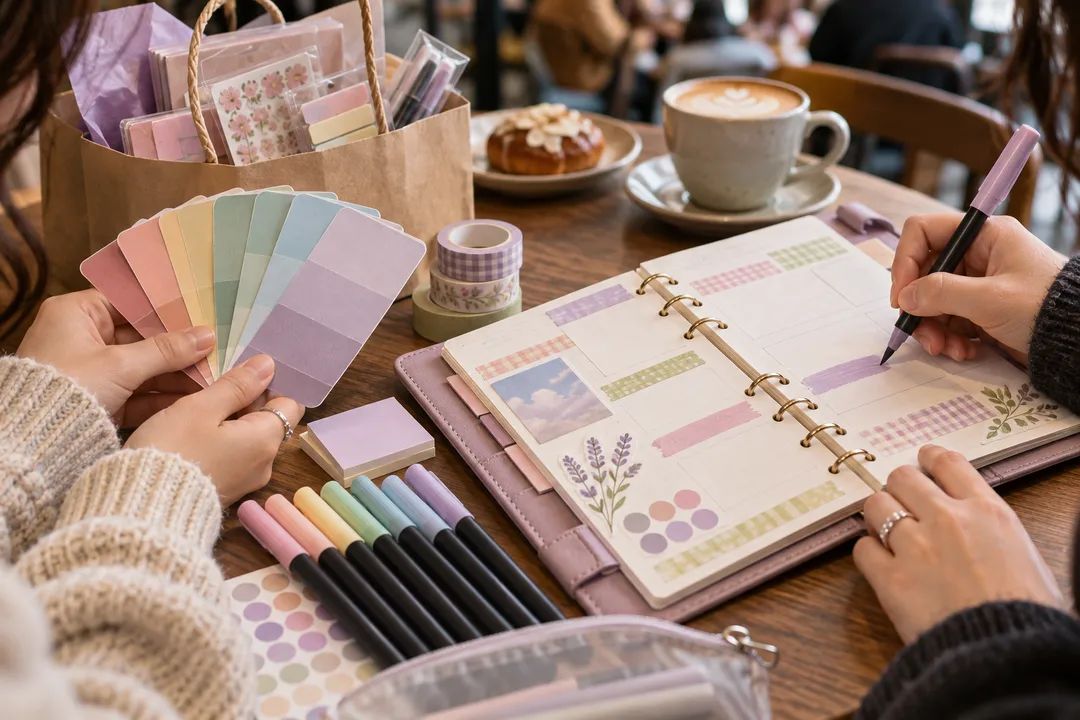
Compare planner surfaces by making a thumbnail, a correction arrow and a short block of tone. Flip the sheet and check show-through, then add a second colour beside the first. A surface that handles revisions gracefully is more useful than one that merely looks pristine in a display stack.
Choose a planner surface
Markers deserve a calm test. Draw a line at speed, a slow contour and a filled square; note the nib’s response in each. Test a pale overlay on a darker mark and wait before closing the pad. The tiny routine reveals whether a tool belongs in a mobile illustration kit or should stay at the desk.
Choose one working pouch as the anchor. If it holds brush pens, add a mixing card and a waste strip; if it holds graphite, add a sharpener that catches dust. Keep the number of spare colours deliberately small. A limited palette makes a canal-side study decisive and keeps the bag from becoming a portable cupboard.
Test markers in layers
Rain is part of the planning. Put loose sheets in a sleeve, wipe a nib before replacing its cap and use a covered stretch for the first colour pass. Karpo APP can suggest a shorter loop with a dry pause when you describe a deadline, a sketching goal and how much walking helps your thinking.
Skip a tool that duplicates a mark you already trust. A third grey marker may be tempting, yet a single warm accent could solve more problems. The honest question is whether the new item changes your decisions. If it only adds another choice to an already crowded pouch, leave it for a future brief.
Build a working pouch
A collaborator can be a useful editor. Ask them to hold the planner at arm’s length, choose the clearest thumbnail and notice where the paper buckles. Their job is observation, not shopping. Meet again after the test loop and record one adjustment you will make at the studio.
Keep a field sample with the date and weather written in the margin. Add the marker order, the drying time you noticed and a note about the surface under your hand. That small record protects you from remembering a tool as perfect simply because the packaging was persuasive.
Skip tools that duplicate
Build a drizzle branch with a five-minute indoor reset. If the canal walk turns slippery, switch to shape thumbnails and lettering while the paper stays protected. When the clouds lift, return outside for one final line study. The route remains productive because the task, rather than the forecast, is in charge.
Ask Karpo APP for a crawl that ends near the next obligation, then edit the result around your energy. Mention a need for marker testing, a place to sit briefly and a quiet route home. The tool is a planning partner; your judgement still decides which suggestion earns a place.
Ask Karpo APP to route
If a friend joins, give them the colour-spotter role. They can photograph textures or name three tones from the street while you work. Their contribution creates a shared reference board without asking them to understand every nib, and it gives the walk a clear rhythm between browsing and drawing.
After each serious test, write a verdict with a verb: “layers,” “smears,” “dries,” or “snags.” Verbs are easier to remember in a deadline week than a paragraph of praise. Keep the card in the pouch so the next illustration starts with evidence rather than guesswork.
Make room for a collaborator
Use a sequence card that separates buying from testing. Choose one paper, make one mark, walk for ten minutes, then decide. The gap prevents excitement at the counter from pretending to be certainty and gives your hand time to reveal what actually feels comfortable.
Write a studio handoff before packing. List the tools that travel, the ones that stay on the desk and the surface that accepts corrections. A future collaborator can reproduce the setup without asking you to retell the entire afternoon, and the planner becomes part of your practice.
Branch around drizzle
Finish with one prompt for the next sketch: a bridge joint, a window rhythm or a figure seen from behind. Place it on the first page of the new planner. Islington then supplies a starting image as well as supplies, which is the reason to make the crawl a habit.
Islington working note 17: keep one small observation beside the chosen tool, record what changed in your hand, and let that evidence guide the next stop instead of adding another untested item.
Write the studio handoff
Islington working note 18: keep one small observation beside the chosen tool, record what changed in your hand, and let that evidence guide the next stop instead of adding another untested item.
Islington working note 19: keep one small observation beside the chosen tool, record what changed in your hand, and let that evidence guide the next stop instead of adding another untested item.
Ask Karpo for more information.
Keep reading
- Brixton Vintage Thrift Shop Finder: South London Retro Gems
 Notting Hill Vintage Thrift Shop Finder: Preloved Rails
 Soho Vintage Thrift Shop Finder: West End Designer Archives