 Brixton Vintage Thrift Shop Finder: South London Retro Gems
Hidden Gems & Odd Finds
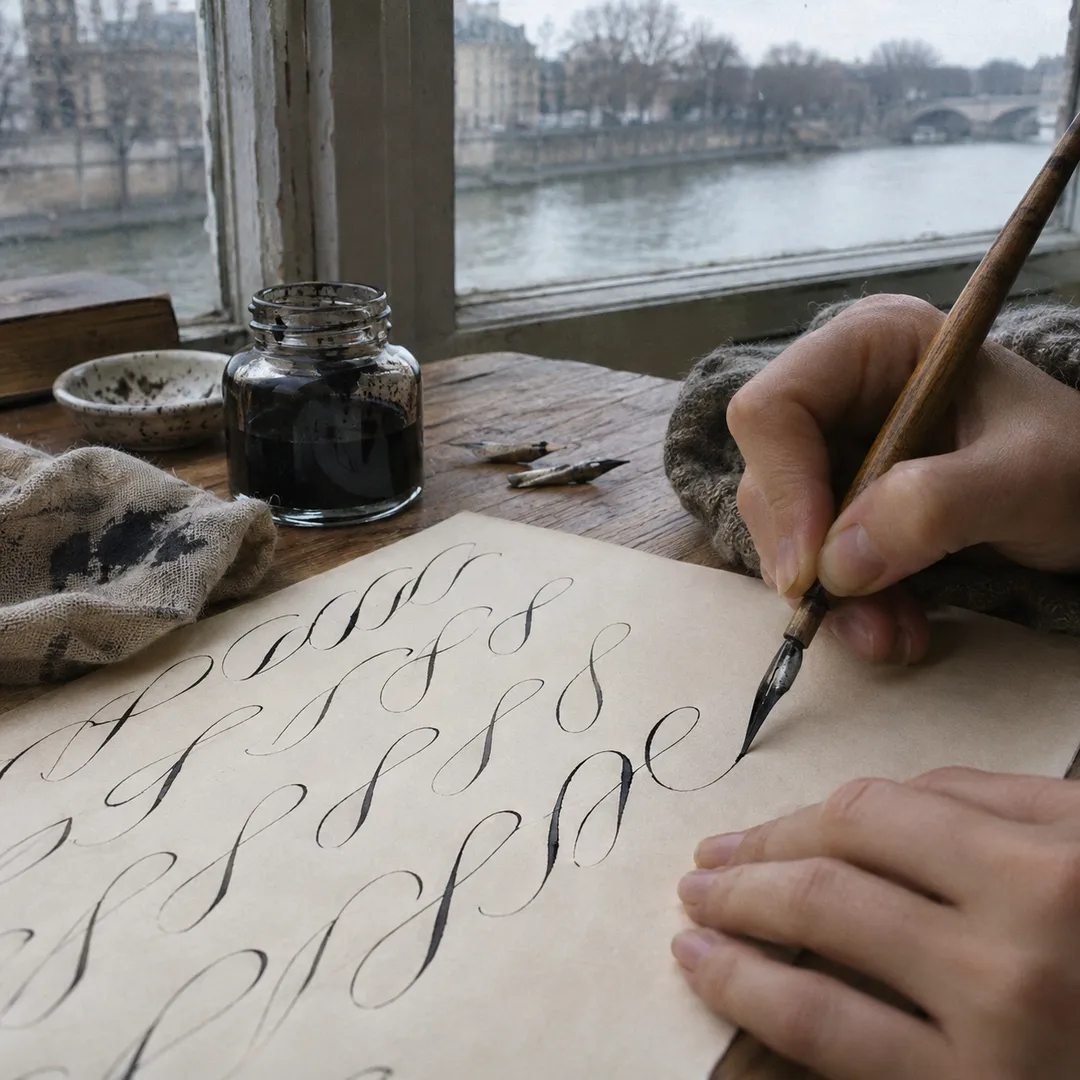
Hammersmith Stationery Shop Crawl Planner for Calligraphy
A Hammersmith stationery crawl for new calligraphers: pick nibs, ink and paper, then practise letters on the riverside where Morris ran his printing press.
Hammersmith has a quiet claim to fame among people who love letters, and this stationery shop crawl planner is built for someone taking up calligraphy. William Morris lived and printed books on the riverside here, and his neighbours shaped some of the most admired type in English printing. Come with an interest and an empty pencil case, and leave with a starter kit plus a stretch of the Thames to practise beside.
Why Hammersmith Belongs to Letterers
Walk west along Upper Mall and you reach Kelmscott House, where William Morris spent his last years and from which he named the Kelmscott Press. His books, printed nearby in the 1890s, made a whole generation think again about how letters look on a page. The William Morris Society still keeps rooms there, and the riverside has a calm that suits careful handwork.
A few doors along, Emery Walker and Thomas Cobden-Sanderson ran the Doves Press, famous for one elegant typeface. After a bitter partnership dispute, Cobden-Sanderson threw the metal type into the Thames from Hammersmith Bridge, a night at a time, so nobody else could use it. Divers recovered some of the pieces from the riverbed almost a century later. It is a story every beginning calligrapher should know.
Who This Crawl Is For
This plan suits a complete beginner who has watched a few lettering videos and wants to try with real tools. It also works for someone returning to calligraphy after years away, who no longer knows what to buy. You need patience more than skill, and a willingness to fill a page with wobbly strokes before anything looks like a letter.
A parent and teenager can do it together, which turns a solo hobby into a shared one. A pair of friends planning wedding envelopes or seasonal cards can also use the day to agree on a style before the real work begins. If you only want brush pens for quick notes, the crawl will be shorter, which is no bad thing.
A Simple Starter Kit
Start with less than you think. A straight pen holder, two or three pointed nibs of different flexibility, one pot of black ink and a pad of smooth paper are enough for weeks. Many teachers also suggest a broad-edged pen or marker for italic hands, since its fixed width forgives shaky pressure while you learn spacing and rhythm.
Paper matters more than beginners expect. Cheap printer paper makes dip-pen ink feather and bleed, which looks like your fault when it is not. Ask for a smooth layout pad or a paper made for pen work and test a stroke if the shop allows it. A soft pencil and a ruler for guidelines complete the kit.
Choosing Nibs and Ink at the Counter
Nibs vary a lot in how far they spread under pressure, so ask staff which ones they hand to newcomers. Stiffer nibs are easier to control, while very flexible ones produce dramatic swells but punish a heavy hand. Buying two kinds lets you feel the difference in your first hour, which teaches more than any description.
For ink, a plain black that flows well and dries reasonably fast is the safe first choice. Coloured and metallic inks are tempting, yet they behave differently and can clog fine nibs. Keep them for later. If the shop has a scrap pad, write the same short word three times with each nib and keep the sheet as your own reference.
A Riverside Practice Session
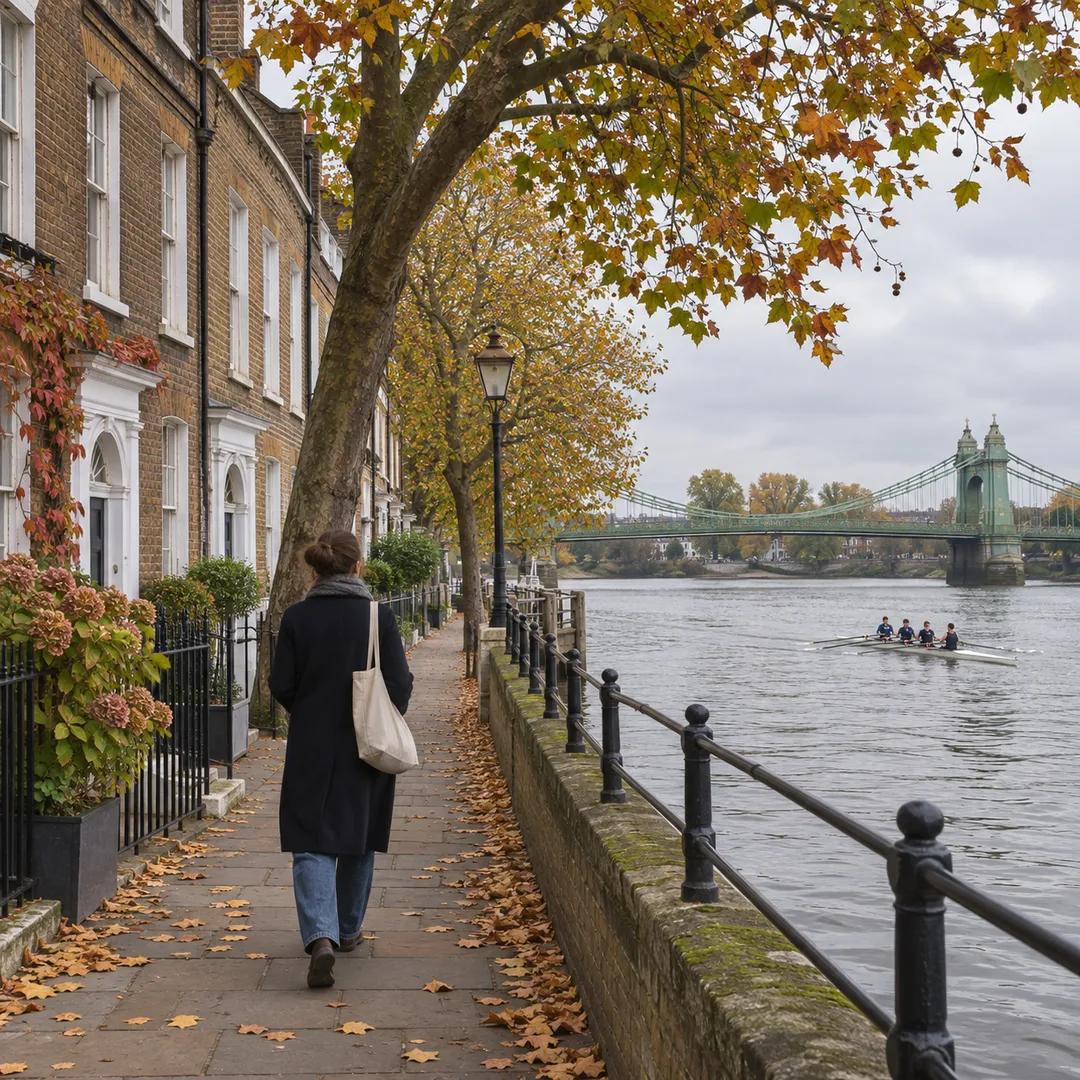
Once you have your kit, head down to the river. Furnivall Gardens opens straight onto the Thames, and the benches there make a good outdoor desk on a still day. Use a clipboard so the paper stays flat, and bring a lidded ink pot or a cartridge pen for outdoor practice, because open ink and river breezes are a poor combination.
Copy simple shapes first, such as rows of ovals and downstrokes, rather than full words. Watch the rowers and the slow traffic of the river while your hand loosens. The pace of the water helps more than you might think. Calligraphy rewards slowness, and twenty unhurried minutes by the Thames often feel more productive than an hour hunched at a kitchen table.
Walking the Morris Trail
From Furnivall Gardens, follow the narrow riverside path west along Upper Mall and Hammersmith Terrace. You pass Kelmscott House, then old pubs and boathouses, and Emery Walker's House, a preserved Arts and Crafts home that opens to visitors on some days. Looking at Morris patterns and printed pages after a practice session makes you notice curves you would have missed before.
Turn back toward Hammersmith Bridge for the view of its green and gold ironwork. Stand on the riverside and picture a printer dropping heavy type into the dark water below. It is a strange, stubborn piece of London history, and it reminds you that people have cared about the shape of letters with real passion.
Where to Warm Up Afterwards
The riverside pubs along the Mall are a cosy place to sit with a notebook on a cold afternoon. Choose a quiet corner rather than a busy terrace, and practise with a brush pen or pencil rather than open ink indoors. King Street, back toward the town centre, has plenty of cafés if you would rather have tea and a pastry.
Use this break to look at your practice sheets with fresh eyes. Circle the three strokes you like best and the three that went wrong. That small habit, borrowed from many lettering teachers, turns a fun day into a starting point for steady improvement.
Using Karpo to Plan the Day
Open the Karpo APP and describe what you want: a stationery shop crawl in Hammersmith for a calligraphy beginner, with stops for nibs, ink and good paper, then a riverside spot to practise. Mention whether you want to include Kelmscott House or Emery Walker's House, and whether you prefer cafés or pubs for the warm-up afterwards.
Karpo can suggest an order for the stops and nearby alternatives if a shop does not suit you. Save the plan in the app so your next supply run is quick. It cannot tell you what is on each shelf, so ask the staff in person about specific nibs and papers.
Practical Notes for the Day
Carry ink in a sealed bag inside your tote, and pack a few paper towels for wiping nibs. A small jar of water helps clean dip pens between sessions. Wear dark clothing if you are new to ink, because a single splash on a pale coat is a memorable lesson.
Riverside paths can be muddy and narrow after rain, so wear sensible shoes. Above all, keep your first sheets, even the ugly ones. Looking back at them in a month is the best proof that a slow afternoon in Hammersmith started something real.
Ask Karpo for more information.
Keep reading
- Brixton Vintage Thrift Shop Finder: South London Retro Gems
 Notting Hill Vintage Thrift Shop Finder: Preloved Rails
 Soho Vintage Thrift Shop Finder: West End Designer Archives