 Brixton Vintage Thrift Shop Finder: South London Retro Gems
Hidden Gems & Odd Finds
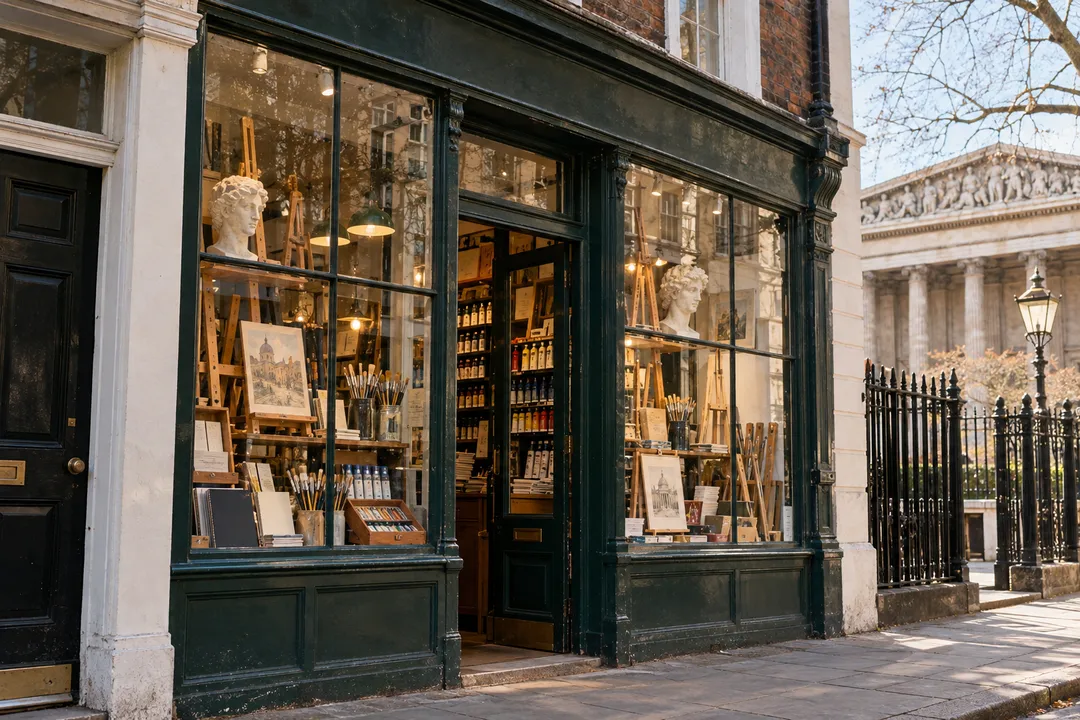
Cornelissen Stationery Boutique: Sunday Art Supply Guide UK
Cornelissen at 105 Great Russell Street opens Monday–Saturday 10am–6pm and Sunday 11am–5pm, with specialist paper and artists’ materials by the museum.
Cornelissen is the stationery boutique to choose when your idea of stationery includes the paper, brush and pigment that make the finished page possible. The shop is at 105 Great Russell Street, London WC1B 3RY, close to the British Museum, and its contact listing gives Monday–Saturday hours of 10am–6pm. The company’s official history dates it to 1855, so this is a working art-materials institution rather than a trend shop wearing an old name.
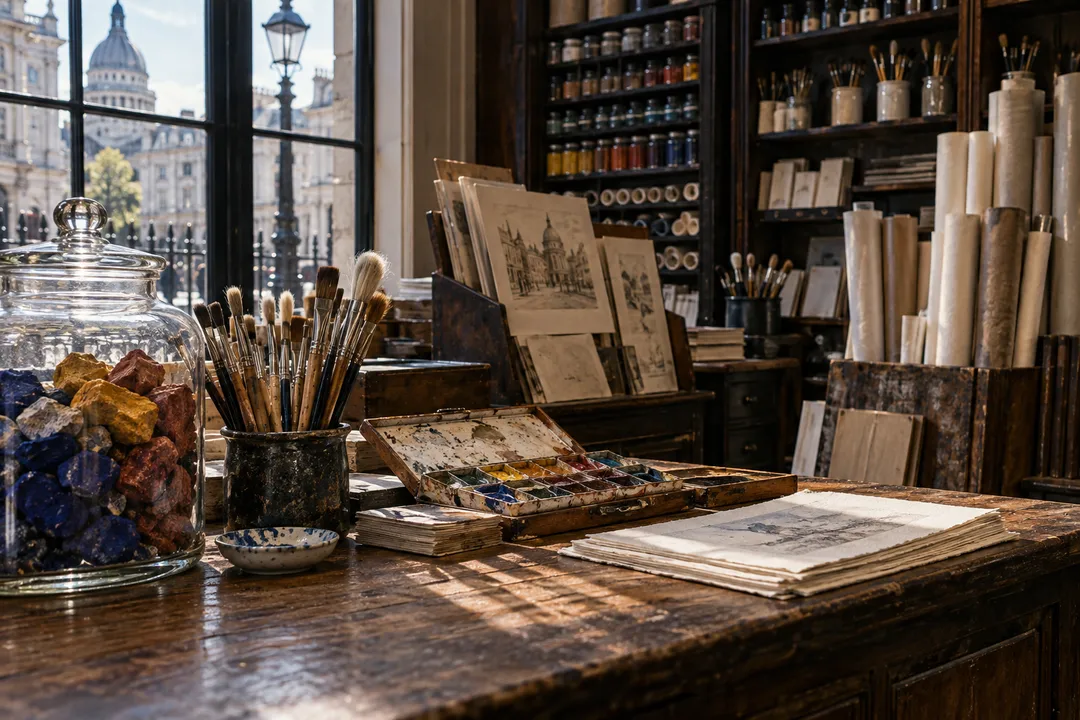
Start With The Paper, Not The Purchase
The first thing to understand is the scale of the selection. A general stationery shop helps you choose a notebook; Cornelissen helps you choose the surface and tools that let a drawing, letter or painted study behave properly. You will see papers with different weights, finishes and uses, alongside brushes, pigments and accessories. If you only need a birthday card, another shop will be faster. If you are building a desk for drawing or correspondence, the range makes the visit unusually productive.
Start with the paper rather than the colour. Ask what the sheet is intended to take: graphite, ink, wash, watercolour or a dry medium. Then compare the feel in your hand and the amount of drag under a pencil. A paper that feels luxurious but fights your tool is not a good buy. The staff can help you narrow the choice, but bring the medium you use or describe it accurately. ‘I want something nice’ is less useful than ‘I need a sheet that accepts a wet line without buckling.’
The shop’s signature pleasure is the pigment and brush counter, even if your final purchase is a notebook or a pad. Seeing colour as a material changes how you think about paper. A warm white sheet can make black ink look softer; a cool sheet can sharpen a blue wash; a textured surface can make a pencil line appear darker. Cornelissen lets you connect those decisions in one room. That is why the visit works for a writer who also sketches, a designer testing a palette or a student assembling a serious kit.
The Detail That Makes This Shop Different
Timing is clear: Monday to Saturday 10am–6pm and Sunday 11am–5pm according to the official contact listing. Arrive earlier if you need a long technical conversation, especially on a museum-heavy weekend. Later Sunday visits are better for a short restock than for choosing an unfamiliar medium. Keep the shopping list narrow, ask before opening anything, and do not squeeze through a display with a wet umbrella. Specialist materials are easier to evaluate when the counter remains calm and the labels stay in place.
The store etiquette is different from a gift shop. Do not rub every brush, open sealed pigment or compare paper by bending an entire pad. Ask for a sample or a staff recommendation. If you are testing a writing tool, use the paper intended for that demonstration rather than marking a retail sheet. The people around you may be choosing materials for a commission, a class or a long project. A little care protects both the stock and the concentration that makes good selection possible.
The best neighbourhood pairing is obvious but still worth doing: Cornelissen followed by the British Museum, or the museum first and the shop after you know which colours and surfaces caught your eye. Great Russell Street also gives you a short route toward Bloomsbury’s bookish streets. If you need to carry paper safely, visit with a flat tote or portfolio rather than a tiny shoulder bag. The route is pedestrian-friendly, but a tube map will not protect an unbent sheet from a crowded commute.
A Neighbourhood Walk That Fits The Visit
Skip the specialist material you cannot name a use for. A rare pigment may be beautiful, but it is not automatically more useful than a dependable black. Likewise, do not buy a large pad because the texture feels exciting if you have nowhere flat to store it. Cornelissen rewards a plan. Choose the medium, the scale and the next project first, then buy the smallest amount that lets you learn. That approach keeps the visit creative rather than expensive for its own sake.
A good first-time method is to divide the visit into three questions. What will I make? What surface will it need? Which tool will make the first mark easiest? Write those answers before you enter. For a handwritten letter, that may mean a smooth sheet and a reliable pen. For a sketchbook, it may mean a paper that tolerates erasing. For a painted study, it may mean a brush that holds a point. The shop becomes much less overwhelming once the finished action is visible in your mind.
Practical Notes And An Honest Verdict
You will see several kinds of regular: an artist replenishing familiar materials, a student comparing papers, a designer choosing a small colour family and a museum visitor who came in for one souvenir but discovers a new medium. The staff’s job is not to turn every visitor into an expert. It is to help each person leave with a material that matches the next action. Ask for a plain-language comparison, then make the decision yourself. Confidence is more useful than a drawer full of samples.
Practical notes: Cornelissen is at 105 Great Russell Street, London WC1B 3RY. Opening is Monday–Saturday 10am–6pm and Sunday 11am–5pm. The official history places the business in 1855, which explains the depth of the art-materials offer. If you want a second stop based on the kind of paper or tool you choose, open the Karpo APP after leaving; the British Museum and Bloomsbury route can then be shaped around what you are carrying.
My verdict: Cornelissen is the strongest choice here for a stationery shopper whose writing life overlaps with drawing, painting or design. It is not a fast card counter and it can be too specialised if you only want a souvenir. Go with one project, ask about the paper before the pigment, and leave with a material you can use this week. The 1855 history matters, but the real reason to return is the quality of the next mark.
Ask Karpo for more information.
Keep reading
- Brixton Vintage Thrift Shop Finder: South London Retro Gems
 Notting Hill Vintage Thrift Shop Finder: Preloved Rails
 Soho Vintage Thrift Shop Finder: West End Designer Archives