 Brixton Vintage Thrift Shop Finder: South London Retro Gems
Hidden Gems & Odd Finds
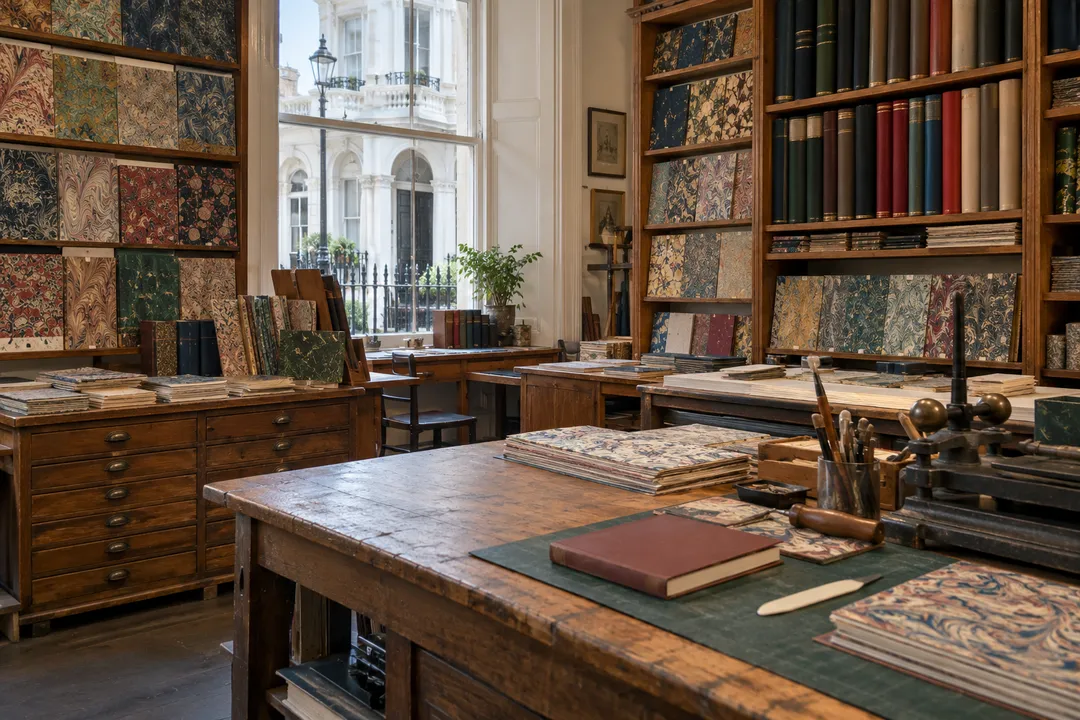
Victoria Specialty Paper Store Guide: 4 Archival Finds
Source archival bookbinding sheets, handmade marbled covers, and Japanese washi at a specialty paper store in Victoria for your next binding project.
Entering a heritage specialty paper store in Victoria connects makers directly with centuries of British bookbinding traditions, conservation techniques, and decorative print crafts. Situated along Gillingham Street near the busy railway interchange, specialist paper merchants supply seasoned binders and enthusiastic novices with archival text sheets, linen bookcloth, and hand-marbled papers. Setting out to hand-bind a bespoke journal or restore a weathered family volume begins by mastering the physical properties of artisanal papers on these wooden workbenches.
Heritage Bookbinding Paper and Grain Alignment
The defining mechanical rule of hand bookbinding dictates that paper grain must always run parallel to the book spine. Because cellulose fibers expand predominantly across their width when absorbing adhesive moisture, folding against the grain produces unsightly spine creasing, paper cracking, and stubborn page cockling. An experienced paper merchant will readily demonstrate how to test grain orientation by gently bending full sheets in both directions, allowing you to feel where the fibers offer natural flexibility.
Selecting the correct basis weight for internal text blocks balances folding ease with opacity. Binders working on everyday journals frequently favor mould-made cotton rag sheets between ninety and one hundred and twenty grams per square meter. These papers accept fountain pen inks, calligraphy pigment, and light watercolor washes without feathering or bleed-through, yielding crisp signatures that sew securely into cohesive signatures.
Selecting Decorative Hand-Marbled Endpapers
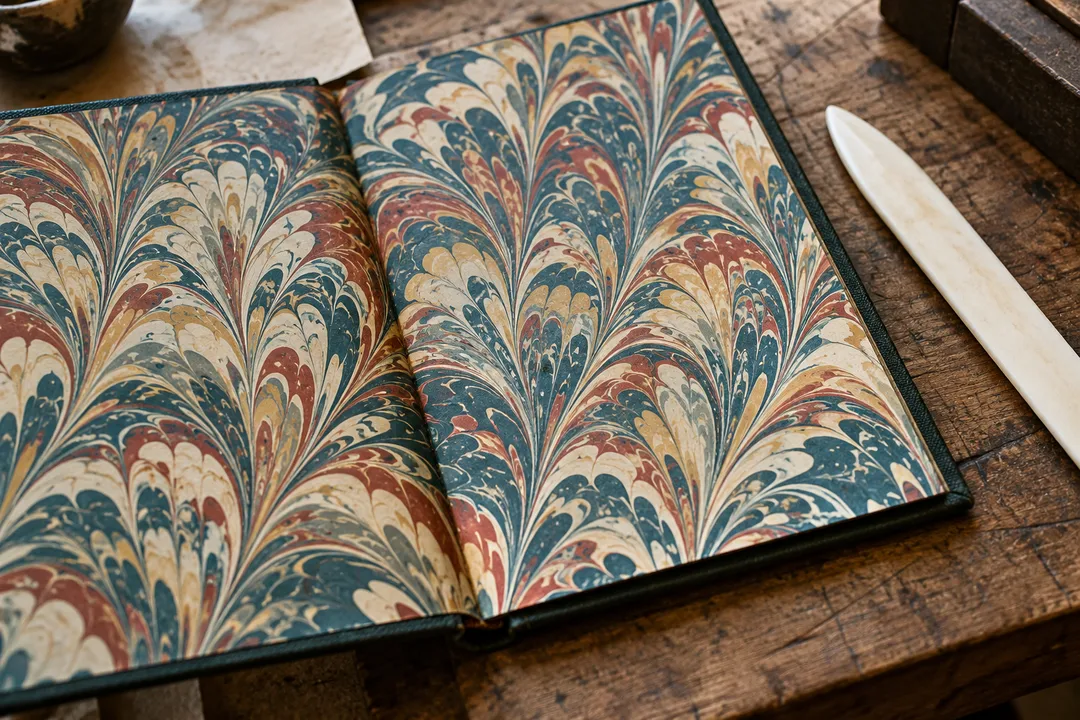
Endpapers serve as both structural hinges and aesthetic statements inside case-bound volumes, protecting the inner pages while offering a burst of pattern upon opening the front board. Victoria's paper specialists curate stunning collections of hand-marbled sheets created using historical floating pigment techniques on carrageenan sizing baths. From classic English shell and combed feather motifs to intricate Italian Spanish wave patterns, each hand-pulled sheet exhibits distinct tonal variations.
When measuring marbled sheets for endpapers, binders must account for both the pastedown leaf that adheres to the inner board and the free flyleaf that rests against the text block. Choosing a substantial paper stock around one hundred and thirty grams prevents wet wheat starch paste from soaking through and distorting the vibrant surface pigments. Pairing a subtle monochrome marbled pattern with contrasting linen spine cloth creates an elegant, durable finish that endures decades of frequent handling.
Beginners should avoid mass-printed synthetic gift wrap when constructing book covers and endpapers. Commercial wrapping rolls lack the requisite archival cotton content, becoming brittle along the inner hinge and separating under repeated flexing. Authentic hand-marbled sheets utilize acid-free base stocks that take bookbinder's PVA and wheat starch paste cleanly, ensuring your finished bindings remain flat and sound across seasonal climate shifts.
Japanese Kozo and Repair Tissues for Conservation
Beyond decorative covers, Victoria paper merchants maintain comprehensive drawers of Japanese heritage papers crafted from pure mulberry kozo, mitsumata, and gampi fibers. These extraordinarily tough, translucent sheets are indispensable for page repair, paper hinge construction, and delicate spine re-backing. Because kozo fibers interlock naturally during sheet formation on bamboo screens, Japanese papers provide immense tensile strength despite their featherweight appearance.
Conservators select lightweight kizukishi and tengujo tissues weighing between nine and twenty grams per square meter for repairing torn text margins and split leaf corners. When applied with cooked wheat starch paste, the feathery torn edges of Japanese tissue blend seamlessly into historic paper substrates without creating rigid steps or obscuring printed type. The pH-neutral composition prevents acid migration, halting further paper embrittlement across antique library collections.
Heavier handmade Japanese papers, including dyed momigami and textured unryu featuring visible mulberry silk threads, make striking outer covers for non-adhesive softcover bindings. Japanese stab bindings and long-stitch structures showcase these tactile sheets particularly well, as the flexible mulberry fibers bend gracefully around external spine threads without requiring rigid cardboard underlays.
Bookcloth, Archival Boards, and Binding Sundries
Completing a durable hardcover requires robust structural backing materials alongside decorative papers. Victoria paper counters stock dense, uncalendered bookbinder's greyboard and acid-free millboard in thicknesses ranging from one to three millimeters. Unlike standard packaging cardboard that warps under wet glue, seasoned millboard maintains rigorous dimensional stability, providing crisp board squares that protect the delicate paper edges beneath.
Woven bookcloth coated with starch or lightweight paper backings offers resilient protection for corners and external spine joints. Choosing contrasting library buckram for the spine and marbled paper for the board sides creates a traditional quarter-bound or half-bound appearance that honors Victorian workshop aesthetics. Paper merchants cut cloth and board from bulk rolls to your desired dimensions, saving beginners the frustration of slicing heavy boards at home without a board guillotine.
Do not leave the shop without essential hand binding sundries that elevate workshop execution. Genuine cattle bone folders smooth out signature folds, Teflon folders prevent burnishing glazed sheets, and unbleached Irish linen sewing thread grips signatures firmly when drawn through punched sewing stations. High-tack reversible wheat starch paste and archival neutral-pH PVA adhesives ensure your paper laminations set smoothly without forming stubborn air blisters.
Exploring Pimlico and Victoria Station Environs
After collecting your freshly trimmed paper parcels, take time to explore the historic architecture and peaceful residential squares of Pimlico and southern Victoria. Leaving Gillingham Street brings you past charming brick townhouses and quiet stucco crescents designed during the mid-nineteenth century by builder Thomas Cubitt. The stately iron railings and quiet side streets offer an unhurried contrast to the bustling commuter terminals nearby.
Stroll south toward Warwick Square or Eccleston Square to enjoy tranquil garden vistas beneath mature London plane trees. The open benches provide a comfortable place to sketch project cut lists, plan signature layouts, or review grain orientation notes in natural daylight. Nearby artisanal bakeries and independent coffee houses along Belgrave Road make welcoming pit stops to rest your paper portfolio while sipping warm tea.
Continuing toward the modern cultural spaces of Victoria Street reveals striking contemporary glass architecture balanced against historic Victorian facades. Walking across the broad pedestrian plazas before boarding the Victoria or District line allows you to reflect on how London's artisan guilds continue to thrive alongside international commercial centers. Carrying a wrapped roll of specialty paper through these storied streets connects your modern craft with generations of city makers.
Practical Notes for Your Victoria Paper Run
Transporting full imperial sheets of mould-made and marbled paper across the London transport network requires careful preparation to prevent dog-eared corners or crushed rolls. Bring a sturdy telescoping cardboard drafting tube with a secure carrying strap, or carry a rigid flat portfolio case if you intend to purchase heavy millboard offcuts. Carrying a lightweight plastic rain sleeve protects your paper parcel against sudden London drizzle while walking between stops.
Most bookbinding text sheets measure approximately twenty by thirty inches, meaning you will need to map your signature folding schemes before making extensive purchases. Measure the finished page dimensions of your intended book so you can calculate how many folios can be extracted from each sheet with grain running strictly parallel to the spine. Asking the merchant to trim oversized millboards at the counter ensures your spine and board components arrive home square and ready for immediate assembly.
Take notes on paper grammages, fiber origins, and maker stamps as you select individual sheets from the drying drawers. Storing these production details inside your workshop journal establishes a reliable reference library for future binding commissions. If you need step-by-step navigation through London's artisan crafting quarters or want tailored workshop supply itineraries, consulting Karpo in the Karpo APP provides intuitive city guidance.
Ask Karpo for more information.
Keep reading
- Brixton Vintage Thrift Shop Finder: South London Retro Gems
 Notting Hill Vintage Thrift Shop Finder: Preloved Rails
 Soho Vintage Thrift Shop Finder: West End Designer Archives