 Marylebone Coffee Shop Finder: Village Cafes and Espresso
Coffee & Dessert

South Bank Specialty Coffee Crawl Planner for Home Brewers
Plan a South Bank specialty coffee crawl for home brewers: taste filters by the Thames, ask baristas about grind and recipe, then buy beans by Borough Market.
If you brew coffee at home, a coffee crawl is about more than what is in the cup. It is a chance to taste beans you might buy, watch how professionals brew them, and ask questions you cannot answer from a bag label. London's South Bank is a lovely place to do it, with a riverside walk that links the arts centres near Waterloo to the food stalls around Borough Market. This specialty coffee crawl planner turns that walk into a tasting route and a bean-shopping trip in one afternoon.
Why Home Brewers Should Walk the South Bank
Most coffee crawls are built for drinking. A crawl for home brewers is built for learning. You want cafes that brew filter by hand, baristas willing to talk through a recipe, and a chance to buy fresh beans at the end. The South Bank and its neighbours make that easy, because the riverside walk connects a string of cafes, market stalls and food halls in a single flat, pleasant route along the Thames.
The river itself helps too. Between each stop you have a few minutes of open air, views of the bridges and the city skyline across the water, and time to think about what you just tasted. That gap between cups is useful: it lets your palate reset so the next coffee does not blur into the last one.
Stop One: Taste a Filter Near Waterloo
Start near Waterloo, around the arts centres and theatres that line the river. Find a specialty cafe that offers filter coffee and order the lightest roast on the menu. Drink it black, and take a few notes on your phone or in a small notebook: is it sweet, bright, juicy, bitter? This first cup is your baseline for the afternoon.
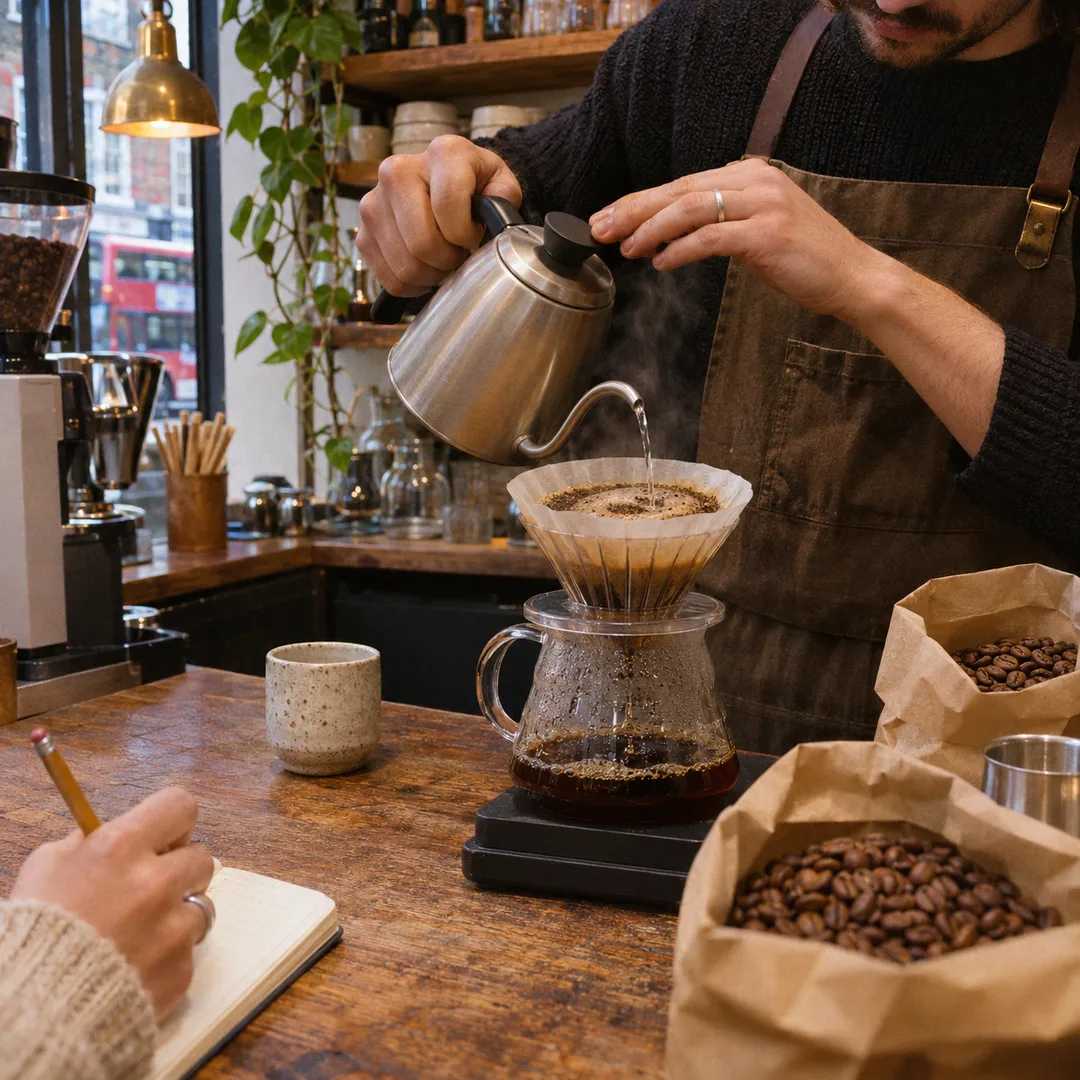
While you drink, watch the barista work if the brew bar is visible. Notice how much coffee they weigh, how coarse the grind looks and how they pour. Many home brewers struggle with consistency, and seeing a professional brew the same coffee you are drinking shows you exactly what you should be aiming for at home.
Ask the Questions You Cannot Google
Baristas at specialty shops are usually happy to talk about their coffee, especially if you visit during a quieter part of the day. Ask about the recipe they use for filter: how many grams of coffee to how much water, the grind setting relative to table salt or sand, and how long the brew takes. Ask how long after roasting they like to use the beans. These small details are the difference between an average cup at home and a great one.
If you use a particular brewer at home, mention it. Advice for a cone dripper is different from advice for a French press or an AeroPress, and a good barista will adjust their tips to suit your kit. Write down what they say. By the end of the crawl you will have a small notebook of recipes from people who brew for a living.
Walking the River to Bankside
From Waterloo, follow the riverside path east. You will pass second-hand book stalls under a bridge, street performers, skateboarders in the undercroft, and a long line of restaurants and bars. Keep walking towards Bankside, where the former power station that now houses a major modern art gallery rises above the river, and the old timber-framed theatre reconstruction sits close by.
Use this walk to compare your notes. Did the first coffee taste brighter than you expected? Did the barista's recipe surprise you? Then choose your second stop in the streets just behind the river, where several specialty cafes sit among the converted warehouses. Order a different origin this time, ideally a washed coffee if your first was natural or the other way round, and taste the two side by side in your memory.
Finishing With Beans Near Borough Market
The final stretch takes you towards Borough Market, one of London's oldest and most famous food markets. The streets around it are full of food stalls, bakeries and coffee counters, and it is the perfect place to finish your crawl by buying beans to take home. Look for a stall or shop that roasts its own coffee or carries a careful selection from small roasters.
Ask to smell the beans before you buy, check the roast date on the bag, and buy only what you will use in the next few weeks. Choose one coffee you know you liked during the crawl and one wildcard you have never tried. That way you have a safe favourite for busy mornings and an experiment for the weekend.
Choosing a Good Time for the Walk
Timing changes this crawl more than most. Weekend afternoons along the river can be very busy, with crowds around the market and long queues at the most popular coffee counters, which leaves little room for a proper chat with the person brewing. A weekday morning or early afternoon is calmer, and baristas are far more likely to have time to talk through grind settings and recipes.
Autumn suits the walk well. The plane trees along the embankment turn yellow, the light over the river is soft and low, and a warm cup feels welcome between stops. If the weather turns, the arches, galleries and covered market stalls along the route give you plenty of places to shelter while you wait for the shower to pass.
Using Karpo APP to Build the Route
Before you go, open Karpo APP and describe your plan: a specialty coffee crawl along the South Bank for a home brewer, starting near Waterloo, with filter coffee at each stop and somewhere to buy fresh beans near Borough Market. It can suggest coffee shops along the river so you can line up two or three stops without leaving the walk.
During the afternoon, use the app when you want to change course. If a cafe is too busy for a chat with the barista, ask Karpo APP for another specialty coffee shop nearby, and choose the one closest to the river path. It keeps the crawl focused on tasting and learning rather than searching.
Bringing the Crawl Home
Carry a tote bag with room for a couple of bags of beans, and keep them away from heat and sunlight on the way home. Drink water between coffees so your palate stays sharp, and do not feel you have to finish every cup. Tasting three or four sips is enough to learn from a coffee, and it keeps you from feeling jittery by the time you reach the market.
The real payoff comes over the next few mornings. Brew your new beans using the recipes in your notebook, adjust the grind as the baristas suggested, and compare the results with what you tasted by the river. Each cup becomes a reminder of the walk, and the next crawl along the Thames will teach you something new again.
Ask Karpo for more information.
Keep reading
- Marylebone Coffee Shop Finder: Village Cafes and Espresso
 Fitzrovia Coffee Shop Finder: Quiet Central London Espresso
 Covent Garden Coffee Shop Finder: Hidden Courtyard Cafes