 Greenwich Gelato Shop Crawl: Market Cobbles to Park Hilltop
Coffee & Dessert
Dalston Specialty Coffee Crawl Planner: Phin, Cezve, V60
Plan a Dalston coffee crawl through three brewing traditions: Vietnamese phin, Turkish cezve and a specialty pour-over, with market and garden breaks between.
Most coffee crawls in London stay inside one idea of coffee: light roasts, white walls, a pour-over bar and a menu of tasting notes. Dalston lets you do something more interesting. On a single walk up and around Kingsland Road you can drink coffee the way three different communities have been making it for generations, and then finish with a modern specialty cup that makes the comparison obvious. This specialty coffee crawl planner is built around that idea: a slow Vietnamese phin, a thick Turkish coffee from a long-handled pot, and a clean filter at the end, with a market and a garden in between so your stomach and your nerves get a rest.
Why Dalston Works for a Three-Tradition Crawl
Dalston has long been a neighbourhood where people arrive and bring their kitchens with them. The Turkish and Kurdish families who settled along Kingsland High Street and Stoke Newington Road built a world of ocakbasi grills, bakeries and men's coffee houses. A little further south, toward Haggerston and Hoxton, the stretch of Kingsland Road known for Vietnamese restaurants grew out of the community that came to Hackney from the late 1970s onward. Then, in the last fifteen years, a new wave of small specialty cafes arrived with scales, grinders and baristas who talk about extraction.
That mix is what makes a coffee crawl here worth planning. Instead of comparing three nearly identical flat whites, you compare three different answers to the same question: how do you turn roasted beans into something worth sitting down for? Each style has its own pace, its own sweetness and its own social habits, and walking between them in one morning teaches more than any tasting card.
Stop One: The Slow Drip of a Vietnamese Phin
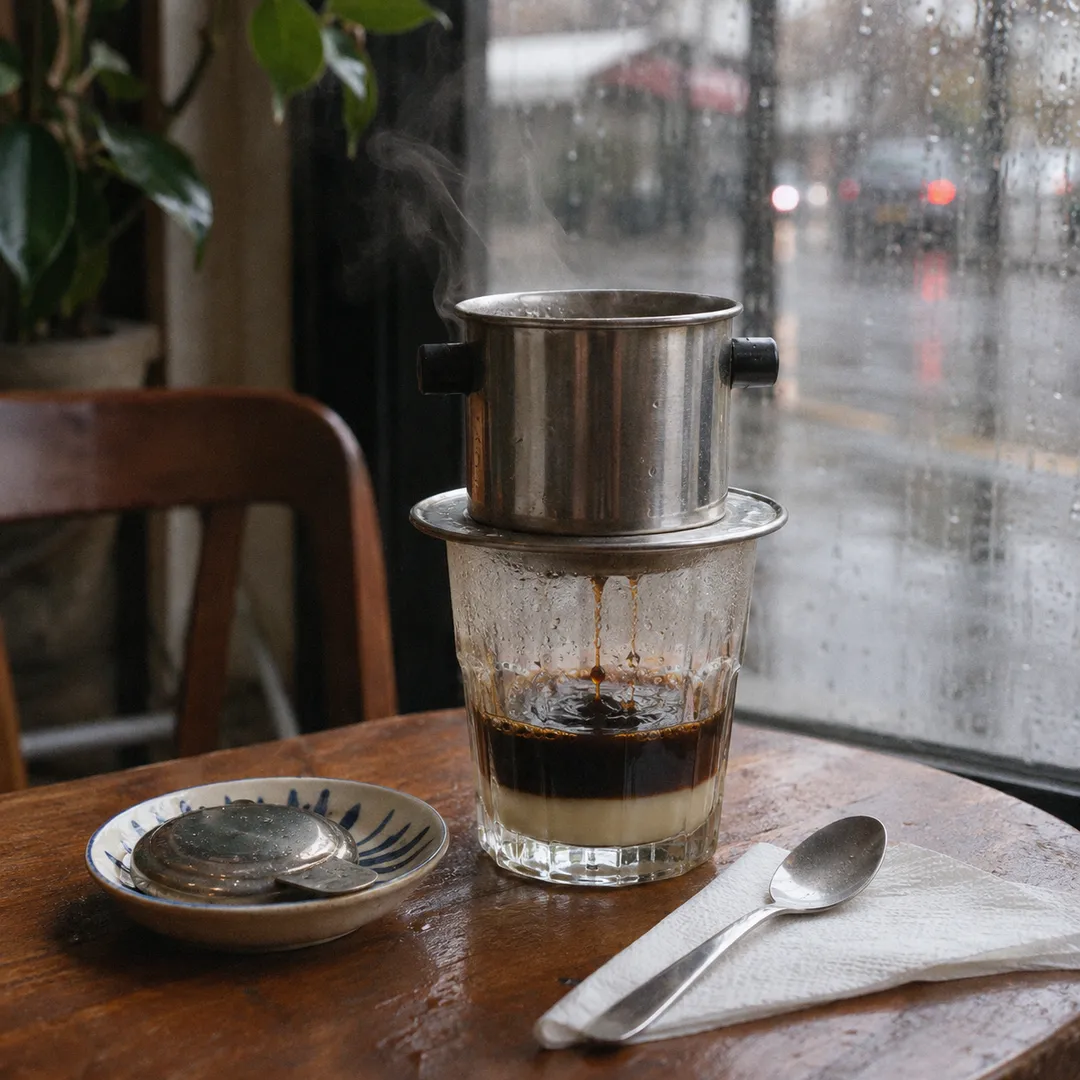
Start toward the southern end of Kingsland Road, where the Vietnamese cafes and pho houses sit close together. Ask for ca phe sua da, iced coffee with condensed milk, or the hot version if the morning is cold. What arrives is usually a small metal filter perched on top of a glass, with dark robusta-heavy coffee dripping drop by drop onto a pale layer of sweet milk. It takes several minutes, and that is the point.
Use those minutes to slow the whole crawl down. Watch how the colour changes, then stir once the dripping stops. The flavour is bold, chocolatey and almost syrupy, nothing like a light-roast filter, and the condensed milk turns it into something close to dessert. If you are crawling with a friend, order one hot and one iced so you can compare temperature as well as taste. A bowl of pho or a banh mi here is a good idea too, because the next two stops are strong and you will want something in your stomach.
A Market Break on Ridley Road
Walk north up Kingsland Road and cut into Ridley Road Market for the second leg. The market has been part of Dalston life for more than a century, and even on a quiet weekday it is loud with stallholders calling out prices for plantain, yams, fish and fabric. You are not here to buy coffee; you are here to let the first cup settle and to get a sense of the neighbourhood that all three cafes on this crawl belong to.
Pick up a piece of fruit or a warm bread roll from one of the bakeries near the market entrance. Something plain helps reset your palate between the sweet phin and the next stop. If you are planning the route on your phone, the Karpo APP can show you nearby cafes in each style around Dalston, so you can choose stops that fit your walking pace instead of zigzagging across the neighbourhood.
Stop Two: Turkish Coffee From a Long-Handled Pot
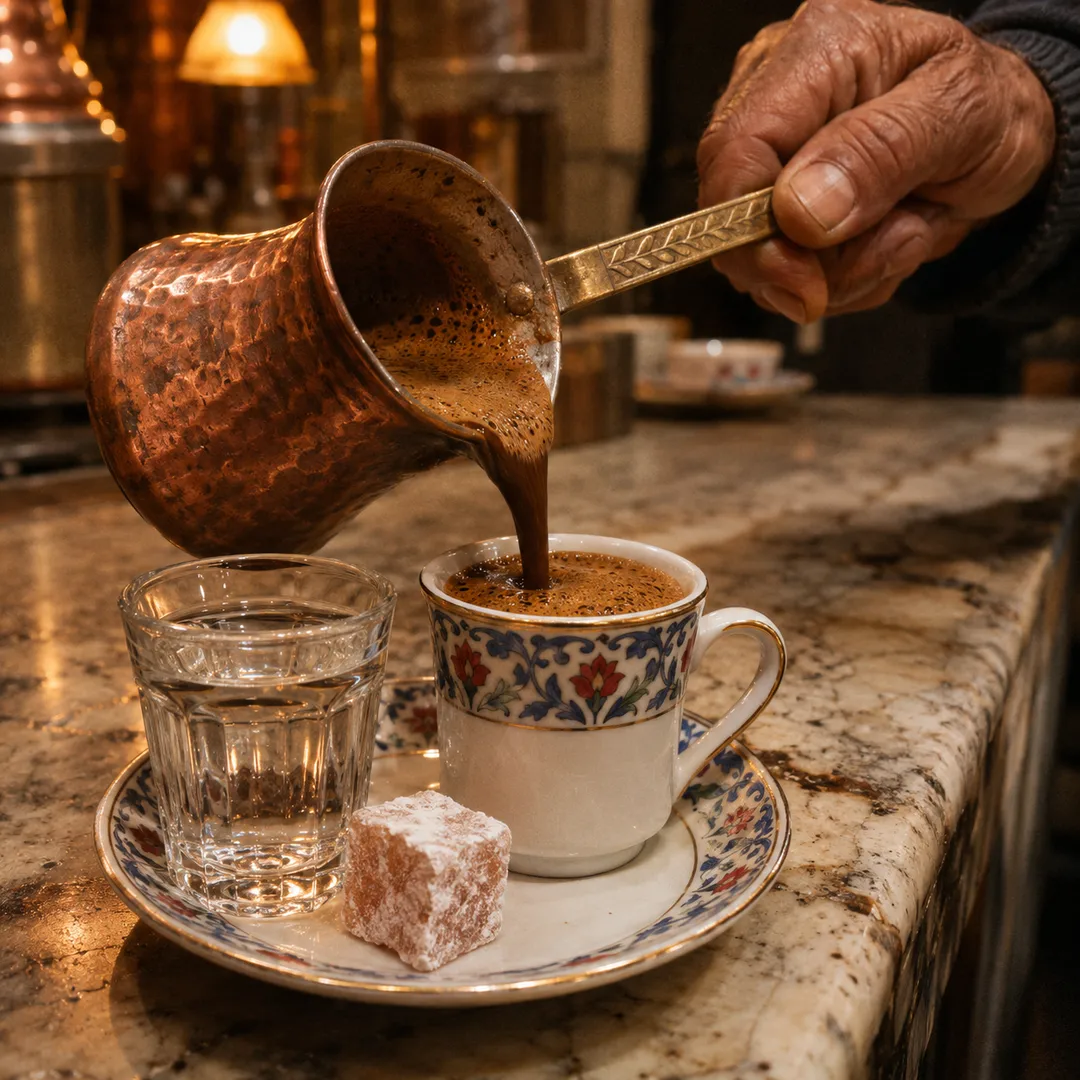
The second stop belongs to the Turkish side of Dalston. Look for a small cafe or bakery along Kingsland High Street or Stoke Newington Road where Turkish coffee is brewed in a cezve, the little long-handled pot heated slowly until a thick foam rises. Many places will ask how sweet you want it before they start, because the sugar goes into the pot rather than the cup. Sade means no sugar, orta is medium and sekerli is sweet. For a fair comparison with the specialty stop later, try it plain or medium.
The coffee arrives unfiltered in a small cup, often with a glass of water and a piece of lokum on the side. Sip the water first, then the coffee, and stop before you reach the grounds at the bottom. The texture is the thing to notice: heavy, silky and almost chewy compared with the phin. In some cafes an older regular may tell you about reading the grounds left in your cup, a tradition that turns the end of a coffee into a conversation. Take your time here. In Turkish coffee culture the drink is an excuse to sit, and rushing it misses half the experience.
A Breather in the Eastern Curve Garden
Before your third coffee, give your heart rate a break. The Eastern Curve Garden sits on an old railway line behind the high street, a community garden with timber structures, raised beds and corners to sit in. It is one of the calmest spots in Dalston, and in late autumn the planting turns to seed heads and bare branches that still look good in low light.
This is a good moment to take a few notes. Write down what you remember about each cup: sweetness, body, bitterness, how long the flavour stayed after you swallowed. It sounds a bit serious, but even three lines per coffee will make the last stop far more interesting, because you will taste the specialty cup against something concrete rather than against a vague memory of a latte.
Stop Three: A Bright Pour-Over to Finish
End the crawl in one of Dalston's modern specialty cafes, the kind with a hand-grinder on the counter and single-origin beans listed by farm or region. Skip the milk here and order a filter, ideally a lighter roast from East Africa or Central America if they have one. Ask the barista what they are enjoying this week; most are happy to explain a coffee if you show genuine interest.
After a phin and a Turkish coffee, the pour-over will taste startlingly light. Where the first two were about body and sweetness, this one is about clarity and acidity: notes of citrus, berries or black tea that are easy to miss when you drink this style on its own. That contrast is the real reward of the crawl. You will understand why people love each style, and you will probably find that one of them surprises you.
How to Pace the Caffeine and Plan the Day
Three strong coffees in a morning is a lot, so plan for it. Drink a full glass of water at every stop and eat something before the Turkish coffee. If you are sensitive to caffeine, share each cup with a friend or ask for a smaller serving at the last stop. Starting mid-morning rather than early gives you time to eat breakfast first and keeps the last cup well away from bedtime.
Weekends bring the busiest market energy and the fullest cafes, while a weekday morning is calmer and better for long chats with staff. Either way, the whole route is walkable in a couple of hours with breaks. Use the Karpo APP to save your three stops before you leave, then let the neighbourhood set the pace. Dalston has always been a place where different traditions sit side by side, and a coffee crawl is one of the most enjoyable ways to taste that.
Ask Karpo for more information.
Keep reading
- Greenwich Gelato Shop Crawl: Market Cobbles to Park Hilltop
 Hackney Gelato Shop Crawl: Small-Batch Arch and Park Route
 Islington Gelato Shop Crawl: Sunday Canal and Passage Walk