 Shoreditch Comic Shop Crawl Planner: Murals to Manga
Hidden Gems & Odd Finds

Islington Soft Pastel Paper Texture Picker: 3 Choices
Islington pastel paper choices start with fine stems and quiet ivory grounds. Compare tooth, broken lines and gentle layering for your next botanical drawing.
Fine tooth is a useful starting point for a small botanical drawing in Islington: it leaves room for stems, leaf edges and the pale gaps between them. This soft pastel paper texture picker begins with that particular project, rather than a claim that one surface suits every hand. Imagine a handful of dried seed heads drawn against an ivory ground, with just enough green to suggest the last living leaf. The paper should support those decisions without demanding that every hollow be filled.
Give the seed head some breathing room
Islington's residential squares and narrow passages offer a fitting mood for close observation. A stroll around the neighborhood can become a study in small intervals: the gap between railings, a bare twig against brick, the rounded shadow beneath a leaf. You need not make a finished drawing outdoors. Carry a sketchbook for shapes and write your own color impressions separately. That lets the browsing outing feed a project without turning every stop into a hunt for a particular product.
Before leaving home, choose the size of the intended picture and the kind of marks that matter most. A delicate stem has different needs from a densely blended background. Bring the pastel sticks you actually intend to use, protected from contact with other belongings. A firm stick may make a tidy line on a surface that swallows the edge of a very soft one. Comparing papers with an unfamiliar tool can lead you toward the wrong conclusion about your own working method.
Look for a broken line you can control
Tooth describes the small irregularities that catch pigment. A visibly textured sheet can leave a pleasing interruption in a green stem, while a less pronounced surface may carry a more continuous stroke. Neither effect is automatically more accomplished. For seed heads, ask whether the interruptions look like light moving through the plant or like holes you will repeatedly try to repair. That is a better question than whether the sheet feels luxurious beneath a fingertip.
Where sample use is permitted, make a narrow stroke with the side of a pastel and another with a corner. Keep the pressure light at first. Then draw a tiny fork where a stem divides. You are looking for a surface that lets those branches remain legible without bearing down. If the line becomes wider than you want, try a firmer pastel before rejecting the paper. One useful sample can reveal a relationship between stick and surface; it cannot predict every brand or color.
Ivory, stone or a stronger ground?
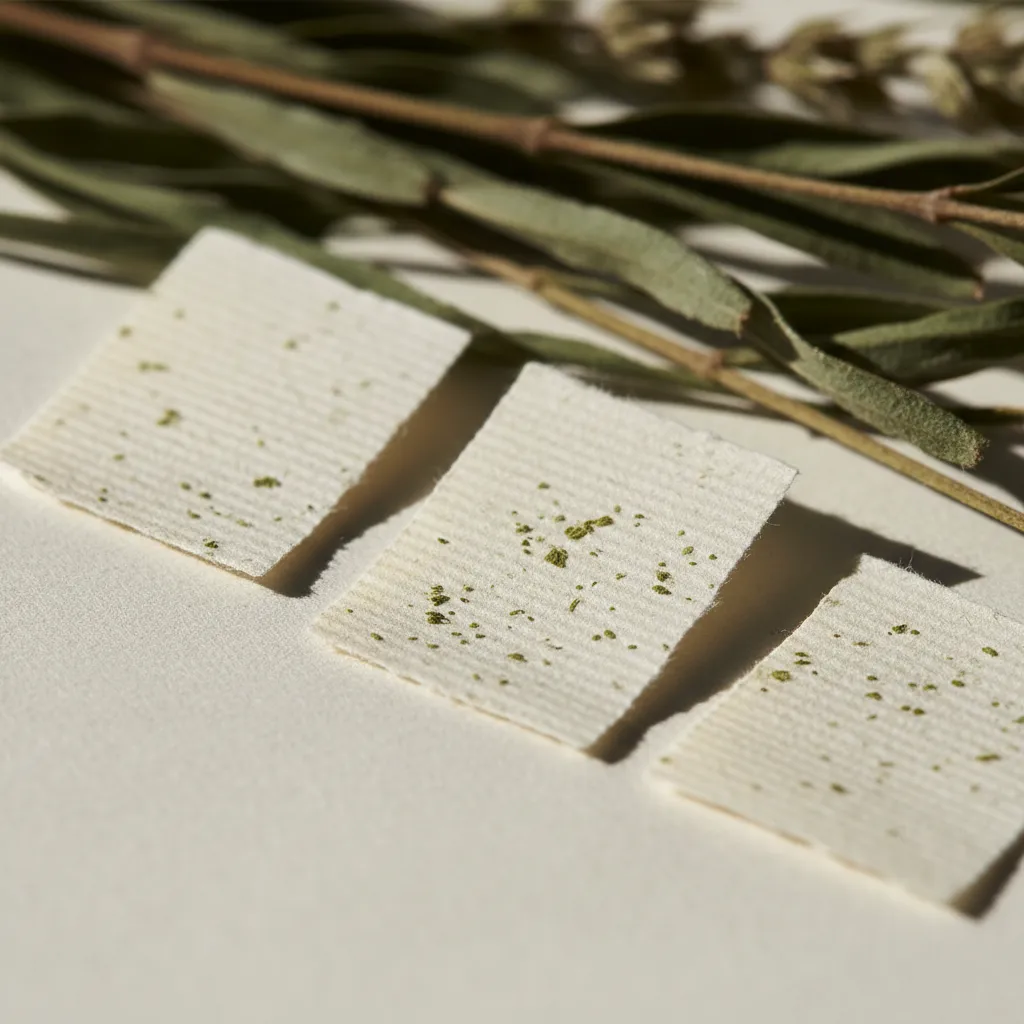
An ivory ground can become part of a botanical picture, especially when empty areas carry the composition. Put a small green mark beside a pale ochre mark and look at the paper showing around both. Does it feel like light, or does it make the green look tired? A cooler stone tone may separate warm seed pods more clearly. Choose with the planned palette beside you, because a stack of attractive blank sheets gives little evidence of how a finished drawing will read.
Skip a strongly ridged surface for this project if its repeating pattern competes with the plant's fine structure. You may love that same pattern in a broader landscape. Here, however, the spaces between branches are doing much of the work. A modest texture can hold enough pigment while leaving the ground quiet. This is an artistic preference to test, not a rule that finely detailed drawings must always live on smooth paper or that visible grain is a mistake.
Make a small comparison that answers something
Use separate scraps to compare an unblended leaf, a softly blended leaf and a light mark laid over a dark one. Keep the shapes similar enough that you can see what changes. Avoid covering the entire sample with vigorous rubbing. You want to know whether a gentle green layer leaves room for a pale vein, not whether every surface can be forced into a uniform field. Photograph your samples only if the setting and any display rules allow it.
A fingertip can blur a delicate edge more quickly than expected, so include one passage left entirely untouched. If you normally use a paper stump or another applicator, test that tool too. Notice whether your preferred result comes from the paper itself or from a treatment you would struggle to repeat across the drawing. Buying a more demanding sheet can be worthwhile, but it is less helpful if the project is supposed to be a relaxed return to drawing after a long break.
Browse with one question in your pocket
The practical question for this Islington outing is simple: which surface lets you place a thin stem beside a soft leaf without changing your pressure dramatically? You can ask for nearby art material places in the Karpo APP. Its role here is nearby place recommendations. You choose which places interest you, decide their order and arrange your own journey. A recommendation is a starting point for exploring; it does not establish that a particular paper or sample is available there.
Keep the outing small enough to remember what you saw. Rather than trying to inspect every possible paper, concentrate on a fine surface and a more pronounced alternative if you encounter them. Make your own short notes about the differences. You can take a separate neighborhood walk afterwards, perhaps around a garden square or along a stretch of canal you select yourself. Leave the materials packed while walking so that loose pigment stays away from clothing, benches and other people's belongings.
Bring home a decision, not a perfect sheet
At home, repeat the most useful sample under the light where you will draw. A paper that looked pleasantly warm during the outing may appear different beside your usual lamp. Set the scraps against a neutral background and compare them from the distance at which the finished picture will be seen. The winner should support the stem, leaf and empty space together. A beautiful close view of the grain is only one part of that judgment.
For practical preparation, carry a rigid folder larger than the paper, an interleaving sheet suitable for the material, and something to contain dusty tools. Handle unsampled stock with clean hands and ask before touching a drawing surface. Keep any experiments within the permission you have been given. If nothing answers the project well, leaving with a clearer description of the problem is useful progress. The eventual seed head drawing needs a surface that welcomes your marks, rather than a purchase made to give the outing an ending.
Ask Karpo for more information.
Keep reading
- Shoreditch Comic Shop Crawl Planner: Murals to Manga
 Bermondsey Comic Shop Crawl Planner: Zines Under the Arches
 Clapham Comic Shop Crawl Planner: Charity Shelves and Common