 Brixton Vintage Thrift Shop Finder: South London Retro Gems
Hidden Gems & Odd Finds
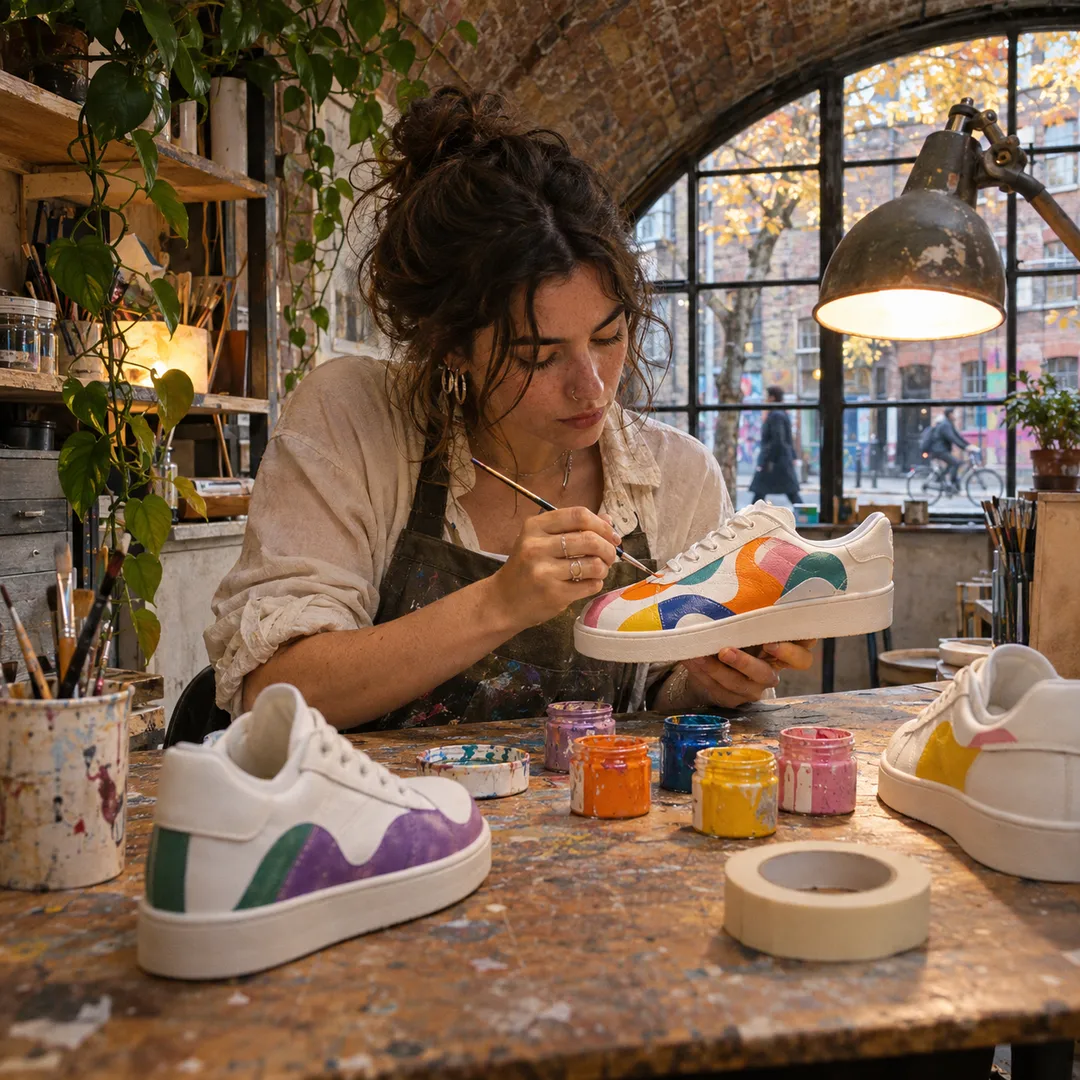
Shoreditch Sneaker Shop Crawl Planner for Custom Pairs
Plan a Shoreditch sneaker crawl for custom pairs: restoration and painting studios, independent boutiques, Brick Lane street art and a Sunday flower market.
Shoreditch has never been interested in looking like everyone else. The railway arches, converted warehouses and street art around Brick Lane have made this corner of East London a magnet for designers, painters and people who would rather customise a pair of trainers than buy the most popular colourway twice. If you want a pair that tells your own story, whether that means hand-painting a plain upper, rescuing a battered favourite, or hunting for a small-batch maker, this crawl strings together the kinds of places and streets that make it possible in a single day.
Why Shoreditch Is the Customisers' Corner of London
The area's creative streak goes back a long way. Old furniture workshops and textile warehouses gave way to studios and galleries, and many of those spaces still feel like places where things are made rather than simply sold. That spirit carries over into footwear: around Shoreditch you will find independent sneaker boutiques, streetwear stores that stock small labels, and studios where people clean, repair and paint trainers by hand.
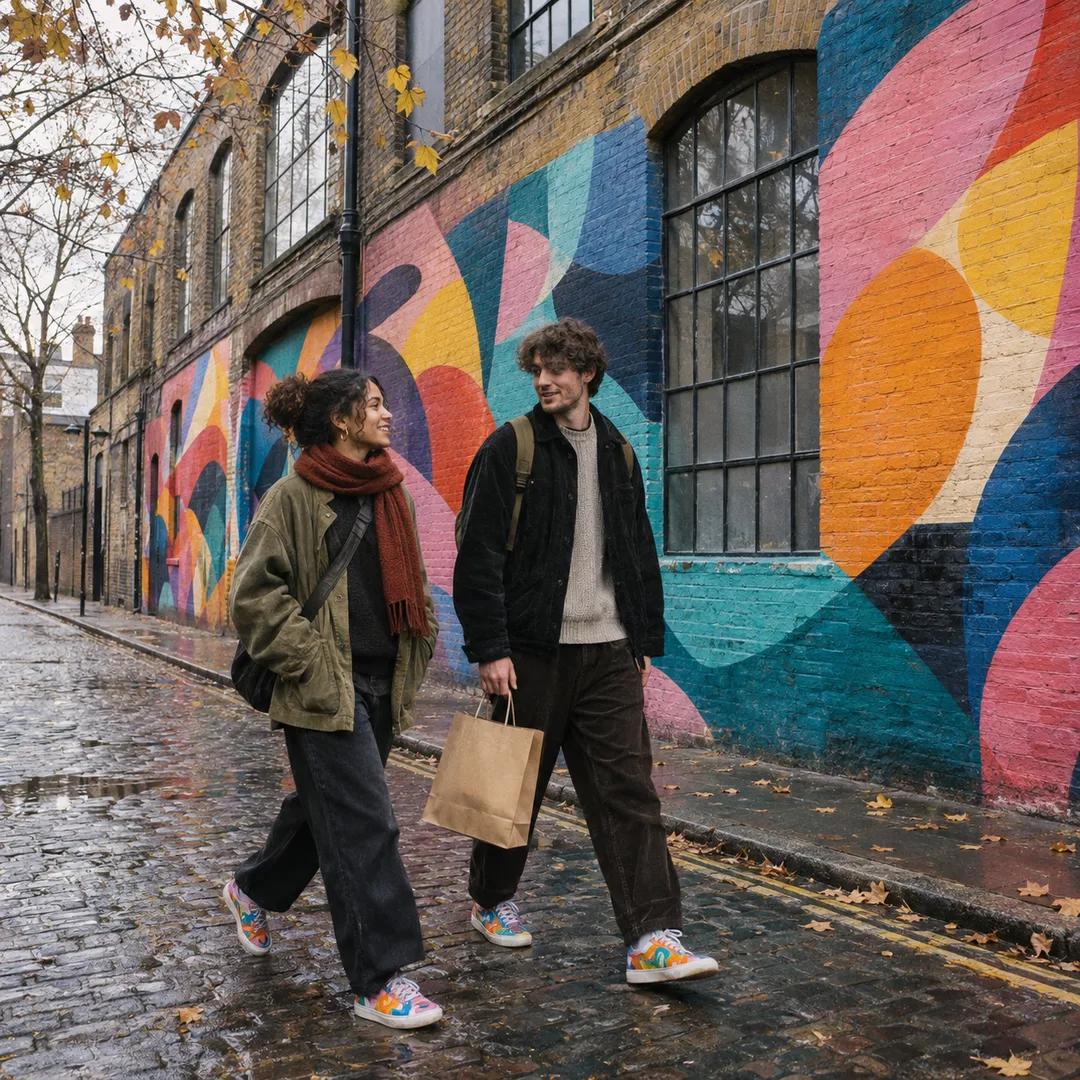
The neighbourhood also rewards wandering. Murals change regularly on the walls of Brick Lane and the surrounding streets, and new pop-ups appear in arches and shopfronts all the time. A crawl here is less about ticking off a fixed list and more about following your eye from one interesting window to the next, which is exactly the mindset you need when you are designing something personal.
Spend a few minutes simply walking before you shop. Notice the colours and patterns on the walls, and take photos of anything that might inspire a design.
Decide What Kind of Custom You Want
There are three broad routes. The first is restoration: taking a pair you already love and getting it deep cleaned, re-soled or re-glued so it has another few years of life. The second is light customisation, such as swapping laces, adding patches or changing insoles. The third is full customisation, where an artist paints or reworks the upper into something completely new.
Knowing which route you want before you set off saves a lot of time. Restoration needs a pair in your bag and a realistic idea of what can be saved. Light customisation is something you can mostly do yourself with a few purchases. Full customisation usually means a conversation with an artist, a sketch, and patience while the work is done, so treat the crawl as the start of the process rather than the end.
If you are starting from scratch, choose a plain base shoe. A simple white leather or canvas trainer with few overlapping panels gives an artist the most space to work and tends to produce cleaner results.
Walking the Crawl From Shoreditch High Street
Begin near Shoreditch High Street and work along Redchurch Street and the lanes around it, where independent fashion and lifestyle shops sit beside small studios. This is a good stretch for browsing small labels and quieter models you will not see on every high street, and for picking up inspiration about colours and materials.
From there, head toward the container-style shopping area by the station for a quick look at the bigger streetwear names, then cross over into Brick Lane. Walk north to south slowly, ducking into the side streets to look at the murals. The vintage shops along the lane often have racks of old trainers and boxes of laces, patches and pins that are perfect for light customisation.
Keep a small notebook or a notes app open. Write down colours, motifs and textures that catch your eye, and photograph shoes with details you like. When you eventually sit down with an artist, those references will make the brief far clearer than trying to describe an idea from memory.
Talking to a Painter or Restorer
If you find a studio offering customisation or restoration, ask to see examples of their past work and how those pairs aged after being worn. Good artists are usually proud to show close-ups of their brushwork and will explain how they prepare leather, which paints they use, and what kind of finish protects the design from rain and scuffs.
Be honest about how you will wear the shoes. A pair for everyday commuting needs a tougher finish and a simpler design than a pair for special occasions. Ask how long the work will take, how you should look after the finished shoes, and whether the artist can send progress photos. Agree the design in writing, even a quick sketch and a message, so that both of you know exactly what to expect.
For restoration, show the restorer the worst parts of the shoe first. Yellowed soles, split heel linings and deep creases each need a different fix, and an experienced restorer will tell you honestly what is worth doing.
Make It a Weekend in East London
If you are crawling on a Sunday, finish at Columbia Road, where the flower market fills the street with buckets of blooms and the shouts of traders. It is a cheerful contrast to a day spent looking at shoes, and the little shops along the road are good for picking up gifts. On Saturdays, Spitalfields and the Old Truman Brewery area bring extra market stalls and food to the mix.
Columbia Road also suits a slower test walk if you collected a restored pair earlier in the day. The street is short and lined with tiny independent shops, so you can stroll it twice, stop for a coffee, and notice whether the new soles grip properly on the old paving. Arrive early in the morning if you want space to move, because by midday the narrow pavements fill up with people carrying armfuls of flowers and plants.
End the day with something to eat around Brick Lane, where the choice ranges from curry houses to bagel bakeries. Sitting down with your notes and photos is the best way to turn a day of wandering into a clear plan for your custom pair.
Practical Notes for Custom Sneaker Days
Carry a cleaning cloth, a small bag for your old laces, and the shoes you want restored in a tote rather than wearing them. Weekdays are calmer in the studios and boutiques, while weekends bring the markets and the crowds. Wear comfortable shoes that you do not mind getting dusty, because the best finds are often in the corners of busy vintage shops.
Once your custom pair is finished, protect it with a suitable spray and clean it gently with a soft brush and a damp cloth rather than a washing machine. When you want to plan a full Shoreditch day, from Redchurch Street to Brick Lane and Columbia Road, the Karpo APP can help you map the route, save your favourite studios, and keep your design references together.
Ask Karpo for more information.
Keep reading
- Brixton Vintage Thrift Shop Finder: South London Retro Gems
 Notting Hill Vintage Thrift Shop Finder: Preloved Rails
 Soho Vintage Thrift Shop Finder: West End Designer Archives