 Brixton Vintage Thrift Shop Finder: South London Retro Gems
Hidden Gems & Odd Finds
Notting Hill Sneaker Shop Crawl Planner for Vintage Trainers
Plan a Notting Hill sneaker crawl for vintage trainers: Portobello stalls, how to check worn soles and glue, and a Golborne Road loop to finish the morning.
Notting Hill sells nostalgia better than almost anywhere in London, and that includes trainers. Between the antique silver and the vintage leather jackets, the stalls and secondhand shops around Portobello Road turn up retro runners, faded terrace classics and court shoes that went out of production before their new owners were born. The hunt is half the fun, but a worn pair can hide a crumbling midsole or a peeling heel. This crawl is built for anyone who wants the thrill of the dig without carrying home a shoe that falls apart on the walk back to the Tube.
Why Portobello Turns Up Old Trainers
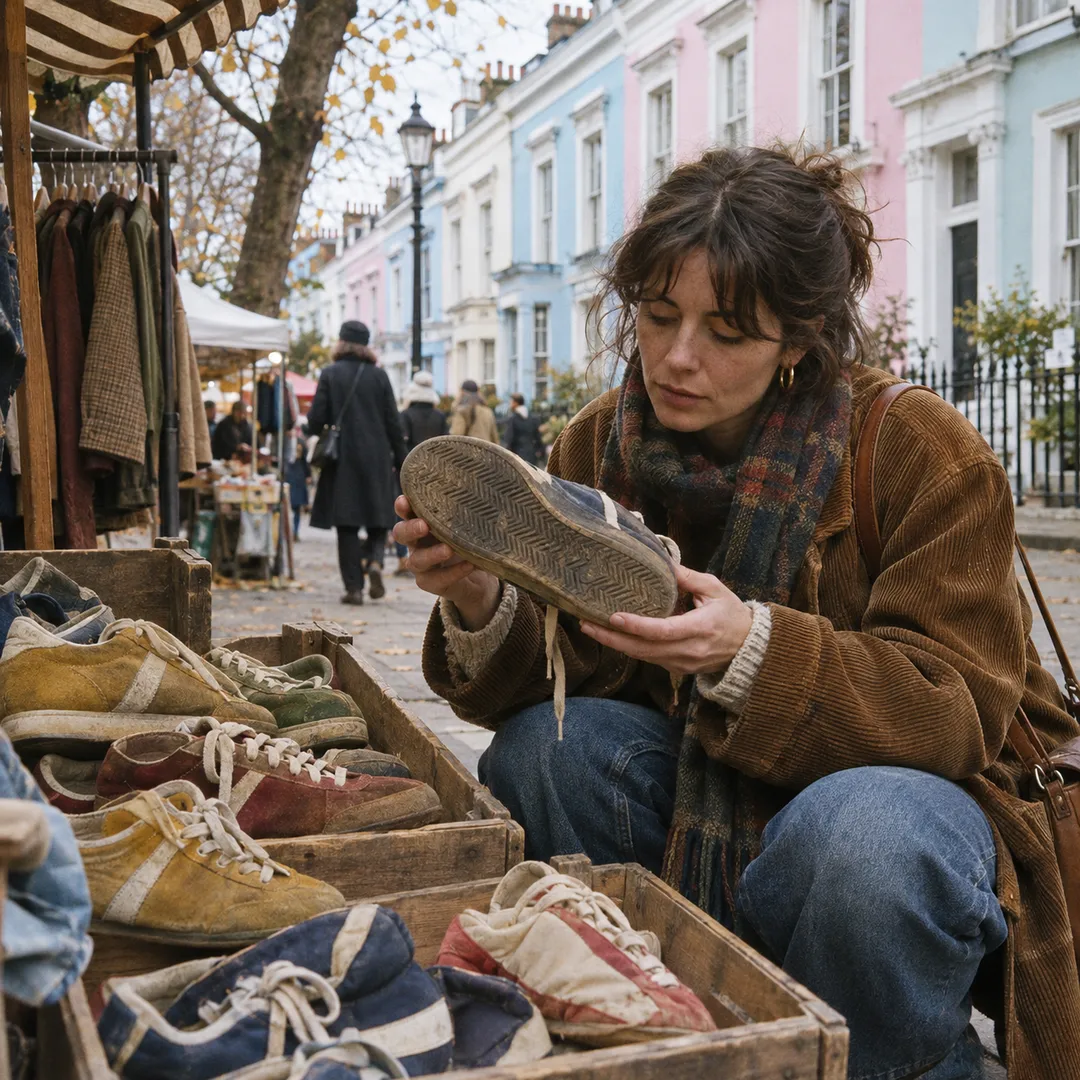
Portobello Road has been a market street for a very long time, and its character shifts as you walk north. The southern end near the antiques arcades is polished and busy with visitors. Further up, past the stretch of fruit and vegetable stalls, the mood relaxes into clothes, records and bric-a-brac, and that is where trainers start to appear. Rails of secondhand sportswear often come with a crate of footwear underneath, and a patient browser can find a pair with a story behind it.
Part of the appeal is the people running the stalls. Many have been collecting for years and will happily tell you which decade a silhouette comes from, why a certain colourway was only sold in Europe, or how they found a box of unworn pairs in a closing shop. Listen to those stories. They help you judge whether the price feels fair and whether a pair is a genuine piece of history or simply a recent shoe that has been worn hard.
Timing the Morning Around the Market
Saturday is the main market day and the busiest by far. Arrive early, when stallholders are still unpacking, and you will have room to crouch down at the crates and talk without a crowd pressing behind you. By late morning the pavements around the antiques end fill with visitors taking photos, so head north quickly and save the colourful houses for the walk back.
Friday is a smart alternative. The market is smaller and the energy slower, but the secondhand clothing stalls further up the road often have more time to chat, and the shops along the route are calmer. If you only care about trainers and not the antiques, a Friday morning can be the most relaxed way to do this crawl.
Whatever day you pick, eat breakfast first and bring a tote bag. Shoe hunting on an empty stomach makes everything look like a bargain, and you will want both hands free to inspect what you find.
How to Check a Secondhand Pair in Two Minutes
Start with the sole. Flip the shoe over and press the midsole firmly with your thumb. Old foam that has gone hard and chalky, or that shows tiny cracks along the sidewall, is likely to crumble once you start walking. Look for even wear across the heel; heavy wear on one edge tells you how the previous owner walked, and that shape will stay with the shoe.
Next, check the glue line where the upper meets the sole. Gently flex the shoe at the toe and watch whether the edges lift. A small gap can be repaired by a cobbler, but a sole separating along the whole side usually means the adhesive has aged out. Peek inside, too. Pull out the insole if it lifts, look for torn heel lining, and give the shoe a quick sniff, because some smells never leave.
Finally, try both shoes on and stand up. Vintage sizing can run differently from modern pairs, and old shoes have already moulded around someone else's feet. Walk a few steps on the pavement. If anything rubs immediately, it will not improve, however good the colourway looks.
Deciding Between Wearing and Keeping
Before you hand over cash, decide what the pair is for. A trainer you plan to wear every weekend should have a healthy sole and a solid glue line. A pair you love purely as an object, perhaps an old colourway you remember from childhood, can be more fragile, because it will mostly live on a shelf. Being honest about this stops you from paying wearable-pair prices for a display piece or ruining a rare shoe on a wet commute.
If you are torn, ask the stallholder whether they will hold the pair while you walk the rest of the market. Many will, especially early in the morning. A loop up the road and back gives you time to think and compare without the pressure of the moment.
It also helps to think about what the shoe will sit next to in your wardrobe. A loud retro runner in mismatched panels can look brilliant with plain jeans and a dark coat, but it fights with patterned trousers or bright knitwear. A faded court shoe, on the other hand, goes with almost everything and tends to be the pair people end up wearing most. If the trainer would need a whole new outfit built around it, consider whether you will really reach for it on an ordinary Tuesday.
Finish the Loop Along Golborne Road
Once you reach the top of Portobello Road, turn onto Golborne Road, where the market thins out into a lively mix of Moroccan and Portuguese cafes, furniture dealers and more secondhand stalls. It is a good place to sit down with a coffee and a custard tart, check your finds properly in daylight, and give your feet a rest before the walk back.
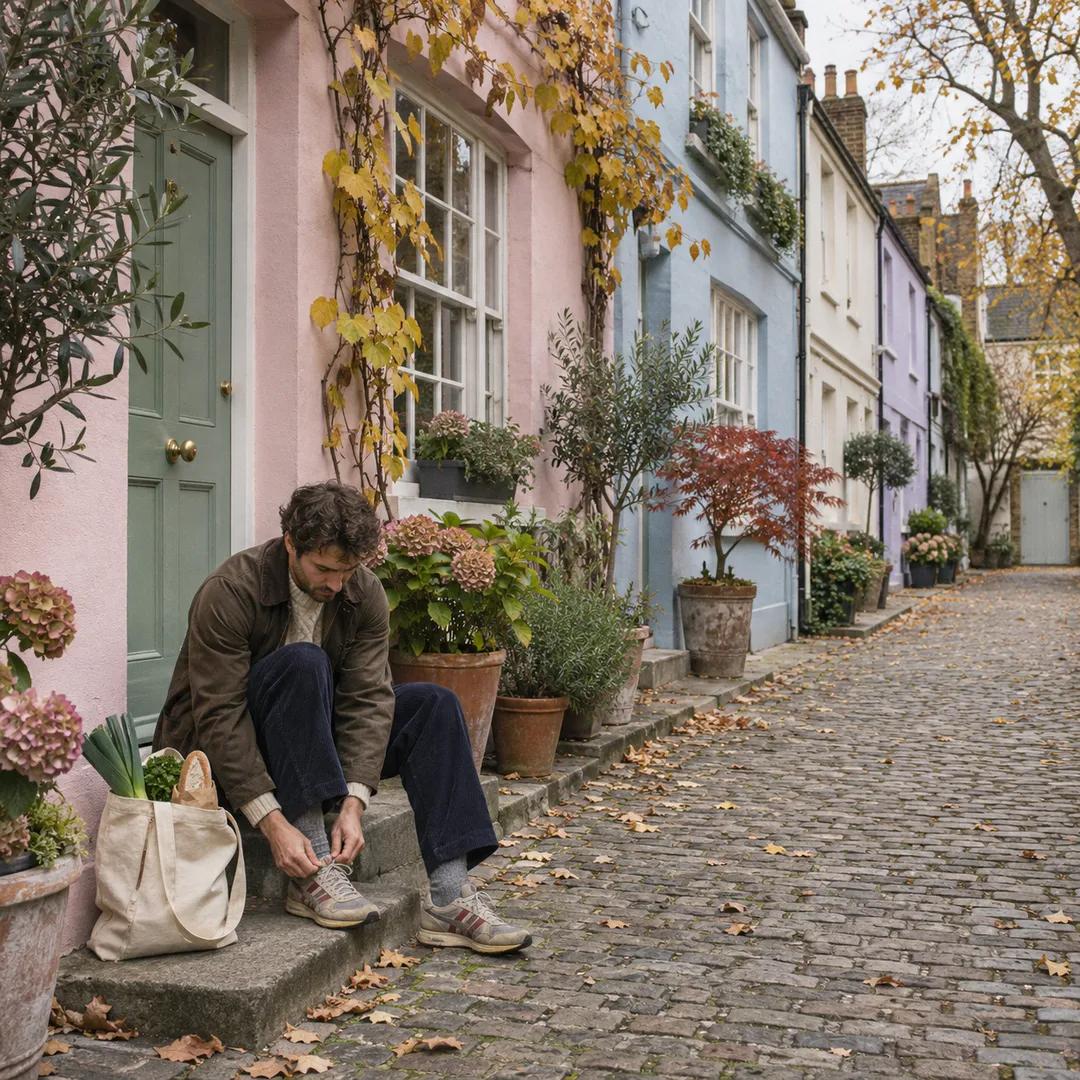
On the return, drift off the main road into the quiet mews and crescents. The cobbled lanes behind the high street make a calm place to change into a new pair and test them, and the pastel terraces are far more pleasant to photograph once the crowds have gone home.
If you still have energy, walk back down through the side streets toward Westbourne Grove instead of retracing Portobello. The route is quieter, the pavements are wider, and you pass a few independent clothing shops where a newly found pair can be tried against a jacket or a pair of trousers. It turns a market dash into an easy, unhurried loop that ends close to the Tube.
Practical Notes for Vintage Hunters
Carry a little cash, since some smaller stalls prefer it, and a plastic bag to keep dusty soles away from the rest of your shopping. A small torch on your phone helps you look inside dark shoes. If you find a pair with a loose sole, a local cobbler can often re-glue it, and many trainer collectors swear by a gentle clean with a soft brush and mild soap rather than a washing machine.
Keep a running note of the pairs you passed on and why. Next time you come back you will know which stalls carry runners, which focus on courts, and which only turn up shoes occasionally. When you want to plan your next Saturday morning, the Karpo APP can help you sketch a route from the antiques end up to Golborne Road, so you spend less time guessing and more time digging through crates.
Ask Karpo for more information.
Keep reading
- Brixton Vintage Thrift Shop Finder: South London Retro Gems
 Notting Hill Vintage Thrift Shop Finder: Preloved Rails
 Soho Vintage Thrift Shop Finder: West End Designer Archives