 Brixton Vintage Thrift Shop Finder: South London Retro Gems
Hidden Gems & Odd Finds
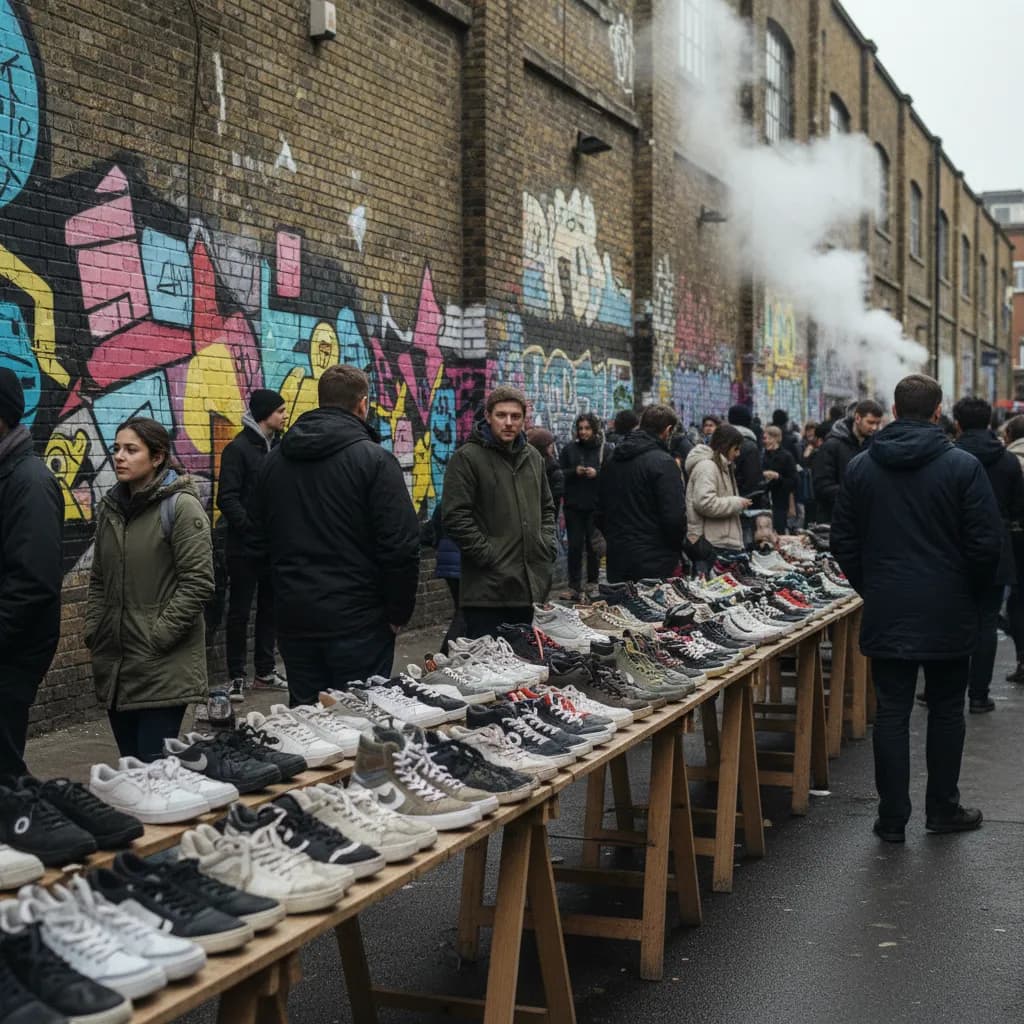
Shoreditch Sneaker Consignment Boutique or Brick Lane Stall?
In Shoreditch a sneaker consignment boutique offers checked pairs, while Sunday stalls on Brick Lane trade cheaper but riskier, so learn which suits your pair.
Shoreditch gives sneaker hunters two very different options within a few minutes of each other: a sneaker consignment boutique, where pairs have usually been inspected before they reach the wall, and the Sunday tables along Brick Lane, where anything goes and the seller is standing right in front of you. Both are free to browse. The real question is how much checking you are prepared to do yourself, and how much risk your budget can absorb.
The Case for the Boutique Shelf
A consignment shop sits between private sellers and you. Staff take in pairs, look them over and only list the ones they are happy to stand behind, which is why prices run higher than on a market table. You are paying partly for the shoe and partly for that filter. For rare collaborations or anything you would hate to lose money on, the extra cost often makes sense.
Boutiques also give you somewhere to go back to. If a sole separates within a week or a size label turns out to be mismatched, there is a counter, a receipt and usually a policy to point to. Ask about it before paying. Many consignment sales are final, but some shops will take a pair back if a fault was missed at intake, and knowing which applies changes how carefully you inspect.
The Case for a Sunday Table
The Sunday market spread around Brick Lane and the Old Truman Brewery is a different animal. Sellers range from collectors clearing a shelf to traders with stacks of boxes, and prices can be much lower, with room to talk. The catch is that nobody has filtered the stock. You are the authenticator, and once you hand over cash and walk off into the crowd, there is rarely anyone to go back to.
Tables reward people who already know a model well. If you have owned the shoe before, you will notice when the toe box shape looks too bulky, the heel tab sits at the wrong angle or the insole print smudges under your thumb. If you are buying a model for the first time, the market is a place to learn by handling pairs, not the place to spend serious money.

Habits That Catch Most Problems
Smell the inside of the shoe. Factory pairs have a faint glue smell, but an overpowering chemical odour is often a warning sign. Press the midsole with your thumb and compare the give on the left and right shoes. Check that both shoes carry the same production details on the inner tags. Some collectors bring a small ultraviolet torch, since certain glues and markings show up under it in ways genuine pairs usually do not.
Pay attention to the box as closely as the shoe. Weight, print sharpness, the font on the label and the colour of the cardboard all vary between factories, and sellers sometimes pair a strong shoe with a weak box or the reverse. A missing box is not automatically a dealbreaker on a well-worn pair, but on anything described as unworn it should lower the price considerably.
A Walk Between the Two Worlds
Start at Shoreditch High Street Overground station and step across to Boxpark, the pop-up mall built from stacked shipping containers that opened beside the station in 2011. Its row of small streetwear units sets the mood. From there walk east along Bethnal Green Road and turn down Brick Lane, where the long run of market stalls, food traders and painted warehouse walls gets busier the further south you go.
The Old Truman Brewery complex, roughly halfway down Brick Lane, hosts vintage and makers' markets on its weekend days, and the yards around it are where sneaker tables tend to appear among vintage clothing. Continue south to Spitalfields Market if you want a covered space to compare notes. Aldgate East and Liverpool Street stations are both a short walk from the end of the route.
Who turns up shapes the mood. Expect students hunting a first pair of retro runners, older collectors who remember when certain colourways were simply on the high street, and resellers moving quickly from table to table with a mental price list. The resellers are worth watching from a distance: if three of them pass over the same pair without a second look, there is usually a reason, and it is rarely that they missed a bargain.
Timing and an Honest Warning
Sunday from late morning to mid-afternoon is when Brick Lane is at its liveliest, which suits browsing but not careful inspection. Arrive soon after stalls set up if you want room to handle shoes. Weekday visits suit the boutique side better, since staff have more time to talk you through how a pair was checked on arrival.
One frank piece of advice: skip any table offering a stack of identical unworn hyped pairs in every size at well under retail resale value. Genuine collectors rarely have deep size runs of the same rare shoe, and prices that look too kind usually are. If you love a pair you find there but feel unsure, walk to a boutique, compare it against a checked example, and come back if the details line up.
Where Karpo Fits Into the Plan
Karpo APP can turn a vague Sunday into a route. Tell it whether you want boutiques, market tables or both, plus your size and how much walking you want, and it can lay out an order that starts near Shoreditch High Street and finishes by a station. It cannot inspect pairs for you, so take its suggestions as a map and bring your own eyes and torch.
Practical Notes
Carry some cash for market tables and a card for boutiques. Keep a list of style codes on paper so your hands stay free for shoes. Wear comfortable shoes of your own, as the route involves long stretches of standing on cobbles and concrete. If you pay a stall holder, photograph the seller's table and the pair before leaving, which can help with any later dispute or resale.
Ask Karpo for more information.
Keep reading
- Brixton Vintage Thrift Shop Finder: South London Retro Gems
 Notting Hill Vintage Thrift Shop Finder: Preloved Rails
 Soho Vintage Thrift Shop Finder: West End Designer Archives