 Islington Dive Bar Night Picker: Essex Road and Quiz Nights
Bars & Nights Out
Clerkenwell Scotch Egg Pub Snack Picker for Real Ale Runs
Use this Clerkenwell scotch egg pub snack picker to match warm runny-yolk shells with cask bitters around Smithfield, Exmouth Market, and historic green lanes.
An architectural model-maker stepping out of a studio near Clerkenwell Green and a visiting brother off the train at Farringdon rarely want a sit-down three-course meal before their evening walk. They want a Clerkenwell scotch egg pub snack picker that separates cold, fridge-hardened pastry-case spheres from warm, freshly fried counter snacks served beside a cellar-cool pint of bitter. Because Clerkenwell sits right against the old meat-trading avenues of Smithfield and the pioneering gastropub corners that reshaped London bar food, this neighborhood treats the humble breaded egg as a serious craft test rather than an afterthought.
Why Smithfield Proximity Shapes Clerkenwell Bar Counter Standards
Walk the quiet curves between Charterhouse Square, St John's Gate, and the ironwork perimeter of Smithfield, and the culinary logic of the area becomes obvious immediately. Generations of butchers, drovers, and print-shop apprentices needed compact, high-protein counter fare that could be eaten with one hand while holding a pewter tankard or a half-pint glass. When the modern London gastropub movement took root in these exact Victorian corners, chefs kept the traditional bar-snack format but upgraded every component: coarse-ground shoulder pork, fresh sage and mace, free-range eggs with deep amber yolks, and panko or fresh sourdough crumbs fried to order.
For two brothers catching up over a mid-week round, that heritage changes how you read a pub counter. In many parts of central London, a breaded egg sits under a glass dome all afternoon until the shell turns leathery and the grey-rimmed yolk goes chalky. In Clerkenwell, regulars expect either a batch-time chalkboard note on the bar back or a kitchen hatch that sends each portion out warm on a wooden board with a smear of sharp condiment. Knowing whether a room operates as a wet-led alehouse with counter jars or a kitchen-led tavern with hot bar plates is the core decision that saves your evening.
Skip the glossy corporate bars right beside the main station ticket halls where snacks arrive pre-packaged from a central commissary. Walk five minutes north into the warren of brick alleys around Clerkenwell Close or east toward the medieval archway of St John's Lane, where independent cellars still treat bar snacks as a point of pride.
Decoding Sausage Casings, Runny Yolks, and Mustard Pairings
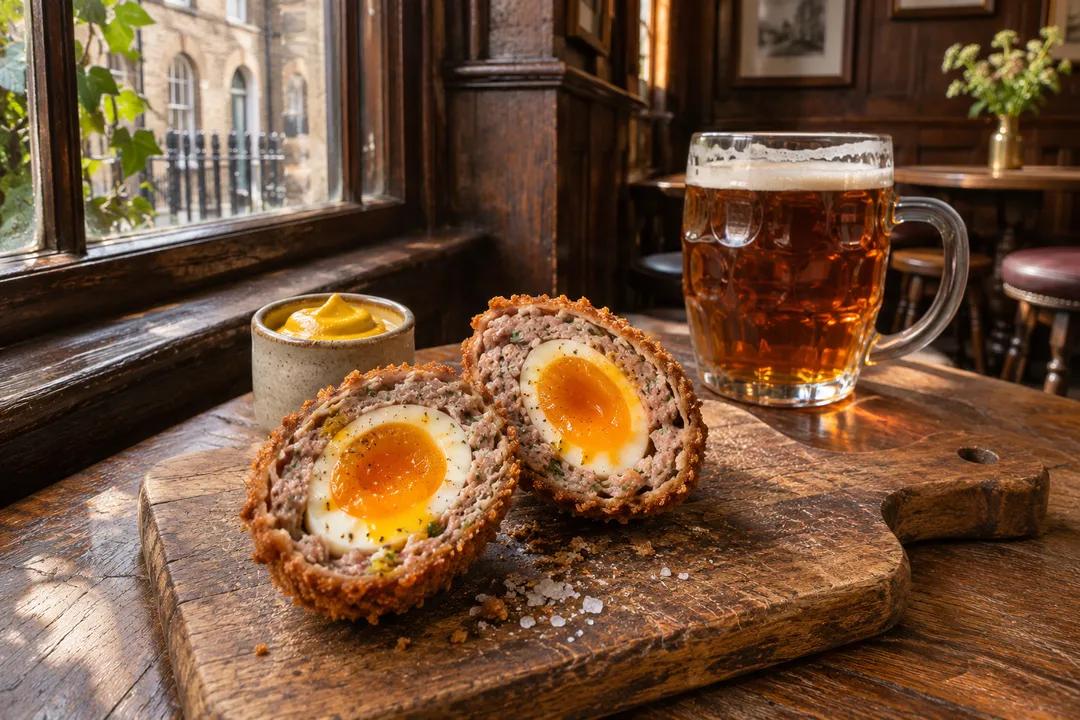
A reliable Clerkenwell scotch egg pub snack picker breaks the dish down into three variables: the mince blend, the yolk set, and the acid cut on the side. Classic Cumberland-style pork seasoned with white pepper, nutmeg, and rubbed sage remains the benchmark for a first pint, offering a savoury, herb-forward shell that never overwhelms a delicate golden ale. Across several Clerkenwell counters, however, kitchens swap in Lancashire black pudding or mixed venison and juniper mince, creating a darker, richer crust that stands up to roasted porters, dry stouts, or malty extra special bitters.
Yolk texture matters just as much when you are sharing a plate at a narrow standing ledge. A soft, jammy centre that barely holds its shape when halved with a serrated pub knife coats the crumb and acts as its own sauce, whereas a firmer medium-set yolk travels better if you are carrying your plate out to a courtyard bench. Vegetarian visitors are rarely left out here either: neighbourhood kitchens frequently roll soft-boiled eggs in crushed chickpea, charred leek, or spiced lentil casings that fry up just as crisp as butcher-shop sausage.
Pay attention to the condiment pot before you take your first bite. Fiery English mustard clears the palate between sips of hoppy pale ale, while house-made piccalilli—sharp with cauliflower florets, mustard seed, and turmeric—cuts through the richness of a black pudding shell. If a chalkboard offers anchovy mayonnaise or Baron Bigod cheese sauce on the side, order it only when splitting the snack between two people, as the extra richness quickly turns a light sharpener into a full supper.

Timing the Post-Work Crowd and Ordering at the Bar
Clerkenwell follows the rhythm of its design studios, architectural practices, and legal chambers, which means Thursday and Friday evenings see a sudden surge of pavement drinkers spilling onto the cobbles. If your goal is a warm snack eaten comfortably at an indoor high table or a leather snug bench, aim for the quiet window between late afternoon and the main office exodus, or arrive later in the evening after the early commuter wave has caught the train home from Farringdon.
Bar etiquette in these historic rooms is straightforward but worth respecting. Unlike formal dining rooms, most tavern front bars operate on direct counter ordering: check whether hot snacks require a table number or if the bartender simply calls out the dish name when the small brass bell rings at the kitchen pass. Always ask whether the eggs are fried to order—which takes a short wait while the hot oil crisps the outer crumb and leaves the centre molten—or drawn from a freshly rested counter batch.
When a tiny corner pub near Sekforde Street or Woodbridge Street packs out completely, do not hover awkwardly over seated diners hoping a stool opens up. Step outside, open the Karpo APP to compare nearby Clerkenwell taverns with quieter back rooms or courtyard ledges, and pivot two streets over before the kitchen stops sending out hot counter plates.
Stitching Together a Clerkenwell Green and Exmouth Market Walk
One of the pleasures of using a Clerkenwell scotch egg pub snack picker is how effortlessly a two-pub tasting loop connects with the neighbourhood's layered streetscape. Start near the quiet plane trees of Charterhouse Square, where Tudor stonework and Georgian townhouses frame one of the calmest open spaces in central London. After splitting a classic pork-and-sage egg with a half-pint of bitter in a nearby timber-panelled room, stroll west across Clerkenwell Road into the historic radical heart of Clerkenwell Green.
From the Green, thread through the narrow pedestrian passage beside St James's Church—climbing the curved stone steps and passing through the quiet churchyard garden—to emerge near the Victorian brick facades of Peel Street and Northampton Road. Continue north toward the lively pedestrianised strip of Exmouth Market, where strings of overhead lights illuminate independent ceramic shops, stationery stores, and small-batch coffee bars. Here, a second tavern stop lets you compare a darker black-pudding or spiced lamb variation alongside a crisp craft lager or cider.
If rain sweeps across the cobbles or you want a cultural pause between rounds, duck into the historic museum rooms around St John's Gate to trace the priory's medieval foundations, or follow the slope down toward the Fleet River valley. Keeping the Karpo APP handy on your walk makes it simple to filter surrounding streets for traditional alehouses, check which venues lean toward quiet conversation versus lively pavement crowds, and build a custom evening route without backtracking.
Ask Karpo for more information.
Keep reading
- Islington Dive Bar Night Picker: Essex Road and Quiz Nights
 Peckham Dive Bar Night Picker: Rye Lane Rooms and Rooftops
 Shoreditch Dive Bar Night Picker: Basements and Jukeboxes