 Clapham Board Game Night Finder: New to London Meetups
Weekend Plans
Science Museum Near Me in South Kensington: Free Galleries, Wonderlab and Apollo 10
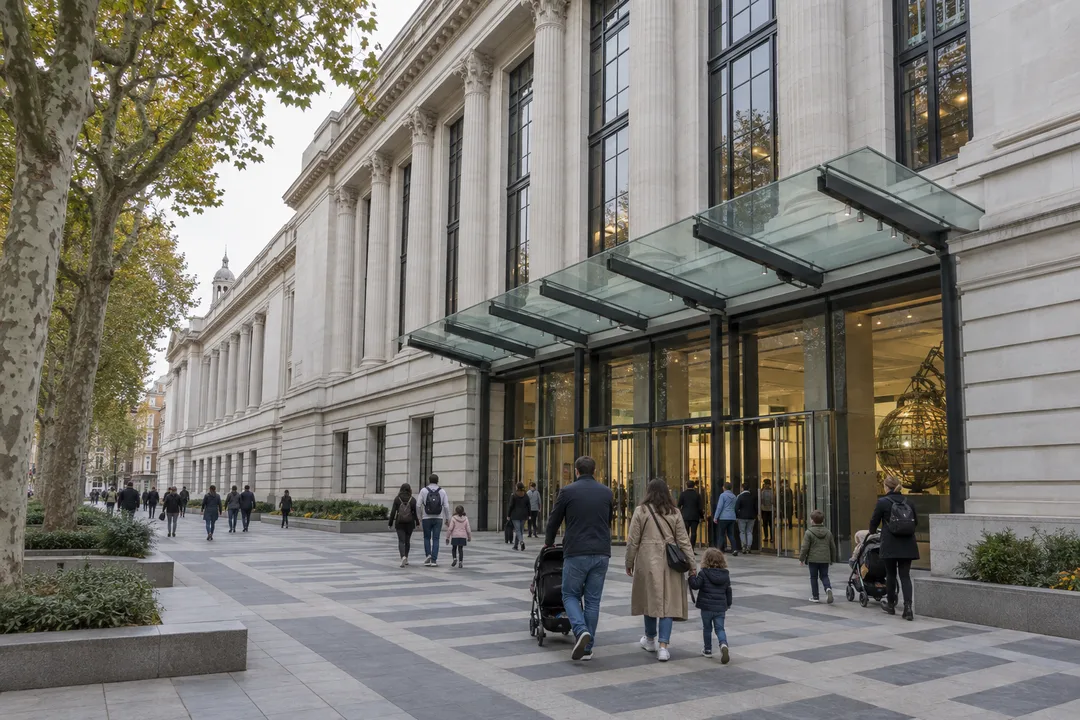
The Science Museum on Exhibition Road is free, open daily 10.00–18.00 with pre-booked tickets, and charges only for Wonderlab, from £13.50. Here is how to plan a visit.
General admission to the Science Museum costs nothing, but you still need a ticket: the museum asks every visitor to pre-book a free timed slot before walking through the main entrance on Exhibition Road, London SW7 2DD. Doors open daily from 10.00 to 18.00, last entry is 17.15, and galleries begin closing half an hour before the building does. If you typed science museum near me anywhere between Kensington and Chelsea, this is the one with a real Apollo capsule, steam engines and a paid hands-on floor that sells out in half term.
Book the Free Slot Before You Leave Home
The arrival window printed on your ticket matters more than the clock time on the website. Staff at the Exhibition Road doors check the slot, so a 10.00 ticket gets you in ahead of the school-holiday surge that builds after 11.00. The museum is closed from 24 to 26 December, shuts all day on Wednesday 11 November 2026, and closes early, at 17.00, on Thursday 26 November 2026, so check those dates against your diary before you pick a day.
Children under 12 must come with someone aged 18 or over; a teenager cannot sign in a younger sibling alone. The average visit runs about two hours, but nobody hurries you out before closing. The museum is also building new galleries this year, and its own visitor page warns of extra construction noise, which is worth knowing if you are bringing a child who struggles with sudden sounds. Sensory maps and foreign-language maps are downloadable from the visit page.
What the Wonderlab Ticket Actually Buys
Wonderlab: The Equinor Gallery on Level 3 is the one area that charges. Day passes start from £13.50, under-fours go free, and a family of three to five with no more than two adults takes £3 off each pass. An annual pass for anyone aged 4 and over is £29.00, which pays for itself on the third visit. Anyone receiving Universal Credit can buy adult Wonderlab tickets at £5, for up to five people per household, as long as they book at least a day ahead.
Inside are 50 exhibits arranged across seven zones: Maths, Electricity, Forces, Space, Light, Matter and Sound. The headline acts are a giant Tesla coil that throws real lightning, the friction slides that children queue for repeatedly, and a Chemistry Bar where Explainers run live experiments. The newest Showspace performance, Are We There Yet? The Science of Maths and Motion, has kids start up a steam engine and fire a spark plug into the air. Shows are included in the pass, and the gallery itself runs 10.00 to 17.40.
Free Galleries Worth Your First Hour
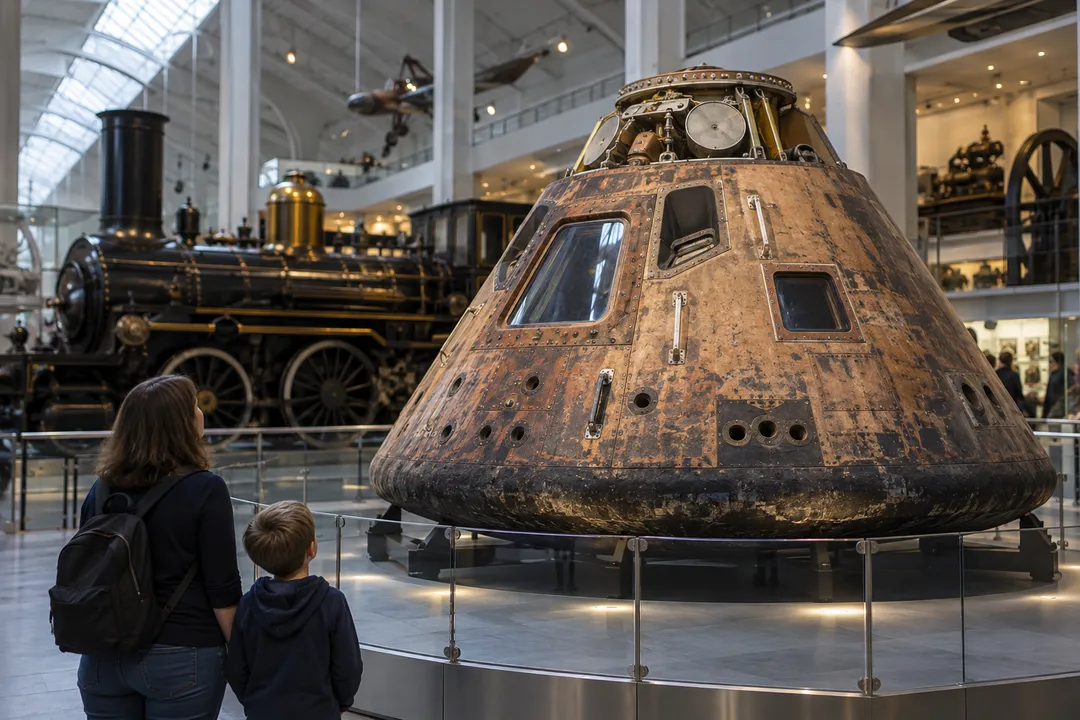
Start on the ground floor in Making the Modern World, where the scorched cone of the Apollo 10 command module sits near Puffing Billy, the oldest surviving steam locomotive in the world. Seeing a capsule that orbited the Moon in 1969 beside a colliery engine from the 1810s is the quickest way to understand why the collection exists. Then head to the Energy Hall at the entrance, where the hulking mill engines are often running slowly enough for children to follow every piston stroke.
The Space gallery has moved this year. To reach it, walk through the corridor on Level 0 near Lifts and Stairs C and keep going toward the back of the building, following signs for Space; the same route leads to Power Up and the IMAX: The Ronson Theatre on Level -1. Who Am I? on the first floor is good for older children, but it has scheduled maintenance closures and several 15.00 early closures through November and December, and Flight is shut on 19 and 20 October and 19 November.
How the Collection Ended Up on Exhibition Road
The museum grew out of the South Kensington Museum, which opened in 1857 using money and objects left over from the Great Exhibition of 1851 in Hyde Park. Science and art were split apart in 1909, when the art half became the Victoria and Albert Museum next door and the science collections stayed on this side of Exhibition Road under their own name. The stone-faced building you enter today dates from the late 1920s, which is why the galleries feel like long, high-ceilinged halls rather than modern boxes.
That history explains the mix you meet inside: Victorian engines, early computers, medical instruments, and gaming consoles sit within a few floors of one another, because the collection was assembled to show industry rather than to tell one neat story. It is part of the wider Science Museum Group, which also runs the Science and Industry Museum in Manchester, the National Railway Museum in York and Locomotion in Shildon.
Who You Will Share the Floors With
On weekday mornings in term time the ground floor fills with school groups in matching hi-vis vests moving between the Energy Hall and Making the Modern World, so independent visitors often head straight upstairs and work down. Saturdays bring grandparents steering buggies toward the lifts, and teenagers who skip Wonderlab entirely to spend their hour in Power Up, the paid gaming gallery that runs 10.00 to 17.30 and has consoles from the past 50 years.
An honest call: if your children are under five, skip Wonderlab and save the money. The gallery is pitched at ages 7 to 14, the Tesla coil demonstration is loud, and much of the content is designed for kids who can read the instructions. Younger children get more out of the free floors and a run around the gardens outside the Natural History Museum.
Practical Notes for the Day
South Kensington station on the District, Circle and Piccadilly lines is the closest stop, and the long pedestrian subway from the ticket hall lets you walk under Cromwell Road and surface almost at the museum, a useful dry route on wet days. Bring a small bag; the conditions of entry ask visitors to respect bag checks at the door. Lifts are spread around the building, and staff will help groups use them, which matters with buggies because the stair routes between some galleries are long.
If the museum's free slots are gone for your day, the Natural History Museum is a two-minute walk south on Cromwell Road, and the Victoria and Albert Museum is across Exhibition Road. Both are free for their permanent collections. On a fine afternoon, finish by walking north up Exhibition Road past Imperial College to Kensington Gardens and the Albert Memorial, about ten minutes from the Science Museum doors, where children can burn off whatever energy the slides did not.
Ask Karpo for more information.
Keep reading
- Clapham Board Game Night Finder: New to London Meetups
 Marylebone Board Game Night Finder: Baker Street Mysteries
 Notting Hill Board Game Night Finder: Two-Player Rainy Dates