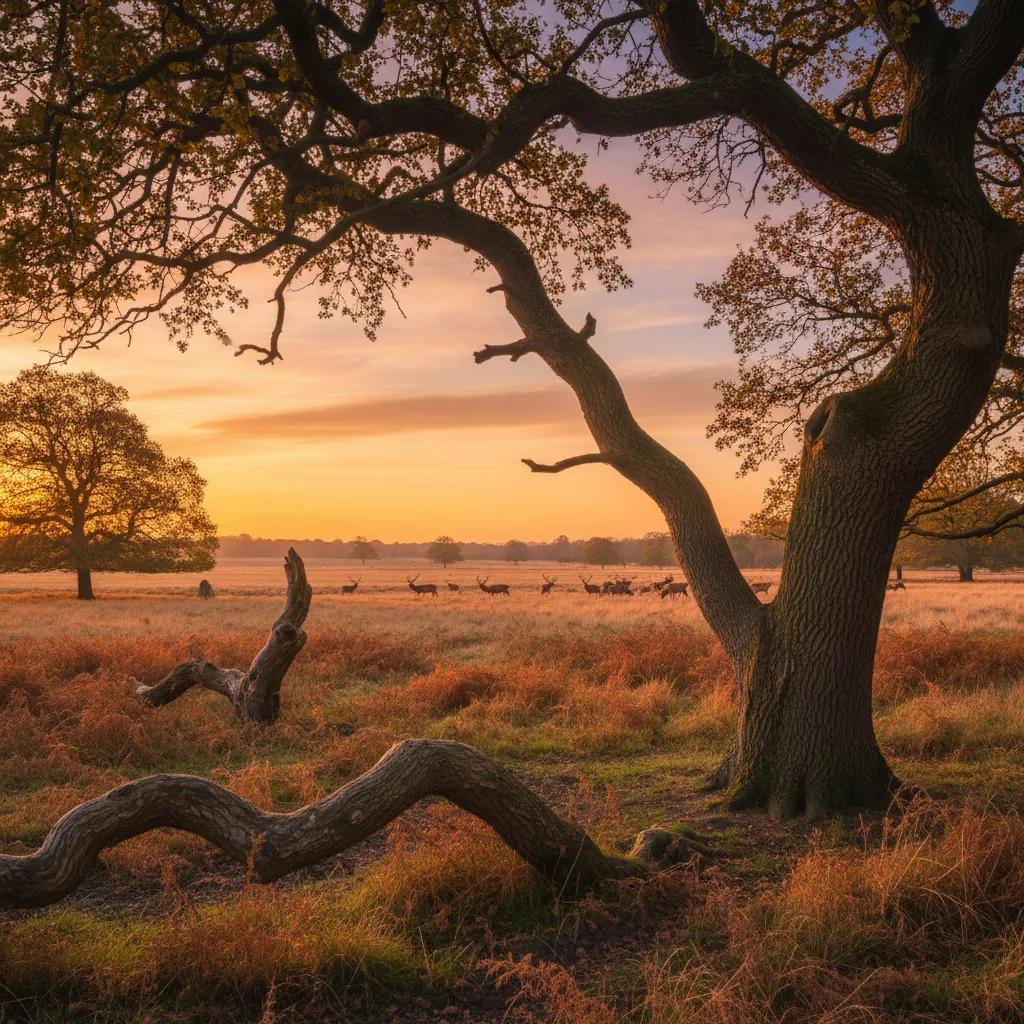
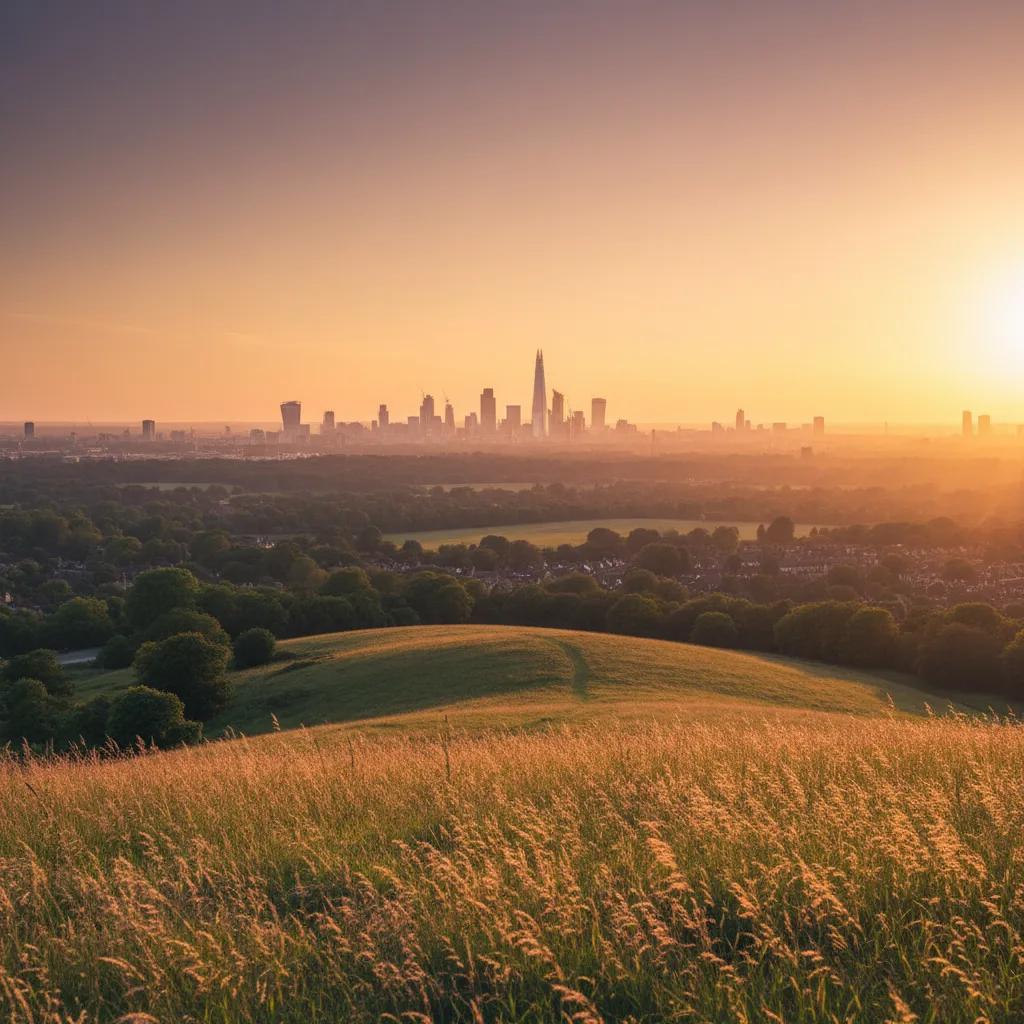
 Richmond Park Sunset Viewing Planner: Deer Meadow Horizons
Weekend Plans
London Scenic Pedestrian Bridge Route With 3 Shared Shots
Build a London scenic pedestrian bridge route around three shared photographs, with camera turns and a paired edit that gives both friends a creative role.
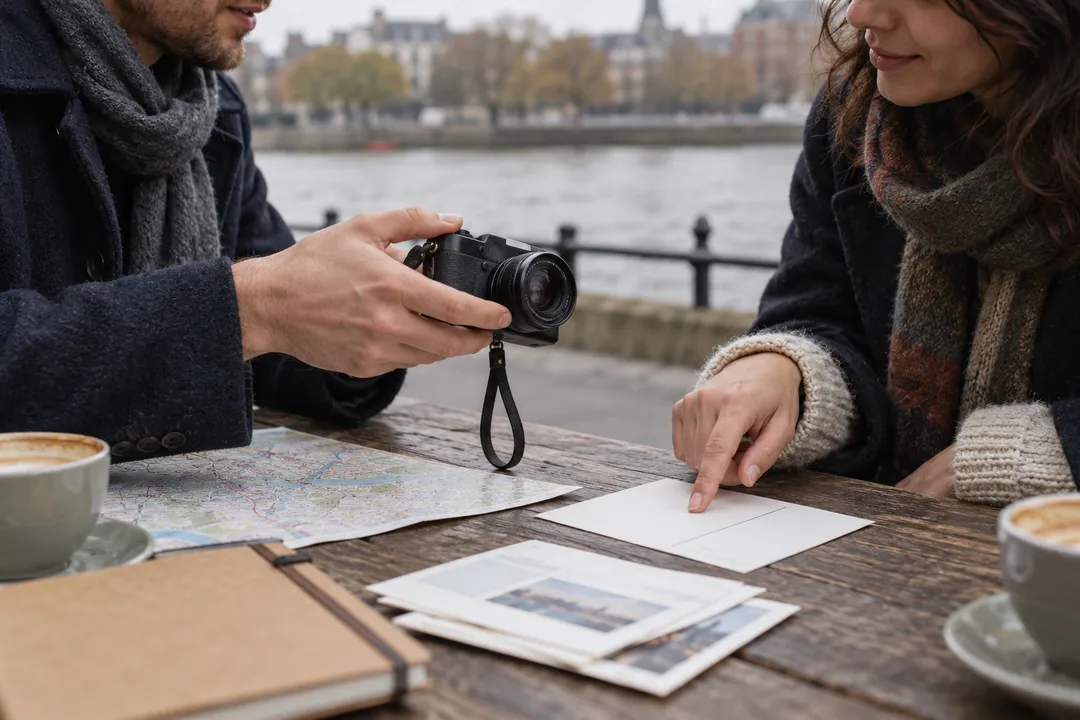
A London scenic pedestrian bridge route can become a shared photography exercise without making one friend wait through every picture. Set a limit of three selected photographs and swap the camera between attempts. Use a pedestrian crossing in Queen Elizabeth Olympic Park as your subject, chosen from the park's visitor map, with editing left until after the walk. This version is for two people who want to make something together, including a confident photographer paired with a beginner. Its images are AI-generated examples of the activity, not photographs of the park, its crossings or an actual participant's work.
Write the assignment on one card
The brief has three parts: describe the place, notice a detail, and show a relationship. A broad scene can establish water and the crossing. A detail might isolate a shadow or surface. The relationship could connect a person with their surroundings, provided they agree to appear. These are jobs for the final selection, not promises about what will be visible from a particular position. Put the three jobs on a single card. Keep equipment simple enough that both people can operate it, and explain the wrist strap before exchanging a camera.
Agree whose pictures will be kept and where they may be shared. Friends often assume that a casual photograph can go straight into a public post, while the person in it expects to choose first. Settle that difference at the table rather than on the bridge. Permission to take a photograph is separate from permission to publish it. If either person dislikes portraits, make the relationship picture about two objects instead. A reflection beside a solid edge can tell a visual story without including a face or another visitor.
Let the beginner choose the first position
A familiar mistake is for the experienced photographer to find the angle, set the camera and then hand it over for the final press. The beginner has operated a button but made no decision. Reverse the order. Let them choose a standing place on the approach where stopping does not obstruct anyone, then ask what caught their attention. Offer one useful adjustment, such as leaving more room around the subject. Save a second suggestion for another attempt. A lesson containing every possible correction quickly becomes a demonstration by the teacher.
The first exchange is also a chance to decide whether the crossing itself is a suitable place to photograph. If people are moving steadily through, cross with the flow and work from a permitted space beyond it. Do not treat the assignment as a reason to occupy an approach or ask strangers to wait. A photograph made from the bank is still a bridge photograph. The exercise is deliberately flexible about the camera position so courtesy does not depend on getting an empty deck, a specific gap or perfect weather.
The scene needs an edge
For the place picture, choose what the viewer needs to understand before choosing what looks impressive. A slice of water with no crossing may be beautiful but fail to identify the subject. A tightly framed railing may be strong as a detail but weak as the opening image. Use a visible edge of the crossing to connect foreground and distance where the view permits it. Then ask your partner to describe the picture without hearing your explanation. Their description tells you whether the composition communicates what you thought you photographed.
Resist collecting several almost identical versions while the other person waits. Take an attempt, look briefly for an obvious mistake and move on. A slight imperfection can remain until the selection stage. If you want to revisit the same position, ask whether the other person wants that too. Photography changes the rhythm of a walk, and consent to join an outing does not amount to agreeing to indefinite repetitions. A shared assignment should give each person the chance to change its direction, rather than rewarding whichever person cares most about the camera.
Details are decisions about exclusion
The second picture can leave out most of the bridge. Look for one meeting of materials, one repeating element or the way a shadow breaks across a surface. Avoid presenting an invented construction explanation with the image. You can say the picture draws attention to a repeated line without claiming to know what carries a load or why a joint was designed that way. This distinction makes the exercise welcoming to people who notice forms without technical knowledge. It also keeps a visual impression separate from a factual description of engineering.
To compare attempts fairly, photograph the same detail once each. The difference may be distance, angle, light or which edge you exclude. Ask each person to explain one choice. Do not rank them automatically by sharpness or how much expensive equipment was used. A slightly softer image may have a clearer subject. Equally, an image with an accidental distraction can be improved without declaring it a failure. Discuss the visible result and a concrete next attempt, rather than assigning a talent label that a beginner may carry into every future outing.
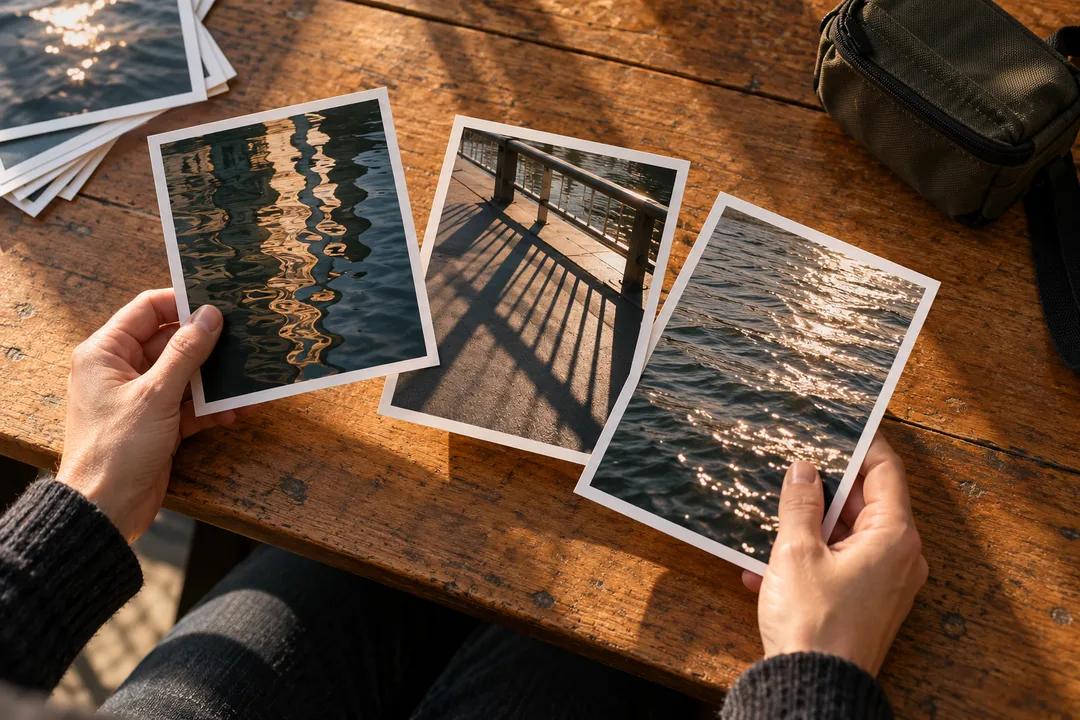
Generated editing-table scene with abstract example prints. These are not documentary photographs of a London bridge.
A pair makes the final edit
After leaving the crossing, find a suitable place to review the images without standing in the pedestrian flow. Each person nominates one picture for each of the three jobs. If both choose the same frame, it earns its place without debate. If they disagree, say what the picture contributes to the sequence. Two attractive detail images may compete for one role, while a less dramatic wide view gives the set essential context. Selecting a small sequence teaches a different skill from gathering the greatest number of individually pleasing photographs.
Imagine the experienced photographer's favourite image is the beginner's least favourite portrait. The person's preference takes priority over the sequence. Choose another relationship picture, or finish with only two images. Constraints are useful only while they support the people doing the activity. You can record a missing picture as an idea for another visit. There is no prize for forcing a third frame into a set, and the exercise is not evidence of having covered an entire park. Its success is a conversation about decisions both people helped make.
What belongs in the route note
Queen Elizabeth Olympic Park provides its own maps and waterways information. Use those to identify your chosen crossing and arrival route, then keep the photography brief separate. This article does not supply a measured circuit, certify access or promise that a stopping space will be available. For the surrounding walk, keep a portion that allows ordinary conversation with the camera put away. That interval makes the outing feel like time with a friend rather than an unpaid assistant's shift. The final route note can contain an arrival, the crossing and an editing break.
Practical Notes: carry only equipment you are comfortable managing while walking. Keep loose items secure near the water, respect barriers and avoid directing a subject backwards towards an edge. An ordinary question in Karpo APP can start a conversation about a photography outing, but this assignment is not an automated camera guide or a promise of live crowd information. You choose the place, judge conditions and select the images yourselves. Finish by giving each photograph a short, honest caption that separates what is visible from what you merely imagine about the structure.
Ask Karpo for more information.
Keep reading
- Richmond Park Sunset Viewing Planner: Deer Meadow Horizons
 South Bank Sunset Viewing Planner: Thames Riverside Walks
 Parliament Hill Sunset Viewing Planner: London Heath Vistas