 Richmond Park Sunset Viewing Planner: Deer Meadow Horizons
Weekend Plans
London Scenic Pedestrian Bridge Route for Two Design Ideas
Explore a London scenic pedestrian bridge route at Paddington Basin by comparing the Rolling and Fan bridges as design ideas, without timing a demonstration.
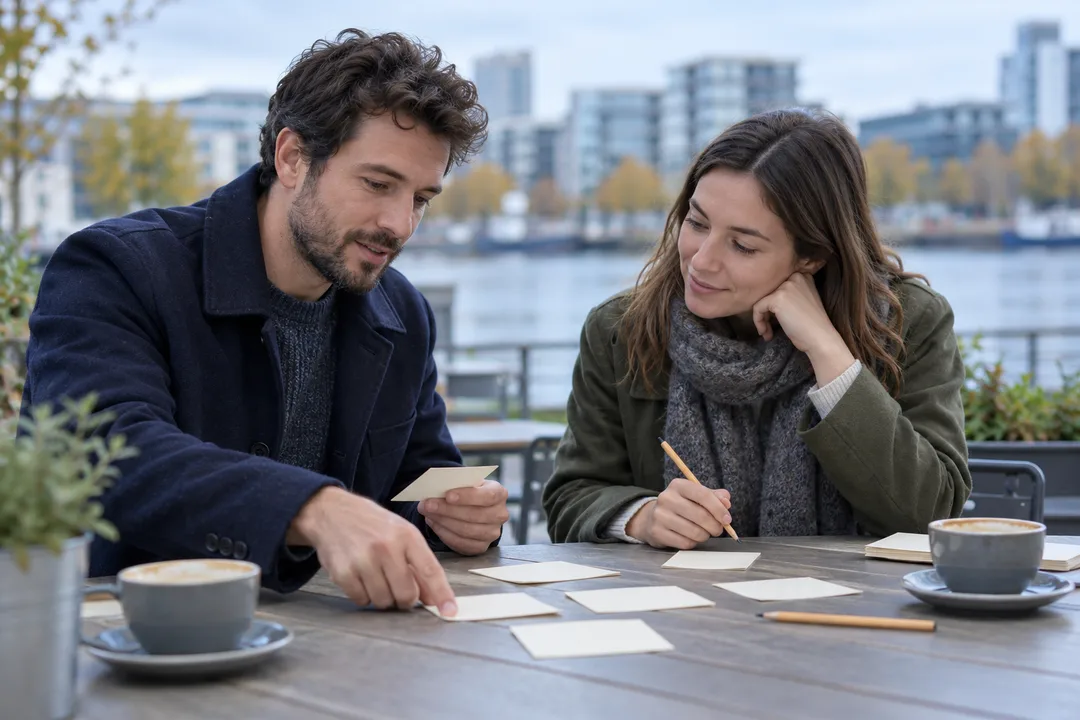
Cover illustration: an AI-generated observation-card activity, not a photograph of Paddington Basin or either bridge. Paddington Basin gives a London scenic pedestrian bridge route an unusually compact design question: how can a walkway move out of the way of water traffic? Heatherwick Studio describes its Rolling Bridge as spanning an inlet off the main canal. Nearby, the Fan Bridge uses a different movement, with deck elements rising like a fan. Plan an observation outing around those two ideas rather than a promised demonstration. You can compare what the structures are designed to do even when neither moves during your visit. That turns waiting into an optional extra instead of the purpose of the day.
Start with the problem a designer had to solve
On a blank card, write the practical conflict: a route for people and a route through water occupy the same line. A conventional answer might separate the heights or open a section, but these bridges make movement part of their identity. Keep that question in mind while looking at the basin. You do not need to know the engineering calculations to notice how a design communicates its possible movement. A joint, a gap or a repeated frame can be a clue without being a complete explanation.
Separate what you can see from what you know through documentation. A flat bridge seen on the day may not reveal its full action. The project description supplies that missing dimension, while your observation supplies details of scale, reflection and the relationship to the path. Give each a place on your card. Write observed beside a visible feature and described beside a movement learned from the designer. This keeps an engaging design walk accurate without pretending you watched a mechanism that remained still.
First card: a bridge that curls
For the Rolling Bridge, draw the idea of a straight line changing into a compact shape. Do this as an explanatory doodle, not a measured drawing of the installed structure. Heatherwick's project description establishes the location at the basin inlet, and the studio's imagery gives the design context. During your own visit, concentrate on the relationship between the repeated parts. Ask which details suggest that a walkway might also behave like a sculpture. You are interpreting the design, not conducting an inspection of its machinery.
A companion can take the opposite role: describe how a first-time passerby might understand the object without knowing its name. Would they see a bridge, a railing or a sequence of metal shapes? Compare that answer with your movement doodle. The gap between a design's operation and its appearance at rest is the interesting part. Avoid making up a conversation with an imaginary engineer or claiming that a nearby person mistook it for something. Your own question is enough to animate the scene.
Second card: a deck that opens like a fan
The Fan Bridge introduces a different visual language. Paddington's official area website describes a deck made of five beams and an opening action compared with a Japanese hand fan. Use that documented idea to make a second card. Put five simple lines on the page and show how their relationship might change. There is no need to reproduce every structural detail. The purpose is to compare two ways of transforming a crossing, with each sketch clearly identified as your understanding of the design.
Now write one contrast between the cards. Curling suggests parts gathering into a shape, while fanning suggests parts spreading into one. Those are descriptive comparisons, not claims about which mechanism is better or more reliable. A child can make the same comparison with folded paper after leaving the walking route. Keep any improvised model on land and away from the edge. The bridges are functioning infrastructure, so observing their ideas does not mean treating barriers, joints or equipment as objects to touch or test. The image below is an AI-generated card exercise: a spiral for curling and five pencil lines for fanning. These abstract doodles compare ideas, not the construction of the Rolling or Fan bridge.

A basin walk, not an appointment with a machine
Locate both structures on a pedestrian map before deciding how to walk between them. The basin contains paths and approaches that matter more at foot level than they appear to in a tightly framed photograph. Choose a continuous public route which fits your arrival and onward journey. Do not derive a shortcut from an aerial image or assume that a bridge shown across water is available to cross whenever you arrive. The observation can happen from a permitted bank-side position when crossing is not part of the route.
Leave demonstration times out of the shared plan unless you have separately organised a visit around an authoritative event notice. This article supplies no demonstration schedule and no promise that either structure will move. If you happen to encounter an organised opening, follow the instructions given there and adjust where you stand. If nothing happens, complete the two cards and carry on. A plan which depends on an unsourced performance time can waste a whole outing, while a design comparison remains useful with the bridges at rest.
Use the surroundings as a scale reference
After drawing both ideas, take one more look at the setting. Water reflection, paving, ordinary pedestrian movement and the buildings around the basin can help you understand the scale of a small bridge. Choose one of those relationships for a photograph or a written note. Avoid turning the exercise into a hunt for unrelated attractions. The strongest additional observation is one that changes your understanding of the crossing, such as how much of its shape is visible from the approaching path compared with the opposite bank.
This is also a useful moment to discuss taste without turning preference into a fact. One person may enjoy the theatrical idea of a curling bridge, while another prefers the fan's separate elements. Ask which design makes its intended movement easier to imagine. There is no required answer and no prize for identifying the more famous designer. Keeping the conversation attached to visible details makes the outing accessible to someone who has never read an architecture magazine and simply enjoys noticing unusual things on a walk.
Turn the two cards into a usable request
For planning help in the Karpo APP, describe the outing as a short Paddington Basin design comparison. Ask to keep the Rolling and Fan bridges as the two subjects, with no dependence on a timed opening. Explain your arrival point, your preferred finish and whether the drawing activity is for adults or children. The useful result is a compact walking brief around those observation tasks. Do not ask for a long attraction list merely because you are near a major station.
Keep three pieces of information in the final brief: the two design questions, the public walking connection you intend to use and the point where you finish discussing the cards. Any additional canal wandering should have a separate purpose. This prevents a focused architectural outing from quietly becoming a much longer towpath expedition. The app conversation can help organise your preferences, while the project descriptions remain the basis for the bridge facts. Neither a generated illustration nor a planning suggestion establishes a live operating condition.
Practical Notes for looking at movable structures
Stay in public pedestrian areas and give barriers and moving equipment space. Do not lean across railings, stand in a crossing line to finish a drawing or place loose materials near the water. The images in this article are newly generated observation-card activities, not photographs or technical diagrams of either bridge. No commercial premises, prices, telephone numbers or fixed operating hours are part of the plan. The designer and area sources support the basic movement comparison, while the observation cards are your own interpretation.
Finish by reversing the original question. Instead of asking which bridge is prettier, ask what each makes possible at a small water crossing. You may leave with a preference, a rough paper model or only two short descriptions. All three are useful outcomes if they reflect a closer look. The walk has given you a way to read infrastructure as a series of choices: a path, a water route, a moving part and the public space that has to accommodate them together.
Ask Karpo for more information.
Keep reading
- Richmond Park Sunset Viewing Planner: Deer Meadow Horizons
 South Bank Sunset Viewing Planner: Thames Riverside Walks
 Parliament Hill Sunset Viewing Planner: London Heath Vistas