 Brixton Christmas Light Up Walk Planner: Rainy Arcades
Free Things to Do

London Scenic Evening Skyline Promenade: SoHo Carnaby Loop
Follow this scenic evening skyline promenade from SoHo through Carnaby toward Waterloo Bridge. Time your stroll for sunset to view lit Thames towers.
London transitions into an enchanting twilight visual spectacle as daytime foot traffic clears across the West End and evening illuminations emerge above historic stone facades. Embarking on this scenic evening skyline promenade from the glowing lantern-strung corridors of Carnaby and SoHo leads walkers on a gentle southward descent across the bustling heart of central London toward the wide open tidal basin of the River Thames. As artificial light takes over from departing natural daylight, historic Portland stone archways and modern steel-and-glass pinnacles create dramatic layered silhouettes against the deepening indigo horizon.
Twilight Timing and Route Direction
Commencing your evening journey precisely forty-five minutes before astronomical dusk guarantees the most rewarding visual progression from enclosed historic retail lanes to broad maritime panoramas. Begin near the northern pedestrian archway of Carnaby Street, where seasonal overhead lighting rigs cast an amber wash across timber storefronts and narrow cross streets. Moving deliberately southward along Kingly Court allows you to observe the subtle atmospheric shift as commercial office lights extinguish and evening hospitality venues awaken with warm sidewalk glows.
Continuing through the classic Georgian proportions of Golden Square guides pedestrians toward Piccadilly Circus and lower Regent Street. Here, the grand neoclassical curve designed by John Nash catches the fading northern twilight, bouncing ambient streetlamp light off pale stone balustrades. Following this deliberate architectural corridor southward avoids congested commercial arteries while maintaining clear southward momentum toward the river, ensuring you arrive at the waterfront precisely when city spires ignite their decorative night illuminations.
Architectural Silhouettes and Skyline Angles
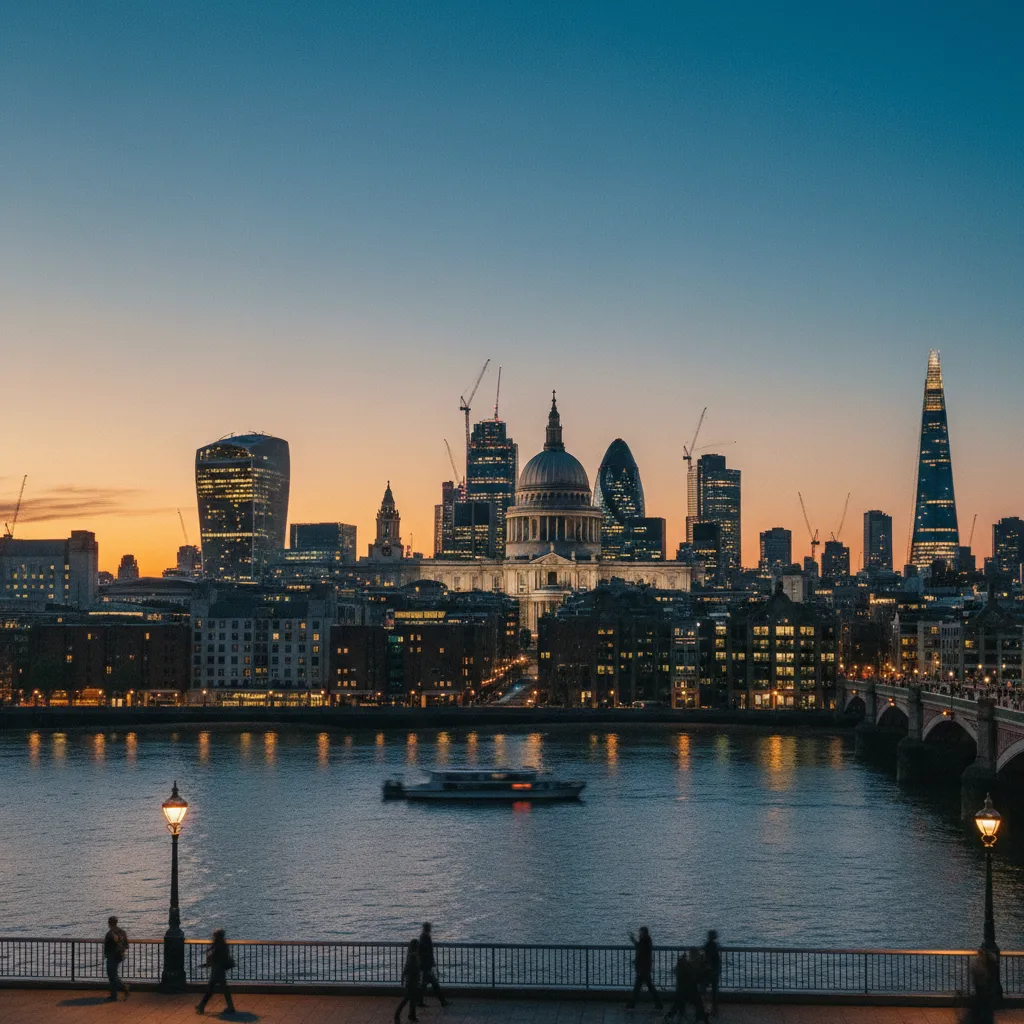
Gazing eastward from the mid-span pedestrian balustrades of Waterloo Bridge reveals one of the most comprehensive urban skyline panoramas in Western Europe. The gentle curve of the River Thames creates a natural amphitheater where Christopher Wren's baroque masterpiece, St Paul's Cathedral, commands the northern bank while the soaring contemporary spires of the City of London rise in geometric harmony behind it. During clear twilight conditions, the glass crown of 22 Bishopsgate and the tapered geometry of the Leadenhall Building reflect shifting violet and coral tones across the rippling water.
Turning toward the western horizon provides an equally majestic counterpoint framed by the Gothic spires of the Palace of Westminster and the Victoria Tower. The illuminated circular rim of the London Eye rotates quietly against the twilight sky, casting vibrant crimson and azure reflections into the dark tidal current beneath passing river cruisers. Walking this open span connects pedestrians directly with the architectural breadth of the metropolis, contrasting the intimate brick scale of SoHo with monumental civic engineering.
Evening Atmosphere and Illumination Progression
Pedestrian rhythms shift noticeably as you leave the animated pub patios of Beak Street and enter the tranquil leafy courtyards of St James's Church along Piccadilly. Gas lamps and low-voltage heritage lanterns provide soft pools of light along brick footpaths, creating an intimate twilight atmosphere where the sound of street musicians echoes off limestone porticoes. This peaceful spatial compression heightens the sensory impact when you subsequently emerge onto the sweeping waterfront embankments.
Waterfront promenades along Victoria Embankment feature ornate Victorian cast-iron dolphin lampposts, originally installed in the 1870s, which cast rhythmic golden patterns across the riverside granite parapet. Below the stonework, the dark tidal waters of the Thames churn steadily eastward, mirroring the headlights of red double-decker buses crossing bridge spans and the floodlit facades of historic riverside institutions. The combination of cool maritime air and warm architectural lighting establishes an unforgettable urban cadence.
Avoiding Crowds and Pacing Recommendations
Navigating Carnaby Street and central SoHo between 5:30 pm and 6:30 pm requires patience, as commuters and shoppers crowd primary pedestrian intersections. To enjoy an unhurried walking rhythm, schedule your departure for approximately 6:45 pm on a Tuesday or Wednesday, when retail crowds have dispersed into dinner venues and the primary lanes offer spacious, step-free walking corridors. Bypassing crowded Shaftesbury Avenue by utilizing the quieter pedestrian paths of Warwick Street and Rupert Street ensures continuous, relaxed forward progress.
Pacing your walk to cover approximately two miles over ninety minutes allows ample time for photographic stops and quiet contemplation along Waterloo Bridge's pedestrian bays. Benches set into the bridge piers offer resting perches where evening strollers can observe dusk transitioning into full darkness without blocking commuter pedestrian flows. Carrying a light windbreaker or fleece layer is strongly advised, as river breezes across open Thames bridges remain brisk throughout autumn and winter months.
Connecting Evening Walks and Scenic Detours
Extending your evening promenade eastward from Waterloo Bridge invites an effortless transition along the South Bank riverside path toward Blackfriars and Tate Modern. This continuous car-free boardwalk passes the illuminated concrete terraces of the Royal Festival Hall and the National Theatre, where public book stalls and seasonal food chalets maintain a vibrant evening promenade culture. The riverside walk remains well-lit and animated well into the late evening hours.
Alternatively, branching northward into Covent Garden allows you to explore cobblestone alleys around Floral Street and the gas-lit colonnades of the Apple Market before concluding your evening. This northern detour weaves past historic playhouses and subterranean brassieres, where pedestrians can warm up with hot cider or espresso beneath sheltered glass canopies before connecting back to primary underground corridors.
Transit Access and Practical Navigation Tips
Accessing the beginning of this scenic skyline promenade is straightforward via Oxford Circus underground station, which provides frequent services across the Bakerloo, Central, and Victoria lines. Exiting toward Argyll Street places walkers directly at the northern gateway of Carnaby Street within two minutes. For those wishing to commence slightly further south, Piccadilly Circus station serves the Bakerloo and Piccadilly lines with direct subway concourse exits onto Glasshouse Street.
Completing your promenade on the south side of Waterloo Bridge places you within an easy five-minute walk of Waterloo station, a major transportation interchange offering Bakerloo, Jubilee, Northern, and Waterloo & City lines alongside extensive National Rail connections. All pedestrian pavements along this route feature curb ramps and signalized street crossings. For seamless route tracking and twilight sunset countdown alerts, using the Karpo APP helps you time each bridge crossing with peak skyline illumination.
Ask Karpo for more information.
Keep reading
- Brixton Christmas Light Up Walk Planner: Rainy Arcades
 Hackney Christmas Light Up Walk Planner: Canal Boats
 Islington Christmas Light Up Walk Planner: Square Dates