 Notting Hill Budget Lunch Route Planner: Golborne Road Cafes
Restaurants
Borough Sausage Roll Bakery Picker: Arch Trays to Pick
Use a sausage roll bakery picker in Borough to compare railway-arch pork trays and Bermondsey butter puff. Match crust flake and mustard to a Southwark walk.
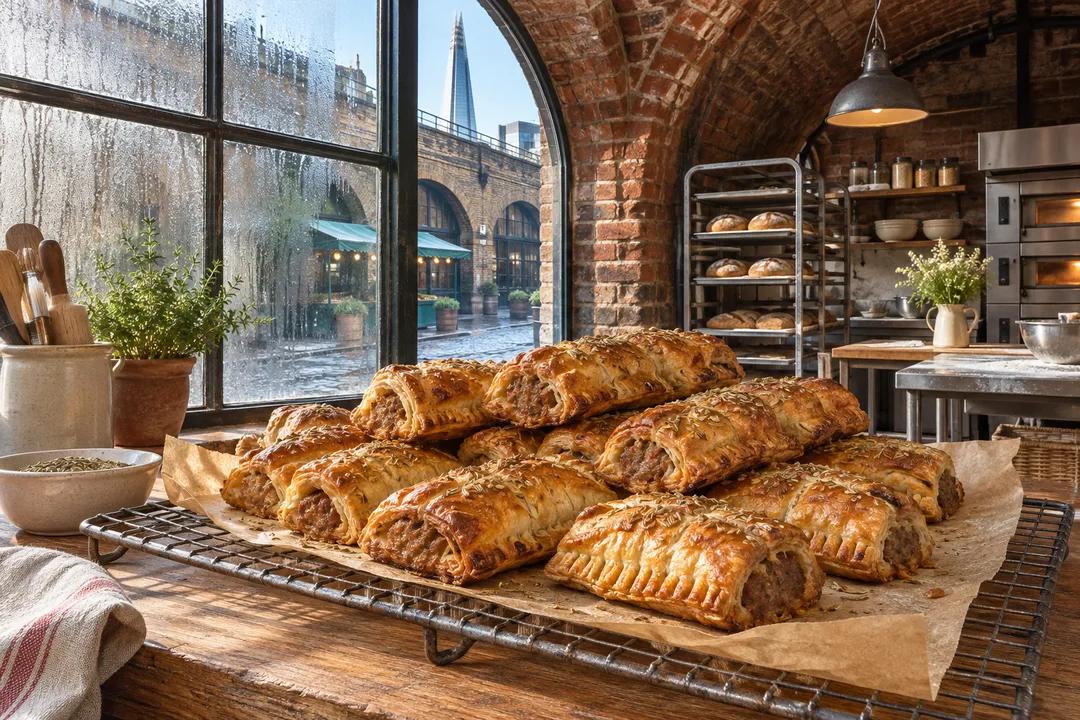
Morning commuters stepping off the riverfront paths around Borough smell toasted butter, cracked black pepper, and rubbed sage before they ever spot a bakery queue under the railway viaducts. Using a sausage roll bakery picker in this corner of Southwark is less about finding pastry and more about choosing between two distinct baking traditions separated by a five-minute walk across the cobbles. Beneath the Victorian brick arches near the market hall and Stoney Street, bakers pull wide, blackened steel trays from deck ovens where coarsely ground shoulder pork and pancetta rolls sizzle in their own rendered fat. A few blocks south along Bermondsey Street, converted hop-and-leather warehouses house quiet neighbourhood counters where pastry chefs fold salted butter into delicate rough puff, brushing each cylinder with rich egg yolk and toasted fennel seeds. When my cousin arrived from Yorkshire after an early train—having worked as an apprentice butcher with strong opinions on meat-to-pastry ratios—we spent a brisk morning walking from the viaducts to Red Cross Garden and down to Bermondsey Square, comparing crumb structure, seasoning, and bench options along the way.
Railway-Arch Deck Ovens Versus Bermondsey Street Counters
Our first stop beneath the curving brick viaducts showed why railway-arch bakehouses attract a crowd of tradespeople, riverside walkers, and market porters before the lunch rush builds. Every time a train rumbles overhead, a faint vibration settles across the flour bins and stacked cooling racks, while bakers slide long wooden peels into steam-filled ovens. The sausage rolls here are built for cold air and walking: thick cylinders of hand-chopped pork shoulder mixed with fresh sage leaves, nutmeg, and white pepper, wrapped in a sturdy pastry sleeve that holds together in one hand without collapsing into greaseproof paper. Because the meat filling is coarsely minced rather than whipped into a smooth paste, each bite has real texture and savoury juice that soaks slightly into the bottom layer of dough, giving the underside an almost caramelised crunch while the top stays blistered and golden.
Walking ten minutes southeast past the railway bridge into Bermondsey Street changes the pace and the pastry completely. Here, former warehouse ground floors with tall factory windows and timber tables cater to graphic designers, gallery visitors, and local dog walkers who want to sit with a ceramic cup of filter coffee and a plate. Instead of heavy market-style cylinders, the Bermondsey counters lean toward French-trained viennoiserie technique, wrapping spiced pork, leek, or caramelised apple stuffing inside dozens of paper-thin butter laminations. When you tap a knife against the top crust, shards of golden flake scatter across the saucer, and the filling inside is often brighter with lemon thyme, fennel pollen, or slow-cooked shallots. If you hate dropping pastry flakes down a wool coat while standing on a street corner, save these ultra-flaky laminated versions for an indoor window stool and keep the sturdier arch-baked rolls for walking toward the river.
How to Read the Baking Tray Before You Order
My butcher cousin taught me to look past the front row of the glass display cabinet and check three visual cues on the baking sheets behind the counter. First, examine the exposed ends of the sausage roll where the knife cut through the dough log before baking. A filling that bulges slightly outward with visible flecks of green herb and coarse pepper tells you the baker used high-meat pork shoulder bound with minimal rusk, whereas a shrunken, recessed grey centre inside a cavernous pastry tunnel means the fat melted out and left the meat dry. Second, look at the colour of the pastry seam along the side or base: a pale, doughy line means the tray was crowded and pulled early, while a deep chestnut-brown base shows the fat from the sausage properly fried the bottom pastry layer against the hot metal sheet.
Third, watch how the counter staff store the freshly baked batch between oven pulls. The finest Borough counters leave their rolls resting on open wire cooling racks at room temperature rather than trapping them inside a steamed-up glass warming cabinet. Closed warming boxes turn crisp rough puff chewy and rubbery within twenty minutes as moisture from the hot pork migrates outward into the crust. If you arrive just as a fresh sheet emerges from the deck oven, ask the server to give your roll three minutes on the wire rack before sliding it into a paper bag, and leave the top of the bag folded open rather than twisted shut so steam can escape as you walk through the market arcades.
Mustard Pots, Chutney Pairings, and Skipping the Ketchup Trap
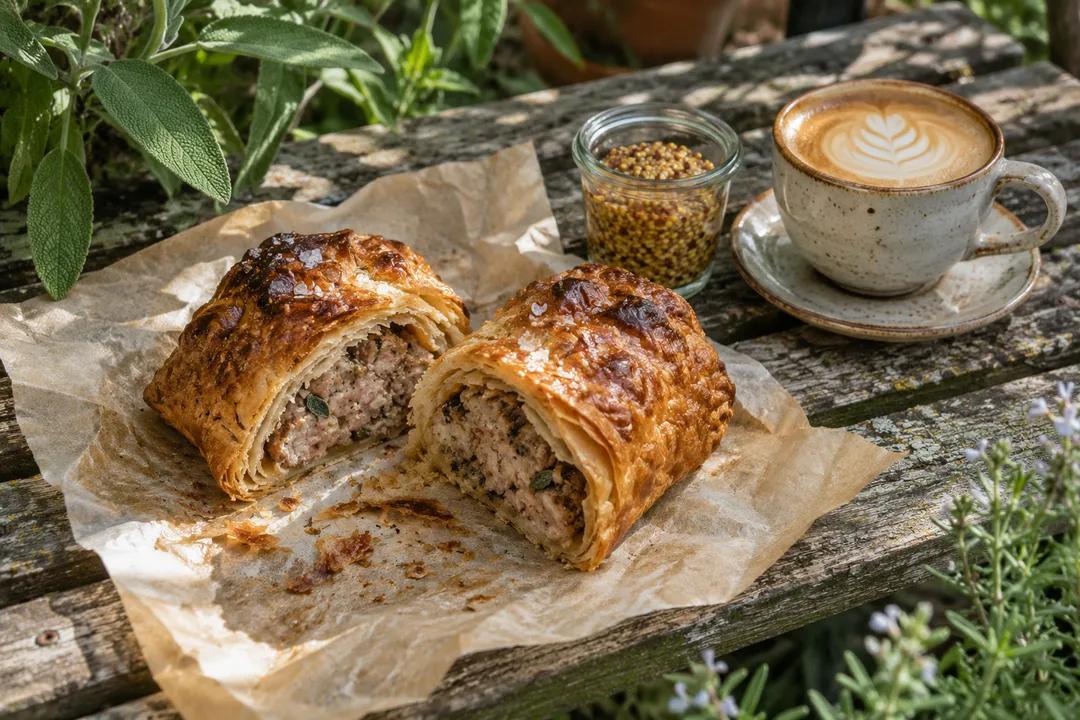
A rich pork sausage roll needs sharp acidity to cut through the butter pastry and rendered fat, yet most hurried visitors grab a plastic sachet of sweet tomato ketchup that flattens the herb seasoning. Skip the standard ketchup pump entirely, and also skip reheating a delicate fennel-seed roll in a microwave or high-speed toaster oven if a café offers to warm a cold tray item—those blasts melt the butter layers into a greasy sponge. Instead, look at the small condiment jars lined up beside the till at Borough and Bermondsey bakehouses. A spoonful of hot English mustard or coarse wholegrain cider mustard wakes up nutmeg and sage in traditional pork rolls, while a tart damson, green-tomato, or spiced apple chutney pairs naturally with black-pudding or caramelised-onion variations.
If you are sharing across two or three counters with a friend, ask the server to slice each sausage roll diagonally in half before bagging it and request an extra sheet of unbleached wax paper. That simple ask lets two people taste a classic sage-and-pork roll under the viaducts alongside a chorizo-and-pork or vegetarian mushroom-and-chestnut roll on Bermondsey Street without filling up on a single massive portion. For drinks, avoid heavy syrupy lattes that compete with savoury pastry fat; a clean black Americano, an unsweetened flat white, or a brisk builder's tea with a splash of milk clears the palate between bites.
Garden Benches and Southwark Streets to Pair With Your Walk
Standing right outside a busy market arch with a hot pastry bag means dodging wheeled luggage and delivery trolleys, so smart locals carry their sausage rolls two minutes away to quieter historic pockets. On the north side of the viaducts, walk past the gothic stonework of Southwark Cathedral toward the riverside path and the small herb gardens tucked beside the churchyard, where low stone walls and wooden benches let you eat in peace while watching river boats pass under London Bridge. If the cathedral courtyard feels breezy, head south down Redcross Way into Red Cross Garden, a compact Victorian oasis laid out by social reformer Octavia Hill, where a tiled cottage gallery, a small pond, and sheltered benches sit completely hidden from the main road traffic.
From Red Cross Garden, you can follow Ayres Street and Marshalsea Road into Bermondsey Street for your second bakery stop, browsing independent bookshops, small glassblowing studios, and contemporary art spaces as you walk off the meal. When you want to check which nearby bakehouses, traditional pie counters, or quiet coffee rooms fit your route across Southwark without backtracking through the busiest arcades, open the Karpo APP to compare neighbourhood bakery spots and plot your next stop toward Maltby Street's ropewalk arches or the Bankside river walk.
Ask Karpo for more information.
Keep reading
- Notting Hill Budget Lunch Route Planner: Golborne Road Cafes
 Camden Budget Lunch Route Planner: Lock or Drummond Street
 Brixton Budget Lunch Route Planner: Covered Arcades When Wet