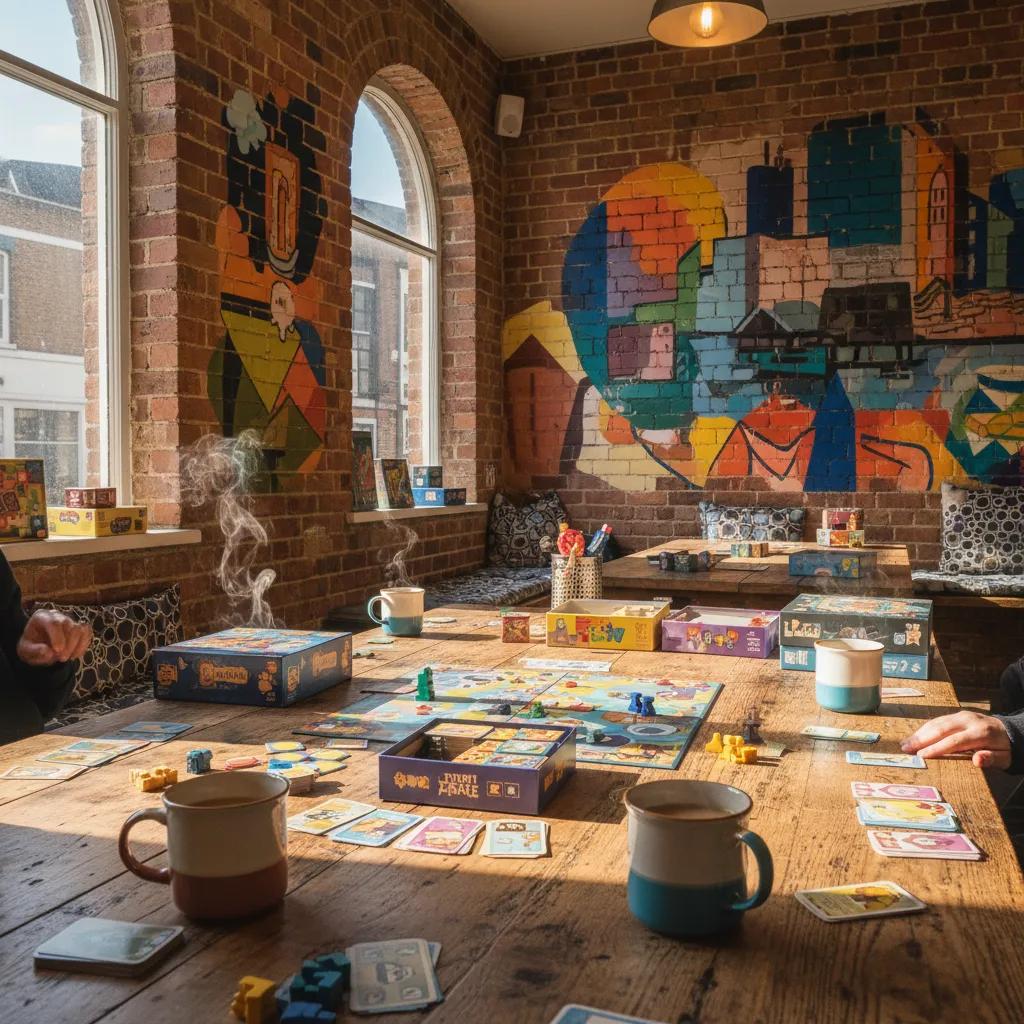
 Waterloo Cozy Board Game Cafe Finder in South London
Weekend Plans

Tuft Up London Rug Tufting Studio: Hackney Groups
Tuft Up London at 15 Bohemia Pl, London E8 1DU offers a hands-on rug-tufting workshop. Bring a simple sketch and leave room for the pile to change it.
Tuft Up London is at 15 Bohemia Pl, London E8 1DU, in Hackney. That precise address matters because the workshop is a destination appointment, not a shop you wander into while browsing the high street. The studio’s rug-tufting format is built around a personal drawing, a stretched foundation cloth, coloured yarn and guided use of the tufting tool. Book the slot before travelling, save the address offline and allow time to find the entrance without turning the first ten minutes into a search exercise.
Start With the Address and the Appointment
The first useful preparation is a drawing that can survive being enlarged. A bold flower, curved checkerboard, animal silhouette or two-colour emblem gives the frame a clear job. Thin lettering, tiny facial features and complicated borders often become muddy once the yarn is looped and trimmed. Use a thick outline on paper, mark the main colour blocks and decide which edge should read first.
Turn the Sketch Into a Workable Map
The drawing decision should happen before the tool starts. Pick one focal shape, one supporting colour and one border treatment, then test the idea at the scale of the frame. A reference that looks spare on paper can become rich once the pile catches light, while a busy illustration can lose its hierarchy. Bring the simplest version that still feels like yours and leave the tutor room to suggest a cleaner route.
What the Frame Changes
The frame is not just a holder; it sets the scale of the whole afternoon. A compact design can feel graphic and intentional, while a crowded drawing looks unfinished when every shape is fighting for space. Ask how much margin to leave around the central motif before you begin. Keeping an unfilled border makes trimming easier and gives the finished rug a calmer silhouette. This is also where a tutor can help you edit: one removed detail is often more valuable than three extra colours.
Learning the Tufting Motion
Tufting looks fast in videos because the tool is doing one mechanical action repeatedly. In person, control comes from keeping the cloth taut, moving at a steady speed and stopping cleanly at corners. Start on an inconspicuous section, practise a straight line, then try a curve before working on the most visible part of the design. Do not force the tool through a turn. Lift, reset and continue; a tidy pause is easier to hide than a wobbled line that has been chased across the frame.
How to Choose Colours
Choose colours for contrast first and mood second. A dark outline around a pale field will make the shape legible, while neighbouring shades can disappear after trimming. Lay the yarn choices beside the sketch and take a quick photograph for reference, but keep the physical sample in front of you while working. Tuft Up suits visitors who want to make a personal piece rather than reproduce a showroom sample, so a restricted palette is usually more satisfying than an ambitious rainbow.
The Quiet Rules of a Shared Studio
A small creative studio runs on shared attention. Keep yarn and scissors in the area assigned to your frame, ask before borrowing a colour and leave the cutting surface clear for the next person. If another maker is working through a complicated edge, give them room rather than reaching across the frame. The social part is real, but the unwritten rule is concentration: conversation should not make someone lose track of a line. Arrive ready to listen during the demonstration, then settle into your own rhythm.

Finishing Is Part of the Project
The last stage is where a rough craft experiment becomes an object. Trimming reveals uneven pile, cleaning the outline sharpens the graphic shape and backing gives the piece a finished side. Resist the urge to cut aggressively at the beginning. Work in small passes, stand back and check the silhouette from a few steps away. If a colour boundary feels too soft, correct the edge rather than shaving the entire surface. The best result is not the flattest rug; it is the one whose design still reads clearly.
When to Go and How to Plan
Choose a day when you do not have to run straight to another booking. A rushed maker skips the planning stage and then blames the tool for a problem caused by the drawing. A calmer schedule leaves room for the demonstration, the main tufting work, the trim and the inevitable pause when you rethink one colour. If you are booking for two people, agree on the level of complexity before arriving. Parallel projects are more enjoyable when neither person is waiting for the other to finish a difficult section.
What to Bring From Home
Bring the reference image, a pencil, comfortable clothes and a willingness to make a decision. Avoid loose sleeves or dangling jewellery near the working area. A water bottle is useful, but keep it away from yarn and electrical equipment. You do not need to arrive with specialist knowledge: the point of the session is to learn the motion in a supported setting. What helps most is a design with a clear centre, a manageable number of colours and enough flexibility to change when the material behaves differently than the paper.
Who Gets the Most From Tuft Up
Tuft Up London is best for a first-time maker who wants a tangible result, a small group looking for an activity with more concentration than a bar and a design-minded visitor who likes leaving with something made by hand. It is less suitable for someone seeking a drop-in retail experience or a completely unstructured evening. The address in Hackney makes it easy to pair with a longer East London day, but the workshop itself deserves the main slot rather than being treated as a filler between unrelated plans.
The Honest Skip
Skip the most intricate reference image in your camera roll. A dense illustration with fine text may look impressive on screen but can make the frame feel like a correction exercise. Choose the second-best idea if it has stronger shapes and fewer tiny gaps. That is the honest trade-off: a simpler rug often looks more deliberate after trimming. The session is about learning a repeatable process, not proving that every detail in an illustration can be forced into the pile.
A Simple Plan B
If you arrive with a design that no longer feels right, do not panic and do not start from scratch in the first five minutes. Reduce it to the strongest outline, remove one colour and let the tutor help you rebalance the frame. If the weather turns wet, make the studio the destination and postpone an outdoor walk until after the session. Nearby food and coffee options can fill the gap, but the safer Plan B is always a smaller, cleaner rug rather than an overworked large one.
Walking Through Hackney
After the workshop, walk toward London Fields or along the quieter stretches around Broadway Market, depending on the day and your energy. Keep the route simple because a fresh rug may need careful handling. Hackney rewards a slow neighbourhood wander: brick terraces, small galleries, bakeries and independent shops provide a useful contrast to the focused repetition of the frame. Do not plan a packed museum circuit immediately after; the hands-on work is more tiring than it looks, especially if you spend the final stage trimming carefully.
Practical Notes
For practical planning, use the full address: 15 Bohemia Pl, London E8 1DU. Book before you travel, arrive with the design saved on your phone and keep a paper or offline backup in case reception is poor. Wear shoes that are comfortable for standing, keep sleeves close to the arm and allow time for finishing rather than assuming the first pass is the final one. The studio is a better fit for a planned creative appointment than an improvised walk-in, and that is exactly why the finished rug feels personal.
The most useful way to think about the Hackney session is as a sequence rather than a single reveal. The sketch comes first, then the frame, then the repeated push and lift of the gun. Each stage gives you a chance to make the next one easier. If the outline looks too complicated, remove a small interior detail before you start. If the palette feels flat, change the border rather than adding four more colours. Those decisions are more valuable than rushing toward a finished photograph.
For a group booking, agree on the design owner before the demonstration begins. A shared rug can work beautifully when one person manages the outline and another fills the broad colour fields, but constant hand-offs make the canvas harder to read. Keep the reference image visible, ask for help when the yarn catches and leave the trimming stage enough time to expose the shape. Tuft Up is strongest when the workshop remains collaborative without becoming chaotic: the room can be social, but every maker still needs a clear patch of frame and a moment to judge the pile from a distance.
Ask Karpo for more information.
Keep reading
- Waterloo Cozy Board Game Cafe Finder in South London
 Shoreditch Cozy Board Game Cafe Finder in East London
 Brixton Cozy Board Game Cafe Finder for Warm London Days