 Shoreditch Comic Shop Crawl Planner: Murals to Manga
Hidden Gems & Odd Finds

Greenwich Rubber Stamp Ink Pad Picker for Folded Tags
For folded gift tags in Greenwich, compare rubber stamp ink pad colour and paper handling on real scraps, then choose your own nearby browsing stops.
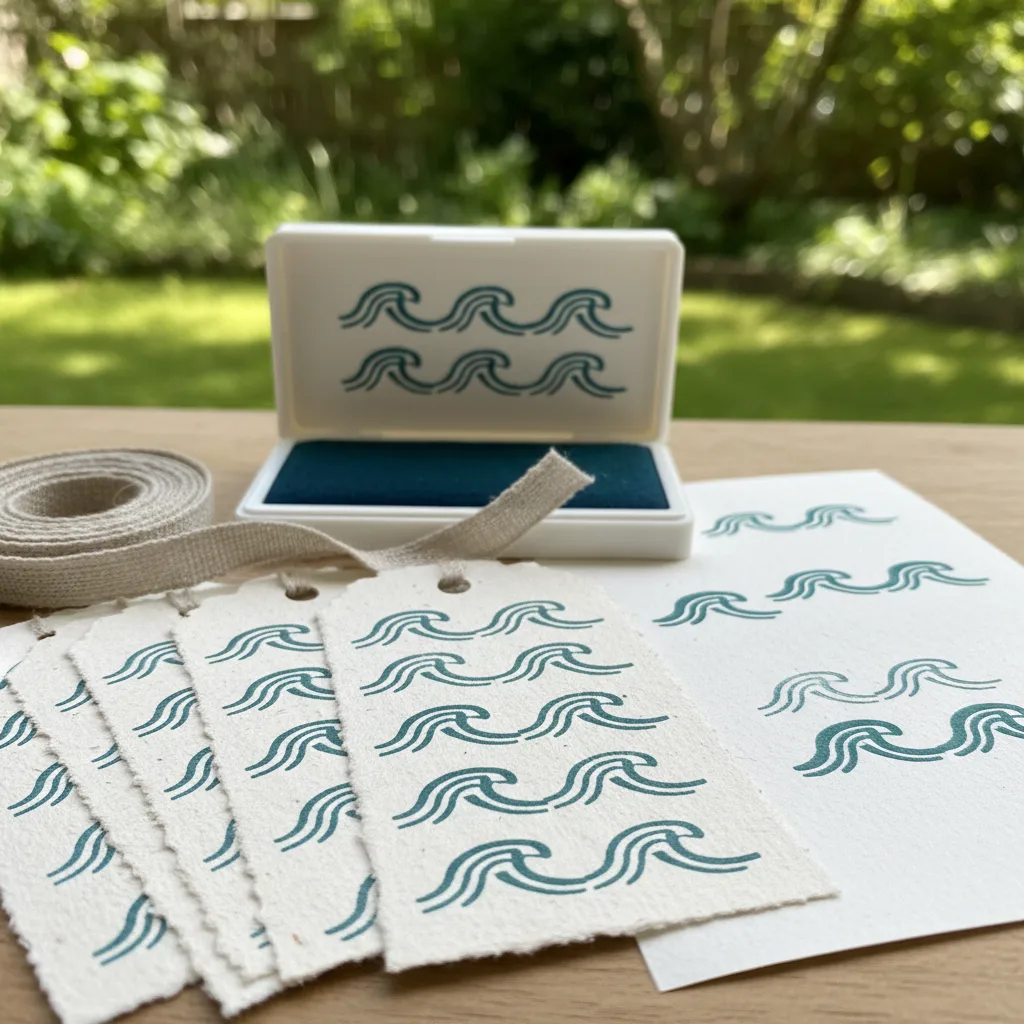
A folded gift tag needs an ink that survives being touched. The Greenwich rubber stamp ink pad picker starts with a small wave motif, pale uncoated card and a fold that stays clear of the printed area. A lovely flat proof is only the beginning: the finished tag will bend, brush a ribbon and rest against wrapping. Compare those ordinary actions before choosing a blue-green pad for a personal set of gifts.
Design around the fold before choosing colour
Cut a few blank tags and fold them before stamping anything. Decide which face carries the wave, where the ribbon will sit and how much room you need for a handwritten name. A small design can become crowded surprisingly quickly once the tag closes. Leave a clear zone beside the crease so the motif does not have to survive the sharpest bend. That layout decision often solves more problems than changing the ink itself.
Paper grain affects how neatly a card folds, so try the intended fold on scraps from the actual sheet. A clean bend on one sample does not prove that every direction will behave the same way. If the surface cracks or opens unevenly, reconsider the card and scoring method before testing colour. Follow guidance appropriate to your paper and tools. A decorative print cannot disguise a fold that makes the tag awkward to close or write inside.
Choose a wave you can read on a small surface
A simple curved wave is a useful motif for this experiment because its direction remains clear at a modest size. A closely packed seascape asks much more of both rubber and paper. Start with an open design and notice whether the ends of the curves remain distinct. If they join into a dark patch, inspect how the stamp was inked. If they break apart on every trial, the paper texture may be too pronounced for those fine lines.
The proposed tags might accompany a handmade scarf, a book or a small jar of something prepared at home. These are gift ideas you can adapt, not claims about a Greenwich retailer's products. Let the wrapping influence the motif's scale. A delicate wave can suit plain paper and linen ribbon; patterned wrapping may need a stronger single mark. Put the sample beside the whole parcel before deciding that a subtle impression is too faint.
Sea blue and green meet warm cream differently
Test a marine blue and a teal on the same cream stock if those are your preferred colours. A warm paper can change the impression of a cool shade, and a transparent formulation may reveal more of that background. Compare after drying, alongside the ribbon and wrapping you plan to use. The pad's printed colour panel is a reference, while the actual mark on the actual card is the relevant evidence for this project.
Keep a clean part of the card visible beside the proof. That makes it easier to notice spread beyond the edge of the wave or a halo where liquid has entered the fibres. Consider whether the change enhances the watery motif or makes it lose its shape. You are choosing a relationship between ink and paper, so an effect that would be undesirable on a formal emblem might be exactly right for a loose blue wave.
Give the Greenwich outing a riverside mood
Greenwich offers an easy visual theme for blue curves and pale paper: the sense of open sky near the Thames, the change from market lanes to green slopes and the contrast between stone and water. Use those neighbourhood impressions as a starting palette. They do not establish that a particular stall sells stamps or that an unnamed workshop is open to visitors. An independent browsing day can include observation without turning every pleasant corner into a supply stop.
For nearby place ideas, ask the Karpo APP for craft, stationery or gift-browsing recommendations around Greenwich. You select the places that appeal to you and make your own arrangements for getting between them. A small envelope of blank tag samples can keep the project concrete. If you also want an outdoor pause, choose its setting and timing yourself, with the comfort of your group and the weather in mind. The recommendations are one input into your outing.
Handling is a separate test from drying
Once the ink has dried according to the product's directions, fold and open a trial tag several times. Then rub it gently against a clean scrap similar to your wrapping. Look for transferred colour, a polished patch or a weakened impression. A pad that works on a flat greeting card may be less suitable for a tag exposed to repeated contact. Test the handling you expect instead of treating every dry-looking mark as equally durable.
Water resistance deserves its own trial if it matters to the gift. A label's claim must be understood in the context of the stated paper and any required treatment. Do not infer washability, outdoor durability or suitability for food contact from a simple stamping test. For ordinary paper tags, it may be easier to protect the gift from damp than to add a specialist process. Choose the simplest material combination that meets the way the tag will actually be used.
Ribbons can move colour into unexpected places
Thread a spare piece of your chosen ribbon through a finished test tag and handle the whole assembly. Pale linen can make a small amount of transferred blue quite obvious. Position the stamped wave away from the area the ribbon repeatedly crosses, or alter the way the tag attaches to the parcel. You can make these changes before printing the full set. They preserve the design while reducing contact between surfaces that do not need to touch.
Skip a full stamped border around every face if it leaves nowhere clean to hold the tag. A single wave with generous blank card is easier to write beside and attach. If your paper absorbs the colour too unevenly, a smoother uncoated card may be a better change than another shade of blue. If the print is attractive but vulnerable at the crease, move it outward. These are design responses to the test, rather than reasons to keep adding supplies.
Practical notes for a compact gift-making kit
A useful kit can stay small: the chosen rubber stamp, a compatible pad, matching paper offcuts, clean waste sheets and the ribbon you will actually use. Protect the table and give finished tags room to dry separately. Store the pad and clean the rubber as their instructions specify. Keep ink away from the inside area where you intend to write. Test that pen there as well, since a successful decorative face does not guarantee that every writing tool will suit the card.
Carry materials home in a dry folder and leave damp or tacky proofs outside the stack until they are ready for handling. The Greenwich decision is complete when your wave reads clearly, the fold works comfortably and the tag behaves against its wrapping. You may finish with a teal pad, a different paper or a simpler motif. Any of those can be a successful result from a thoughtful outing that leaves the final gift unmistakably your own.
Ask Karpo for more information.
Keep reading
- Shoreditch Comic Shop Crawl Planner: Murals to Manga
 Bermondsey Comic Shop Crawl Planner: Zines Under the Arches
 Clapham Comic Shop Crawl Planner: Charity Shelves and Common