 Richmond Park Sunset Viewing Planner: Deer Meadow Horizons
Weekend Plans
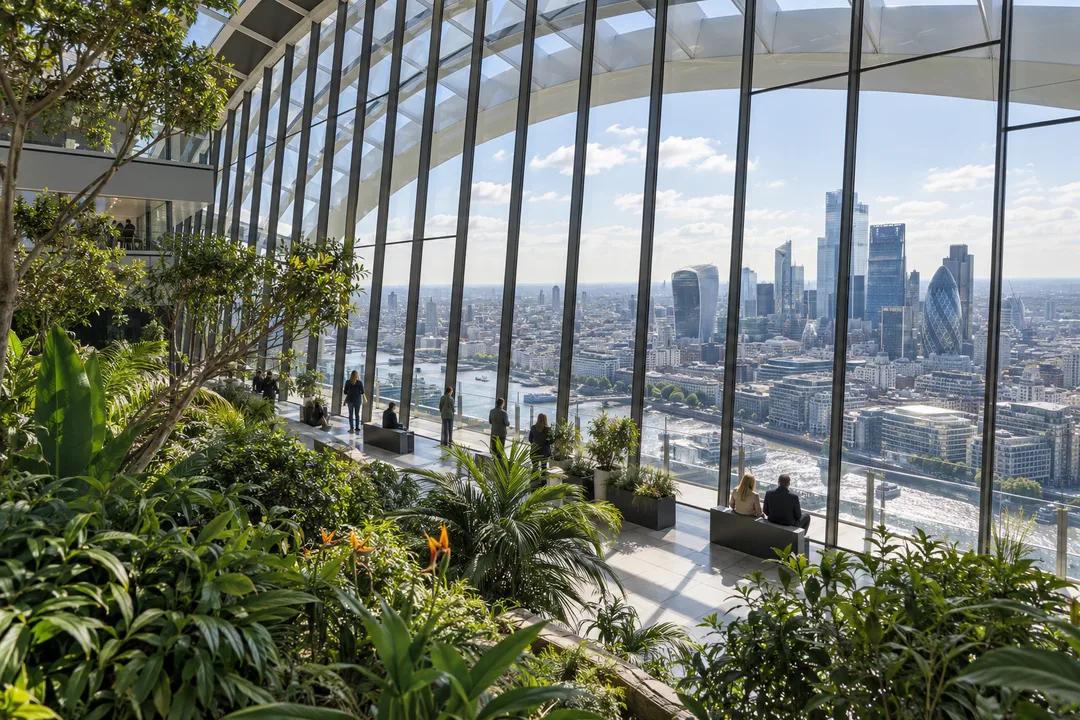
Sky Garden Rooftop Botanical Terrace: Free City Views
Sky Garden makes a London rooftop botanical terrace easy to plan: pair indoor planting with skyline time, a short City walk, and a calm exit route.
Sky Garden is the useful answer when your rooftop botanical terrace search needs both living greenery and a broad London outlook. The experience works best as a two-part visit: slow down among the planted interior paths, then move to the glass edge for the skyline. Treat it as a reset inside the City of London rather than a trophy viewpoint. The practical question is what you want from the hour: a quiet plant-filled pause, a visual orientation to the river, or a starting point for a longer walk.
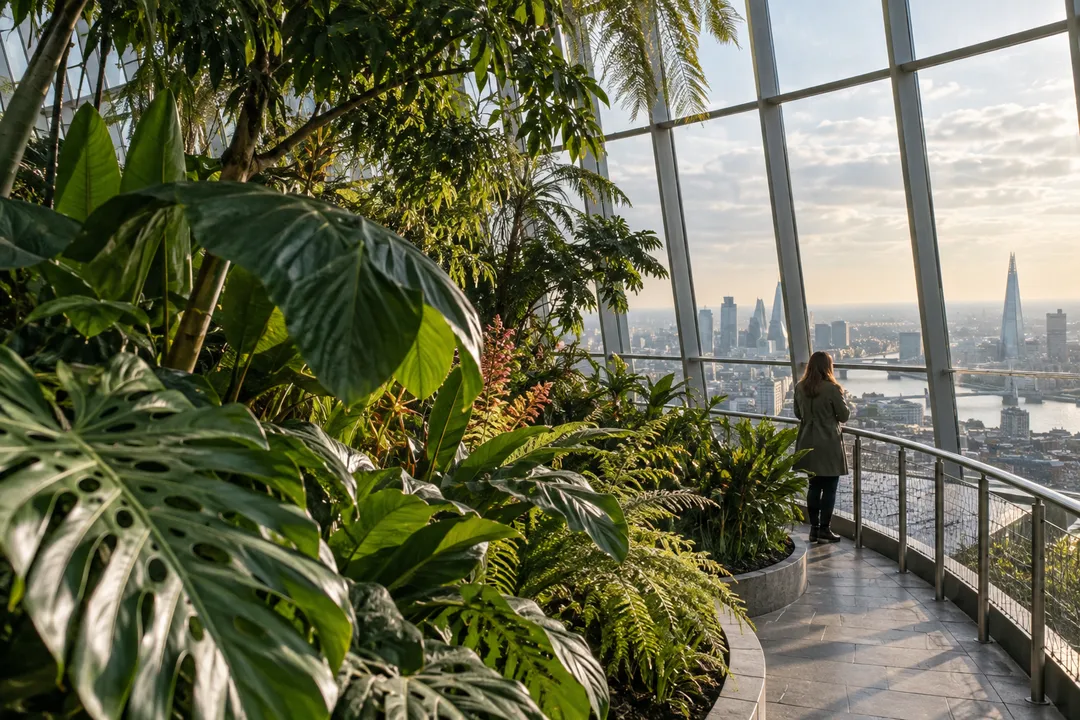
Let the planting set the pace
The garden is memorable because the plants occupy the same visual field as the city. Tall palms and layered leaves create foreground, middle distance and horizon, so the view keeps changing as you walk a few metres. Start at the lower planting, where the canopy feels enclosed, then climb gently toward the open edge. A companion who dislikes heights can stay close to the central greenery while the photographer takes the perimeter. That split makes the terrace friendly to mixed groups.
Use a three-stage visit
Plan three small stages instead of one long stop. Spend the first ten minutes orienting yourself: notice the stair or lift arrival, the main path and the brightest glass wall. Give the next twenty minutes to a slow loop, pausing where the foliage frames a recognizable City tower. Finish with a final skyline look and a decision about what comes next. This structure prevents the common mistake of taking one photo immediately, then leaving without experiencing the garden itself.
Choose your skyline brief
A rooftop garden becomes more useful when you arrive with a visual question. You might trace the Thames toward the east, pick out bridges, or compare the tight geometry of office towers with the irregular shapes of the planted beds. Families can turn it into a find-five game for towers and boats. Solo visitors often prefer one bench and a notebook. Couples can use the glass edge for a short conversation before moving into the quieter green interior.
Plan for the social rhythm
Sky Garden attracts many kinds of visitors, and the room changes character through a visit. Early arrivals tend to spread along the viewing edge; later groups cluster near obvious photo angles. Keep moving rather than guarding one rail. If a school group or tour occupies the central path, take the outer loop first. The best etiquette is simple: leave a clear walking lane, keep voices low near seated visitors, and let someone take one photograph before you step into the same frame.
Make a City of London loop
The terrace is strongest as the middle of a short City route. Begin around Monument or the river, use Sky Garden as the vertical pause, then continue toward Leadenhall Market or the quieter lanes around St Dunstan in the East. The contrast is the point: glass, leaves and distant water give way to stone, church ruins and narrow passages. Keep the walk flexible so the garden remains the anchor instead of becoming a rushed stop between landmarks.
Rain changes the emphasis
On wet London days, Sky Garden offers a protected botanical scene with a view that still feels outdoors. Bring the weather into the plan rather than pretending it is irrelevant. A soaked coat makes the long edge uncomfortable, so spend more time in the interior planting and use the windows as framed weather. On bright days, reflections can soften the skyline; move a few steps to find a cleaner angle instead of pressing against the glass.
Know when to skip the photo
The terrace is not the right choice if your group only wants a fast, unobstructed panorama. The planted paths are the reason to stay, and a rushed photo-first visit can feel less satisfying than a ground-level viewpoint. Choose a street walk instead when the priority is constant movement. Choose Sky Garden when you want the city to slow down around you, with leaves and glass interrupting the usual hard-edged skyline.
Give the visit a small ritual
A useful ritual is to name three layers before leaving: one plant detail, one building, and one line of movement in the city below. The exercise makes the terrace feel like a place rather than a backdrop. Children can sketch leaf shapes; design-minded visitors can compare the curves of foliage with the straight tower lines. If the weather is clear, end by looking outward without a camera for a full minute. That pause is often the part people remember.
Use Karpo APP for the next move
Karpo APP can turn this single stop into a London rooftop botanical terrace plan that fits your day. Start with a preference such as indoor shelter, sunset light, a quiet bench or a short walk afterward. The useful output is a sequence: rooftop first, nearby street texture second, transport-friendly finish third. You are choosing a rhythm, not collecting every viewpoint. That keeps the visit personal even when the location is a popular public attraction.
Practical Notes
Pack a light layer, shoes that work on a longer City walk, and a small notebook if you like making visual notes. Give yourself transition time between the terrace and the next stop; lifts, street crossings and photography all take longer than a map suggests. For groups, decide who wants the skyline and who wants the plants before entering. For solo visitors, choose one loop and one final view. The honest plan B is a ground-level City walk if the rooftop feels crowded or the weather turns unpleasant.
Use the quietest angle
The most rewarding angle is rarely the busiest one. Step away from the obvious glass edge and let a plant cluster frame the skyline instead. The shift changes the image from a generic lookout to a recognisable garden scene. It also gives companions room to talk without competing with a queue of photographers. If the light is flat, use the foliage for depth; if the sun breaks through, wait for a patch of natural contrast rather than forcing a posed picture.
Leave with a grounded detail
Before you descend, pick one ground-level detail you want to find next: a church wall, a market roof, or a narrow lane visible between towers. That detail gives the rest of your City walk a destination. The terrace has already done the orientation work, so there is no need to add six more landmarks. A single specific follow-on keeps the day breathable and makes the rooftop visit feel connected to London rather than suspended above it.
A compact route to remember
The best version of this rooftop botanical terrace visit is deliberately modest: arrive with one question, walk the planted route, take one considered skyline photograph, and leave before the scene becomes a checklist. Sky Garden gives London a soft foreground, and that softness is what separates it from a plain observation deck. Build the rest of your route around that contrast, then let Karpo APP help you choose the next nearby pause.
Ask Karpo for more information.
Keep reading
- Richmond Park Sunset Viewing Planner: Deer Meadow Horizons
 South Bank Sunset Viewing Planner: Thames Riverside Walks
 Parliament Hill Sunset Viewing Planner: London Heath Vistas