 Richmond Park Sunset Viewing Planner: Deer Meadow Horizons
Weekend Plans
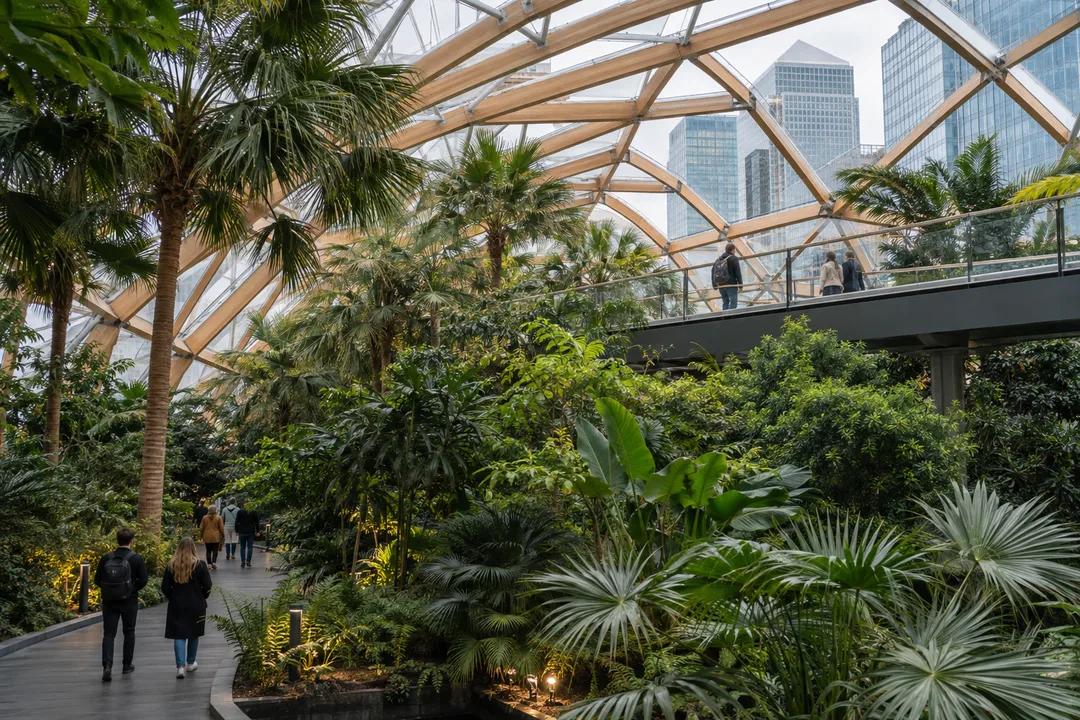
Crossrail Rooftop Botanical Terrace: Canary Wharf Reset Plan
Crossrail Place Roof Garden is a London rooftop botanical terrace for a Canary Wharf reset, pairing tropical planting with a simple transit-friendly walk.
Crossrail Place Roof Garden answers a different rooftop botanical terrace need: a tropical-feeling interior that gives Canary Wharf’s glass towers a softer foreground. The roof is especially useful when your day already runs through the docks and stations. Start by deciding whether you want a restorative pause, a short architectural detour, or a meeting point before exploring the waterside. The planting changes the tone of the district without asking you to leave its transport network.
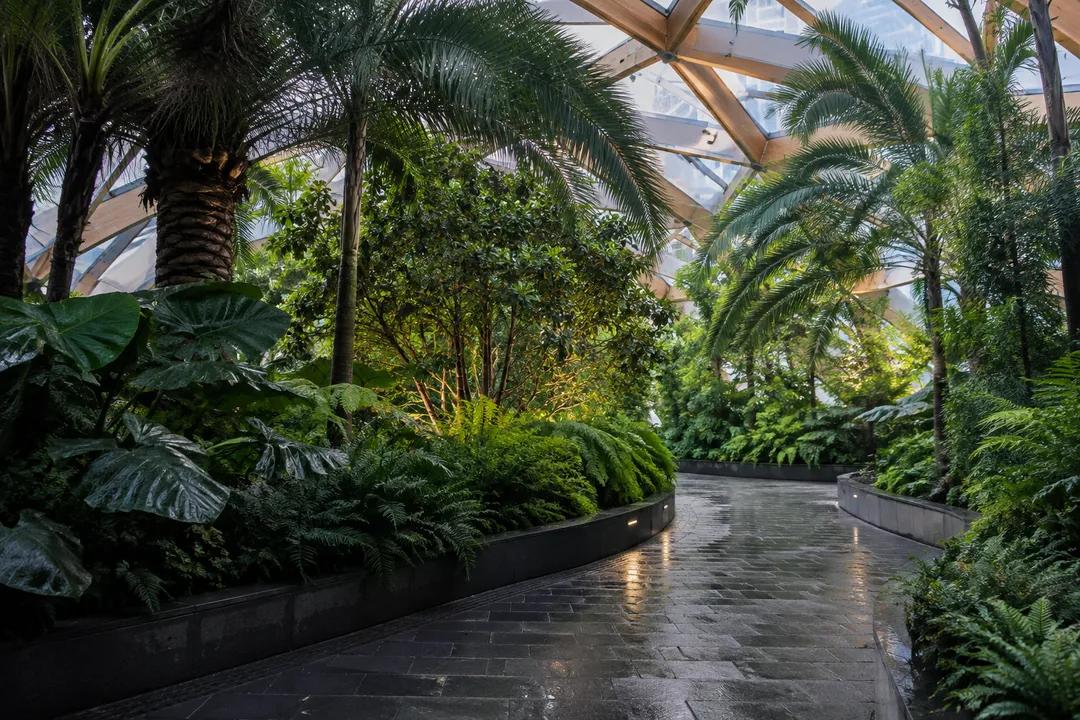
Notice the timber canopy
The first visual cue is the timber lattice overhead. It filters light into stripes and turns the roof into a sequence of frames. Walk slowly enough to see how palms and broad leaves alternate with the structure. A photographer can work from the centre for repeating geometry, then move to the edge for a quieter plant detail. The canopy makes this terrace distinctive, so do not rush straight to the skyline or you will miss the reason to visit.
Take the warm-up walk
Give yourself a few minutes to arrive before choosing a seat. A short warm-up walk around the planting lets your eyes adjust from station signage and polished retail space to leaf texture and filtered light. Look for a path that lets you see both the canopy and the dense planting. When you find it, pause without taking a photograph. That pause is the reset: the city’s infrastructure remains visible, but it is no longer directing your attention.
Build a docklands sequence
The roof works well as the middle of a Canary Wharf sequence. Pair it with a waterside loop, a view across the docks, or a slow walk between the district’s public spaces. Keep the sequence to two or three stops so the garden remains a pause rather than an intermission. The contrast between tropical leaves and hard-edged towers supplies enough variety. If rain arrives, the covered garden can carry the mood while your outdoor route becomes shorter.
Choose a viewing position
There are three useful positions: under the centre of the lattice for pattern, beside a planted path for layered depth, and near the open edge for the district’s scale. Move between them rather than waiting for one perfect spot. A group can spread naturally because each position offers a different task. Solo visitors can use the centre for a sketch or a quiet drink break. Keep the narrow path clear for people moving through.
Let the plants guide attention
The roof is not a botanical catalogue, and it does not need one. Choose one leaf shape, one change in height and one place where the planting meets the building. Those three observations are enough to make the visit concrete. The tropical palette also helps children and first-time visitors stay engaged; they can compare textures instead of memorising names. A small detail-first approach makes the skyline feel more dramatic when you finally look outward.
Plan for sound and crowds
Canary Wharf can feel busy even when the garden itself is calm. Use the canopy as a sound filter and step deeper into the planting if the main route becomes noisy. When larger groups arrive, keep your own party moving in a gentle line. The unspoken rule is to share the frames: take one photograph from a good angle, then leave space for the next visitor. This preserves the roof’s sense of openness.
Skip it for a pure panorama
Crossrail Place Roof Garden is not the best choice if your only aim is a bare skyline panorama. The lattice and planting intentionally interrupt the view. That interruption is the value for visitors who want atmosphere and a little shelter. Choose an open waterside viewpoint when the horizon matters more than the garden. Choose the roof when you want to feel the city through layers of structure, leaf and reflected light.
Use a weather-led plan
A weather-led plan makes this terrace easy to keep. In rain, begin under the canopy and shorten the outdoor dock loop. In bright sun, use the roof as a shade break before walking beside the water. In grey weather, focus on saturated greens and the pattern of the timber. The point is to change the order, not to abandon the day. Karpo APP can help you arrange the sequence around shelter and walking tolerance.
Make the reset social
For a small group, give everyone one minute to choose a favourite frame, then compare choices at the edge. Couples can use the garden as a transition between a busy commute and a slower conversation. Solo visitors can sit with the sound of footsteps and trains beyond the building. These simple social cues work better than trying to force a formal tour. The roof is generous enough for a shared pause without demanding a shared route.
Keep the next step practical
Ask Karpo APP for a Canary Wharf route that starts with Crossrail Place Roof Garden and then narrows by mood. You might want waterside movement, a quiet coffee stop, an architecture-focused loop, or a short route back toward transport. The tool is most useful when you name the constraint. A rooftop botanical terrace is not an endpoint; it is a decision point that helps the rest of the afternoon feel coherent.
Practical Notes
Wear shoes suitable for a waterside walk and keep a light layer for the change from filtered roof light to open dock air. Let one person lead the first loop while others look upward and outward. If the canopy feels crowded, use the planted edge and return later rather than holding a photo spot. If the outdoor route is unpleasant, the roof still works as a complete short visit. Leave with one canopy pattern and one leaf detail in mind.
Find a frame away from the centre
The centre of the roof delivers the strongest lattice pattern, but the edges often give a better botanical photograph. Stand where a palm or fern interrupts the repeating timber, then let the distant towers sit behind it. This is a small compositional change with a large effect. It also keeps you moving through the garden instead of stopping the main route. The roof feels more expansive when you collect several modest frames rather than one crowded hero shot.
Keep the outdoor add-on optional
The docks are a useful extension, not a requirement. If the roof has already given you the reset you wanted, leave through the nearest easy route and continue with your day. If energy is high, add a waterside loop and use the skyline you saw through the lattice as a navigation cue. This optional structure makes the plan resilient. A good rooftop botanical terrace should improve the day even when the second half changes.
End on the right contrast
Crossrail Place Roof Garden succeeds because Canary Wharf remains present without dominating the visit. Timber softens glass, plants soften movement, and the roof gives you a pause that can be short or expansive. Use it as a reset, then let Karpo APP choose the route that matches the atmosphere you found. That is the practical promise of a rooftop botanical terrace: a small change in height that changes the whole city day.
Ask Karpo for more information.
Keep reading
- Richmond Park Sunset Viewing Planner: Deer Meadow Horizons
 South Bank Sunset Viewing Planner: Thames Riverside Walks
 Parliament Hill Sunset Viewing Planner: London Heath Vistas