 Brixton Christmas Light Up Walk Planner: Rainy Arcades
Free Things to Do

Wapping Riverside Walk Planner: Warehouse Lanes and Stairs
A quiet Wapping riverside walk for a weekday morning: canyon lanes between old warehouses, river stairs down to the water and hidden gardens on the Thames.
Wapping is the riverside walk for people who prefer hidden corners to big panoramas. Instead of a long open promenade, you get a narrow old high street squeezed between towering brick warehouses, with gaps that open suddenly onto the Thames. Old river stairs lead down to the water, small gardens sit wedged between buildings and the river appears in frames rather than all at once. Go on a weekday morning, walk slowly and treat each glimpse of water like a reward.
The Character of a Warehouse Riverside
For a long time this part of East London was all about cargo. Ships moored in the river and in the enclosed docks behind, and the warehouses were built tall and close to the water so that goods could be swung straight inside. Today those buildings are mostly homes, but the bones are still there. Look up and you see iron walkways bridging the lanes, loading doors stacked one above another and the occasional old crane arm left in place like a sculpture.
That history shapes how the walk feels. The street often runs a building's depth away from the river, so you are walking through a brick canyon with the Thames hidden just behind the walls. Then a passage appears, or a set of stairs, and there it is, wide and grey and moving fast. That rhythm of closed and open, shadow and light, is what makes Wapping different from the broad, sunny embankments upriver.
Start Early and Begin Near Tower Bridge
The easiest approach is from the west, walking away from the crowds near Tower Bridge and the old dock basin beside it. Within a few minutes the tourist noise fades, the road narrows and you are suddenly in a much quieter neighbourhood. A weekday morning is ideal. Delivery vans come and go, a few residents walk dogs and the light falls in long diagonal stripes between the warehouses. At weekends it stays pleasant, just with more walkers.
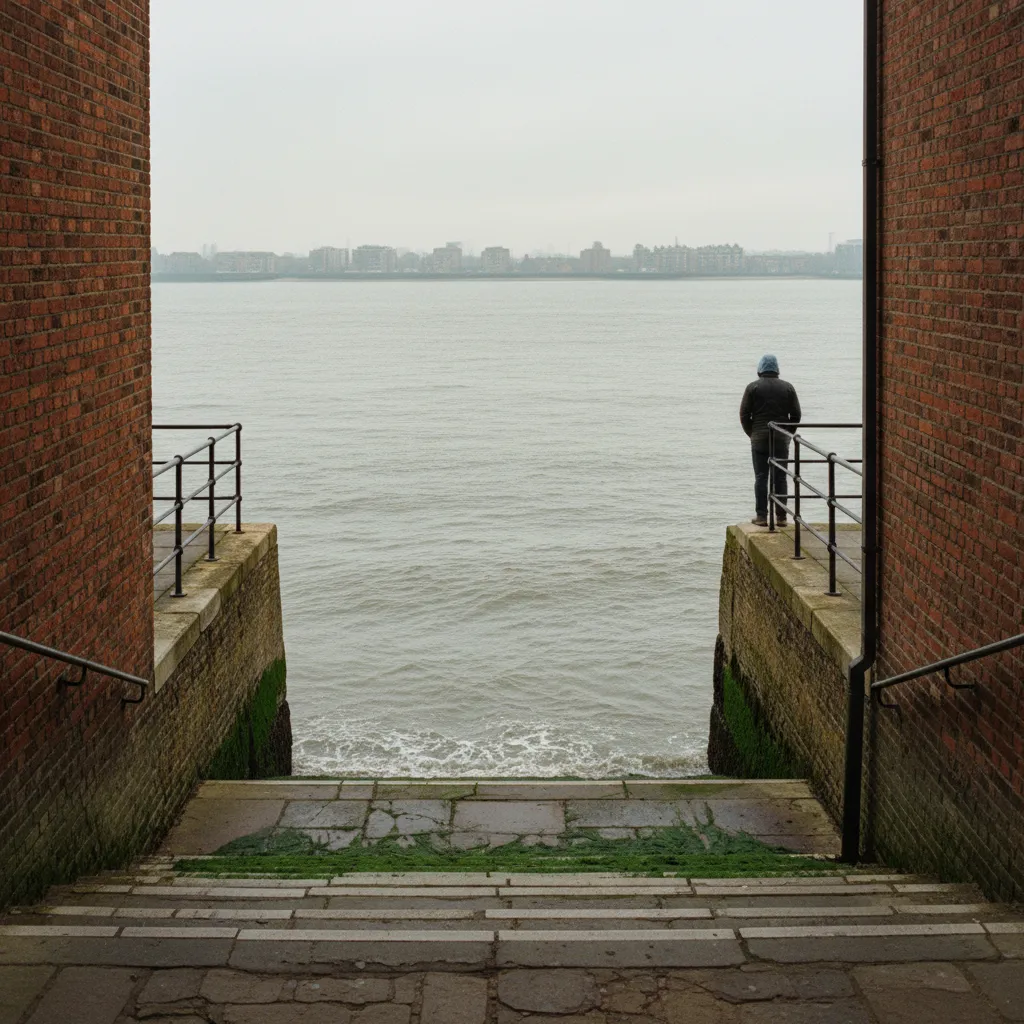
Walk east along the old high street at an unhurried pace. Look out for the small passages between buildings that lead toward the river. Some end in a little viewing platform, some in a set of stone stairs dropping to the foreshore. These river stairs were once how watermen ferried people and goods across the Thames, and their worn steps carry that working history. Take a moment at the top of each one to look across the river at the far bank.
River Stairs and How to Use Them Safely
The stairs are part of the charm, but they need respect. The lower steps are often covered in slick green weed, and at high tide the river reaches far up them. Stay on the dry upper steps unless you know the tide is out and the stones are firm. Even then, the foreshore can be muddy and uneven, so good boots are essential and this is not a place for small children to run ahead. The view from the top is usually the best one anyway.
If you do go down at low tide, keep your eye on the water and plan to come back up well before it turns. The foreshore along here is a lovely place to look at pebbles, old bricks and pieces of pottery washed smooth by the river, but there are rules about what you can take away, so the safest habit is to look, photograph and leave things where they lie. Gentle curiosity suits this place far better than treasure hunting.
Small Gardens and Quiet Sitting Spots
Wapping hides several small green spaces between its buildings, and they make good resting points on the walk. Some are just a lawn and a few benches facing the river; others are larger, with old trees and a view of passing boats. Bring a coffee from a café near the start and sit for ten minutes in one of them. The sound of the water and the gulls, with the city humming somewhere in the distance, is a calm way to start a working day.
Behind the river edge, the old dock basins have been turned into quiet water gardens and canals lined with houses. A short detour inland along one of these is a good way to vary the walk, especially on a windy day when the riverside is exposed. You swap the wide Thames for still water, reeds and ducks, then rejoin the high street further east. It adds variety without adding much distance.
Who This Walk Suits
This walk is excellent for solo walkers who want an hour of thinking time, for photographers who love brick, iron and reflections, and for anyone working nearby who needs a short, peaceful break from screens. It is also a good walk for visitors who have seen the famous bridges and want to understand what the working river once felt like. If you are with friends, it suits small groups of two or three; larger groups crowd the narrow pavements.
Honestly, if you want long uninterrupted river views, a wide promenade and lots of cafés along the way, Wapping is not your best choice. The views come in pieces, and the street is mainly residential. That is the trade-off. What you gain is calm, atmosphere and a sense of discovery, which many people find more memorable than another walk along a crowded embankment with shops at every step.
Ending the Walk and Linking Onward
As you continue east, the high street eventually curves away from the river and the neighbourhood opens out toward larger parks and the next riverside district. You can keep going along the river path toward Limehouse, where the scenery shifts again to marinas and newer homes, or turn inland toward an Overground station for an easy ride home. Many walkers like to finish at one of the old riverside pubs for a warm seat by the window.
If you would rather choose the ending on the spot, the Karpo APP is a simple way to see cafés, bakeries or pubs within a short walk of where you have stopped and save the ones that look right for next time. It helps you decide where to sit without backtracking through the lanes. Karpo will not plot a route through the passages for you, so keep a map open too, but it takes the guesswork out of choosing a warm place to finish.
Practical Notes for Wapping by the River
Wear sturdy shoes with good grip for the cobbles and stone stairs, and bring a light waterproof, since the narrow streets channel the wind and drizzle. Keep your voice low in the residential lanes, especially early in the morning, and avoid blocking the narrow pavements when you stop for photos. The whole stretch from the dock basin to the eastern end takes about an hour at a slow pace, longer if you explore the gardens and side passages.
Keep dogs on a lead near the river stairs and the canal edges, and watch children closely at any point where the path meets the water without a railing. If the river is running high and fast after heavy rain, enjoy the stairs from the top and skip the foreshore entirely. Most of all, leave space in your plan for stopping. Wapping rewards the walker who pauses in a passage and simply watches the river slide past.
Ask Karpo for more information.
Keep reading
- Brixton Christmas Light Up Walk Planner: Rainy Arcades
 Hackney Christmas Light Up Walk Planner: Canal Boats
 Islington Christmas Light Up Walk Planner: Square Dates