 Richmond Roasted Chestnut Winter Walk Planner: Towpath Loop
Free Things to Do
Greenwich Riverside Walk Planner: Follow the Tide East
Plan a free Greenwich riverside walk around the Thames tide: start at the old ships, read the foreshore at low water and drift east toward the open river.
Greenwich is the stretch of London where the Thames stops feeling like a city river and starts to look like the road to the sea. This riverside walk plan is built around one thing most visitors ignore: the tide. Start beside the old ships near the market, check whether the water is high or low, then walk east along the river path toward the open reaches. The tide sets the mood, the views and how far you will want to go, and it costs nothing at all.
Why the Tide Matters More Than the Map
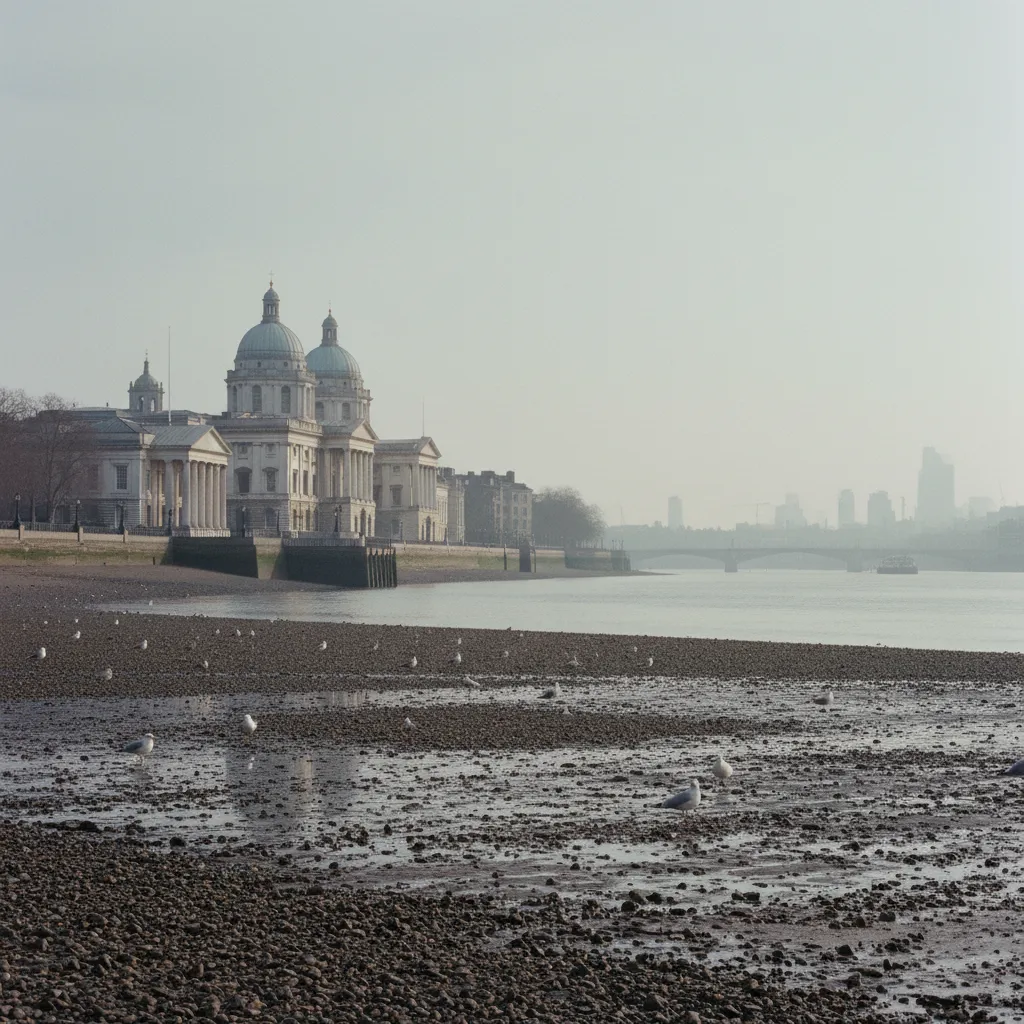
The Thames at Greenwich rises and falls by several metres twice a day, so the same path can feel like two completely different walks. At high water the river slaps against the embankment wall, boats sit level with your eyes and the whole scene feels busy and full. At low water a broad beach of pebbles, clay and old timber appears below the wall, the gulls move in, and the river suddenly looks wilder and older, with channels and mud banks you never knew were there.
Neither version is better, but they suit different people. If you want drama and boat traffic, aim for the hours around high tide. If you like quiet, texture and the feeling of discovery, go when the water is low. Most tide tables for the river are easy to find on a phone, and checking one before you set out is the single best planning step for this walk. It turns a pleasant stroll into something that feels timed and deliberate.
Start Among the Masts and Colonnades
Begin near the famous tea clipper in her dry dock, where the town centre meets the water. Give yourself a few minutes to look at the riverside front before you move: the long pale colonnades of the old naval buildings, the twin domes, the lawns running down to the river wall. This is the postcard view, and it is worth seeing it once properly before you turn your back on it. Early on a weekday the space is calm and you can hear the river.
Walk east along the front with the water on your left. The path passes the grand buildings and then narrows into a lane with old riverside houses and a pub or two leaning toward the water. Keep looking down over the wall. At low tide this is where you see the foreshore at its best, with smooth stones, broken clay pipe stems and the dark ribs of old wooden posts. Admire it from above; the foreshore has strict rules about digging, and the mud is soft.
Heading East as the City Falls Away
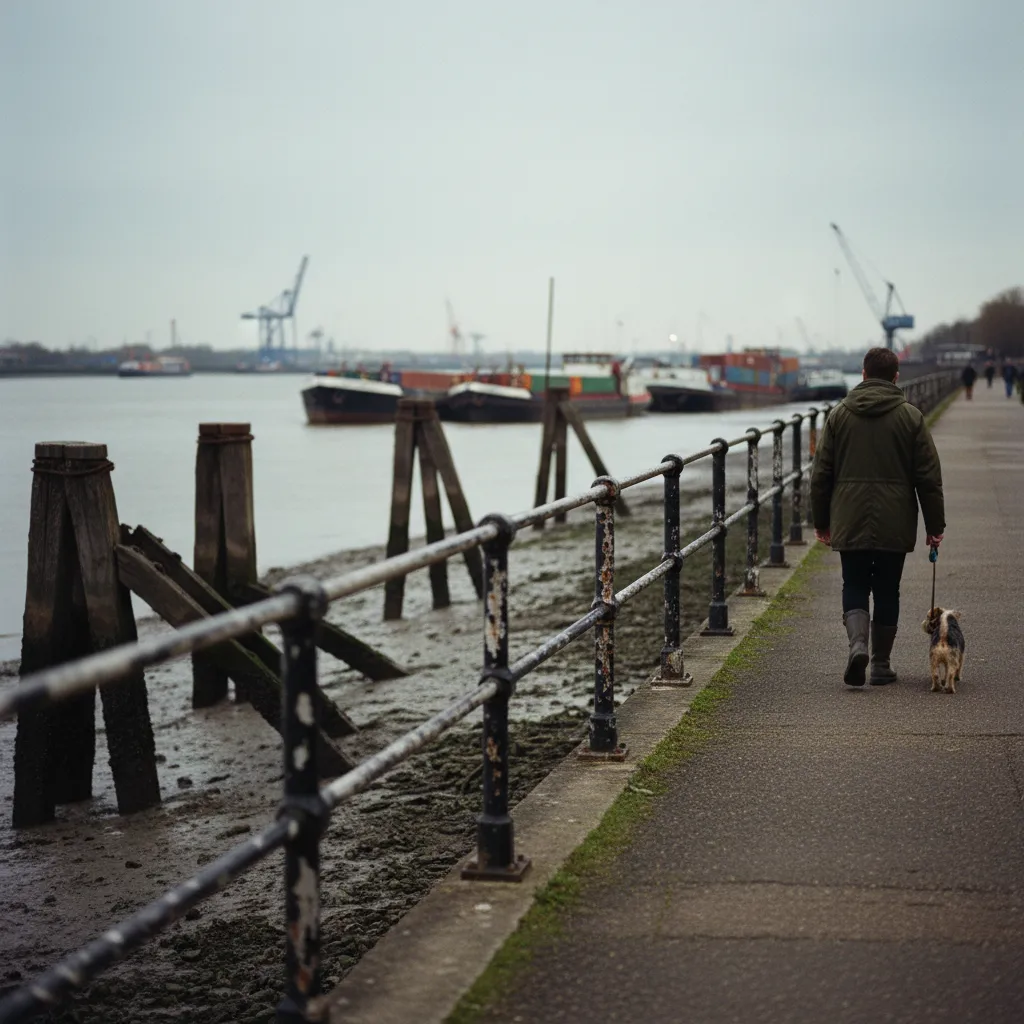
Past the old town the riverside walk changes character quickly. Boatyards, aggregate wharves and a big old power station building take over, and the path weaves between working river sites and new apartment blocks. Some walkers find this stretch less pretty. I think it is the most honest part of the route, because it shows that the river is still a place of work. Barges unload, cranes swing slowly and the smell of wet rope and river water hangs in the air.
The river widens as you go, and the sky opens up with it. On a clear afternoon you can watch the light move across the water toward the glass towers of the Docklands on the far bank, which look surprisingly calm from this distance. The path is mostly flat and paved, with a few gravel sections and short detours inland where a wharf blocks the edge. Signposting for the riverside route is generally good, but keep a map open to rejoin the water after each turn.
Who This Walk Is Best For
This route suits curious solo walkers and photographers who like big skies and industrial textures more than manicured parks. It works well for a pair of friends catching up, because the path is wide enough to walk side by side and there are long quiet stretches with nothing to interrupt the conversation. It is also a good choice for anyone who has already done the park hill and the museums and wants to see a different, rougher side of Greenwich on a second visit.
It is less ideal for very small children on scooters, simply because the working wharf sections ask for attention and some parts feel exposed in wind. Families can still enjoy the first stretch from the clipper past the colonnades, then turn back for the park. Be honest with yourself about the weather, too. A raw easterly wind straight off the estuary makes the open stretch tough going, while a still grey morning is perfect and strangely beautiful along this bend.
How Far to Go and How to Turn Back
The beauty of a riverside walk is that it has no fixed end. A gentle version runs from the clipper to the point where the river bends toward the big peninsula, which takes under an hour at an easy pace. Walkers with more energy can keep following the path around the peninsula itself, where the river feels at its widest and windiest. Decide your turning point before you set off, so you are not caught with tired legs a long way from the town.
Coming back, you have choices. Retracing your steps is no hardship, because the light will have changed and the tide will have moved, so the river looks different on the return. You can also cut inland through residential streets toward the park for a change of scenery, or finish near one of the river piers and ride a boat back toward the centre of town. A boat ride is a lovely way to see the stretch you just walked from the water.
Warming Up After the River
Once you are back in the old town, the covered market and the lanes around it are good for browsing and a warm drink. If the walk was cold, a café table by a window with a view toward the masts is a fine reward. Try not to plan too tightly here. Part of the pleasure of this walk is coming back slightly windswept and letting the afternoon unfold, perhaps with a short climb up the park hill for a last look over the river bend you followed.
Open the Karpo APP when you reach the end of the river path and want somewhere warm within a few streets, whether that is a café, a bakery or a quiet pub corner. You can save the stretch of river you liked most and come back to it at a different tide. Karpo will not tell you what the water is doing, so keep a tide table handy as well, but it makes deciding where to sit down much easier after a long blustery walk.
Practical Notes for Greenwich by the Water
Wear shoes with grip, because the riverside paving gets slick after rain and the gravel stretches can be muddy. A windproof layer matters more than a warm one, since the breeze off the open water is the thing that chills you. Bring a small bag for anything you carry rather than pockets stuffed with gloves and maps. If you want photographs of the foreshore, an overcast day gives softer light on the wet stones than bright sun, which tends to flatten the scene.
Stay on the marked path through the working wharf sections, keep dogs on a short lead near the river wall and keep children back from the edge where there is no railing. Avoid going down onto the foreshore unless you know the access points and the tide well, because the water returns faster than it looks. Above all, give yourself a little more time than you think you need. The best moments here are slow ones, standing still and watching the river change.
Ask Karpo for more information.
Keep reading
- Richmond Roasted Chestnut Winter Walk Planner: Towpath Loop
 Borough Roasted Chestnut Winter Walk Planner: Arch Route
 Hampstead Roasted Chestnut Winter Walk Planner: Ridge Loop