 Brixton Vintage Thrift Shop Finder: South London Retro Gems
Hidden Gems & Odd Finds
Shapero Rare Book Shop in Mayfair: Sunday Browsing
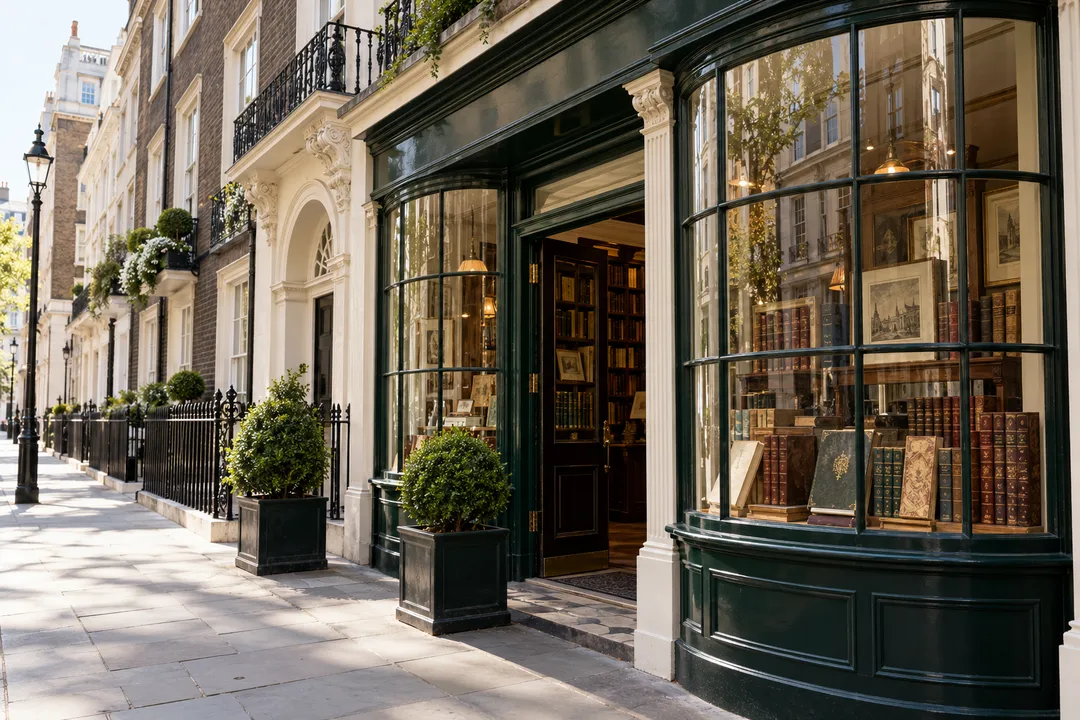
Shapero Rare Books at 94 New Bond Street opens Sundays from 11:30am, with maps, art, travel and first editions for a focused Mayfair browse.
Shapero Rare Books is the rare book shop near me answer for a Mayfair afternoon when you want something more deliberate than a general used-book browse. The shop is at 94 New Bond Street, open Monday to Saturday from 10am to 6pm and Sunday from 11:30am to 6pm. Its shelves range across maps, atlases, natural history, art, architecture, travel, Judaica, modern first editions, private press books and illustrated material, so the useful question is not whether it has something interesting, but which department you should start with.
Start with the department, not the doorway
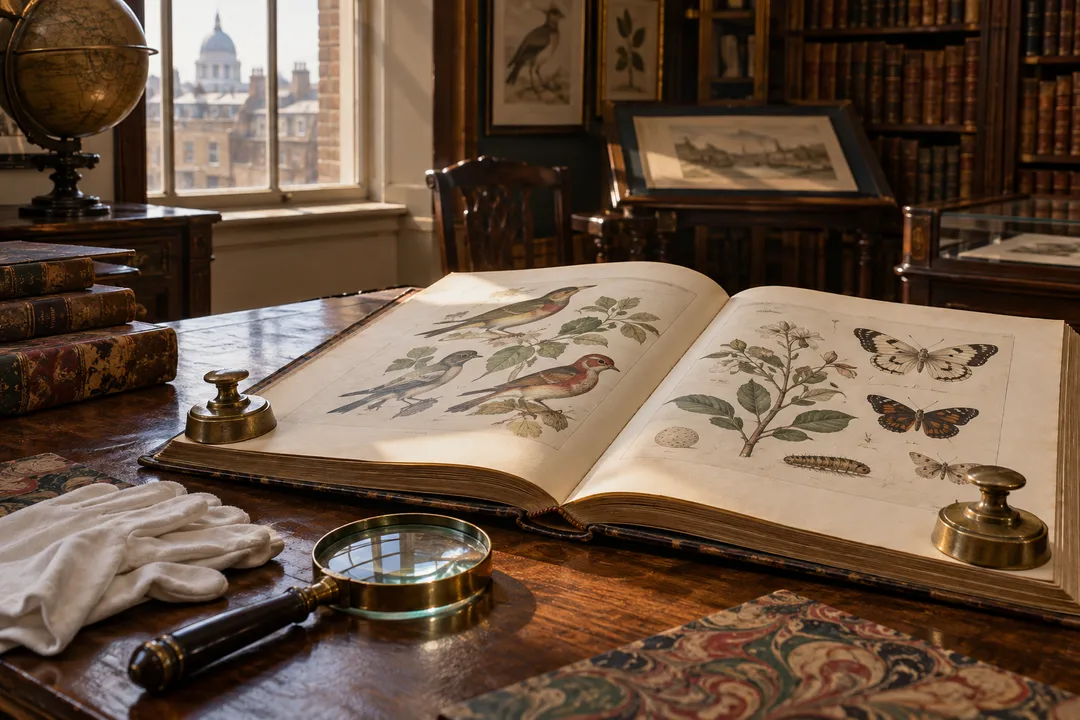
The first thing to understand is Shapero's breadth. This is not a narrow room devoted only to signed novels or nineteenth-century bindings. The official catalogue is arranged by subjects such as maps, guidebooks, natural history, science, travel and exploration, and modern first editions. That makes it an unusually good stop for a visitor whose collection is still taking shape. You can arrive with a broad interest in botanical illustration, the history of journeys or the visual language of old guidebooks and let the categories sharpen your eye.
A good opening move is to tell a bookseller the kind of object that made you come in rather than asking for the rarest book in the shop. Say that you like city maps, early photography, illustrated science or private-press design. The staff can point you toward the right case without turning the visit into a sales pitch. The room rewards questions about condition, provenance and why one edition matters more than another; those details are often more interesting than a headline author name.
What to look for on the shelves
For a first pass, spend ten minutes on maps and atlases, then move to natural history and travel. Shapero's own categories include Baedeker and Murray guidebooks, botanical and zoological material, early science, and books connected to voyages. Look for the relationship between image and object: a hand-coloured plate, a foldout map that still opens cleanly, a binding that has survived use, or a book whose previous owner left a meaningful inscription. Those are the clues that turn browsing into collecting.
The shop is especially satisfying for readers who like books as designed artefacts. Private press editions, artists' books and illustrated volumes invite a slower inspection than a standard paperback. Notice the paper, the margins and the way plates were tipped in or folded. If a book is behind glass, ask to see it rather than leaning over the case. The practical rule is simple: clean hands, one volume at a time, and never force a stiff hinge just to see the title page.
Skip the idea that you need to buy something expensive to justify the visit. A specialist bookseller is useful even when you leave with a better vocabulary rather than a parcel. Ask what makes a map early, how a first edition is identified in a particular field, or which catalogue category is worth following. Shapero also handles valuations and buying enquiries, so a question about a family book or a small collection can be more productive than an aimless search for a souvenir.
Make the Sunday visit work
Sunday is the most distinctive timing advantage because Shapero lists an 11:30am opening rather than the more common weekday-only schedule of many specialist dealers. Go close to opening if you want the quietest inspection of the cases, or arrive after lunch when the New Bond Street foot traffic has thinned. The shop closes at 6pm, leaving enough time for a second look at a book you noticed on the first circuit. There is no queue strategy here; the win is unhurried attention.
The people you will see are usually purposeful: a collector checking a binding, a designer studying an illustrated volume, a visitor comparing a map with a phone photograph taken earlier, or a regular asking about a new arrival. The unspoken etiquette is to let those conversations breathe. If you need a detailed explanation, ask directly and step aside when another reader is waiting at the case. That small courtesy keeps a tiny specialist room comfortable for everyone.
For a plan B, do not replace Shapero with a generic chain just because the door is busy. Switch the emphasis of the walk instead. If art and architecture are your priority, continue toward the Royal Academy and the Burlington arcades. If maps and travel are the draw, use the surrounding Mayfair streets as a visual extension of the visit and return to the shop once you have a sharper question. The point is to preserve the subject, not simply fill another hour.
A Mayfair walk after the books
Shapero fits neatly into a compact literary and design walk. Start at the New Bond Street entrance, drift south through the arcades, then cut toward Burlington Gardens and the Royal Academy. The route changes the way you read the shop: polished storefronts become a lesson in display, while the older passages make a hand-coloured map feel less like a museum object and more like a record of how London has been imagined.
If you still have energy, loop east toward Piccadilly and the bookish institutions around St James's. Keep the walk observational rather than trying to cram in another dealer. Look at windows, old signs and the proportions of the streets; Shapero's strengths in art, architecture and travel make those details part of the same subject. A coffee break is useful here because the best second visit is usually the one after you have worked out what you actually want to ask.
Practical notes for a better browse
The address to save is 94 New Bond St, London W1S 1SJ. The official hours are Monday–Saturday 10am–6pm and Sunday 11:30am–6pm. If you are travelling for one named item, call first and describe the author, subject or catalogue reference; a specialist shop can often prepare a more useful answer than a hurried shelf search. If you are carrying a large bag, keep it close and ask before placing it near a display table.
Use the Karpo APP to build this as a Mayfair stop rather than treating it as an isolated errand. The useful itinerary is Shapero first, a short architecture-and-arcade walk second, and a return visit only if one department has opened up a genuine collecting question. That rhythm suits the shop: a quiet room, a specialist subject and enough time to notice why an ordinary-looking volume is not ordinary at all.
Ask Karpo for more information.
Keep reading
- Brixton Vintage Thrift Shop Finder: South London Retro Gems
 Notting Hill Vintage Thrift Shop Finder: Preloved Rails
 Soho Vintage Thrift Shop Finder: West End Designer Archives