 Brixton Vintage Thrift Shop Finder: South London Retro Gems
Hidden Gems & Odd Finds
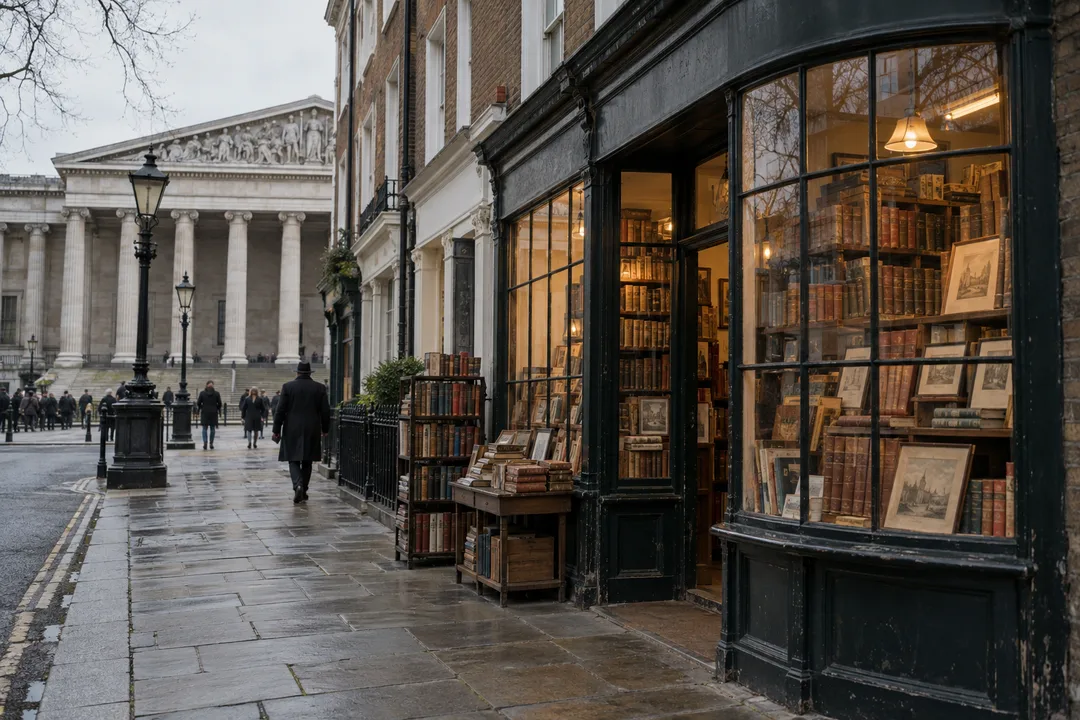
Jarndyce Rare Book Shop: Dickens Before the Crowds
Jarndyce at 46 Great Russell Street opens weekdays from 11am to 5:30pm opposite the British Museum, specialising in English literature, history and Dickens.
Jarndyce Antiquarian Booksellers is the rare book shop near me for a Bloomsbury visit built around English literature, history and the physical atmosphere of an old bookseller's room. The shop is at 46 Great Russell Street opposite the British Museum, open Monday to Friday from 11am to 5:30pm. Established in 1969, Jarndyce specialises in seventeenth-, eighteenth- and especially nineteenth-century English literature and history, with Dickens, women writers, plays, pamphlets and London material among its recurring subjects.
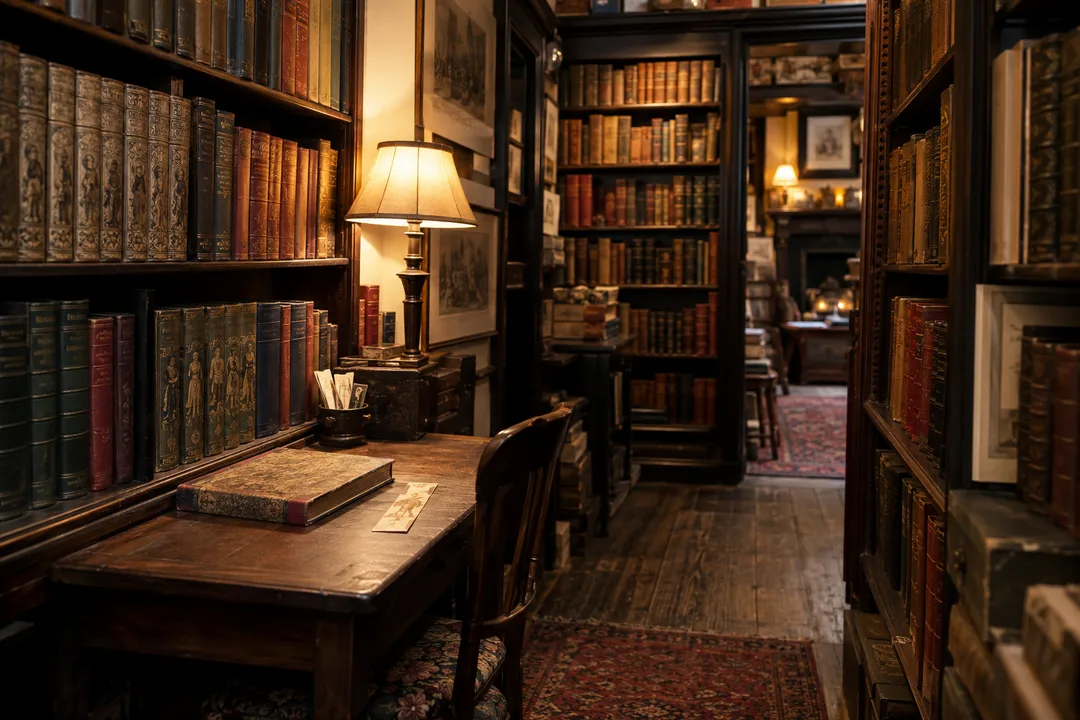
The building is part of the collection
Jarndyce is unusually good at making the setting explain the stock. The building was constructed around 1730 and retains period features, while the ground floor was renovated to recreate a nineteenth-century bookshop with panelling, a working fireplace and an original wooden floor. You are not walking into a neutral retail box. The room makes cloth bindings, pamphlets and Victorian novels feel connected to the culture that produced and read them.
The firm began as an antiquarian bookselling and catalogue business in 1969 and has published more than 250 catalogues. That catalogue habit is central to the visit. Jarndyce organises material by subjects such as Dickens, the Romantics, women writers, language and education, economic and political history, chapbooks, broadsides, yellowbacks, plays and theatre. A catalogue is not just a sales list; it is a way of seeing a period through its reading habits.
A better way to browse Dickens
If Dickens is your entry point, do not start by asking for the single most famous title. Look for the surrounding world: original cloth, later editions, Dickensiana, letters, manuscript material, theatre adaptations and books about the author. Jarndyce's buying material specifically highlights first and early editions, original bindings, autograph letters, ephemera, plays and imitations. That wider field is where the shop becomes more revealing than a standard display of familiar novels.
For a broader literature browse, choose one shelf family and follow it for fifteen minutes. Women writers, Victorian novels, yellowbacks, language books and plays each produce a different image of nineteenth-century reading. Compare paper, format and intended audience. A cheap-looking wrapper may tell you more about mass readership than a handsome leather volume. Ask the bookseller what the original buyer would have noticed; that question opens the period without requiring specialist knowledge.
Skip the temptation to treat the fireplace and panelling as a photo backdrop. The room is a working bookshop, not a museum installation. Handle only what you are invited to handle, keep your bag and drink clear of the tables, and return books to the staff. The most useful souvenir is a catalogue title or a new research lead. Jarndyce's own catalogue list makes it easy to continue the subject after you leave.
When to go and how long to stay
The official opening window is 11am to 5:30pm Monday to Friday, which makes a late-morning start especially sensible. Arrive near 11am if you want the room before the museum crowds build, or go mid-afternoon after lunch if you prefer a slower neighbourhood. There is no advertised weekend window on the contact page, so do not plan a Saturday visit as though the shop were guaranteed to be open. The weekday schedule is the one to trust.
The visitors are usually easy to read: a Dickens collector checking original cloth, a student investigating pamphlets, a reader interested in women writers, a theatre historian, or a tourist who has come from the museum and discovered that the street itself has a literary life. The quiet rule is to let the shop's expertise set the tempo. Ask a focused question, then give yourself room to look before requesting another stack.
A useful plan B is the online catalogue and the firm's printed-catalogue archive. Jarndyce publishes several catalogues each year and offers subjects ranging from manuscripts and railways to women writers, newspapers and books about London. If the exact shelf you want is not available, choose a catalogue theme and use it to plan a return visit. That is more productive than replacing the shop with a generic bookstore that cannot explain the material's history.
A British Museum and Bloomsbury walk
Jarndyce is opposite the British Museum, so build the visit around a simple crossing of subjects. Begin with the bookseller's nineteenth-century room, visit one museum gallery or courtyard, then return to Great Russell Street with one object in mind. The contrast is useful: museums show selected objects at a distance, while Jarndyce lets you think about ownership, binding, reading and circulation through books that were made to be handled.
For a longer loop, continue through Bloomsbury's squares and university streets, then turn back toward the theatre and book lanes of Covent Garden. Look for the details Jarndyce's catalogues make visible: newspaper culture, public education, cheap print, travel writing and the afterlife of popular fiction. Keep the route walkable and leave time for one last shelf pass before closing. This is a place where the second look is often the useful one.
Practical notes for your visit
Save 46 Great Russell Street, London WC1B 3PA, opposite the British Museum. The official shop hours are 11am–5:30pm Monday to Friday. If you want a specific catalogue, Dickens item or manuscript, email books@jarndyce.co.uk before travelling. The company publishes catalogues regularly, and its contact page provides both the address and the weekday opening window.
Because the shop is close to a major museum, give yourself a buffer before the 5:30pm close rather than arriving after a long gallery visit. A twenty-minute final browse is enough to compare two bindings or ask about a catalogue; a rushed five-minute entrance is not. If the museum is crowded, start at Jarndyce and let the quieter room determine how much of the rest of Bloomsbury you need.
Use the Karpo APP to pair Jarndyce with the museum and a Bloomsbury walk, but keep the bookstore as the anchor. The best reason to come is not the promise of a famous name behind glass. It is the chance to see how a literature specialist turns bindings, catalogues, pamphlets and old streets into one coherent story. Arrive before the crowds, ask one good question and let the room do the rest.
Ask Karpo for more information.
Keep reading
- Brixton Vintage Thrift Shop Finder: South London Retro Gems
 Notting Hill Vintage Thrift Shop Finder: Preloved Rails
 Soho Vintage Thrift Shop Finder: West End Designer Archives