 Camden Korean BBQ Group Dinner Picker: Lockside Feasts
Restaurants
Old Street Ramen Noodle Bar: Monohon Without Reservations
Monohon on Old Street seats complete groups without reservations. Choose Monday lunch for the shop's quietest service, or arrive before dinner begins.
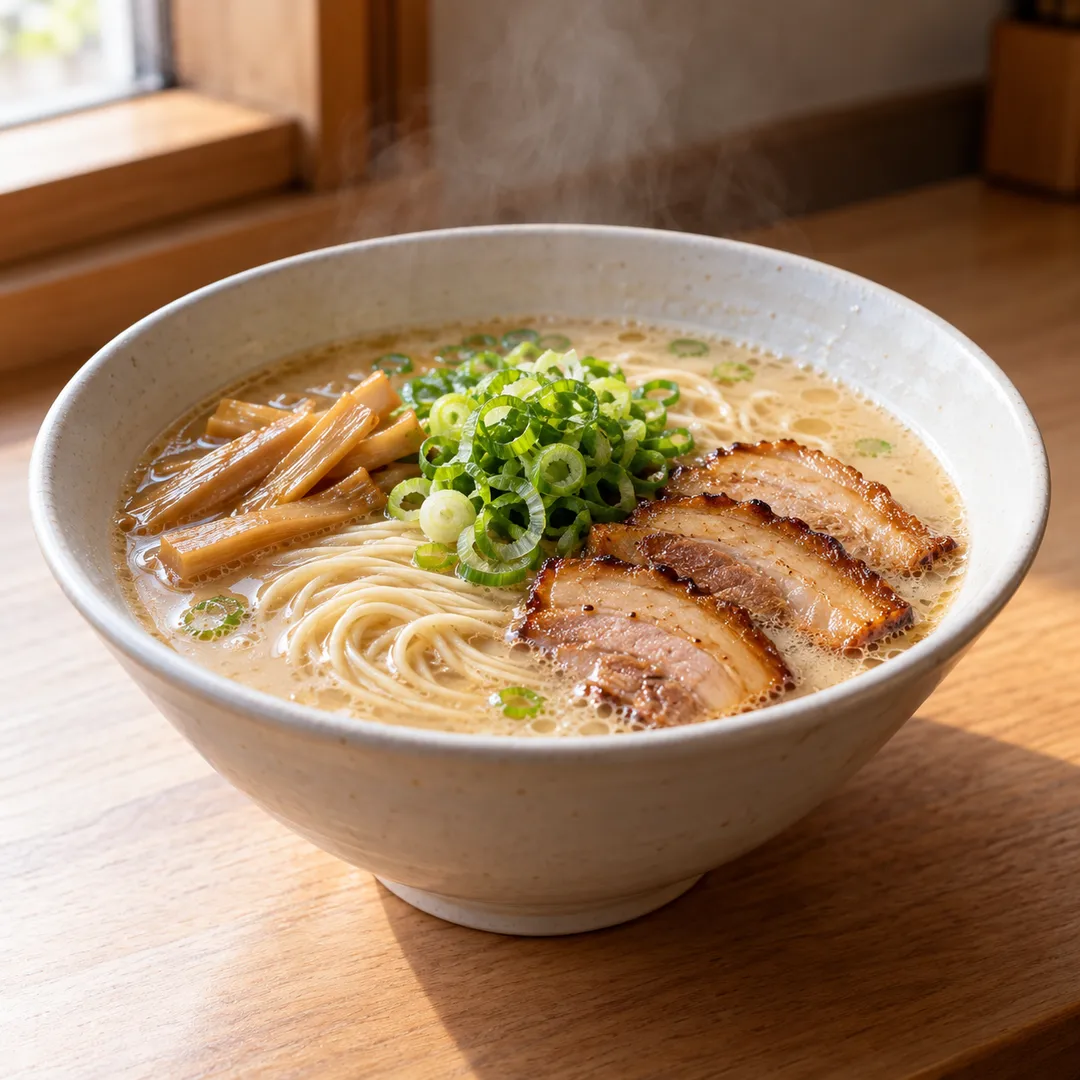
Monohon at 102 Old Street takes no reservations, and the whole group must arrive before anyone is seated. This Old Street ramen noodle bar has 32 seats, makes its noodles in-house, and publishes unusually useful advice about its queue. Monday lunch is its quietest service according to the restaurant's own FAQ. For a first visit, that combination is more useful than chasing a supposedly secret time: choose the service that fits your group, then decide between creamy pork broth and a bowl without soup.
The office escape behind the noodle machine
Founder Ian Wheatley's route into ramen began with living in Osaka in the 1990s. On the restaurant's website, he describes returning to London, taking an office job, and continuing to imagine opening a small Japanese noodle shop. The turning point was a conversation about what he would do after winning the lottery. He had not won anything, but the question pushed him to leave his job and travel through Japan, eating ramen and studying at a ramen school.
The preparation continued after the trip. Wheatley bought a noodle machine, spent six months making ramen in his kitchen, and invited his wife's Japanese colleagues to taste the week's experiments. He then worked at Ippudo for six months. Monohon began as an east London pop-up in summer 2015 before he took the Old Street premises. Those details explain the menu's emphasis on a small set of preparations and the work behind the noodles, rather than an attempt to offer every kind of Japanese meal.
Why the noodles deserve the first bite
Monohon says it makes fresh noodles every day with specialist Japanese flour, kansui, salt, and softened water. The softened water is a response to London's hard water, rather than a decorative ingredient. That gives you something specific to pay attention to when the bowl arrives: lift a manageable portion and notice its resistance before concentrating on the toppings. Put conversations about where to go next on hold for the first few mouthfuls, when you can most clearly compare the noodles with the broth.
The pork-bone soup has its own measured process. Kelp and shiitake mushrooms contribute umami, while a vigorous whole-day boil emulsifies fat into the liquid. The kitchen describes using a refractometer to monitor the soup's concentration and another measurement for the seasoning sauce's salinity. This is the useful background to the creamy colour. You do not need to order extra toppings to understand the bowl; begin with the broth and noodles, then work outward to the pork and vegetables.
Pick a bowl before picking additions
Shouyu Tonkotsu combines a soy-based tare with creamy pork-bone soup. The menu explicitly says the egg is extra, so do not assume that a photograph of ramen defines the standard order. Spicy Tonkotsu builds on that base with chilli and miso-fried pork mince. For someone trying Monohon for the first time, the shouyu bowl is my suggested reference point: it makes the kitchen's concentration and noodle texture easier to judge before an additional layer of heat changes the balance.
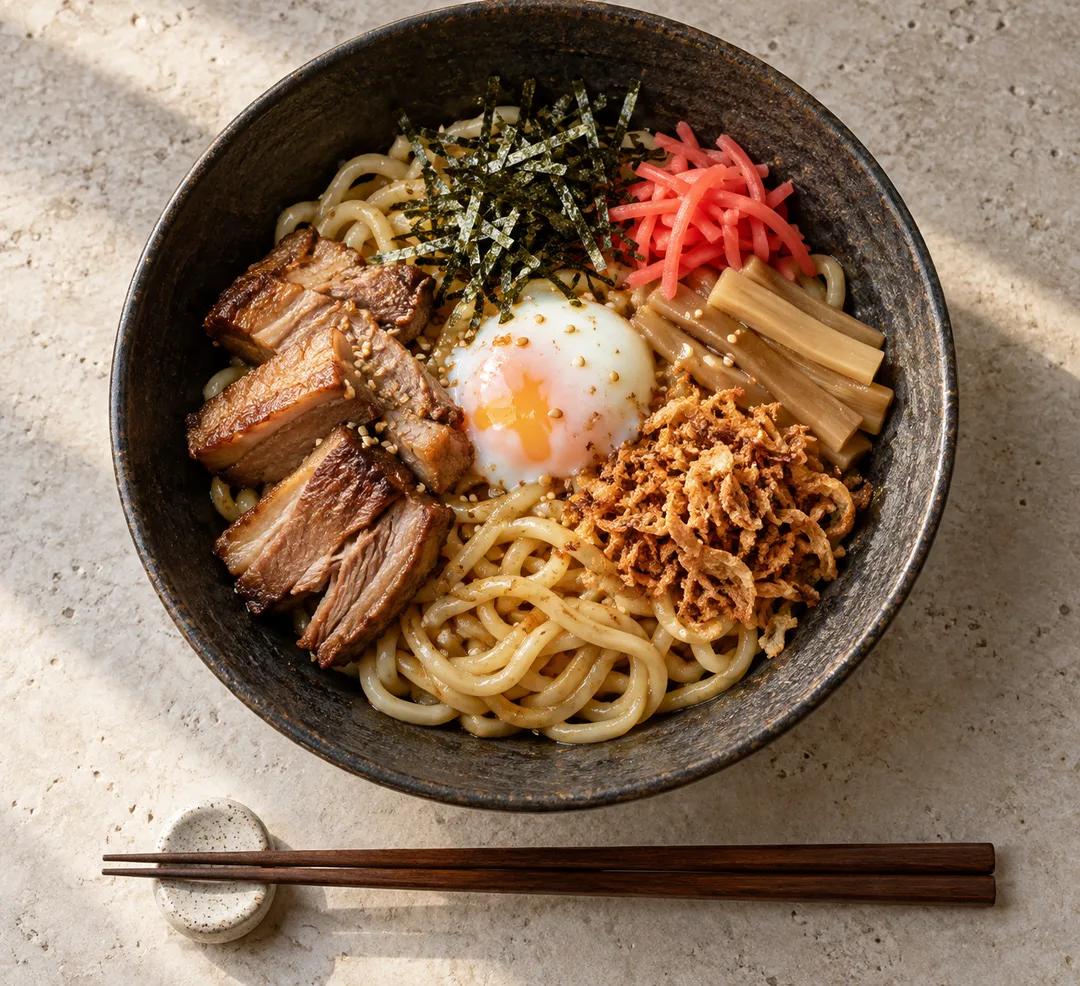
A different appetite calls for Abura Soba. Monohon describes thick, bouncy noodles with sesame-oil-based tare, slow-braised pork, marinated bamboo, crispy onions, shredded nori, pickled ginger, and an onsen egg. There is no bowl of soup to drink alongside the noodles. Mix the dressing and toppings through before settling into the meal. Choose this when you want the noodles and sauce to carry the experience; choose tonkotsu when a hot, creamy broth is the main reason you came.
Arrange the group outside
The seating policy is explicit: everyone must be present before the party takes its table, without exceptions. Sending one friend ahead does not solve the problem. Monohon explains that holding partly occupied tables left ready groups waiting while seats remained unused. Make the Old Street entrance your meeting point, and agree on a realistic arrival time together. If a friend is still travelling, use that time to settle the bowl choices instead of asking staff to keep a table empty.
For two or three people, the FAQ says most tables seat two but regularly accommodate three. There is one larger table for four or five, with six described as a cosy squeeze. Six is the maximum at one table. The counter has nine seats in a row, but that is a different social arrangement from sitting around one table. For a birthday group that needs uninterrupted conversation across six places, I would choose a restaurant with bookable group seating instead of making this small noodle shop absorb a fixed schedule.
Use the queue advice that the shop actually gives
Monohon warns that evenings between 6 pm and 8:30 pm are likely to involve a queue, particularly in cold weather. From Thursday through Sunday, a line can form before the 5 pm service and sometimes exceeds the restaurant's capacity. Its recommendation for the first sitting is to arrive at least 10 to 15 minutes before opening. That is advice about improving your position, not a promise of a table. Bring your complete party if you want the policy to work in your favour.
Monday lunch is the quieter alternative identified by the restaurant, while Tuesday through Friday lunches are described as busier but rarely queued. The decision is therefore about the meal you want: a weekday lunch offers a different rhythm from a social weekend dinner. If the evening line would consume your available time, Monohon offers click-and-collect takeaway through its linked ordering service. It says it does not deliver or use delivery platforms. A collection order still needs a separate place to eat; it does not create a reservation inside.
Leave room for an Old Street walk
After eating, you can continue east along Old Street towards the roundabout and Shoreditch, or head south towards the quieter streets around St Luke's. Pick one direction rather than turning the meal into an ambitious cross-London itinerary. A useful pairing is simply a substantial noodle bowl followed by a neighbourhood walk. If you are eating with friends who arrive from different places, decide that direction while you are still together outside so nobody has to interrupt the noodles to organise the rest of the afternoon.
Practical Notes for a small noodle shop
The address is 102 Old Street, London EC1V 9AY. Monday through Friday service is noon to 2:15 pm and 5 pm to 9:30 pm. Saturday service is 5 pm to 9:30 pm, and Sunday service is 5 pm to 9 pm. The restaurant states that it closes on bank holidays and throughout Easter weekend, with a separate two-week Christmas break. Those split services matter: a mid-afternoon arrival is not a late lunch. This is a meal to place deliberately into your day.
Dietary requirements deserve equal attention. Monohon says it has no gluten-free options and that every dish contains soy sauce. Its Vegan Tan Tan Men is described as containing both peanut and hazelnut, while the Chilli Sansho Miso also contains peanut. The restaurant does not certify its meat or broth as halal. These are useful reasons to choose another meal when necessary, rather than treating every ramen variation as interchangeable. Use Karpo APP to discuss your next city outing, with Monohon's specific seating and menu limits already clear.
Ask Karpo for more information.
Keep reading
- Camden Korean BBQ Group Dinner Picker: Lockside Feasts
 Holborn Korean BBQ Group Dinner Picker: Midtown Feasts
 Covent Garden Korean BBQ Group Dinner Picker: Shared Tables