 Brixton Christmas Light Up Walk Planner: Rainy Arcades
Free Things to Do
London Quiet Museum Gallery Finder: Bankside Art Spaces
Discover quiet museum galleries and peaceful art spaces across Bankside. Explore calm morning viewing rooms and uncrowded historic riverfront collections.
Traversing past the lively gourmet food stalls and enthusiastic crowds of Borough Market often leaves cultural explorers yearning for contemplative quiet. While the bustling market halls along Southwark Street draw thousands of hungry visitors and camera-toting tour groups every midday, the surrounding Bankside waterfront precinct conceals some of central London's most serene and unhurried exhibition spaces. Utilizing an intuitive quiet museum gallery finder mindset allows art lovers to transition smoothly from crowded culinary lanes into airy riverside halls, specialized printmakers' salons, and secluded ecclesiastical cloisters. Here, tucked within restored Victorian brick warehouses and Georgian side passages, visitors encounter museum-grade exhibitions illuminated by generous natural skylights where delicate watercolours, abstract canvases, and architectural artifacts can be contemplated in authentic stillness throughout the week.
Discovering Master Prints Inside Bankside Gallery
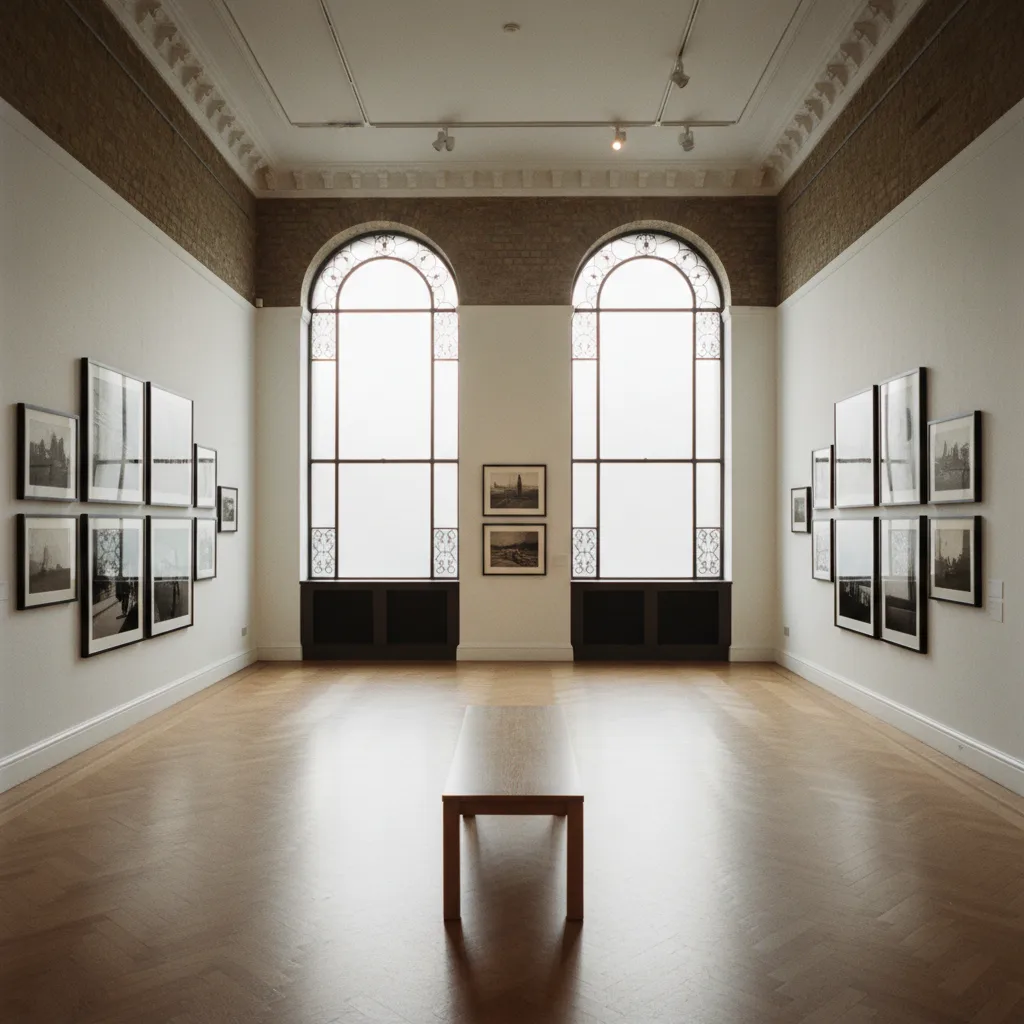
Stepping inside Bankside Gallery along Hopton Street instantly shields visitors from riverside winds and pedestrian commuter flow. Serving as the historic headquarters for both the Royal Watercolour Society and the Royal Society of Painter-Printmakers since 1980, this intimate riverfront venue remains one of London's finest undiscovered cultural sanctuaries. The single-level exhibition floor features polished light-oak timber boards, high display partitions, and state-of-the-art museum lighting that illuminates original etchings, woodcuts, lithographs, and experimental watercolours. Because the gallery sits just beyond the heavy foot traffic of the Millennium Bridge, its daylight-filled rooms are rarely crowded on weekday mornings. Art enthusiasts can inspect intricate linocut textures and layered wash techniques at their own pace, assisted by knowledgeable desk attendants who provide detailed print registers and exhibition monographs without any commercial pressure.
Retreating to Contemplative Wings Within Tate Modern
Continuing west toward the monumental former Bankside Power Station leads to Tate Modern, whose cavernous Turbine Hall often echoes with hundreds of visitors. However, experienced cultural navigators know that the upper floors of the Natalie Bell Building and the subterranean Tanks offer profound quietude when visited strategically. The dedicated Rothko Seagram Murals room on Level 4 provides a darkened, temple-like space where low ambient lighting and deep burgundy velvet seating invite prolonged, silent reflection upon brooding maroon and black pigments. Similarly, the minimalist suites housing post-war abstract sculpture and monochrome kinetic works on Level 2 remain remarkably sparsely populated during early hours. Resting upon wide beechwood benches, solitary gallery goers can observe subtle interplay between cast shadows and brushed metal forms while gazing through floor-to-ceiling windows toward the gentle ripples of the Thames.
Uncovering Medical Heritage at St Thomas Church Garret
Tucking southward beneath the railway viaducts of St Thomas Street reveals the Old Operating Theatre Museum and Herb Garret, hidden within the wooden attic framework of an early eighteenth-century church. Accessing the collection requires climbing a narrow thirty-step wooden spiral staircase that immediately deters casual passersby. At the summit, visitors enter Europe's oldest surviving operating theater, constructed in 1822, featuring semicircular wooden spectator tiers and a historic pine operating table lit by a broad sloping skylight. The adjacent garret exhibits dried apothecary herbs, antique glass medicine phials, and surgical instruments arranged in glass vitrines against fragrant cedar rafters. Because admission numbers are naturally constrained by the attic's historic capacity, the atmosphere remains hushed and intensely atmospheric, providing an evocative glimpse into London's medical history without the distracting audio guides and souvenir crowds found in larger municipal museums.
Timing Weekday Visits for Maximum Gallery Serenity
Timing visits effectively forms the cornerstone of an unhurried cultural day across the Bankside and Southwark corridor. Arriving between 10:00 AM and 11:30 AM on Tuesday through Thursday guarantees the most tranquil viewing conditions, as local school field trips rarely visit these smaller specialized spaces, and market congestion remains minimal. Visiting Bankside Gallery during late weekday afternoons after 3:30 PM is equally rewarding, as the setting sun casts a soft golden glow through river-facing glazing while office crowds gather elsewhere. Planning around Borough Market's peak lunch rush between 12:30 PM and 2:00 PM ensures you can cross local pedestrian streets effortlessly without fighting queues, keeping your cultural mindset completely undisturbed and focused on artistic contemplation.
Observing Thoughtful Etiquette in Historic Chambers
Observing quiet gallery decorum preserves the peaceful environment that makes these Southwark cultural venues so restorative. When inspecting delicate paper prints and historical surgical texts, keeping footwear light and walking softly across antique timber floorboards avoids distracting fellow visitors. Muting mobile phones before stepping across thresholds, utilizing compact sketchbooks rather than flash photography, and speaking in low whispers ensures that the contemplative atmosphere remains intact. In the Tate's darkened collection rooms, respecting the unwritten code of prolonged silent viewing enables everyone present to absorb complex modern compositions without visual disruption, honoring the artistic intentions of artists who conceived their works for immersive individual contemplation.
Pausing in Hidden Courtyards and Riverfront Gardens
Pausing between museum explorations allows visual impressions to settle comfortably while enjoying Bankside's secluded green spaces. The tranquil enclosed churchyard of Southwark Cathedral, located just steps from Borough High Street, offers secluded stone benches surrounded by heritage medicinal herb beds, ancient flint masonry, and budding rose bushes where you can rest with an art catalogue. Alternatively, wandering west along the paved pathways of Hopton's Almshouses on Hopton Street reveals a peaceful 1752 quadrangle framed by red-brick cottages and manicured lawns, offering a picturesque historical perspective that feels centuries removed from contemporary London commerce. These quiet pocket sanctuaries provide the ideal setting to sip a warm takeaway tea and jot down thoughts on the exhibitions experienced earlier in the morning.
Connecting Neighborhood Pathways Away from Market Traffic
Wandering through secluded pedestrian lanes ensures your walking transitions between galleries remain as peaceful as the exhibitions themselves. Instead of walking along congested arterial roads like Southwark Street, follow historic riverside alleyways such as Cardinal Cap Alley, Bear Gardens, and Clink Street, where overhead industrial footbridges and weathered stone pavers tell tales of London's maritime past. These narrow brick-lined thoroughfares receive minimal vehicular traffic and provide sheltered walking corridors during rainy mornings. Continuing along the quiet residential stretches of Hopton Street links Bankside Gallery directly to Blackfriars Bridge in under three minutes, allowing art lovers to navigate the neighborhood with effortless grace and visual enjoyment.
Navigating Transit Links via Central Riverfront Hubs
Arriving at Bankside's cultural quarters is straightforward when utilizing optimal transit exits that circumvent tourist bottlenecks. London Bridge station, serving the Jubilee and Northern underground lines alongside Thameslink and Southeastern rail services, features modern western ticket concourses that lead directly toward St Thomas Street and the Old Operating Theatre Museum. For visitors prioritizing immediate riverside access, arriving via Blackfriars station's south bank ticket hall on the District and Circle lines places you directly on the Thames Path just steps from Hopton Street. Both rail hubs provide step-free access and frequent train intervals, allowing travelers to reach their morning museum destinations swiftly without facing traffic delays or street congestion.
Structuring Seamless Cultural Days with Karpo APP
Organizing seamless gallery explorations and discovering secluded art spaces across central London becomes remarkably simple when utilizing Karpo APP. The platform highlights real-time neighborhood crowd density indicators, recommends tranquil walking corridors away from tourist markets, and curates synchronized cultural itineraries connecting world-class print collections with atmospheric historic monuments. Whether you are searching for silent afternoon meditation wings in modern powerhouses or seeking out rare eighteenth-century architectural attics, Karpo APP helps you craft enriching, stress-free cultural journeys tailored to your personal aesthetic pace, ensuring every moment of your cultural walk remains peaceful and inspiring.
Ask Karpo for more information.
Keep reading
- Brixton Christmas Light Up Walk Planner: Rainy Arcades
 Hackney Christmas Light Up Walk Planner: Canal Boats
 Islington Christmas Light Up Walk Planner: Square Dates