 Clapham Bouldering Gym Finder: New in Town, Climb to Mingle
Sports Social
Marylebone Public Track Training Loop: Lane Rules and Pace
Discover public track training loop options near Marylebone with authentic route navigation, track interval guidelines, and Central London running advice.
Marylebone occupies a uniquely refined pocket of Central London, defined by historic red-brick mansion blocks, independent medical practices along Harley Street, and the bustling retail spine of Marylebone High Street. While the neighborhood boasts an intimate village atmosphere with tree-lined residential mews and quiet garden squares like Manchester Square, its dense urban street plan presents clear obstacles for distance runners seeking uninterrupted interval training. Road crossings, delivery vehicles, and morning pedestrian crowds along Marylebone Road interrupt sustained speed efforts. Runners who need consistent anaerobic conditioning, measured tempo pacing, and repetition work must look slightly beyond the district's borders to reach dedicated municipal facilities. By plotting an intentional route toward nearby track ovals, local runners transform their training routines without sacrificing the charm of their home streets.
Connecting Marylebone to Paddington Recreation Ground Athletics Track
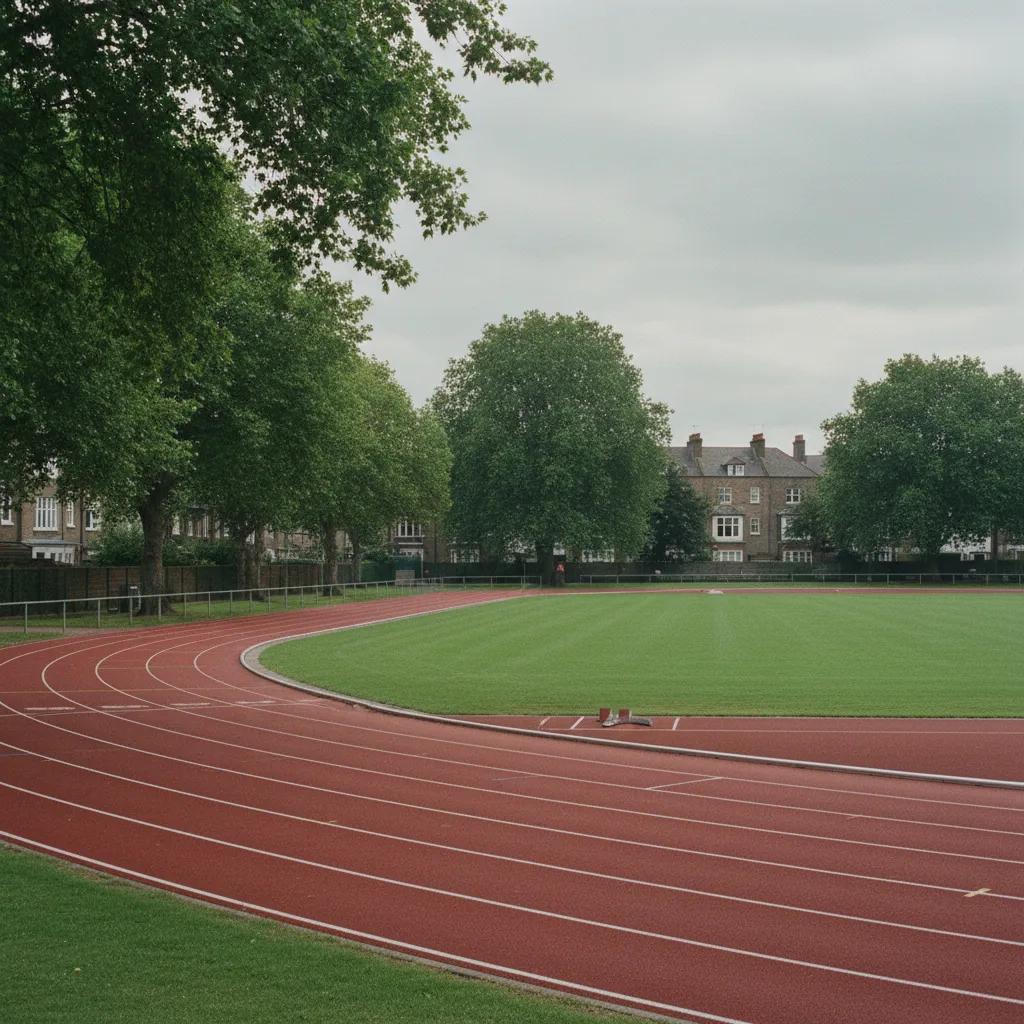
The closest dedicated synthetic running oval serving Marylebone athletes is the athletics track at Paddington Recreation Ground, located at Randolph Avenue, London W9 1PD in Maida Vale. Managed through Westminster City Council in partnership with Everyone Active, this historic park houses a standard 400-meter floodlit polyurethane running surface that is open for community training and club athletics. The track features clearly demarcated running lanes, marked exchange zones, and perimeter fencing that separates interval runners from surrounding dog walkers and casual park visitors.
The transit run from Marylebone High Street to Paddington Recreation Ground serves as a natural warm-up corridor. Jogging west along Devonshire Street and connecting through quiet residential roads into St John's Wood provides roughly 1.5 miles of steady low-intensity running. Crossing under the rail arteries toward Carlton Vale allows your heart rate to rise progressively before you set foot on the synthetic curve. Alternatively, athletes carrying track gear or racing flats can take the London Underground from Baker Street directly to Maida Vale Station on the Bakerloo Line, followed by a short five-minute walk through the park gates to the changing pavilion.
Public track sessions at Paddington Recreation Ground accommodate early morning and evening runners beneath energy-efficient floodlights during autumn and winter months. The track surface undergoes regular maintenance to clear wet leaves and standing water, providing reliable grip through unpredictable British weather. Changing rooms, coin lockers, and water refilling stations are situated adjacent to the pavilion, making it convenient for athletes to transition seamlessly between neighborhood life and intense athletic conditioning.
Surface Biomechanics, Cushioning, and Footwear Selection
Running on a specialized synthetic tartan track provides substantial biomechanical relief compared to the unforgiving concrete pavements and York stone flags that dominate Central London. The resilient elastic matrix of the polyurethane surface absorbs significant vertical ground reaction forces during initial footstrike, reducing cumulative shock loading through the plantar fascia, Achilles tendon, and patellar joints. Distance runners logging high weekly mileage appreciate this protective cushioning when executing sharp speed sessions.
Selecting appropriate footwear is vital for maximizing workout efficiency while preserving the facility's textured topcoat. For routine tempo runs, interval pyramids, and recovery strides, modern road racing shoes or lightweight neutral trainers with blown rubber outsoles deliver optimal comfort and energy return. While dedicated track spikes fitted with regulation ceramic or steel pyramid pins up to six millimeters are permitted for licensed club trials, they place elevated strain on calf muscles and are largely unnecessary for standard endurance training. Wearing clean footwear free from trapped gravel ensures the community oval remains pristine for everyone.
Track Etiquette, Lane Rules, and Overtaking Protocol
Safety and mutual courtesy form the foundation of public track running in London. When stepping onto the oval at Paddington Rec, athletes must strictly observe the standard anti-clockwise running direction. Lane 1 and Lane 2 represent the active fast lanes, dedicated exclusively to runners performing timed speed efforts, maximal sprints, and paced interval repetitions. Stepping into these innermost lanes while walking, taking recovery breaths, or adjusting running watches disrupts ongoing training and risks dangerous collisions.
Athletes resting between intervals or performing dynamic warm-up drills should immediately exit the synthetic oval onto the perimeter grass verge or move out to Lane 7 and Lane 8. When overtaking another runner in the inner lanes, pass deliberately on their right shoulder while leaving ample personal space before cutting back inward. Running with bone-conduction headphones or keeping one ear exposed ensures you hear approaching runners calling track warnings, maintaining an environment of clear communication and mutual respect.
Regent's Park Outer Circle as an Alternative Distance Loop
On days when scheduled school fixtures or youth athletic meets temporarily occupy the track at Paddington Recreation Ground, Marylebone runners have access to an exceptional open-air alternative directly on their doorstep. Regent's Park sits directly north of Marylebone Road, connected via Baker Street and Park Road. The park's famous Outer Circle offers a continuous asphalt loop measuring approximately 4.45 kilometers (2.76 miles), bordered by the monumental neoclassical stucco terraces designed by John Nash.
The Outer Circle perimeter features wide pedestrian walkways that allow distance runners to maintain uninterrupted marathon pace blocks and continuous threshold tempos without crossing vehicle intersections. Combined with the tranquil Inner Circle around Queen Mary's Gardens, runners can structure progressive interval sessions that bridge structured oval workouts with scenic parkland running. Smooth tarmac paths offer reliable footing under rain, while expansive green lawns provide natural spaces for post-workout core routines and mobility work.
Structuring Structured Speed Sessions and Karpo APP Route Guidance
A balanced track session for Marylebone runners begins with a ten-minute conversational jog northward through Devonshire Place, followed by dynamic mobility exercises including leg swings, walking lunges, and high knees on the infield grass. A proven interval structure consists of five sets of 800-meter repetitions at goal 5K race pace, separated by two minutes of active walking recovery in Lane 8. This cardiovascular stimulus builds aerobic capacity and lactate threshold clearance without overloading musculoskeletal structures.
Planning multi-segment workouts through Central London's shifting urban terrain is made simple with digital navigation. You can consult the Karpo APP to explore verified pedestrian routes, check neighborhood park gate opening schedules, and discover low-traffic running corridors linking Marylebone with North London athletic hubs. Following your final 400-meter recovery jog, retrace your steps south toward Marylebone High Street to refuel at independent bakeries, concluding an invigorating training session rooted in London's premier running community.
Ask Karpo for more information.
Keep reading
- Clapham Bouldering Gym Finder: New in Town, Climb to Mingle
 Marylebone Bouldering Gym Finder: Lunch Break Climbs
 Notting Hill Bouldering Gym Finder: Family Climbing Weekends