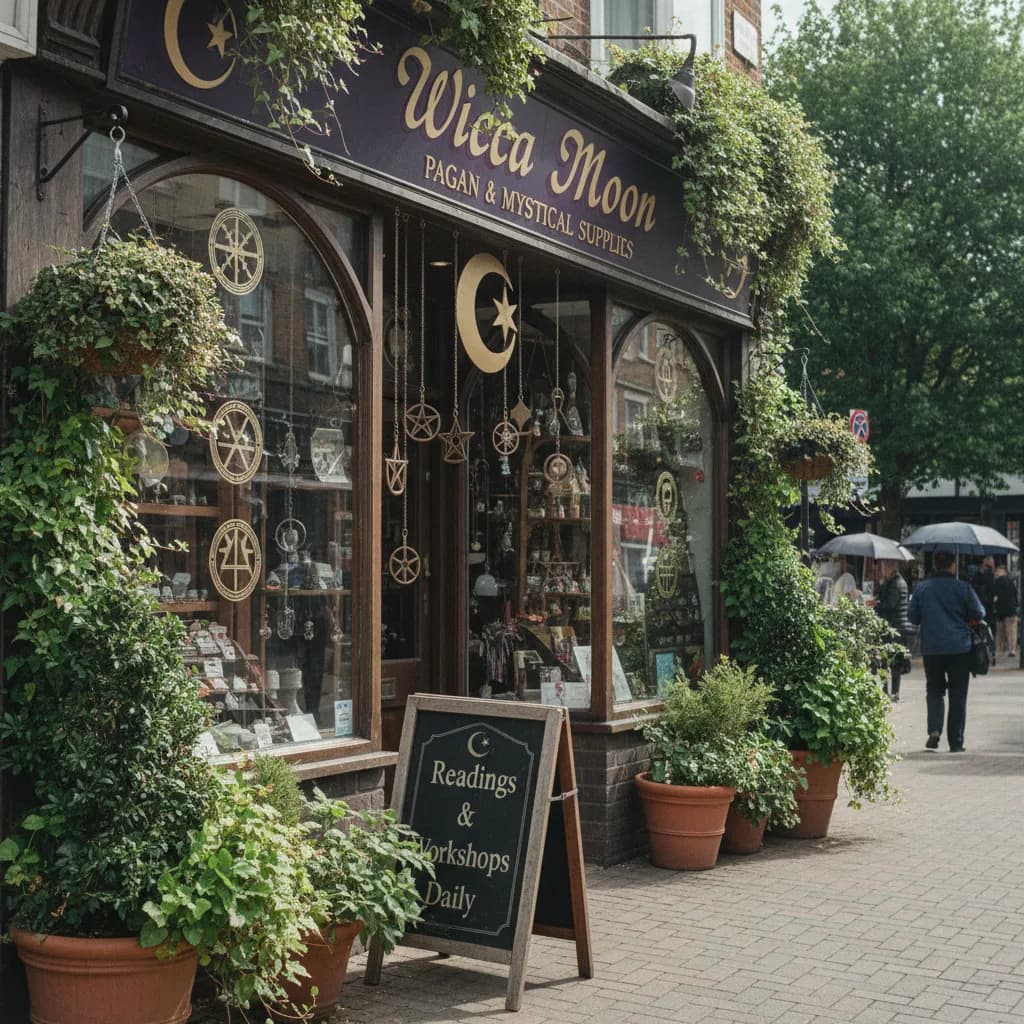
 Witchcraft Store Near Me: Wicca Moon Pagan Supplies in Eltham
Hidden Gems & Odd Finds
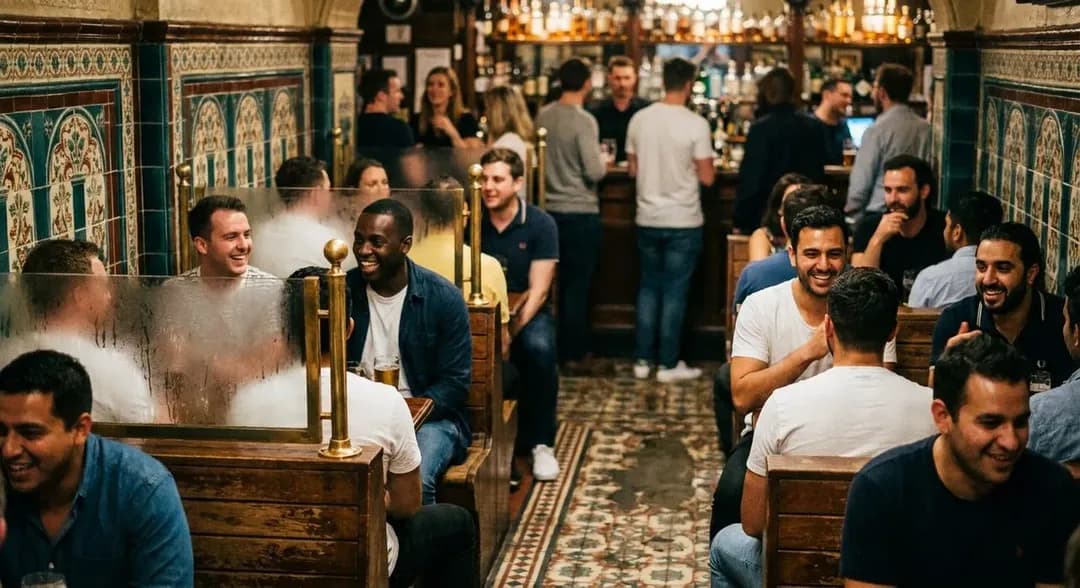
A Pub Inside a Victorian Toilet Block in Central London
Beneath Holborn's pavement lies a cocktail bar housed in an 1890s underground convenience. The original porcelain and tilework remain; the stalls now serve gin instead of their former purpose.
The descent
You'll walk past it three times before you notice. The entrance to these establishments is nothing more than a cast-iron railing at pavement level, the sort of architectural detail Londoners have trained themselves to ignore. But peer down through the metalwork and you'll see a staircase dropping into what was, decades ago, a functioning public convenience for gentlemen. The tiles gleam under low lighting. The air smells faintly of juniper and lime, not carbolic soap. A descent of steps and you're standing in what might be the city's most honest example of adaptive reuse—a Victorian toilet block that never pretended to be anything other than what it was.
Several such conversions exist across London now. The Attendant in Marylebone preserves original Doulton & Co porcelain urinals as seating. Ladies & Gentlemen in Kentish Town, WC Wine & Charcuterie on Clapham Common, Cellar Door near Wellington Street, Bermondsey Arts Club—each made the same smart decision: they left almost everything alone. The attendant's booth becomes the bar itself. The original wall tiles—cream with green detailing, installed sometime in the late Victorian era—run floor to ceiling. Even the plumbing fixtures stay, though they no longer function in their intended capacity. What was once a row of urinals now backs a leather banquette. You're drinking a Negroni where men once stood in overcoats reading the racing results.
The architecture of necessity
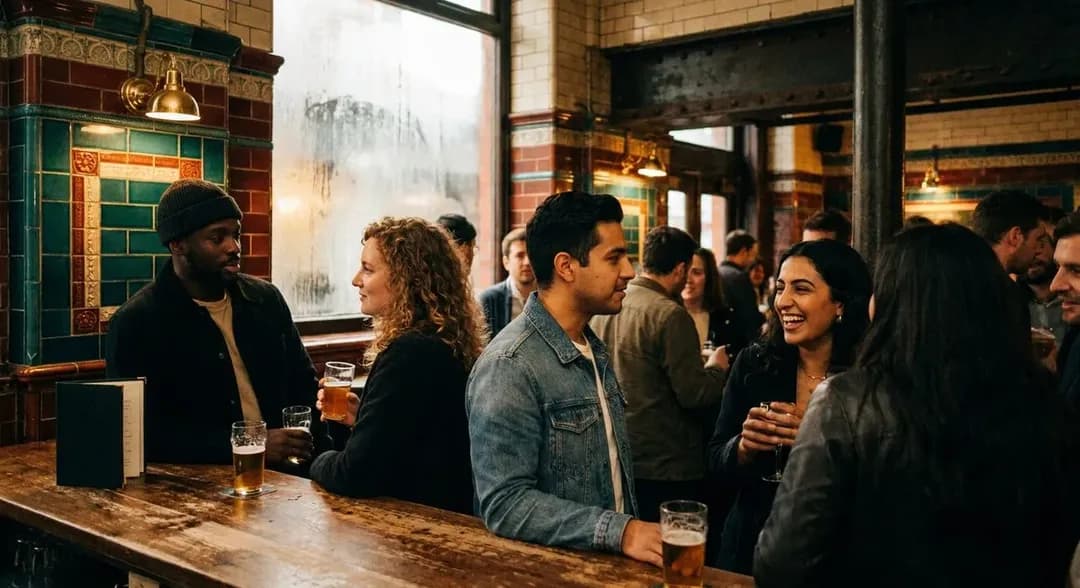
Victorian London built these facilities with surprising care. The tilework isn't merely functional; it's decorated with geometric borders and carefully considered proportions. The ceiling vaults in shallow arches, designed to support the pavement traffic above. Cast-iron columns, painted dark green, divide the space into sections. The original terrazzo floors remain intact in many conversions, their aggregate of marble chips still visible despite a century of foot traffic and whatever else.
The stalls are the real attraction. Each former cubicle now holds a small table and seating for two, maybe three if you're friendly. The partition walls stay at their original height—about six feet—which means your conversation remains relatively private while the general atmosphere flows overhead. Someone thought to install small brass hooks on the inside of each stall door, perfect for coats or bags. Some booths preserve particularly fine examples of the period tilework. Others offer more privacy, tucked furthest from the bar.
What you'll drink
The cocktail menus at these venues typically run to a couple dozen options, organized by spirit rather than style. They serve house martinis that arrive properly cold, stirred exactly enough, with a twist cut tableside. The Corpse Reviver No. 2 appears frequently on tables—Lillet, Cointreau, lemon, gin, and the required dash of absinthe. On quieter evenings, ask the bartender about off-menu options; many keep house-made liqueurs worth trying.
They stock London dry gins, and the tonic comes in individual bottles, never from a gun. Wine exists on the menu but isn't the focus. Beer options include British ales on tap, rotated seasonally, plus bottled lagers if you must. The prices sit comfortably in central London territory—expect to pay standard cocktail-bar rates. Service moves efficiently even on weekend evenings.
The crowd at depth

These aren't venues for tourists, mainly because tourists don't know they exist. The clientele skews toward local office workers who've been coming for years, plus legal professionals who treat them as extensions of their chambers. Weekday evenings between six and eight bring the after-work crowd—loud, loosened ties, complaints about the Tube. After nine the volume drops and the demographic shifts: couples on dates, small groups of friends, the occasional solo drinker working through a book and several drinks in careful succession.
Friday and Saturday nights get properly busy, but the spaces' limitations work in your favor. Capacity constraints mean that once full, the door simply closes. No queue, no bouncer, just a locked gate at street level. The best time to visit is Tuesday or Wednesday around seven-thirty, when you can claim a stall without waiting and actually hear your companion speak. Sunday afternoons, where open, exist in a strange temporal pocket—quiet, almost meditative, with light filtering down the entrance stairs in a way that makes the tiles glow.
The details that matter
The acoustics down here are peculiar. The tile and stone surfaces should create echo, but the low ceilings and fabric seating absorb just enough sound to keep conversations intelligible without being audible a few feet away. Someone engineered this accidentally well. The lighting comes from period-appropriate fixtures—brass wall sconces with milk-glass shades—supplemented by candles on each table. Music, when present, stays quiet enough that you hear the clink of glass, the murmur of voices, the occasional laugh that bounces off Victorian porcelain.
The staff knows the spaces' history and will share it if asked, but they don't perform it. No costumes, no theatrical Victorian bartender routine, just competent service and drinks mixed correctly. They remember regulars by drink order rather than name. Door policies remain relaxed—smart casual accepted, though most people arrive in work clothes. Reservations policies vary by venue. Bar seating often stays available even when the stalls fill.
Practical notes
These converted Victorian conveniences operate at various locations across London. The Attendant is at 27A Foley Street, Fitzrovia, W1W 6DY. Ladies & Gentlemen is at 1 Highgate Road, Kentish Town, NW5 1NS. WC Wine & Charcuterie is on Clapham Common North Side, SW4 0QW. Cellar Door is at Zero Aldwych, Wellington Street, WC2E 7DA. Bermondsey Arts Club is at 168 Bermondsey Street, SE1 3TQ. Hours vary by location; check before visiting. Most are accessible via Tube. Food service varies—some offer full menus, others just bar snacks. Many spaces are not wheelchair accessible due to stairs. Mobile reception is often poor to nonexistent below ground, which some consider a feature rather than a flaw. The facilities (modern ones, mercifully) are typically located at the back. Gets cold in winter despite heating; wear layers.
Tags: #LondonBars #VictorianArchitecture #HiddenLondon #CocktailBar #HolbornLondon #UndergroundBar #HistoricVenues #LondonNightlife #UnusualBars #TheOddEdit #CentralLondon #KingswayLondon
Sources consulted: timeout.com · atlasobscura.com
Please drink responsibly. Must be of legal drinking age.
All trademarks are the property of their respective owners.
Ask Karpo for more information.
Keep reading
- Witchcraft Store Near Me: Wicca Moon Pagan Supplies in Eltham
 Magic Trick Shop Near Me on Oxford Street: Marvin's Magic Selfridges Guide
 Witchcraft Store Near Me: The College of Psychic Studies in South Kensington