 Richmond Park Sunset Viewing Planner: Deer Meadow Horizons
Weekend Plans
Dalston Printmaking Studio: Screenprint Tips at Print Club
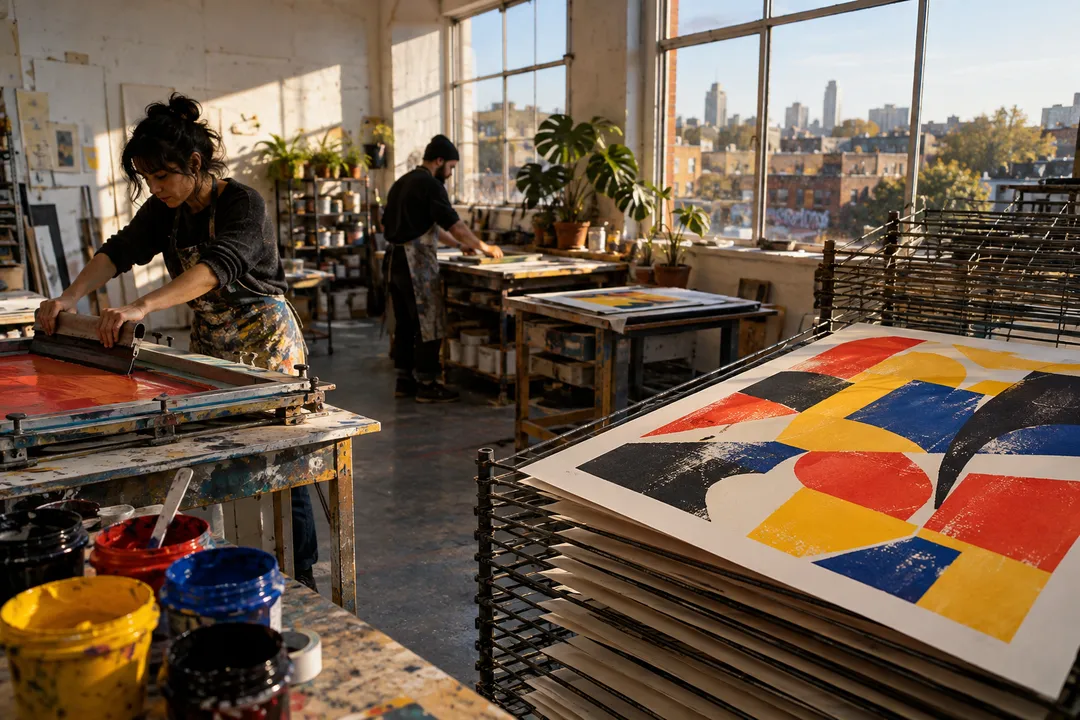
Print Club London at 10-28 Millers Ave pairs beginner screenprinting with Dalston creativity, giving first-timers a practical route into the medium.
Print Club London is a welcoming answer to the search for a printmaking studio near me because it lets a beginner meet screenprinting as a real process rather than a decorative slogan. The listed studio address is 10-28 Millers Ave, Dalston, London E8 2DS, and the organisation presents several ways to engage: beginner workshops, vouchers, print studio membership, print services and live or corporate sessions. That range is useful because a first visit does not need to be a permanent commitment. You can arrive with a simple image, learn how a screen, stencil, ink and squeegee work together, and leave with a physical result. Dalston is also a good setting for the outing: the surrounding streets already carry a strong visual language of posters, murals, independent shops and small creative businesses.
What makes this place useful for first timers
Start with the beginner format unless you already know that you enjoy the slower discipline of preparing and repeating an image. Membership makes sense after you have felt the studio rhythm, not before. Bring a design that can be reduced to bold shapes, clear negative space and a limited colour plan. A photograph full of tiny gradients may look impressive on a screen but become an awkward first screenprint. The useful studio rule is to arrive with an idea, not a demand that the final sheet look exactly like the idea. Staff can help you simplify the image, separate colours and understand what the paper will tolerate. That conversation is part of the workshop, and it is far more valuable than trying to solve every technical question alone.
How the working process unfolds
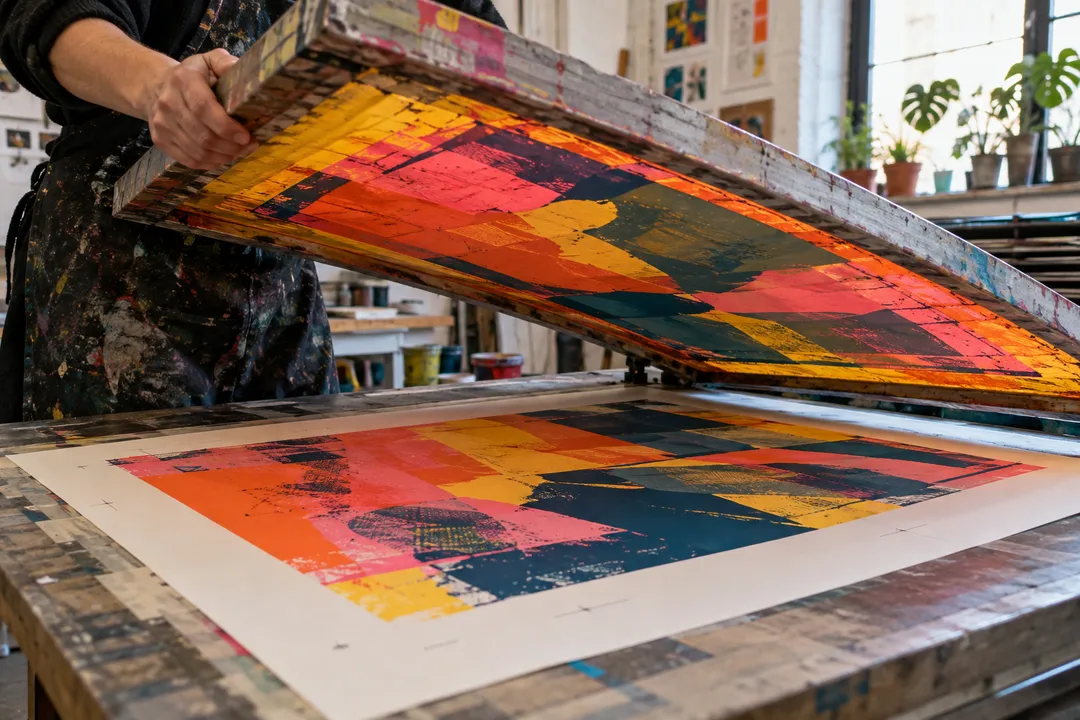
The memorable moment comes when the screen lifts and the first clean pull appears. Before that reveal, watch the sequence: the frame is placed, the ink is flooded, pressure is set, and the squeegee travels in one controlled movement. Each colour is a separate decision, so do not rush a first layer simply because a second one is waiting. Pay attention to how the studio keeps test sheets and drying areas organised. An imperfect proof is not waste; it shows whether the image registered and whether the ink coverage is right. If you attend with a friend, agree whether you are making one shared design or two separate pieces. Shared enthusiasm is helpful, but shared artwork can become confusing once colour choices begin to diverge.
The small rules that improve the session
Print Club also has a useful contrast between finished work and making work. The shop side shows how paper stock, flat colour, edition size and framing change the impact of a completed screen print. The workshop reverses that viewpoint and puts the decisions in your hands. Do not measure the day by the number of sheets you carry out. A small run with clean alignment and thoughtful ink coverage is more satisfying than a large pile made in a hurry. Keep jewellery and loose sleeves away from the working edge, wear clothes that can accept a stray ink mark, and bring a firm folder for carrying paper. The material is the souvenir, but the real skill is learning why one pull is better than another.
How to choose a manageable first project
Timing matters more than queue length. Protect the whole booked session because washing a screen, correcting registration and allowing paper to settle cannot be compressed between two unrelated appointments. If the booking page separates workshops, membership, services and corporate sessions, choose the exact format rather than assuming every option means open studio time. A voucher can be a thoughtful gift, but it still needs a recipient who has time to attend and a design they are willing to simplify. Arrive early enough to find the entrance and settle your idea. The first ten minutes spent looking at the workspace and asking one precise question will save more time than rushing to the table with an overcomplicated file.
A neighbourhood walk after the last pull
After the session, use Dalston as part of the creative day. Keep the print horizontal and take a route that lets your hands stay clean: a café, a gallery window or a slower walk toward London Fields is better than a packed bar. Look at the neighbourhood's signs and posters after working with registration marks; ordinary layers of colour suddenly become a practical lesson. The streets around Dalston also explain why screenprinting feels at home here. Independent music, fashion, food and art all use repeatable visual symbols, and the studio sits inside that culture rather than outside it. If rain starts, shorten the walk and protect the paper. A new print should not be sacrificed to an ambitious itinerary.
Practical notes before booking
A good first project is small enough to finish and strong enough to teach you something. One silhouette, one cut-out shape or a two-colour pattern gives you room to see how pressure changes the result. Skip the temptation to reproduce a complicated photograph on the first attempt; that often turns a joyful workshop into a troubleshooting exercise. If you return, membership or print services become sensible next steps, because you will know whether you want independent access or a more finished edition. The honest judgement is that Print Club is strongest when you accept its learning curve. It is not an instant souvenir factory. It is a studio where a flat sheet changes because a sequence of decisions was made carefully.
Use 10-28 Millers Ave, Dalston, London E8 2DS when planning the route, and use the official booking information to distinguish a beginner workshop, a voucher, membership or a service enquiry. Bring a simple design, practical clothing and a flat carrier. Give the process its full time, listen before moving shared equipment, and let the first pull be information rather than a verdict on your talent. For a visitor who wants a hands-on weekend plan, the combination is strong: a real screenprinting lesson, a walk through one of east London's visually energetic neighbourhoods, and a print that records the decisions you made rather than merely the place you visited.
Ask Karpo for more information.
Keep reading
- Richmond Park Sunset Viewing Planner: Deer Meadow Horizons
 South Bank Sunset Viewing Planner: Thames Riverside Walks
 Parliament Hill Sunset Viewing Planner: London Heath Vistas