 Notting Hill Budget Lunch Route Planner: Golborne Road Cafes
Restaurants
Marylebone Pork Pie Deli Crawl: Village Larder Route
Plan a Marylebone pork pie deli crawl from Moxon Street and High Street larders to Marylebone Lane. Pair Stilton, quince paste, and garden square benches.
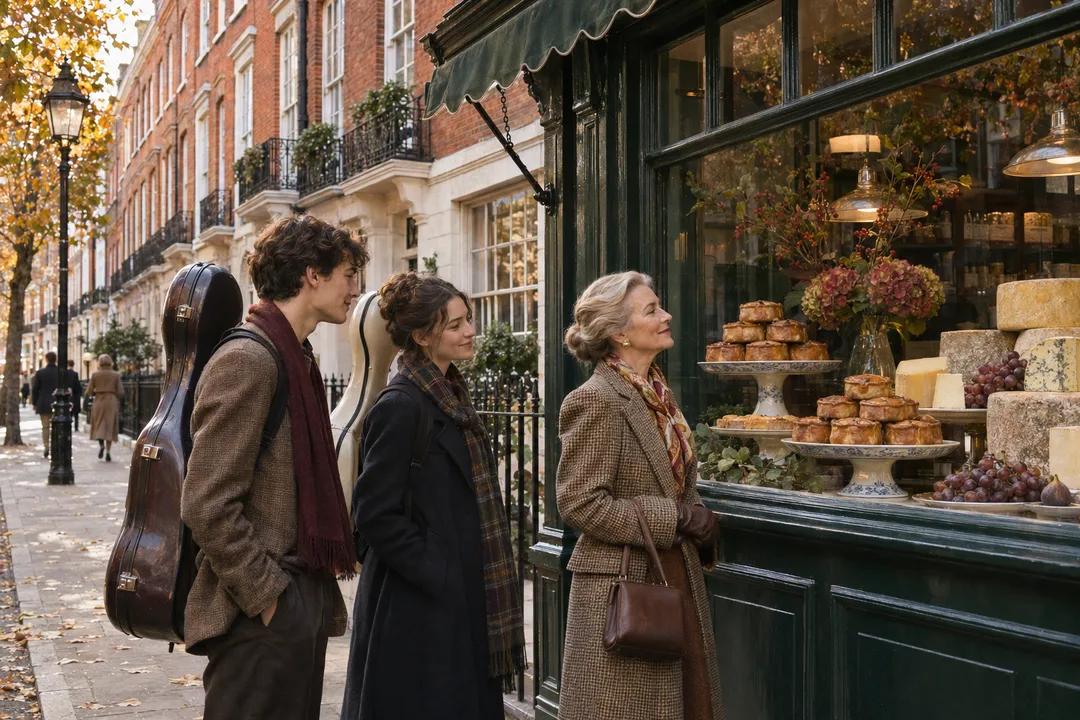
Two cellists emerging from a morning string rehearsal near Wigmore Street and their visiting aunt from Shropshire begin their Marylebone pork pie deli crawl where the red-brick mansion blocks open onto Moxon Street. In this quiet West End village grid, delicatessen shopping moves at an unhurried, residential pace shaped by independent butchers, cheese maturation rooms, and traditional farm-shop larders. Rather than grabbing a hasty snack on Oxford Street, the three walkers treat the neighborhood as an open-air pantry, gathering contrasting styles of cold raised pastry, orchard relishes, and blue cheese for a shared bench lunch beneath the plane trees.
Browsing Butcher Larders Around Moxon Street and High Street
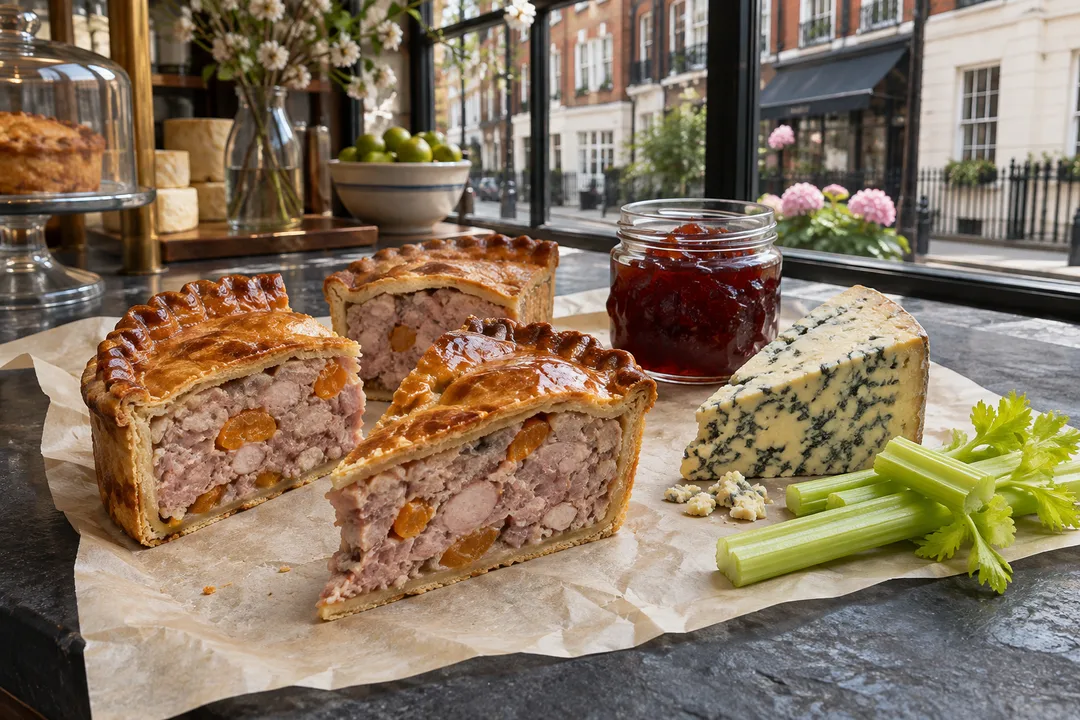
The crawl starts at a traditional butcher and charcuterie counter near the Moxon Street corner, where free-range Gloucestershire and Tamworth pork shoulders are hand-chopped rather than ground into paste. Behind the curved glass, the pies sit on white porcelain platters beside tied beef roasts and house-cured bacon, their tall crusts brushed with rich egg yolk and baked to an amber gloss. The aunt looks for the telltale vent hole in the top lid where reduced bone and trotter stock was funnelled in after the oven bake, locking the seasoned meat in a savory, herb-scented seal.
When ordering for a three-person tasting, asking the butcher for two palm-sized individual drums—one classic white-pepper pork and one layered with chopped dried apricots and poultry liver—gives everyone a clean cross-section of crust and jelly. Regulars in Marylebone bring a structured wicker basket or heavy linen shopper so the delicate crimped edges do not crush against wine bottles or apple bags along the high street.
Notice how the counter staff wrap each pie in breathable parchment before securing it with butcher's twine. Unlike sealed plastic boxes that trap condensation and soften the lard shell, folded paper preserves the biscuit-like snap of the bottom corner until the group reaches the park gates. Before stepping back onto the pavement, the cellists also ask the counterman which farm supplied the lard for the week's pastry batch, since leaf fat from outdoor-reared pigs bakes up noticeably lighter and cleaner on the palate than standard shortening.
Comparing Shropshire-Spiced Pork and Venison-Juniper Bakes
Strolling north up Marylebone High Street and ducking into the curving brick ribbon of Marylebone Lane, the trio stops at a second farm-to-table delicatessen counter known for seasonal estate game pies. Here, the pastry chefs enrich the hot-water dough with a touch of rendered butter alongside leaf lard, yielding a slightly shorter, flakier bite that frames fillings of diced fallow venison, smoked streaky bacon, and crushed juniper berries. Comparing a wedge of this dark, woodland-spiced bake against the clean sage-and-mace profile of the first stop highlights how much regional seasoning changes a cold pie.
Skip the heated sausage-roll cabinets at chain espresso bars near the Baker Street crossroads; reheating a traditional jellied pork pie melts the clarified stock into grease and ruins the contrast between cool, firm meat and crisp pastry. A true raised deli pie is engineered to be eaten at cool room temperature, where the jelly holds its slice and dissolves slowly on the tongue.
Along the quieter side streets toward Chiltern Street and New Cavendish Street, smaller continental and British provisioners also offer miniature cocktail-sized pork pies topped with a scattering of fennel seeds, poppy seeds, or cracked sea salt. Picking up a pair of these two-bite drums provides an easy palate benchmark while walking between the Georgian shopfronts and bow-windowed bookshops, allowing the trio to test how a thinner pastry wall changes the ratio of crust to spiced meat.
Pairing Stilton, Damson Cheese, and Garden Square Benches
Because Moxon Street and Marylebone High Street sit steps away from some of London's finest cheese rooms, no neighborhood deli crawl is complete without matching the pastry to a wedge of farmhouse dairy. The cellists step into a tiled fromagerie smelling of damp cellar stone and hay to choose a creamy slice of Colston Bassett Stilton and a crumbly wedge of aged Kirkham's Lancashire. Eaten alongside a bite of peppery pork crust, the blue veining and lactic tang act like a rich, savory sauce.
To round out the hamper, the aunt selects a small jar of firm damson fruit cheese, a pot of ruby quince paste, a bunch of crisp red radishes, and two Russet apples from a greengrocer display under a striped awning. Instead of squeezing onto narrow café stools with bulky instrument cases, the trio walks two blocks east to the peaceful lawns of Paddington Street Gardens or south toward the railed greenery of Manchester Square, where long wooden benches sit sheltered from high-street traffic.
Setting out the parchment wrappers on a garden bench lets the group alternate bites of salty lard crust, cool bone jelly, sharp cheese, and crisp apple in the fresh autumn air. When an unexpected West End shower blows across the treetops, the covered Georgian arcade of St Christopher's Place or the quiet porch taverns tucked off Thayer Street offer dry refuges within a three-minute walk.
Curating Your West End Hamper Route with the Karpo App
Because independent Marylebone larders bake their raised pies in small morning batches and frequently rotate game fillings between pheasant, wild boar, and heirloom pork, checking neighborhood stops before rehearsal finishes keeps the walk seamless. Opening the Karpo APP allows the group to browse delicatessens, specialist cheesemongers, and traditional butchers across Marylebone, Fitzrovia, and Mayfair, organizing a custom loop around rehearsal halls and quiet garden squares.
If a favored high-street counter has already sold its last apricot-studded gala wedge to the lunchtime residential crowd, the Karpo APP points walkers toward nearby charcuterie counters around Seymour Place, Connaught Village, or New Quebec Street. After packing their wooden knives, linen napkins, and twine into their tote bags beside the quiet brick mausoleum in Paddington Street Gardens, the two musicians shoulder their cellos and walk back toward Wigmore Hall for the afternoon concert.
Planning the route in advance also helps visitors time their walk between the mid-morning bake and the pre-concert supper rush, when local residents stop by for charcuterie platters and farmhouse cheeses. Whether you are carrying sheet music between recitals or spending a quiet afternoon exploring the mews lanes behind the Wallace Collection, a well-chosen cold pork pie turns a simple park bench into the most rewarding table in the West End for a relaxed lunch.
Ask Karpo for more information.
Keep reading
- Notting Hill Budget Lunch Route Planner: Golborne Road Cafes
 Camden Budget Lunch Route Planner: Lock or Drummond Street
 Brixton Budget Lunch Route Planner: Covered Arcades When Wet