 Brixton Vintage Thrift Shop Finder: South London Retro Gems
Hidden Gems & Odd Finds
Brixton Plant Shop Crawl Planner for a Windowsill Cook
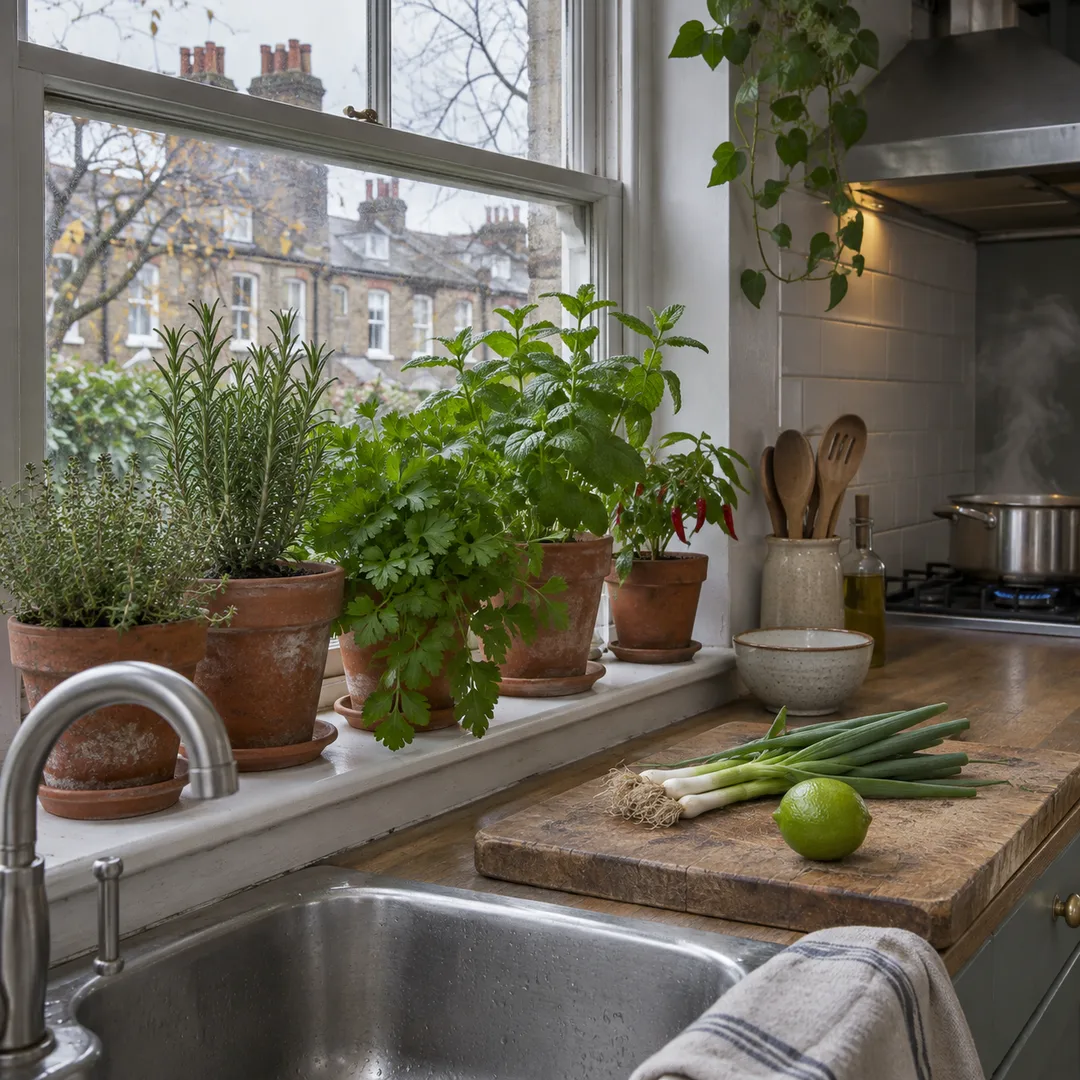
Want herbs on your kitchen sill in Brixton? This plant shop crawl planner picks winter-tough herbs from the market arcades, then heads to Brockwell Park.
Anyone who cooks a lot knows the small sadness of buying a bunch of herbs, using a quarter and watching the rest wilt in the fridge. A windowsill of living herbs fixes that, and Brixton is one of the best places in London to build one. The covered market arcades are full of fresh produce and cooking ingredients from the Caribbean, Africa, Latin America and beyond, and the area's cooks have strong opinions about thyme. This plant shop crawl planner is for the home cook who wants a working kitchen sill through the London winter, not just a decorative row of pots.
Start With the Dishes You Actually Cook
Before buying anything, list the five dishes you make most. If your weekly rotation includes rice and peas, curry goat or jerk marinades, thyme and spring onions matter more than basil. If you lean towards roasts and soups, rosemary, sage and parsley earn their place. A cook who loves Southeast Asian food might want lemongrass and coriander. Your sill should reflect your pots and pans, not a garden centre display.
Then look at the light. A kitchen window that gets a few hours of direct winter sun will grow woody herbs happily. A shaded north-facing kitchen suits mint and parsley better than rosemary. Be honest about space too: most kitchen sills hold four or five small pots before washing up becomes an obstacle course.
Herbs That Handle a London Winter Indoors
Woody Mediterranean herbs such as thyme, rosemary and oregano are the toughest choices for a cool, bright sill. They like to dry out between waterings and dislike sitting in a wet saucer. Mint is almost impossible to kill and grows strongly even in modest light, though it is best kept in its own pot. Flat-leaf parsley and chives are steady producers if you snip them regularly rather than stripping them bare.
Basil and coriander are the tricky ones in November. Supermarket pots are often several seedlings crammed together and struggle once the heating comes on. If you want them, split the clump into a few small pots and treat them as short-term crops. A small chilli plant can also live on a sunny sill over winter; it will slow down, but with luck it will keep a few pods going and burst back into growth in spring.
Browsing Brixton Village and Market Row
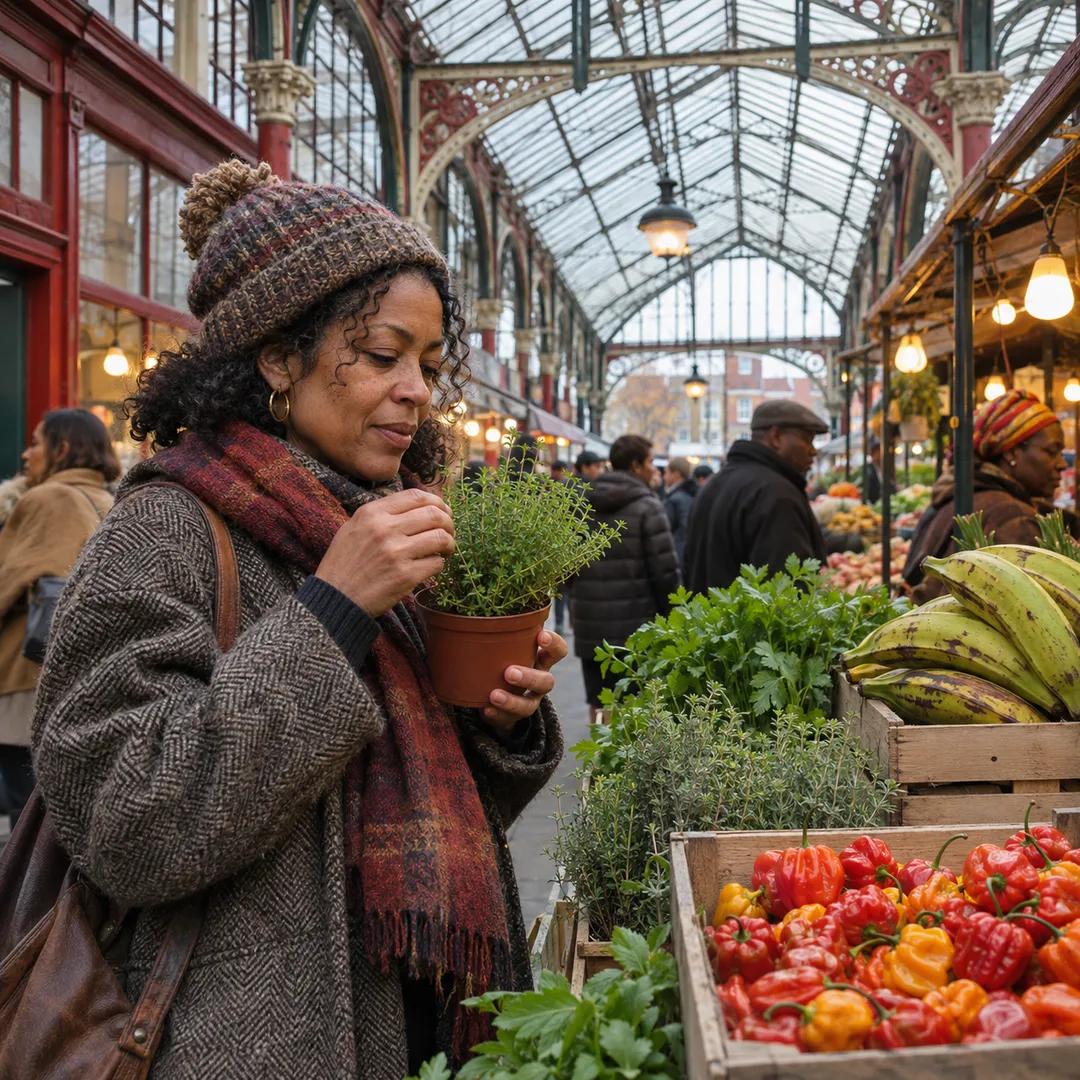
Begin in Brixton Village and Market Row, the covered arcades just off the main road. Walking through them is a sensory education for a cook: crates of scotch bonnets and plantains, bunches of callaloo, dried fish, spices and fresh herbs sold in big bundles. Notice which herbs local cooks buy most, and ask stallholders how they use them. A conversation about thyme in a Brixton arcade can be more useful than any gardening manual.
Look for potted herbs and small plants among the stalls, and around the independent shops in the arcades and nearby streets. Choose plants with firm, bushy growth and roots that are not circling out of the bottom of the pot. If you buy fresh herb bunches for cooking, keep a few sprigs of mint or basil aside, because they can root in a glass of water and become free extra plants.
Pots, Compost and Getting It All Home
Herbs want drainage above all. Terracotta pots with holes and saucers are ideal, because the clay breathes and helps woody herbs dry out between waterings. A small bag of free-draining compost, ideally mixed with a little grit for rosemary and thyme, is worth picking up if you plan to repot. Keep the pots small; herbs on a sill do better in modest containers that do not stay soggy.
Brixton is easy to reach on the Victoria line and by many buses, so carrying a few small pots home is simple. Ask stallholders for a cardboard box or tray to keep them upright, and leave the bag of compost for last so you are not hauling it around the arcades all morning.
If you share a kitchen, agree on the sill before you shop. A flatmate who cooks will usually welcome fresh herbs, especially if you label the pots and invite them to snip what they need. Shared herbs also tend to get harvested more often, which is exactly what keeps them bushy and productive through the darker months, and it turns a solo project into a small household habit everyone enjoys.
A Walk to Brockwell Park's Walled Garden
From the market, walk south to Brockwell Park, a short stroll past the town centre. The park's walled garden is a peaceful corner where you can see herbs, perennials and flowers grown in beds sheltered by old brick walls. In late autumn it is quieter, with seed heads standing and some plants cut back, but it is still a lovely place to study how herbs grow outdoors in London's climate.
Climb the hill afterwards for a view back towards the city skyline on a clear day, then wander down past the lido and the ponds. The walk gives your new plants time to adjust to cold air before they meet a warm kitchen, and it gives you time to plan where each pot will live on the sill.
Keeping the Sill Productive Until Spring
Harvest little and often. Snipping the tips of thyme, mint and basil encourages bushier growth, while cutting a plant back hard in winter can stall it for weeks. Water woody herbs only when the top of the soil feels dry, and keep the pots off cold glass on frosty nights. Turn them every week so they do not all lean towards the window.
Steam from cooking helps some herbs, but grease and heat directly over the hob do not. Keep the sill a little away from the cooker if you can. By spring, the strongest plants can move to a bigger pot or an outdoor box, and you will know exactly which herbs earn their space in your kitchen.
Planning Your Route With the Karpo APP
Open the Karpo APP and ask for plant stalls, garden shops and herb sellers around Brixton Village, Market Row and Electric Avenue. Describe what you cook and the light in your kitchen, then save the places that sound right. Plan a loop that ends at Brockwell Park and add a stop for a warm patty or coffee in the arcades.
Afterwards, use the same app to find community gardens or growing groups in south London, many of which share seeds and advice. The result should be simple and satisfying: fresh thyme within arm's reach every time you cook, all winter long.
Ask Karpo for more information.
Keep reading
- Brixton Vintage Thrift Shop Finder: South London Retro Gems
 Notting Hill Vintage Thrift Shop Finder: Preloved Rails
 Soho Vintage Thrift Shop Finder: West End Designer Archives