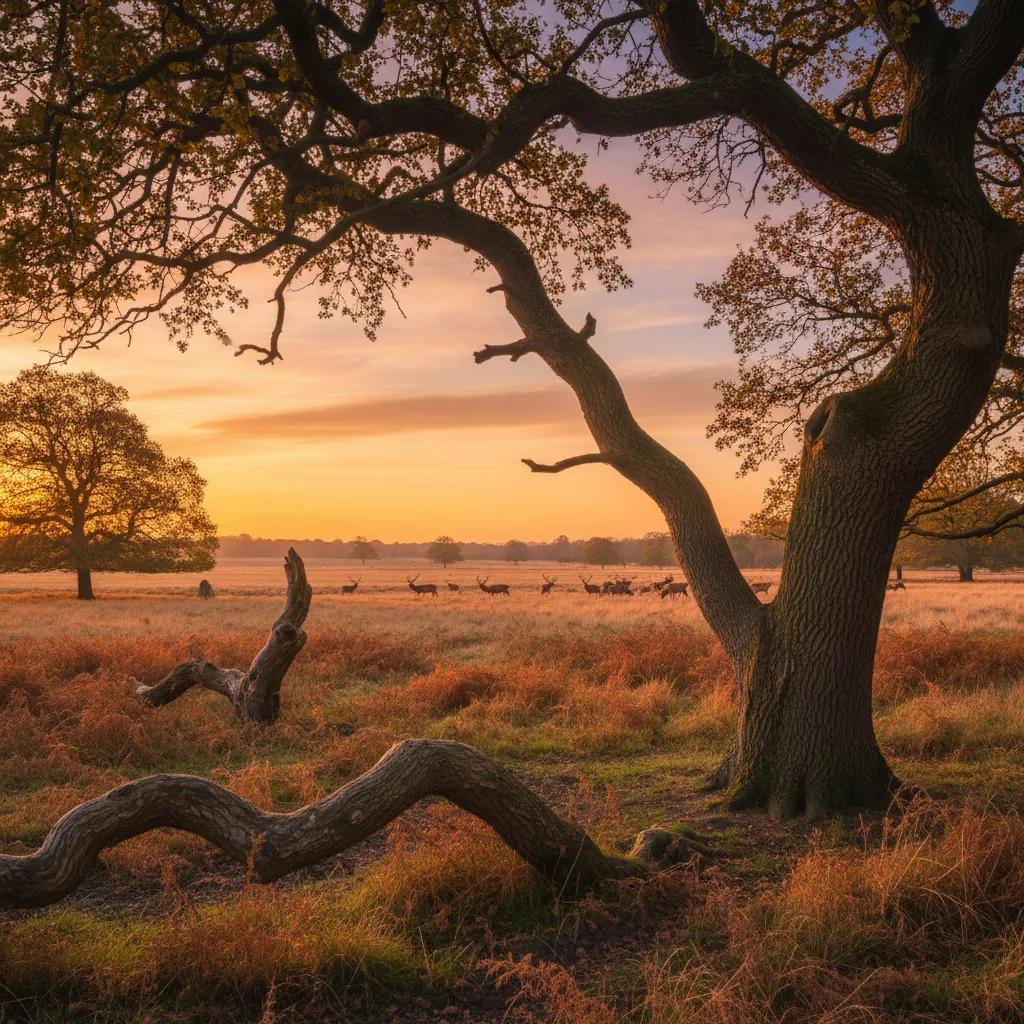
 Richmond Park Sunset Viewing Planner: Deer Meadow Horizons
Weekend Plans
London Panoramic City Lookout: Sketch Richmond in 3 Tones
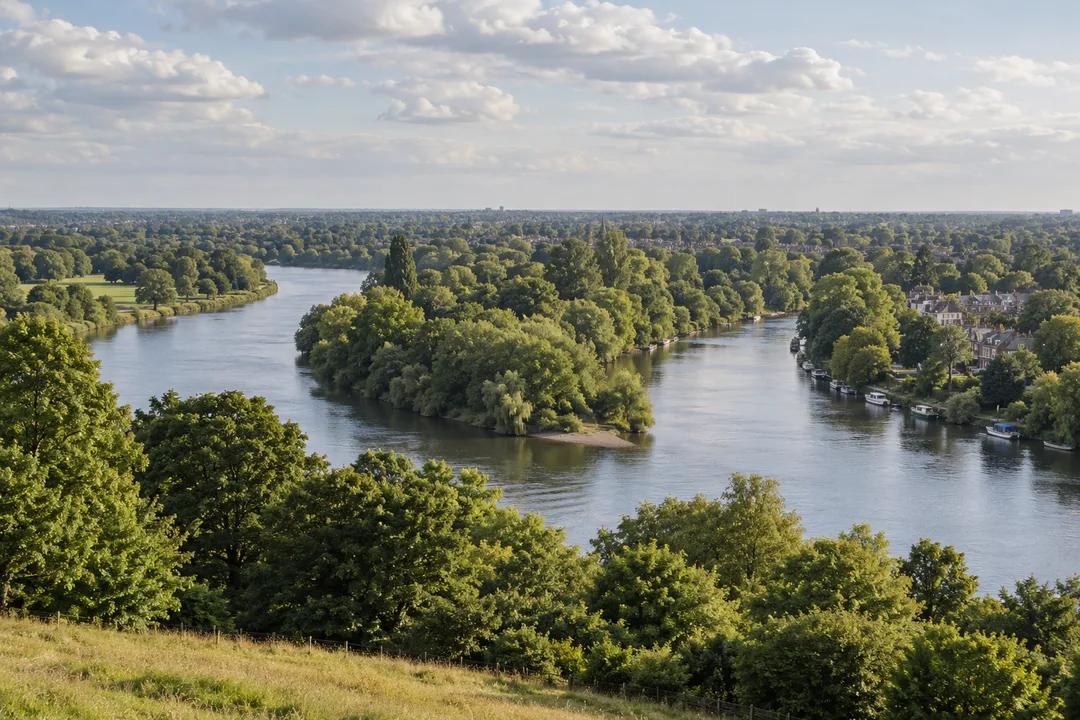
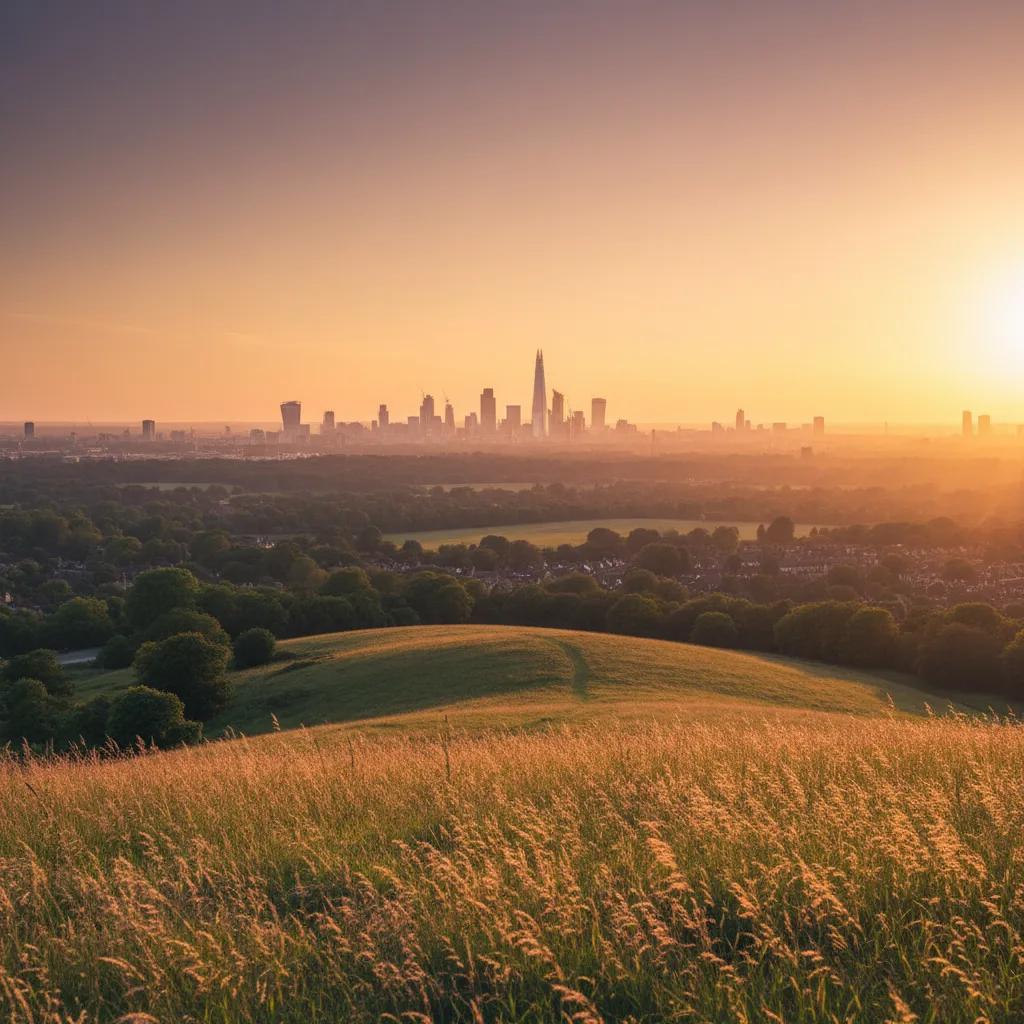
Richmond Hill offers a London panorama shaped by the Thames bend, with a three-tone drawing exercise that turns a city lookout visit into a river study.
The river bend is the subject at Richmond Hill. For a London panoramic city lookout outing built around drawing, the useful question is not how many landmarks you can name, but how much of the scene you can leave out. The Thames, its green surroundings and the space above them offer a composition that rewards editing. Bring a pencil and make a deliberately incomplete picture, with enough room on the page for the river to lead your eye.
Why this view suits a sketchbook
Richmond Hill has a long relationship with landscape painting. English Heritage's account of the view describes artists responding to the Thames through composition and tone, rather than simply cataloguing everything before them. That is a useful starting point for an ordinary visitor. You do not need to reproduce a historical painting or adopt somebody else's position. Instead, borrow the freedom to decide which parts of a real view belong in your own small record of it.
Give yourself permission to produce a study rather than a finished artwork. The difference is practical. A study can stop after establishing the river's curve and the weight of the trees around it. A finished-picture ambition may keep you correcting every mark until the outing becomes frustrating. If drawing is new to you, choose the smaller task. You will learn more from a few decisions you understand than from an elaborate picture you no longer want to make.
Find the white shape before drawing the banks
Look at the water as a shape on the page. Rather than outlining every tree, find the width and direction of the river where it enters your chosen frame. Let the unmarked paper represent that space. Draw around it lightly, allowing the banks to define the shape indirectly. This reverses the usual impulse to fill a landscape with objects. The important part of your picture may be the part where you put almost no pencil at all.
Do not worry if the curve refuses to look convincing on the first attempt. A river seen from above can seem flatter or more compressed than you expect. Make another thumbnail beside the first, changing only the width of the water. Compare the two with the scene itself. Keep the version that explains the bend, even if its proportions are not perfect. The exercise is about learning to see a relationship, not proving that you can draw without revision.
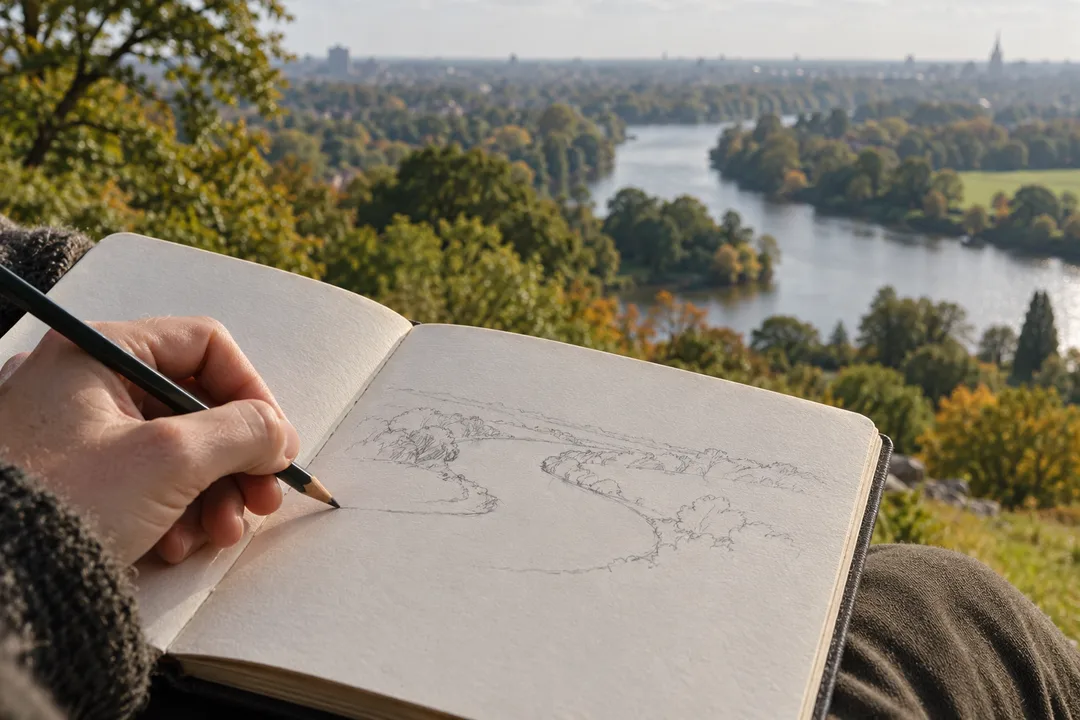
Use three tones instead of a box of colours
Try reducing the view to light, middle and dark. Leave the river and brighter sky as paper, use a soft grey for distant land, and reserve the strongest pencil marks for the nearer vegetation. These are artistic choices rather than claims about fixed colours at Richmond Hill. The conditions you encounter might suggest a different arrangement. What matters is separating the areas clearly enough that the eye can travel through the picture without needing an explanatory label.
A limited set of tones also makes changing light easier to handle. You do not need to chase every patch of brightness as it appears. Choose the arrangement that interested you at the beginning and develop that version. If a later change seems more compelling, begin a separate small study. This keeps two observations honest instead of combining unrelated moments into an image that pretends to describe a single instant. Neither version needs to be more impressive than the other.
A companion can be an editor rather than a critic
Ask a friend to describe the first place their eye lands on your page. That question gives more helpful feedback than asking whether the drawing is good. If they notice an accidental dark mark before the river, you have learned something about emphasis. You can soften the mark, change the frame, or decide that the unexpected subject is more interesting. The conversation stays about a particular choice, rather than turning into a judgement of anyone's talent.
You could also divide one sheet into two different interpretations of the bend. One person draws only the water. The other draws everything except it. When the sheets sit together, the missing spaces become as interesting as the marks. Keep the activity optional. A companion who prefers simply looking does not need a drawing assignment to participate. They might choose a sentence describing the view instead, or say which part of the landscape seems most distant to them.
Photograph the decision, not just the panorama
If you would rather use a camera, take a frame that explains your chosen subject. A picture about the river should give the curve room to work. A picture about layers of vegetation might contain very little sky. Try making each image answer a different visual question, then stop. Taking many nearly identical versions can make selection harder while adding little to the experience. A small, purposeful set is easier to remember and easier to share.
Avoid presenting a tightly cropped photograph as proof that the whole view was empty or tranquil. The frame records a selection, and other people may have been nearby. In the same way, a bright exposure does not establish the weather for the rest of the day. When you share the result, describe it as your view from Richmond Hill rather than a guarantee of what another visitor will encounter. A straightforward caption leaves space for other people's experience to differ.
Keep the riverside walk separate from the drawing
A wider Richmond outing can include the river at ground level, but the elevated view and the riverside are different experiences. The sketch above is concerned with the shape of the water in the landscape. A walk beside it brings your attention to nearer textures, movement and the changing edge. If you choose both, treat the second part as a fresh observation rather than trying to recreate the hill's composition from below.
Do not attach an invented minute-by-minute descent or a named café stop merely to make the visit sound complete. Choose your next move from the route information and conditions in front of you, taking your group's energy into account. You can also end after the sketch. A single page that records a decision about the river is a more satisfying result than an overloaded afternoon that leaves nobody interested in the place they came to see.
Practical Notes for a modest drawing session
Keep your materials contained: a small board or firm notebook, one pencil, and a way to protect the paper if conditions become uncomfortable. Work from a position that leaves the walking space clear. Do not spread equipment around a companion who may need to move suddenly. If you want to compare sketches afterwards, save the discussion until everybody is standing or sitting comfortably rather than asking people to turn around while they are walking.
This is a composition exercise, with no dependence on a sunset appointment or a particular sky. If drawing outdoors stops being enjoyable, close the notebook and retain the incomplete page. Its unfinished areas can remind you what caught your attention. For another outing, ask the Karpo APP about activities that fit your interests, describing whether you want to draw, walk or spend time indoors. This article makes no promise of live crowd reports or reserved viewing space. Richmond Hill's contribution is the river bend. Your contribution is the choice of how to see it.
Ask Karpo for more information.
Keep reading
- Richmond Park Sunset Viewing Planner: Deer Meadow Horizons
 South Bank Sunset Viewing Planner: Thames Riverside Walks
 Parliament Hill Sunset Viewing Planner: London Heath Vistas