 Brixton Vintage Thrift Shop Finder: South London Retro Gems
Hidden Gems & Odd Finds
South Bank Optical Boutique Plan: River Glare and Repairs
Hunting for an optical boutique on the South Bank? The riverside itself has few, so plan around Waterloo and Lower Marsh and know what to do if a pair breaks.
Searching for an optical boutique on the South Bank needs a little honesty up front: the riverside walk between Westminster Bridge and Tate Modern is lined with arts venues, cafes and book tables, not eyewear studios. What the South Bank does have is glare, crowds and a lot of walking, which is when glasses get lost, scratched or sat on. Plan your eyewear around Waterloo and Lower Marsh, keep a spare pair in your bag, and know where to head if something breaks.
Why the River Is Hard on Your Eyes
On winter afternoons the sun sits low in the south-west, so anyone walking west from Bankside toward Westminster Bridge is looking almost straight into it, and wet paving and puddles throw the light back up. Regular sunglasses help, but polarised lenses are what really cut reflected glare from water and wet stone. If you already wear prescription glasses, clip-ons or a prescription sun pair make a long riverside afternoon far more comfortable than squinting under a cap.
Spring and summer bring the opposite problem: bright, crowded promenades where you are reading signs, menus and festival programmes in full sun. Photochromic lenses that darken outdoors suit people who drift between the Southbank Centre's foyers and the open walkway all day. They save you swapping pairs every few minutes, though they take a moment to clear when you step back indoors.
A Small Emergency Kit for Your Bag
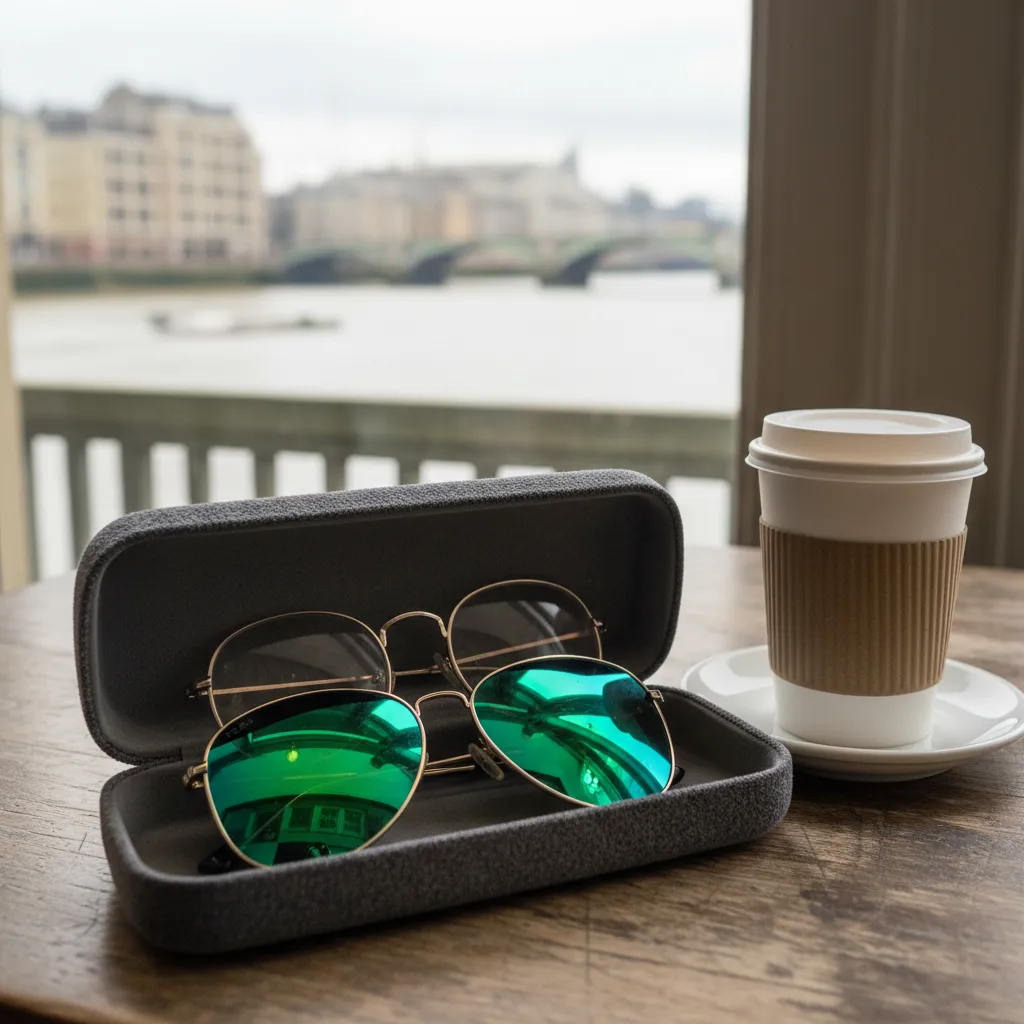
A hard case is the single most useful accessory on a South Bank day, because soft pouches offer no protection when a bag is squashed on a crowded bench. Add a microfibre cloth, since river spray and drizzle leave marks that tissues smear. A tiny optical screwdriver costs very little and fixes the most common failure, a loose hinge screw. If you wear contact lenses, carry your glasses too, in case wind and dust make lenses uncomfortable by evening.
Where to Look Instead of the Riverside
Waterloo is the practical base. Lower Marsh, the street market just behind the station, and The Cut, which runs toward Southwark, carry the everyday shops and services of a working neighbourhood. For a proper boutique visit, it is often simpler to cross the Golden Jubilee Bridges to Embankment or walk over Waterloo Bridge toward the Strand and Covent Garden, where independent eyewear shops are far more concentrated.
Before you set out, open the Karpo APP and describe the situation, for example a broken hinge on acetate glasses, near Waterloo, needing a quick fix this afternoon, or a planned visit to compare prescription sunglasses. Ask for nearby opticians and a sensible walking order from where you are. Not every boutique repairs frames, so favour a practice that lists repairs among its services and head there first.
What an Optician Can Fix on the Spot
Loose screws, wonky temples and a nose pad that has fallen off are usually quick jobs for an optician with the right parts. A lens that has popped out of a full-rim frame can often be refitted if neither the lens nor the groove is damaged. A cracked acetate front or a snapped metal bridge is a different story. Those generally need a new frame, and a good optician will say so rather than attempt a fragile repair.
Skip superglue and tape, however tempting on a bench outside the BFI. Glue can craze plastic lenses and make a professional repair impossible. If the frame is wearable but crooked, put it back in its hard case and get it straightened later that day.
If a Pair Is Lost Entirely
Keep a photo of your written prescription on your phone. Under UK rules the practice that tested your eyes has to give you that prescription, and with it, plus your pupillary distance, any optician can make a replacement without a new test if your prescription is recent. Lost property is worth a call too. Transport for London runs a lost property office for items left on the Tube and buses, and venues along the river keep their own.
A Riverside Loop for an Easier Day
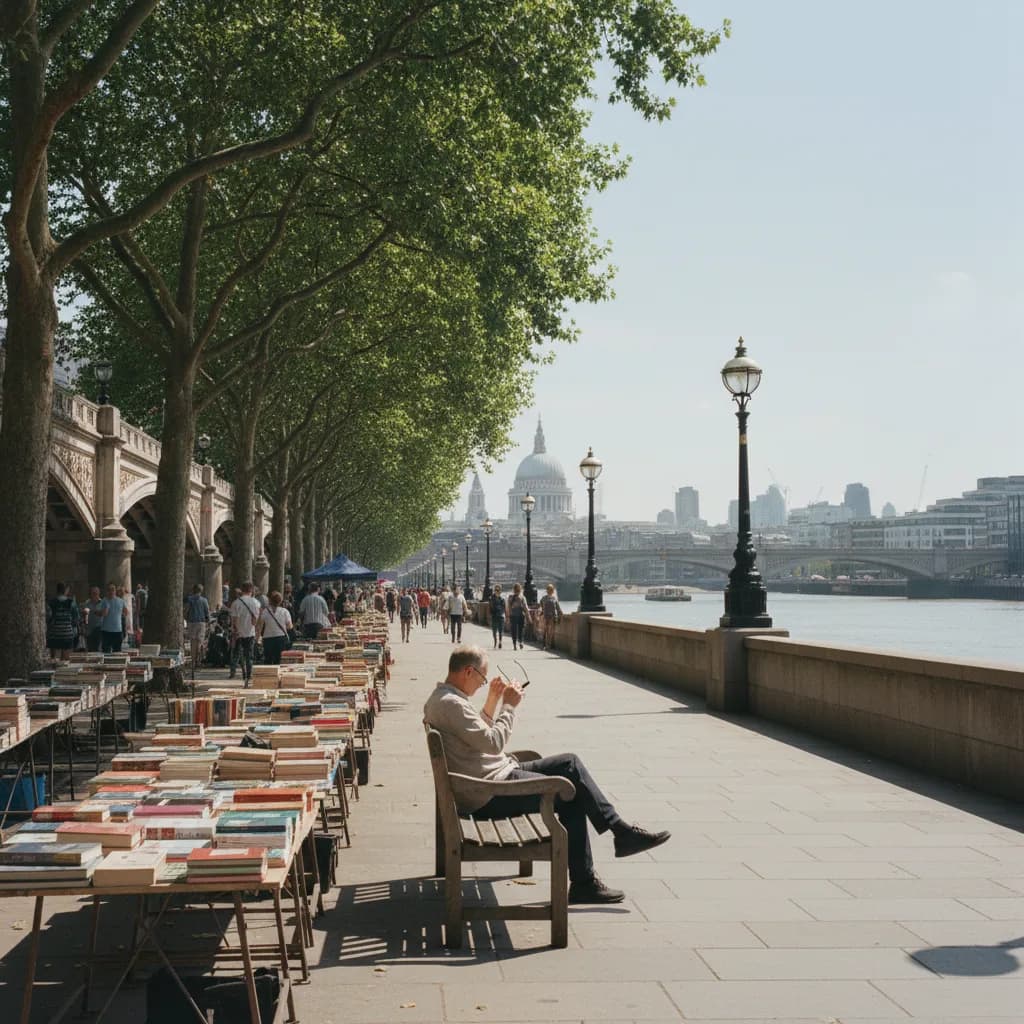
If you are walking the South Bank anyway, a gentle loop works well. Start at the secondhand book market under Waterloo Bridge, outside BFI Southbank, then follow the river east past Gabriel's Wharf and the OXO Tower Wharf toward Tate Modern and Bankside. The trees along the promenade give shade, and the benches facing St Paul's across the water are a good spot to clean your lenses and rest your eyes from the glare.
On the way back, step down into Lower Marsh for lunch and errands. It is quieter than the riverside on weekends and closer to the station when you are ready to head home.
Who Ends Up Needing Help Here
The South Bank draws a particular mix. Commuters cut along the river from Waterloo to offices at Blackfriars, students sit with laptops in the Southbank Centre's public spaces, and visitors spend whole days between the London Eye and Tate Modern. The commuters lose screws, the students crack lenses dropping bags on concrete steps, and the visitors leave sunglasses on cafe tables. Knowing which of these you are tells you what to pack, whether that is a screwdriver, a spare pair or a strap.
Families are a special case. Children's glasses take a lot of punishment on the riverside playgrounds and skate spaces, so a sports strap and a hard case are cheap insurance. If a child's pair breaks, most opticians will prioritise a simple repair, and in the UK under-16s are entitled to an NHS optical voucher toward replacement glasses.
Practical Notes for the Thames Path
Waterloo station, served by the Bakerloo, Northern, Jubilee and Waterloo and City lines as well as mainline trains, is the easiest arrival point. Embankment and Southwark stations are useful for the western and eastern ends. Bring your prescription details, a spare pair if you own one, and a hard case. If you are planning a proper boutique fitting, give it its own trip across the river rather than squeezing it between gallery visits.
The South Bank is a place to enjoy with your eyes rather than a place to shop for glasses. Protect the pair you have, plan the repair route in advance, and save frame shopping for the streets north of the river.
Ask Karpo for more information.
Keep reading
- Brixton Vintage Thrift Shop Finder: South London Retro Gems
 Notting Hill Vintage Thrift Shop Finder: Preloved Rails
 Soho Vintage Thrift Shop Finder: West End Designer Archives