 Brixton Vintage Thrift Shop Finder: South London Retro Gems
Hidden Gems & Odd Finds
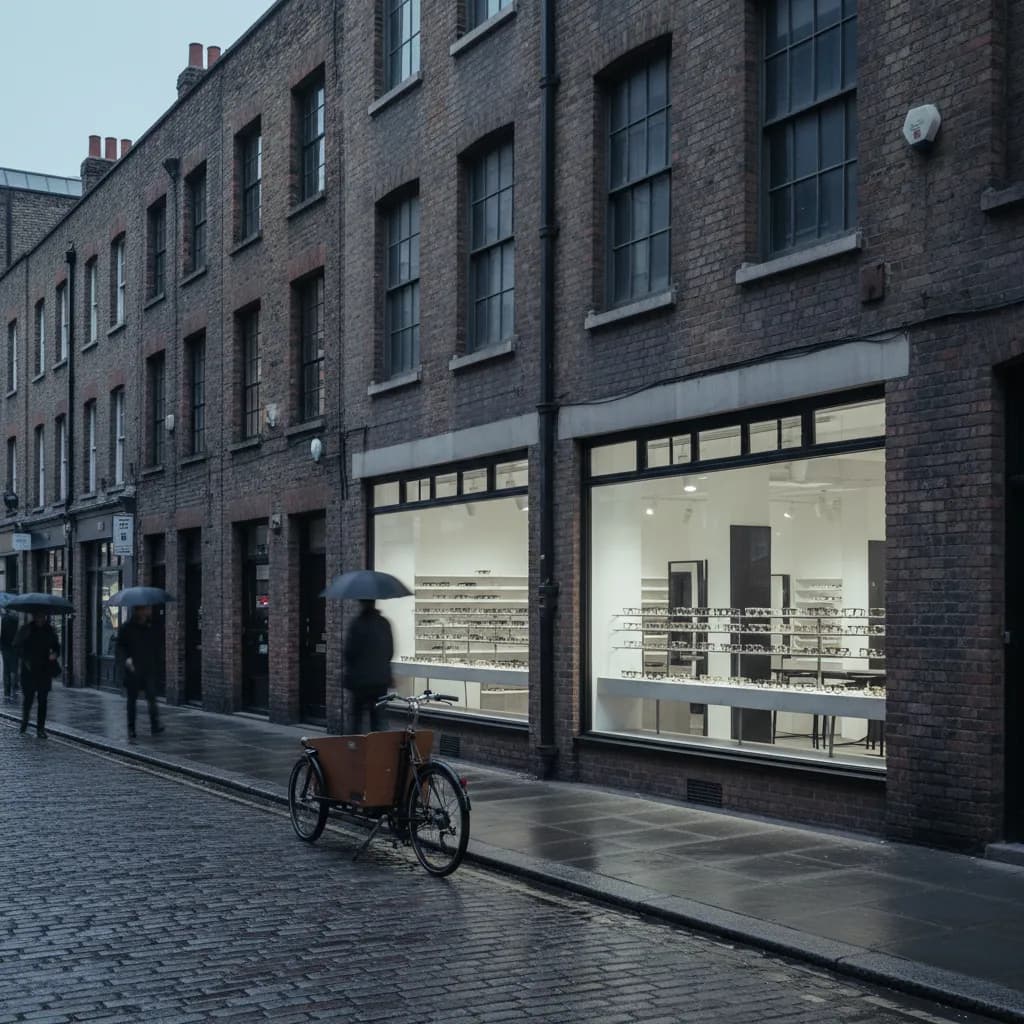
Shoreditch Optical Boutique: How to Judge a Handmade Frame
Weighing a Shoreditch optical boutique near Redchurch Street? Check the acetate, the hinges and the wait for made-to-order work before you pay a design premium.
In a Shoreditch optical boutique, the frame on the shelf is usually the main event. The studios scattered between Redchurch Street, Calvert Avenue and the Brick Lane end of the neighbourhood lean toward design-led acetate, small production runs and the odd made-to-order service. That makes East London a good place to learn how to tell a well-built frame from a merely fashionable one. Spend ten minutes with these checks and you will shop the area with far more confidence.
Reading the Material in Your Hand
Most boutique frames are cut from cellulose acetate, a plant-based plastic made in sheets and then milled into shape. Good acetate has depth: the colour looks layered rather than painted, and the polish is even right into the corners of the bridge. Cheaper injection-moulded frames feel lighter and hollow, with colour that sits on the surface. Neither is wrong, but you should know which one you are paying for before a premium is added for the label.
Hold the frame up to the window light. Look for an even thickness along the brow, clean edges where the lens groove is cut, and no rough spots around the nose pads. Then ask the fitter where the frame was made and by whom. In independent studios that question usually leads to a story about a family workshop or a factory relationship, which is part of what you are buying.
Hinges, Cores and the Small Parts That Fail
Open and close the temples a few times. Riveted hinges, where small metal pins pass through the front of the frame, are a sign of traditional construction and tend to be easy for an optician to service. Spring hinges flex outward and are forgiving if you take glasses off one-handed, though they add a little bulk. Ask whether the temples have a metal core wire inside the acetate, because that wire is what allows a fitter to shape the arms around your ears.
Screws loosen in every frame eventually, especially with daily commuting on the Overground. Ask whether the shop will tighten and readjust frames it sold, and whether spare parts can be ordered for the model. A frame you can keep repairing for years is better value than a cheaper one that becomes unwearable after a single broken hinge.
The Three Numbers Inside the Temple
Look on the inside of the arm of your current glasses and you will usually find three printed numbers, such as 49, 21 and 145. They are the lens width, the bridge width and the temple length in millimetres. Write yours down before visiting. They let a fitter pull frames in a similar size from the drawers, and they help you spot when a frame you admire is simply too narrow or too wide, which saves a lot of trying on in a small studio.
Made-to-Order Versus Off the Shelf
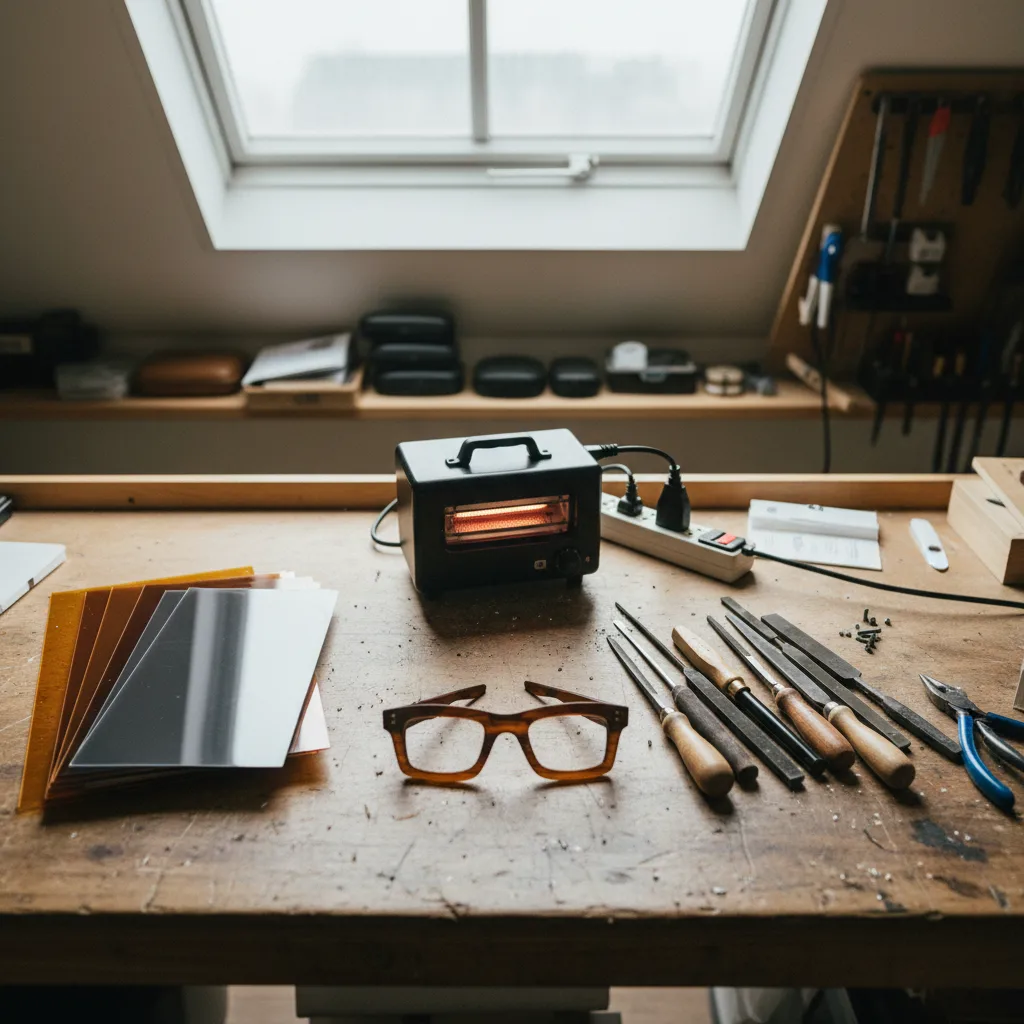
Some East London studios offer frames adapted to your measurements or built in a colour you choose. That service can solve real fitting problems, such as a very low nose bridge or a wide head, but it takes time. Ask how many weeks the frame itself takes before lenses are even fitted, and whether you will see a sample first. If you need glasses for a date in the diary, buy off the shelf and save the bespoke project for a pair you can wait for.
An honest piece of advice: skip bespoke if your only reason is a colour. Most studios carry wide colour ranges in standard sizes, and the extra cost of a custom build makes most sense when the fit, not the finish, is the problem.
Putting Your Shortlist Together
Shoreditch shops change faster than most London neighbourhoods, so start from a current list rather than an old blog post. In the Karpo APP, describe what you want, for instance a heavier acetate frame with riveted hinges, a strong prescription and a weekday visit near Shoreditch High Street. Ask for independent eyewear studios that match and note why each was suggested. Then open each studio's own site to check whether it offers eye tests, lens fitting or only frames.
Two stops are plenty. A frame-led design studio and a full-service optician make a good pairing, because one shows you what is possible and the other can tell you how your prescription will behave in it. Bring the prescription, your pupillary distance and your current glasses to both.
Vintage Frames and Reglazing
The markets around Brick Lane and Old Spitalfields sometimes turn up vintage frames. Before buying one, check for cracks around the hinges and the lens groove, because old acetate can become brittle. Then ask an optician whether the frame can be glazed with your prescription. Many will do it if the frame is sound, though some may ask you to sign a waiver in case an older frame snaps during glazing.
Between Studios on Foot
Redchurch Street is the natural spine, lined with converted warehouses and shopfronts. North of it, Arnold Circus sits at the heart of the Boundary Estate, a ring of red-brick Victorian housing around a raised bandstand garden that makes a peaceful place to sit with your shortlist. On Sunday mornings, Columbia Road's flower market fills the street a short walk away. Boxpark Shoreditch, beside the Overground station, is handy for a quick bite between fittings.
Practical Notes Before Heading East
Shoreditch High Street station on the Overground puts you at the southern end of Redchurch Street, while Old Street on the Northern line is a longer walk from the north-west. Weekday afternoons are calmer than Saturdays, when market crowds spill over from Brick Lane. Carry your prescription and PD, ask every studio about collection times and aftercare, and photograph frame model names so you can compare them later without relying on memory.
If the perfect frame turns out to be a few weeks away, that is usually worth waiting for. A handmade pair that fits properly should outlast several trend purchases, and the studio that sold it will usually be glad to see it back for a tune-up.
Ask Karpo for more information.
Keep reading
- Brixton Vintage Thrift Shop Finder: South London Retro Gems
 Notting Hill Vintage Thrift Shop Finder: Preloved Rails
 Soho Vintage Thrift Shop Finder: West End Designer Archives