 Brixton Vintage Thrift Shop Finder: South London Retro Gems
Hidden Gems & Odd Finds
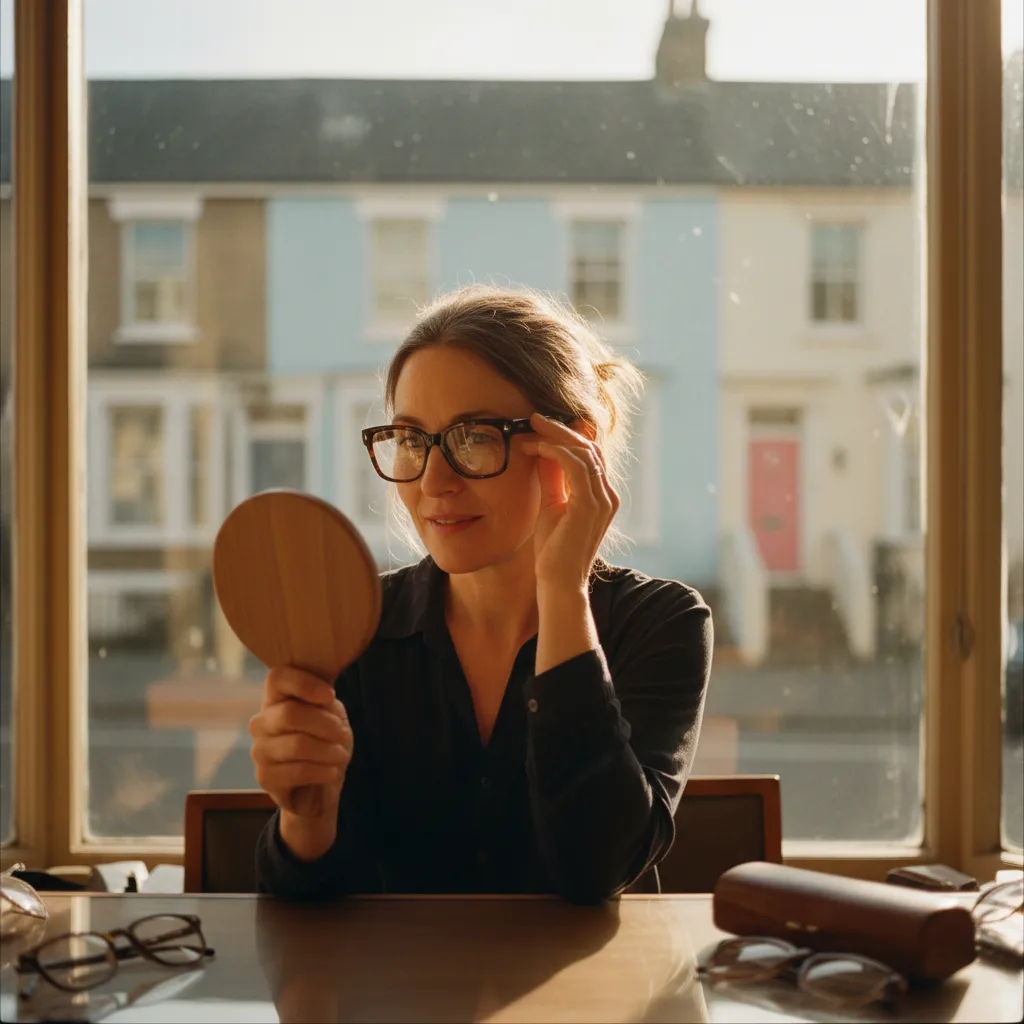
Notting Hill Optical Boutique: Fitting Your First Varifocals
First varifocals in Notting Hill work best when the frame is deep enough and fitting heights are measured in person. Here is what to ask before you commit.
A first pair of varifocals goes smoothly when two things happen in the shop: you choose a frame with enough vertical depth for the reading zone, and the optician measures your fitting heights with that exact frame on your face. Get either wrong and you will find yourself tipping your chin to read a price label on Portobello Road. Notting Hill has a strong mix of independent opticians and design-led optical boutiques around Westbourne Grove, Ledbury Road and the streets off Notting Hill Gate, which makes it a good area to compare advice before you spend on progressive lenses, usually the most expensive lens type you will buy.
Why Your Arms Suddenly Feel Too Short
Most people notice presbyopia somewhere in their early to mid forties, when the lens inside the eye loses flexibility and close focus starts to drift away. The giveaway is holding a phone or a menu further out to read it. Varifocals, also called progressive lenses, handle this by blending three zones into one lens with no visible line: distance at the top, intermediate in the middle for screens and dashboards, and near vision at the bottom. The trade-off is soft blur at the sides of the lower half, which your brain learns to ignore over time.
Choose a Frame With Room for Every Zone
Shallow, narrow frames are fashionable, but they squeeze the reading zone at the bottom of a progressive lens. As a working rule, many lens makers design standard progressives around a minimum fitting height in the high twenties of millimetres, measured from the bottom of the frame to the centre of your pupil. Short-corridor designs exist for slimmer frames, though the reading area becomes smaller. When you try frames on, look straight ahead in the mirror and check that there is visible space between your pupil and the lower rim. A pair that looks lovely but leaves only a sliver below your eyes is the wrong first varifocal.
The Measurements That Decide Comfort
Beyond your prescription, varifocals need pupillary distance measured for each eye separately, and a fitting height marked with the chosen frame already adjusted to your face. Good opticians will set the nose pads and arms first, then take the measurements, because a frame that later slides down your nose changes where the zones fall. Some boutiques use a digital centration device, others mark the demo lenses with a pen. Either is fine if it happens in person. Ordering varifocals online with a guessed fitting height is the most common reason first-time wearers give up on them.

The People You Will See Being Fitted
On a weekday afternoon in this part of West London the chairs are often taken by people in their forties and fifties in work clothes, juggling laptops and reading glasses, plus a few older regulars collecting adjustments for pairs bought years earlier. Parents bringing teenagers for school glasses fill the after-school slots. An unwritten habit worth adopting is to arrive wearing your current glasses and to bring any old pairs you still use, because the optician learns a lot from what has worked for you and what has not.
Getting Through the First Two Weeks
Expect some swimming at the edges when you first move your head, especially on stairs and kerbs. Most wearers settle within a few days, though it can take up to two weeks. Wear the new pair all day from the start instead of switching back to old glasses, which only resets the learning. Point your nose at what you want to see rather than flicking your eyes sideways. Lower your gaze, not your head, for reading. If you still feel unsteady after two weeks, go back: many opticians offer a non-tolerance period during which they will recheck the measurements or remake the lenses.
An Honest Word on When Not to Buy Them
Varifocals are not always the right answer. If you spend most of your working day at a computer, a dedicated office or occupational lens, which covers screen and desk distances with a wider intermediate zone, can feel far more comfortable than an all-purpose progressive. People who mainly need help with books and phones may be happier with simple single-vision readers. Skip premium varifocal upgrades if your prescription is likely to change soon, for example after a recent cataract assessment. Ask the optician to explain which option suits your day, not just which one costs most.
Turn the Visit Into a Notting Hill Afternoon
Fittings and collections need a little waiting time, so it helps to plan the area around them. Notting Hill Gate station serves the Central, Circle and District lines, and Ladbroke Grove sits at the northern end of Portobello Road on the Circle and Hammersmith & City lines. Saturday is the big antiques day along Portobello, which is lively but crowded, so a weekday suits a calm first fitting. Afterwards, walking the leafy residential streets towards Ledbury Road is a gentle way to test your new lenses on kerbs and steps before you face a busy station staircase.
How Karpo APP Helps You Shortlist
Karpo APP is a practical starting point when you are not sure where to begin. Tell Karpo that you need a first pair of varifocals, roughly what you want to spend, and that you would like to stay around Notting Hill or Westbourne Grove, and it returns a shortlist of optical boutiques and independent opticians to look at. Open each shop's own website to read what they say about progressive lenses and adaptation guarantees before you visit. Karpo does not make appointments or see stock levels, so the comparison and final decision are yours.
Practical Notes Before Your Fitting
Bring your current glasses, your latest written prescription and a short list of the distances you use most, such as laptop, car dashboard and recipe book. If your last sight test was more than two years ago, book a fresh one first, since NHS guidance suggests most adults have their eyes tested every two years, and people aged 60 or over qualify for a free NHS sight test. Ask whether the price includes the frame, lenses, anti-reflective coating and any adaptation guarantee, and write down the answers from each shop you visit so the comparison is fair. Keep the box and cleaning cloth from the new pair, since some shops ask for the original case when you return for a free adjustment.
Ask Karpo for more information.
Keep reading
- Brixton Vintage Thrift Shop Finder: South London Retro Gems
 Notting Hill Vintage Thrift Shop Finder: Preloved Rails
 Soho Vintage Thrift Shop Finder: West End Designer Archives