 Brixton Vintage Thrift Shop Finder: South London Retro Gems
Hidden Gems & Odd Finds
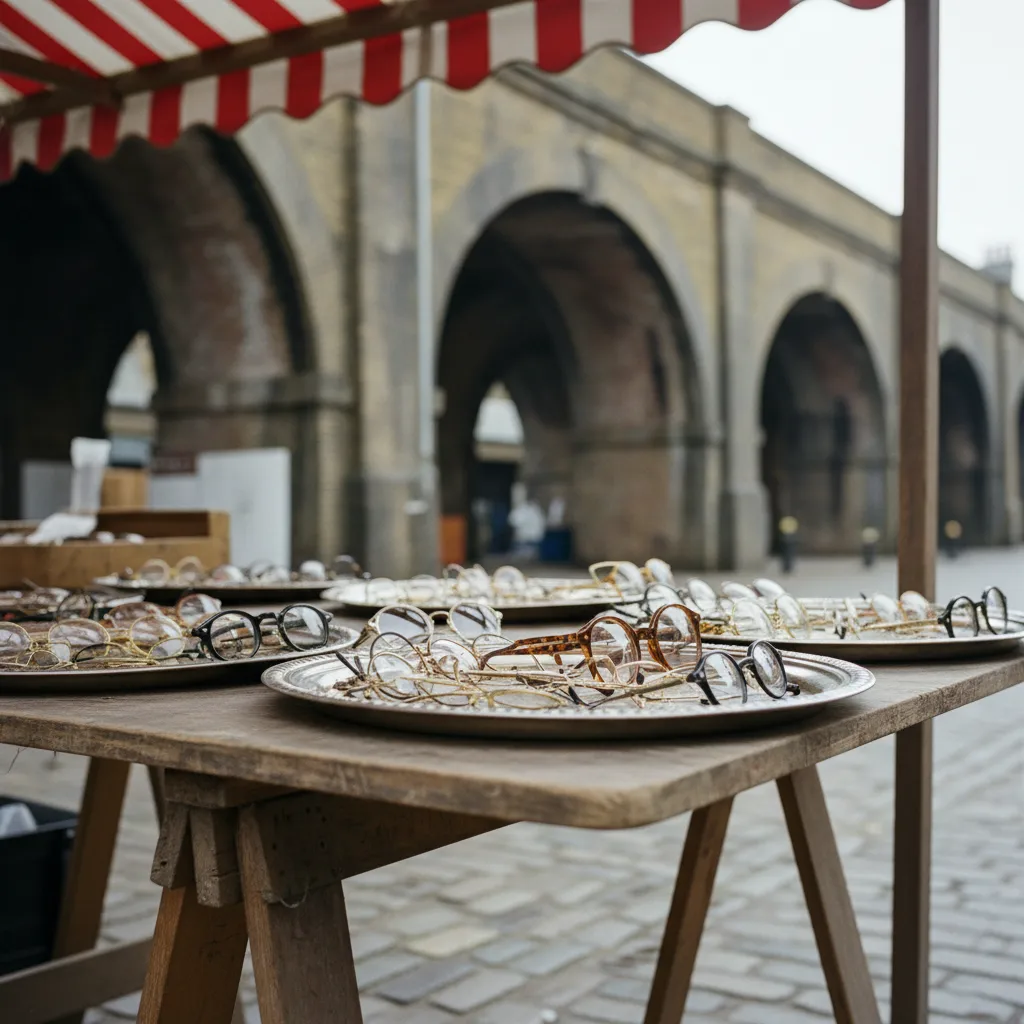
Camden Optical Boutique Plan: Glaze a Vintage Market Frame
A vintage frame from Camden Market can take your prescription if the lens size, bridge and acetate pass a few checks. Here is how to vet it and get it glazed.
A vintage frame bought at a Camden Market stall can usually be glazed with your own prescription, but only if three things line up: the lens shape suits your prescription strength, the bridge sits on your nose without sliding, and the old acetate or metal survives being heated and handled at the bench. Camden is one of the easiest places in London to find secondhand eyewear, with stalls spread through the Stables Market, Camden Lock and the streets off Chalk Farm Road. The harder part is turning a £20 impulse find into glasses you can actually wear, and that is where a planned visit to an optical boutique comes in.
Start With the Frame, Not the Stall
Before paying, open the arms and look at the inner side of one temple. Most frames made after the 1960s carry three numbers there, for example 48-22-145. The first is the width of one lens opening in millimetres, the second is the bridge gap, and the third is the arm length. If you already own glasses that fit well, take a photo of their numbers before you leave home. A vintage frame within two or three millimetres of your current lens width and bridge will usually feel familiar on your face, while a jump of six millimetres or more tends to sit oddly however good it looks on the stall mirror.
Match the Shape to Your Prescription Strength
Strong prescriptions change what is sensible. If you are short-sighted beyond roughly minus four, a large round or aviator opening will leave the outer edges of the lenses noticeably thick, because a minus lens gets thicker away from the centre. Smaller, narrower openings keep that edge slimmer and lighter. Long-sighted wearers face the opposite problem, with lenses thicker in the middle, so a compact shape again helps. High-index lens materials can thin things down, though they add cost at the glazing stage. Bring your written prescription so the optician can tell you within a minute whether the frame you picked is realistic.
Line the Lenses Up With Your Eyes
The second number that matters is your pupillary distance, the gap between the centres of your pupils. In the UK your optometrist must hand you a written prescription after a sight test, but PD is not always printed on it, so ask for it or have it measured when you drop the frame off. The optical centre of each lens needs to sit in front of each pupil. If a vintage frame is much wider than your face, the lab can still decentre the lenses, but with a strong prescription there is a limit to how far that works before the edges get thick or the view feels pulled to one side.
Test the Old Material Before You Commit
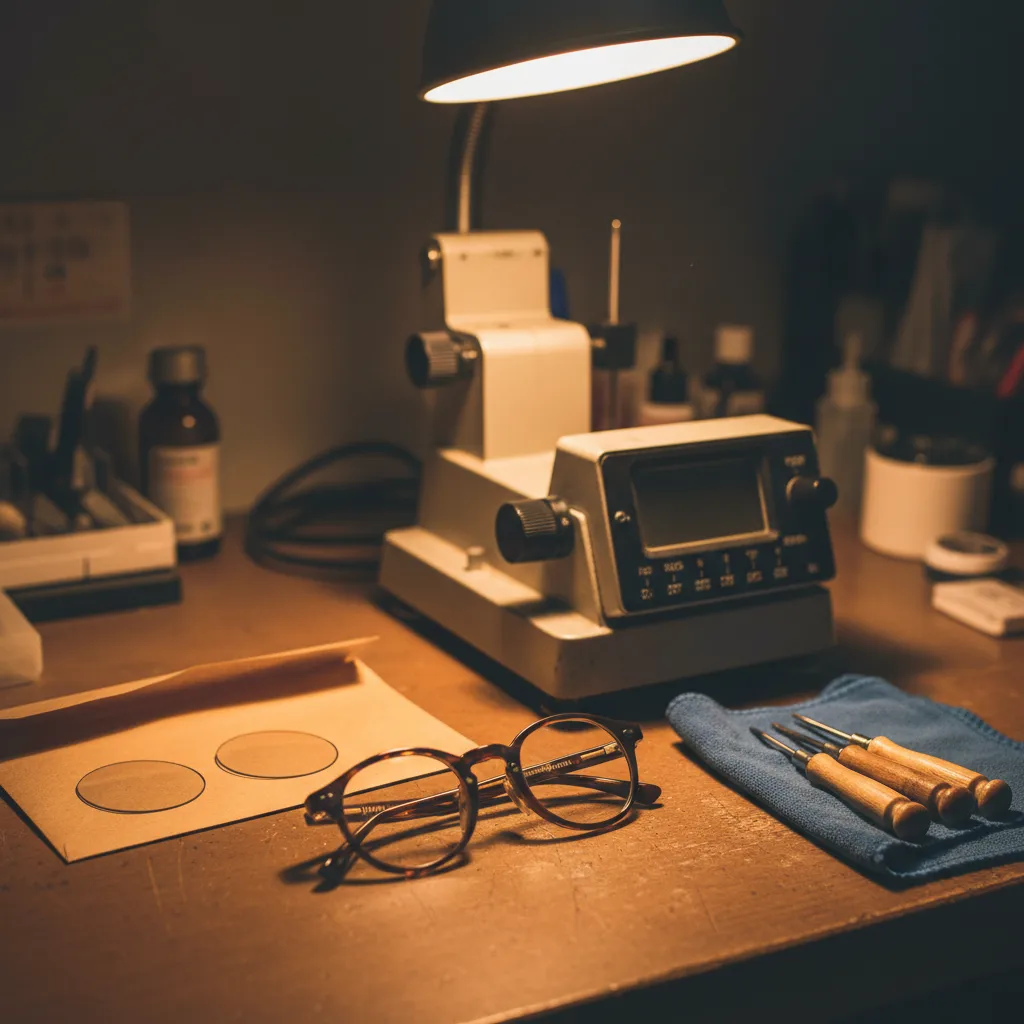
Acetate from the 1950s to the 1980s can become brittle, and frames are often warmed so they can be shaped around your ears and nose. Run a fingernail gently along the inside of the rims and look for hairline cracks near the hinges, which is where stress shows first. Open and close each arm ten times and listen for grinding. On metal frames, check that the small screws at the hinges and the rim lock are present and turn freely. Many opticians ask customers to accept the risk in writing when fitting lenses into an older frame they did not sell, so it is worth knowing its condition yourself before you hand it over.
Who You Will Meet Along the Canal
On a Saturday the stalls fill with students trying on round wire frames for fun, older collectors hunting a particular shape from a particular decade, and a steady line of people who simply want glasses that look different from the high street. Sellers at the vintage eyewear tables are often happy to tell you roughly when a style was popular, but they are not opticians and usually cannot tell you whether a frame suits your prescription. Treat their stories as colour and the measurements as the real decision. A polite rule at busy stalls is to put frames back on the tray where you found them.
Plan the Fitting Route From the Market
Once you have bought something, the easiest plan is to walk away from the busiest stretch of Camden High Street before looking for a fitter. The Regent's Canal towpath runs west from Camden Lock towards Primrose Hill and the quieter village shops along Regent's Park Road, which makes a calmer second stop on the same afternoon. Camden Town and Chalk Farm stations are both on the Northern line, so it is simple to come back later for collection. Glazing a customer's own frame is rarely same-day, because the lab needs to edge new lenses to the exact outline, so plan for a second trip.
Questions to Ask the Optician
Use the drop-off appointment to cover the details that decide whether you will be happy. Ask whether they glaze frames bought elsewhere, and whether they charge a fitting fee separately from the lenses. Ask which lens material and index they recommend for your prescription in this particular shape, and whether an anti-reflective coating is included. Ask how they handle a frame that cracks during fitting. If the frame has nose pads, ask whether they can replace old yellowed pads with fresh silicone ones. Write the answers down on your phone notes so you can compare more than one place.
An Honest Call on What to Skip
Skip frames with a cracked hinge block, however beautiful the colour. Repairs on acetate hinges are possible but often cost more than the frame was worth and still leave a weak point. It is also sensible to pass on frames with lens openings far larger than your current pair if your prescription is strong, because you will pay extra for thin lenses and may still see thick edges. A small, sturdy frame with clean hinges is a safer first vintage pair than a fragile showpiece. If nothing on the tray passes your checks, leave it for another weekend rather than settling.
Where Karpo APP Fits Into the Plan
Karpo APP is useful before you set out and after you have found a frame. Describe what you have, for example a 1970s round acetate frame and a minus five prescription, along with the area you want to stay in, and Karpo gives you a shortlist of optical boutiques and independent opticians worth contacting. From there, open each shop's own website or call them to ask about own-frame glazing and timing. Karpo does not hold appointments for you or track waiting times, so the final choice stays with you and the shop.
Practical Notes for a Camden Frame Day
Carry your written prescription, a photo of the numbers on your current glasses, and a soft case to protect the find on the walk. Weekend crowds around Camden Lock are heavy, so a weekday visit gives you more time at the stalls and more space to try frames on. If your sight test is older than two years, the NHS suggests most adults have their eyes examined every two years, so it may be worth getting a fresh test before glazing. Keep the receipt from the stall in case the seller can swap a frame that turns out to be damaged.
Ask Karpo for more information.
Keep reading
- Brixton Vintage Thrift Shop Finder: South London Retro Gems
 Notting Hill Vintage Thrift Shop Finder: Preloved Rails
 Soho Vintage Thrift Shop Finder: West End Designer Archives