 Brixton Christmas Light Up Walk Planner: Rainy Arcades
Free Things to Do

South Bank Night View Walk Planner for Kids Before Bedtime
Plan an early-dark South Bank walk with kids: the lit London Eye, river reflections, skateboarders, a glowing St Paul's and games to keep small legs going.
In late autumn and winter, London gets dark early, and that is good news for families. Children who would normally be asleep long before the city lights come on can see the whole riverside glowing and still be home in time for bath and bed. The South Bank is the easiest place to do it: a wide, flat, car-free path along the Thames, full of lights, music and things to point at. This night view walk planner is built for parents with children roughly four to eleven.
Why the South Bank Suits Small Walkers
The South Bank stretches along the southern side of the Thames between Westminster Bridge and Tower Bridge, and the central section from the London Eye to the Millennium Bridge is close to perfect for children. The path is wide and smooth, so scooters and pushchairs move easily, and it is almost entirely free of traffic. Benches, cafes and public foyers are spread along the way, which means there is always somewhere to rest, warm up or find a toilet when a small voice says it cannot wait.
The other advantage is that the views do the entertaining. There is a giant wheel, boats sliding past, buskers, skateboarders, bridges lit in different colours and a great dome glowing on the far bank. Children do not need to understand the history to enjoy it, and you do not need to plan any paid activities. The whole walk is free, and you can stop it at any point if someone gets tired, because a station is never far away.
Start at the Wheel
Begin near Westminster Bridge, where the London Eye turns slowly above the river. Its lights change colour in the evening and many children find it more exciting in the dark than in daylight, as the capsules glow like a string of lanterns hanging in the sky. Stand in Jubilee Gardens for the best view, with enough open grass around you for little ones to run off some energy before the walk begins. Look back across the river to see the Houses of Parliament lit gold.
This is a good moment to set up a simple game. Give each child a challenge, such as counting the bridges you cross under or spotting three different colours of bridge lights. Bridges along this stretch are lit in different shades, and spotting them keeps young minds busy along the whole route. Older children might like to take charge of a phone camera and be the official family photographer for the night.
If you have toddlers, consider bringing a pushchair even if they usually walk. The full route is not long, but small legs tire quickly in the cold, and a pushchair doubles as a place to stash coats and snacks.
The Southbank Centre and the Skateboarders
Walk east under the railway bridge towards the Southbank Centre, the big concrete arts complex beside the river. In the colder months the riverside here often fills with a winter market, with wooden stalls, fairy lights and the smell of hot food. Even without it, the building's public foyers are a welcome place to warm up and use the toilets, and the riverside terraces give a broad view of the lit-up north bank.
Underneath the complex is the undercroft, the covered space where skateboarders, BMX riders and graffiti artists have gathered for decades. It is one of the most famous skate spots in Europe, and children love watching the riders drop in and land tricks under the lights. Stand by the railings and enjoy the show, keeping smaller children close as the riders move fast.
Just past it, under Waterloo Bridge, look out for the boats moored along the river wall and the lights of the trains crossing the river behind you. Many families stop here for a hot chocolate before carrying on.
Gabriel's Wharf and the Riverside Path
Beyond the National Theatre, the path continues past Gabriel's Wharf, a small cluster of colourful low buildings and little shops tucked off the river walk. Its painted walls and string lights make it feel a little like a village fair, and it is a cheerful place to stop for a snack. A little further on, the Oxo Tower stands out with its famous windows that spell the brand's name in lights, a fun puzzle for children to work out from below.
The walk from here to Tate Modern is quiet and lovely, with the river close on one side and old warehouses converted into homes and studios on the other. Look across the water for the lights of the City and the tall towers on the skyline. Children often enjoy spotting passing riverboats lit up from inside and waving to the people on board.
The Big Finish: St Paul's from the Millennium Bridge
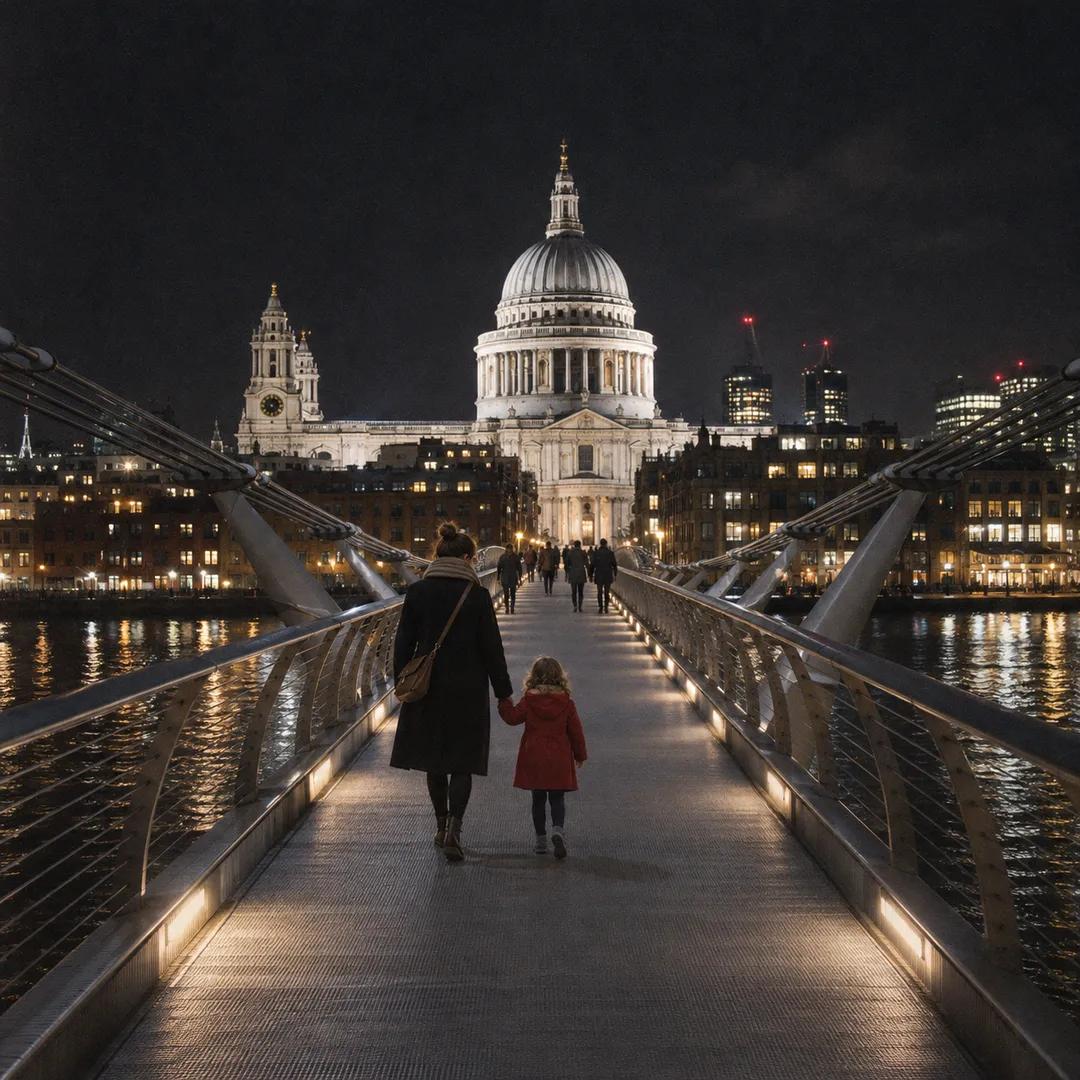
Tate Modern, the art gallery in a former power station, is impossible to miss with its tall brick chimney lit against the night sky. In front of it, the Millennium Bridge stretches across the river as a slim steel walkway with no cars at all. Walk out onto it, and the dome of St Paul's Cathedral rises straight ahead, floodlit white against the dark. It is one of the most magical views in London, and it feels even more dramatic to a small child walking towards it.
When it first opened, the bridge famously swayed under the feet of the crowds and was nicknamed the wobbly bridge. It was quickly fixed, and children are usually delighted by the story, even if they spend the whole crossing testing whether it still wobbles. Stop in the middle to look both ways along the river, then decide whether to cross to St Paul's or turn back towards the South Bank. Both sides have Tube stations within a short walk.
Keeping Children Happy on the Walk
The full route from the London Eye to the Millennium Bridge is long enough to feel like an adventure but short enough for most primary-age children with plenty of stops. Plan for twice as long as an adult would take. Start soon after dark, when the lights are on but children still have energy, and aim to finish before anyone becomes overtired and cold. A packed snack and a flask of something warm make a big difference.
Dress everyone in layers, with hats and gloves, as the wind off the river can be sharp. Reflective strips or a small clip-on light on each child's coat make them easier to spot in the crowds. Agree on a meeting point near the start in case anyone gets separated, and teach older children to stop and wait by the railings if they lose sight of you.
Practical Notes
The South Bank is busy in the evening but feels friendly and family-focused, especially in the central section around the Southbank Centre. Keep children away from the river wall edges and hold hands near the steps down to the beaches at low tide. Cyclists sometimes use the path, so keep scooters in a straight line and to one side. Public toilets in the arts buildings along the route are free, which makes life much easier with little ones.
Everything on this walk is free, from the lights to the street performers, although you might want a few coins for the buskers or a treat at the winter stalls. If the weather turns wet, the covered undercroft and the arts centre foyers are good places to wait out a shower.
To plan the evening, open the Karpo APP and ask it to plan an early evening South Bank walk with your children's ages in mind. Karpo can suggest a route with rest stops, find a family-friendly place for a warm drink or early dinner and work out the easiest way back to your home or hotel once the little ones are ready for bed.
Ask Karpo for more information.
Keep reading
- Brixton Christmas Light Up Walk Planner: Rainy Arcades
 Hackney Christmas Light Up Walk Planner: Canal Boats
 Islington Christmas Light Up Walk Planner: Square Dates